What is Zinc Sulfate Monohydrate?
Zinc sulfate monohydrate is an inorganic zinc compound containing one molecule of water and is widely used as a source of bioavailable zinc across numerous industries. The product appears as a white crystalline powder and is valued for its high zinc content and solubility characteristics.
The compound plays a critical role in addressing zinc deficiencies in agricultural soils, animal nutrition formulations, and industrial chemical processes. Its versatility makes it an important intermediate product in global chemical trade.
Chemical Properties and Commercial Importance
According to technical information published by the Food and Agriculture Organization of the United Nations, zinc remains one of the most important micronutrients required for crop productivity and animal health. Zinc sulfate monohydrate is therefore considered a strategic micronutrient ingredient for fertilizer and feed manufacturers.
The product's stable composition and cost efficiency have encouraged widespread adoption among producers, distributors, and procurement teams seeking reliable micronutrient solutions for industrial applications.
Industrial Applications Driving Market Demand
The demand for zinc sulfate monohydrate is primarily driven by agriculture, animal feed production, and specialty chemical manufacturing. The product serves as a valuable source of zinc supplementation in numerous formulations.
Growing concerns regarding micronutrient deficiencies in soils and livestock have increased consumption in both developed and emerging economies.
Agricultural and Feed Applications
According to the International Zinc Association, zinc deficiency affects a significant portion of agricultural land worldwide, creating sustained demand for zinc-based fertilizers and micronutrient products.
In animal nutrition, zinc sulfate monohydrate is incorporated into feed premixes to support metabolic functions, immune systems, and growth performance. Feed manufacturers continue to increase procurement of zinc ingredients as global meat and dairy production expands.
Chemical Manufacturing Applications
The compound is also utilized in specialty chemicals, water treatment products, and industrial formulations where zinc compounds are required for process efficiency.
Industrial diversification has enabled zinc sulfate monohydrate to maintain stable demand even during fluctuations in agricultural commodity markets.
Global Supply Chain and Production Landscape
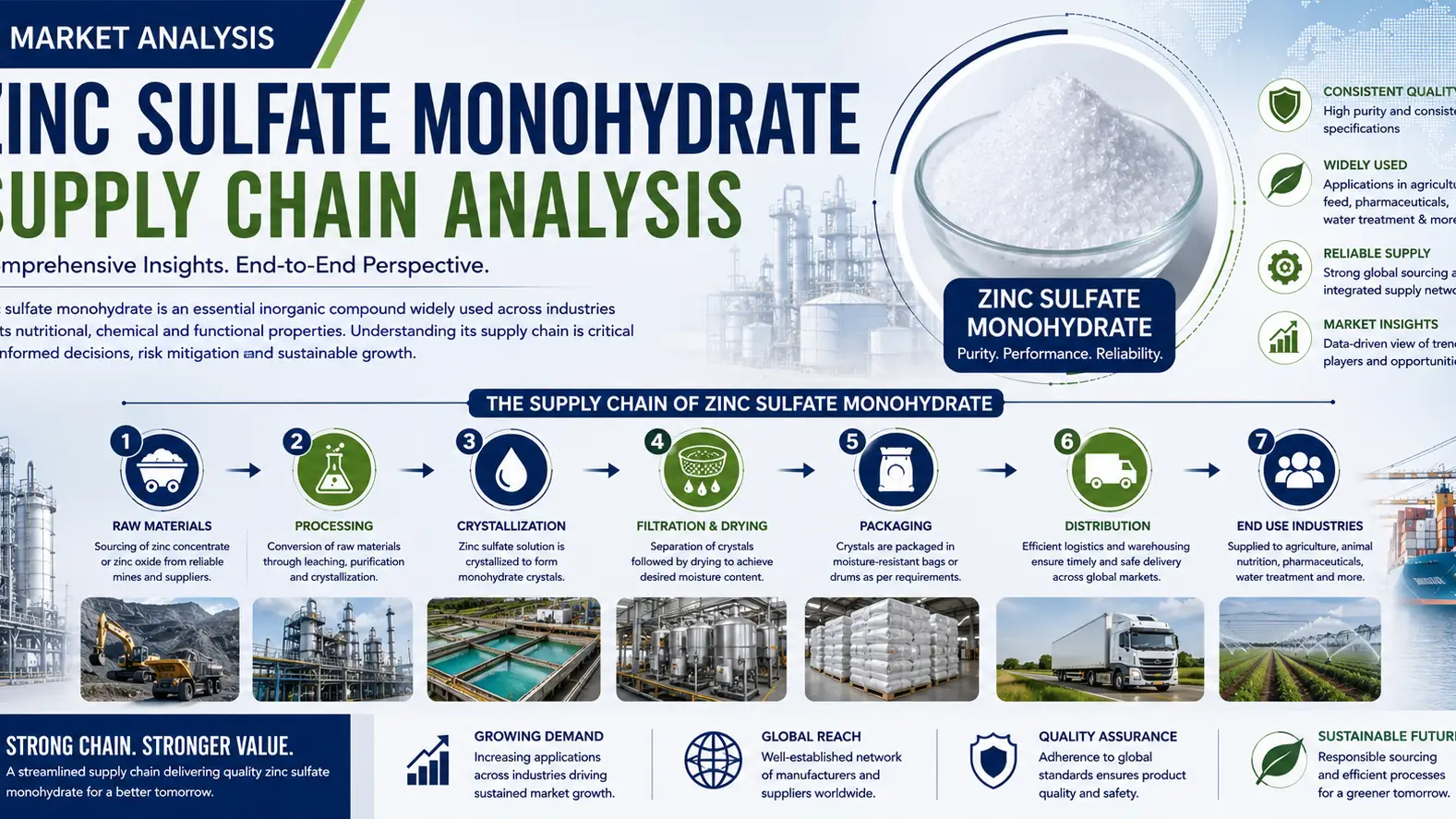
The global supply chain for zinc sulfate monohydrate is closely linked to zinc mining and refining activities. Major production centers are concentrated in Asia, particularly in countries with large non-ferrous metal industries.
The availability of zinc ore and sulfuric acid significantly influences manufacturing economics and international trade flows.
Manufacturing and Distribution Network
According to market analyses from the United States Geological Survey, zinc production remains highly concentrated among a limited number of producing countries, creating strategic sourcing considerations for downstream industries.
Chemical distributors and traders play an essential role by connecting manufacturers with fertilizer companies, feed producers, and industrial end users. Regional warehousing and inventory management are increasingly important in reducing procurement risks.
Supply Chain Challenges
Rising logistics costs, energy prices, and raw material volatility continue to influence pricing and procurement decisions.
Buyers increasingly prefer suppliers that offer diversified sourcing channels, quality documentation, and long-term supply agreements to mitigate supply chain disruptions.
Market Trends and Growth Opportunities
The zinc sulfate monohydrate market is experiencing positive growth due to increasing demand for micronutrient fertilizers and sustainable agricultural practices.
Governments and agricultural organizations worldwide continue promoting balanced nutrient management to improve crop yields and food security.
Emerging Demand Drivers
According to reports from the World Bank, global food demand is expected to rise significantly over the coming decades, creating long-term opportunities for agricultural input suppliers.
Precision farming and micronutrient management practices are encouraging fertilizer manufacturers to incorporate zinc-based products into advanced crop nutrition programs.
Growth in Developing Economies
Rapid agricultural modernization in Asia, Africa, and Latin America has expanded demand for zinc-containing fertilizers and feed additives.
These trends create significant opportunities for manufacturers, exporters, and distributors seeking to expand their presence in high-growth emerging markets.
Buyer Intent and Procurement Considerations
Typical buyers of zinc sulfate monohydrate include fertilizer manufacturers, animal feed producers, chemical distributors, and industrial formulation companies.
Procurement teams evaluate suppliers based on product consistency, zinc content, certifications, packaging capabilities, and logistical reliability.
What Buyers Compare Before Purchasing
According to procurement practices published by various international agricultural organizations, buyers increasingly focus on traceability, quality assurance, and supply continuity when sourcing micronutrient ingredients.
Many companies compare multiple suppliers to optimize costs, reduce supply chain risks, and secure long-term partnerships that support operational stability.
Why B2B Marketplaces Matter
Digital B2B marketplaces simplify supplier discovery and provide easier access to technical specifications and global sourcing opportunities.
A comprehensive product page enables procurement professionals to compare suppliers efficiently and accelerate purchasing decisions while reducing sourcing complexity.
Sourcing Zinc Sulfate Monohydrate Through B2B Marketplaces
Global chemical sourcing is becoming increasingly digital as procurement teams seek greater transparency and supplier diversification.
B2B marketplaces have emerged as efficient platforms for connecting manufacturers, traders, distributors, and industrial buyers across international markets.
Advantages of Marketplace-Based Procurement
According to industry research from leading market intelligence firms, digital procurement platforms can significantly improve sourcing efficiency and supplier visibility.
Buyers sourcing zinc sulfate monohydrate through specialized chemical marketplaces gain access to broader supplier networks and more flexible procurement options.
Building Resilient Supply Chains
Supplier diversification and digital sourcing strategies are becoming essential components of resilient chemical supply chains.
Companies that establish relationships with reliable marketplace suppliers are often better positioned to manage market volatility and maintain uninterrupted production.
Conclusion
Zinc sulfate monohydrate remains an essential micronutrient chemical with broad applications across agriculture, animal nutrition, and industrial manufacturing.
Its strategic importance, expanding global demand, and evolving supply chain dynamics create significant opportunities for manufacturers, traders, and procurement teams.
Future Outlook
Growing emphasis on food security, sustainable agriculture, and micronutrient management is expected to support long-term market growth.
For B2B buyers, understanding supply chain trends and leveraging digital sourcing platforms can improve procurement efficiency and strengthen competitive advantage in global markets.
Sources
Food and Agriculture Organization of the United Nations (FAO)
International Zinc Association (IZA)
United States Geological Survey (USGS) Mineral Commodity Summaries – Zinc

Leave a Comment