Red Rice Supply Chain: Sourcing, Processing and B2B Trade
Red Rice in the Global B2B Supply Chain
Understanding Red Rice as a Commercial Commodity
Red Rice represents a specialized segment of the rice and agricultural commodities supply chain, where product identity, grain characteristics, processing requirements, and market specifications influence commercial value. In B2B trade, buyers may source Red Rice for food manufacturing, ingredient distribution, specialty grain products, and other applications where the characteristic red bran appearance is relevant. The U.S. Department of Agriculture defines red rice according to the presence of distinctly red bran on whole or broken rice kernels, demonstrating the importance of clear product classification during commercial transactions.
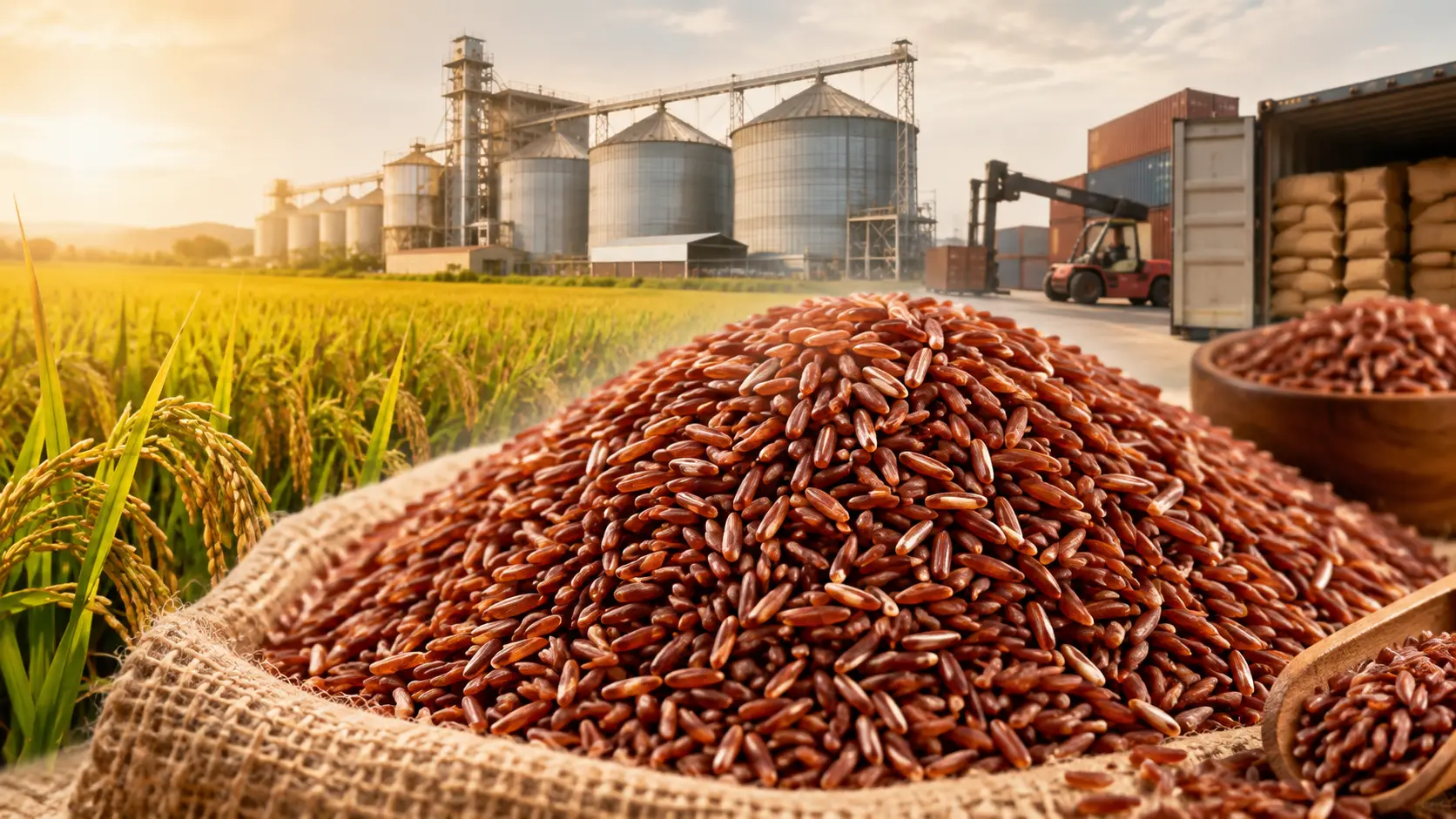
From a procurement perspective, Red Rice moves through several interconnected stages, beginning with cultivation and aggregation and continuing through milling, quality inspection, storage, packaging, transportation, and distribution. Each stage can affect the consistency and commercial usability of the final product. For international buyers, understanding these stages helps procurement teams evaluate supplier capabilities rather than focusing solely on the quoted commodity price.
The supply chain is also shaped by the requirements of the destination market. Buyers may need documentation covering specifications, origin, lot identification, food-safety controls, packaging, and transport conditions before accepting a shipment. Codex maintains an international standard for rice that addresses factors including quality, contaminants, pesticide residues, and hygiene, providing an important reference point for rice-related international trade.
Why Supply Chain Visibility Matters
Supply chain visibility is particularly important when Red Rice is purchased in commercial quantities. Procurement teams need confidence that the material supplied matches the agreed specification throughout harvesting, processing, storage, and dispatch. Consistent communication between growers, processors, exporters, importers, distributors, and end users can reduce uncertainty and support more predictable purchasing cycles.
For B2B marketplaces, supply-chain information can connect product specifications with practical procurement requirements. Buyers can evaluate potential suppliers according to product availability, processing capabilities, documentation, packaging formats, minimum order requirements, logistics arrangements, and quality-management procedures. This creates a more structured purchasing environment for a commodity that may be traded across multiple markets.
Red Rice Sourcing and Agricultural Supply
Agricultural Production and Raw-Material Procurement
The upstream Red Rice supply chain begins with agricultural production and the procurement of harvested paddy. Crop planning, harvesting practices, post-harvest handling, and aggregation can influence the consistency of the raw material delivered to processors. Commercial buyers therefore benefit from understanding how suppliers manage their upstream sourcing relationships and maintain traceability between agricultural production and finished shipments.
Once harvested material enters the commercial chain, aggregation provides an important connection between farms and processing facilities. Traders and processors may consolidate material from different production sources before milling or further handling. For buyers, this makes supplier specifications and lot management important because consistent quality depends not only on the final packaging operation but also on the management of incoming raw materials.
Supplier Qualification
Supplier qualification is a central part of B2B Red Rice procurement. Buyers can assess suppliers based on product specifications, quality systems, production capacity, traceability practices, packaging options, documentation, and ability to meet shipment schedules. A supplier capable of providing consistent information across these areas can make procurement planning more transparent.
For international sourcing, qualification should also consider the supplier's ability to support destination-country requirements. Codex explains that its standards provide international food references but do not replace national legislation, meaning importers remain responsible for meeting the applicable rules in their target markets. This makes regulatory awareness an important component of supplier evaluation.
Processing and Quality Management
Milling and Processing Controls
Processing transforms harvested rice into a commercially handled grain product and can include cleaning, milling, grading, sorting, and packaging operations depending on the product specification. For Red Rice, the visual characteristics of the grain can be commercially significant, making controlled processing and appropriate classification important for maintaining product identity.
The USDA Rice Inspection Handbook specifically describes how red rice is identified during inspection based on the extent of red bran on the kernel. This illustrates why standardized inspection criteria can help buyers and sellers communicate more precisely when establishing product specifications, particularly where quality deductions or acceptance criteria are involved.
Quality Assurance Across the Processing Chain
Quality assurance should extend from incoming raw material through finished-product inspection. Commercial programs may include checks for physical impurities, damaged kernels, moisture-related conditions, grain appearance, lot consistency, and other buyer-defined parameters. The objective is to ensure that the material dispatched corresponds with the agreed specification.
Codex's rice standard provides internationally recognized reference points for extraneous matter, contaminants, pesticide residues, and hygiene. For example, the standard establishes limits for inorganic extraneous matter and requires rice covered by the standard to comply with relevant pesticide maximum residue limits. These references can support specification development while buyers must still apply the requirements of their particular destination markets.
Storage, Packaging and Handling
Warehouse Management
Storage is a critical link between processing and distribution because rice can remain in commercial inventories for varying periods before shipment. Warehousing systems should therefore be designed to protect product integrity and maintain appropriate lot identification. Proper stock rotation, inventory records, pest-control programs, and suitable environmental management can contribute to more consistent product handling.
For B2B buyers, warehouse management also affects order fulfillment. Suppliers handling multiple lots or customer specifications need effective segregation and traceability systems. Clear lot coding and inventory records can help connect finished products with processing batches and supporting documentation, strengthening supply-chain transparency.
Packaging for Commercial Distribution
Packaging requirements vary according to shipment size, customer requirements, destination, and handling method. Red Rice may be supplied through formats appropriate for wholesale distribution or industrial food procurement, with packaging selected to protect the product during storage and transportation. Buyers should establish packaging specifications before contracting to avoid discrepancies at dispatch.
Packaging is also part of the wider quality system. Codex emphasizes that food safety and product integrity can be affected during production, processing, handling, packing, transport, and holding. Consequently, packaging decisions should be considered together with warehouse procedures and logistics rather than treated as an isolated purchasing detail.
Red Rice Logistics and International Trade
Transportation Planning
Transportation connects processors and exporters with distributors, importers, food manufacturers, and other commercial buyers. Shipment planning can involve inland collection, warehouse consolidation, port handling, containerization, customs documentation, and final delivery. For international Red Rice procurement, coordination between these stages is essential for maintaining delivery schedules.
Procurement teams should align logistics planning with order quantities, destination requirements, packaging formats, lead times, and documentation. A well-organized supplier relationship can help buyers understand when product becomes available, how it is prepared for shipment, and what information is required to coordinate receiving operations.
International Trade Documentation
Documentation plays a major role in cross-border agricultural commodity transactions. Commercial invoices, packing information, certificates, product specifications, origin documentation, inspection records, and other import-related documents may be required depending on the transaction and destination country. Buyers should establish documentary requirements before shipment rather than after cargo has been dispatched.
Food-safety documentation is particularly important because contaminants and residues can enter food during production, processing, storage, transport, and distribution. Codex identifies contaminants as a food-safety consideration across these stages and maintains standards and codes of practice addressing relevant risks. This makes documentation and traceability important elements of international Red Rice sourcing.
Quality, Safety and Regulatory Considerations
Contaminant and Residue Management
Rice procurement requires attention to food-safety parameters that can influence import acceptance and commercial usability. Codex's rice standard states that rice should comply with applicable maximum residue limits for pesticides and addresses heavy metals and extraneous matter. Buyers should therefore include appropriate analytical and documentary requirements in their purchasing specifications.
Rice also has a dedicated Codex code of practice concerning the prevention and reduction of arsenic contamination. This does not mean every Red Rice shipment has the same contamination profile; rather, it highlights why sourcing programs should incorporate appropriate risk-management and testing procedures according to the destination market and intended use.
Regulatory Alignment
Regulatory compliance is ultimately determined by the laws applicable in the importing and exporting jurisdictions. International standards can provide useful reference frameworks, but they should not be treated as substitutes for national requirements. Codex explicitly notes that its standards do not replace national legislation and administrative procedures.
For commercial procurement, regulatory alignment therefore involves matching supplier documentation with the buyer's country-specific requirements. Procurement teams can request technical specifications, certificates, analytical reports, traceability information, and other relevant documents before approving a supplier. This approach supports more structured supplier qualification and reduces uncertainty during international transactions.
Red Rice Buyers and Procurement Requirements
Food Manufacturers and Ingredient Buyers
Food manufacturers represent an important B2B buyer group for rice commodities, particularly companies purchasing grain as a raw material or ingredient for formulated food products. Their procurement priorities can include consistent specifications, dependable supply, suitable packaging, food-safety documentation, and reliable delivery schedules.
Distributors and wholesalers have somewhat different requirements because they may serve multiple downstream customers. They may prioritize flexible order quantities, inventory availability, standardized packaging, supplier responsiveness, and the ability to maintain consistent product specifications across repeated shipments. A supplier that understands these commercial requirements can support longer-term purchasing relationships.
Procurement Criteria
When sourcing Red Rice, buyers can structure procurement around several practical criteria: product specification, origin, quality parameters, available volume, packaging, documentation, lead time, logistics arrangements, and commercial terms. Establishing these criteria before requesting quotations helps ensure that supplier offers can be compared on a consistent basis.
B2B marketplaces can support this process by connecting buyers with suppliers and presenting product information in a procurement-oriented format. Instead of treating Red Rice simply as a commodity listing, a structured marketplace approach can highlight sourcing capabilities, product specifications, applications, and supply-chain information relevant to professional buyers.
Building Reliable Red Rice Supply Networks
Supplier Relationships and Supply Continuity
Long-term supply continuity depends on more than a single successful transaction. Buyers can strengthen sourcing programs by maintaining clear specifications, reviewing supplier performance, communicating forecast requirements, and establishing expectations for documentation and quality verification. These practices can make procurement less dependent on short-term availability.
Suppliers can also improve commercial reliability by maintaining transparent information about sourcing regions, processing capacity, inventory, packaging, and logistics. For buyers operating across multiple markets, this information can support supplier diversification and contingency planning while maintaining defined product specifications.
B2B Marketplace Connectivity
A digital B2B marketplace can connect different stages of the Red Rice trade ecosystem, bringing together agricultural suppliers, processors, exporters, distributors, importers, and food-industry buyers. This connectivity can simplify supplier discovery while giving procurement teams a centralized environment for evaluating commercial opportunities.
For Tradeasia / Chemtradeasia / Tradechem Marketplace, Red Rice can be positioned within a broader food-ingredient and agricultural-commodity sourcing ecosystem. Product discovery, supplier communication, specification review, and international trade coordination can work together to create a more transparent purchasing journey for businesses seeking reliable bulk supply.
Conclusion: Strengthening Red Rice Procurement
From Agricultural Supply to Global Distribution
The Red Rice supply chain connects agricultural production with processing, quality management, storage, packaging, logistics, and international distribution. Each stage contributes to the reliability of the final commercial product, making supply-chain coordination an important consideration for B2B buyers.
For procurement teams, effective sourcing means looking beyond the product name and evaluating the complete supply proposition. Supplier capability, quality controls, documentation, inventory management, packaging, logistics, and regulatory alignment can all influence the success of a Red Rice purchasing program.
A Structured Approach to B2B Sourcing
Reliable Red Rice procurement benefits from clearly defined specifications and transparent supplier relationships. Buyers can establish their requirements around product quality, intended application, shipment volume, packaging, documentation, delivery location, and applicable food-safety standards before entering commercial negotiations.
As international food and agricultural trade becomes increasingly connected, digital B2B marketplaces can provide an efficient channel for supplier discovery and commercial engagement. A structured approach to Red Rice sourcing can help food manufacturers, distributors, importers, and procurement teams develop more predictable supply relationships while supporting efficient movement from agricultural production to international markets.
Sources
https://www.fao.org
https://www.ams.usda.gov
https://www.fao.org

Leave a Comment