Poultry Meal Market Demand and Buyer Trends Across Global Feed Industries
Understanding Poultry Meal and Its Commercial Value
Poultry meal has become an important protein ingredient in modern feed formulations due to its nutritional profile and cost efficiency. Derived from rendered poultry by-products through controlled processing methods, poultry meal delivers concentrated protein and fat content for various animal nutrition applications.
Nutritional and Commercial Characteristics
According to technical guidance published by the Association of American Feed Control Officials, poultry meal is widely used because of its digestible protein levels and amino acid profile suitable for animal growth. The product serves as an efficient feed component for livestock and aquaculture nutrition programs.
The commercial value of poultry meal also comes from the ability to convert by-products into economically valuable feed ingredients. Manufacturers seek ingredients that balance nutritional efficiency with production costs while maintaining product consistency.
As feed producers face pressure to improve productivity and optimize feed conversion ratios, poultry meal continues to gain relevance in global ingredient portfolios.
Industrial Applications Driving Poultry Meal Demand
Industrial demand for poultry meal extends beyond one animal category and supports multiple sectors in the feed industry. Growing protein requirements continue to create opportunities for specialized feed ingredients.
Applications Across Feed Industries
According to technical information published by the Food and Agriculture Organization, animal protein ingredients remain important in improving nutritional value across feed formulations.
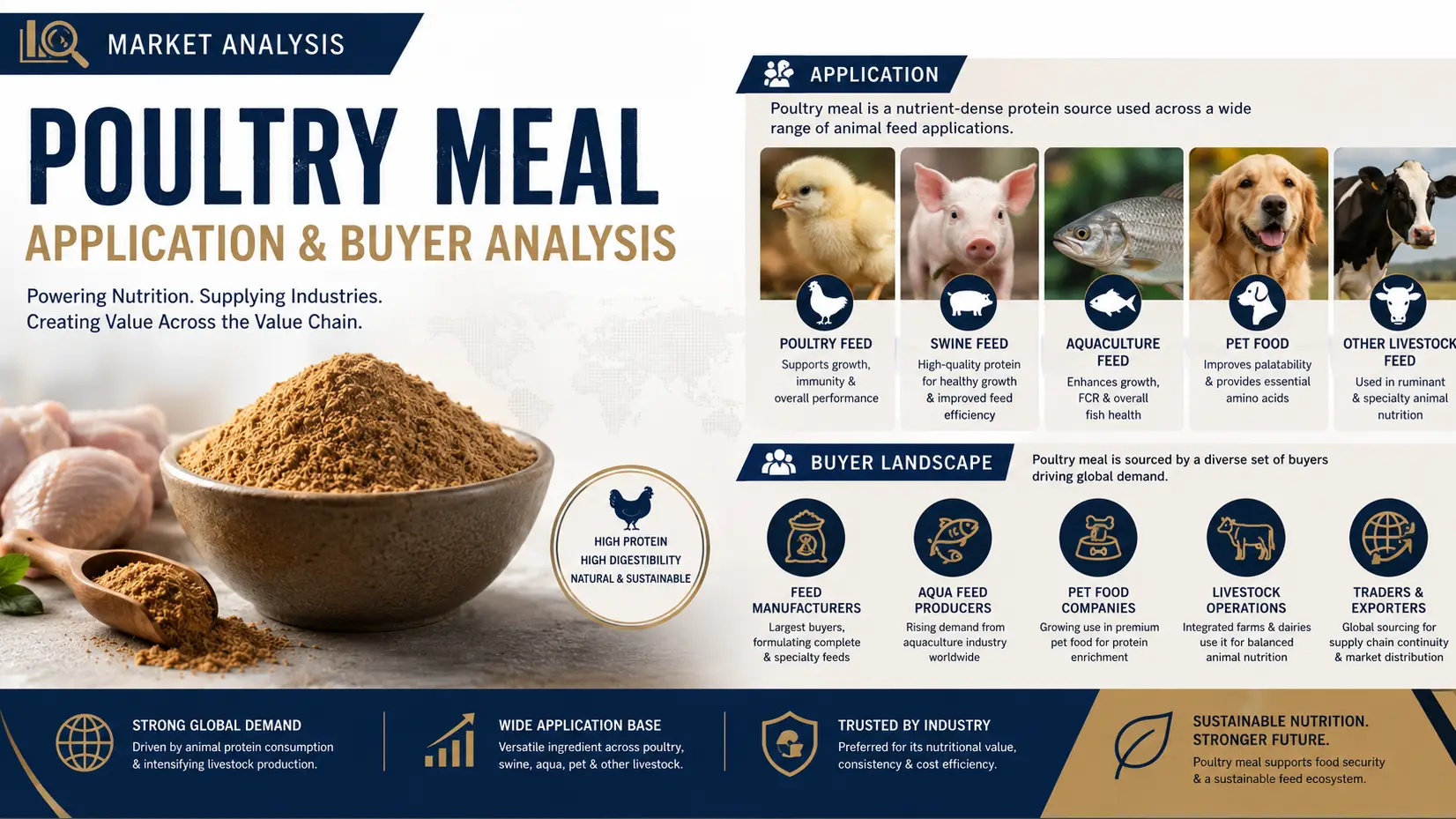
Poultry meal is commonly used in livestock feed formulations because it contributes protein and energy content needed for poultry, swine, and cattle nutrition. Feed manufacturers frequently include poultry meal to improve nutritional efficiency while controlling production costs.
Aquaculture producers increasingly utilize poultry meal as an alternative or complementary ingredient alongside marine protein sources. Fish feed manufacturers seek stable ingredients that support growth performance and reduce dependency on fluctuating fishmeal markets.
The pet food industry also represents an expanding segment for poultry meal demand. Premium pet food manufacturers require protein-rich ingredients for dry food and specialized nutrition products.
Global Market Trends Influencing Poultry Meal Growth
Changing feed economics and agricultural production patterns continue to shape global poultry meal demand. Several regional and international factors influence market behavior.
Demand Trends and Industry Expansion
Market analysis published by the Food and Agriculture Organization indicates growing global demand for animal protein production and feed ingredients supporting livestock efficiency.
Increasing livestock populations across emerging economies have expanded demand for cost-effective feed materials. Countries with rapidly growing meat consumption continue to invest in feed production infrastructure and animal nutrition systems.
Feed manufacturers are also pursuing ingredient diversification strategies to reduce supply risks associated with single-source proteins. Poultry meal often becomes part of these strategies due to its availability and nutritional functionality.
Sustainability initiatives have further increased interest in resource optimization practices that maximize the value of agricultural and food processing outputs.
Buyer Intent and Procurement Considerations
Purchasing decisions for poultry meal involve multiple technical and commercial factors. Buyers evaluate suppliers according to operational requirements and quality standards.
Procurement Evaluation Criteria
According to guidance from the United States Department of Agriculture, feed ingredient quality standards play a significant role in maintaining nutritional consistency and supply reliability.
Typical buyers include feed manufacturers, aquaculture producers, livestock nutrition companies, pet food manufacturers, distributors, and ingredient traders. Procurement teams assess protein content, moisture levels, fat content, microbiological quality, and supply consistency before placing orders.
Buyers compare suppliers because variations in product specifications can directly affect feed formulation outcomes and production costs. Reliable sourcing partnerships reduce operational uncertainty and improve planning accuracy.
Product pages on B2B marketplaces support sourcing decisions by providing specification transparency, supplier visibility, and procurement information that simplifies international trade processes.
Supply Chain and Sourcing Opportunities
Global trade activity has created broader sourcing opportunities for poultry meal buyers and suppliers. International supply networks continue to evolve as demand shifts between regions.
Opportunities for Manufacturers and Distributors
Industry reports from the US Poultry and Egg Association suggest continued investment in poultry processing and rendering operations supporting ingredient availability.
Manufacturers increasingly target export opportunities to diversify customer bases and expand market reach. Traders and distributors also benefit from connecting supply regions with demand centers across Asia, Europe, Latin America, and the Middle East.
Procurement teams frequently seek suppliers capable of maintaining stable inventory and documentation standards for international transactions. Certifications, traceability, and logistics capabilities can influence purchasing decisions.
Digital B2B marketplaces further improve sourcing efficiency by connecting buyers and suppliers through centralized procurement channels.
Future Outlook for Poultry Meal Markets
Long-term market development for poultry meal will likely remain connected to broader trends in food production, sustainability, and feed innovation.
Market Development Expectations
According to forecasts discussed by agricultural market researchers and international food organizations, animal protein demand is expected to continue increasing over the coming years.
Feed companies are expected to pursue improved nutritional performance and cost management strategies. Poultry meal may continue serving as a practical ingredient for balancing these priorities.
Technological improvements in rendering and ingredient processing may further enhance product quality and consistency. Better processing standards can increase confidence among procurement and quality management teams.
As global supply chains become more interconnected, poultry meal markets may experience broader international participation among manufacturers, traders, distributors, and industrial buyers.
Sources
Food and Agriculture Organization (FAO)
Association of American Feed Control Officials (AAFCO)
United States Department of Agriculture (USDA)

Leave a Comment