Commercial Demand Dynamics and Buyer Behavior in the 2026 Poultry Meal Market
Introduction: The Strategic Evolution of Poultry Meal in Industrial Feed Supply Chains
Poultry meal has evolved from a secondary rendering by-product into a strategic platform protein within global feed manufacturing. As a concentrated source of digestible protein, fats, minerals, and amino acids, poultry meal serves as a commercially efficient substitute for more volatile protein ingredients such as fishmeal and select soybean derivatives. In 2026, the global poultry meal market is estimated to advance at a 5.8% CAGR, supported by rising industrial livestock production, premium pet nutrition demand, and tightening protein economics across feed supply chains.
Feed Manufacturing Demand Reshapes Market Growth
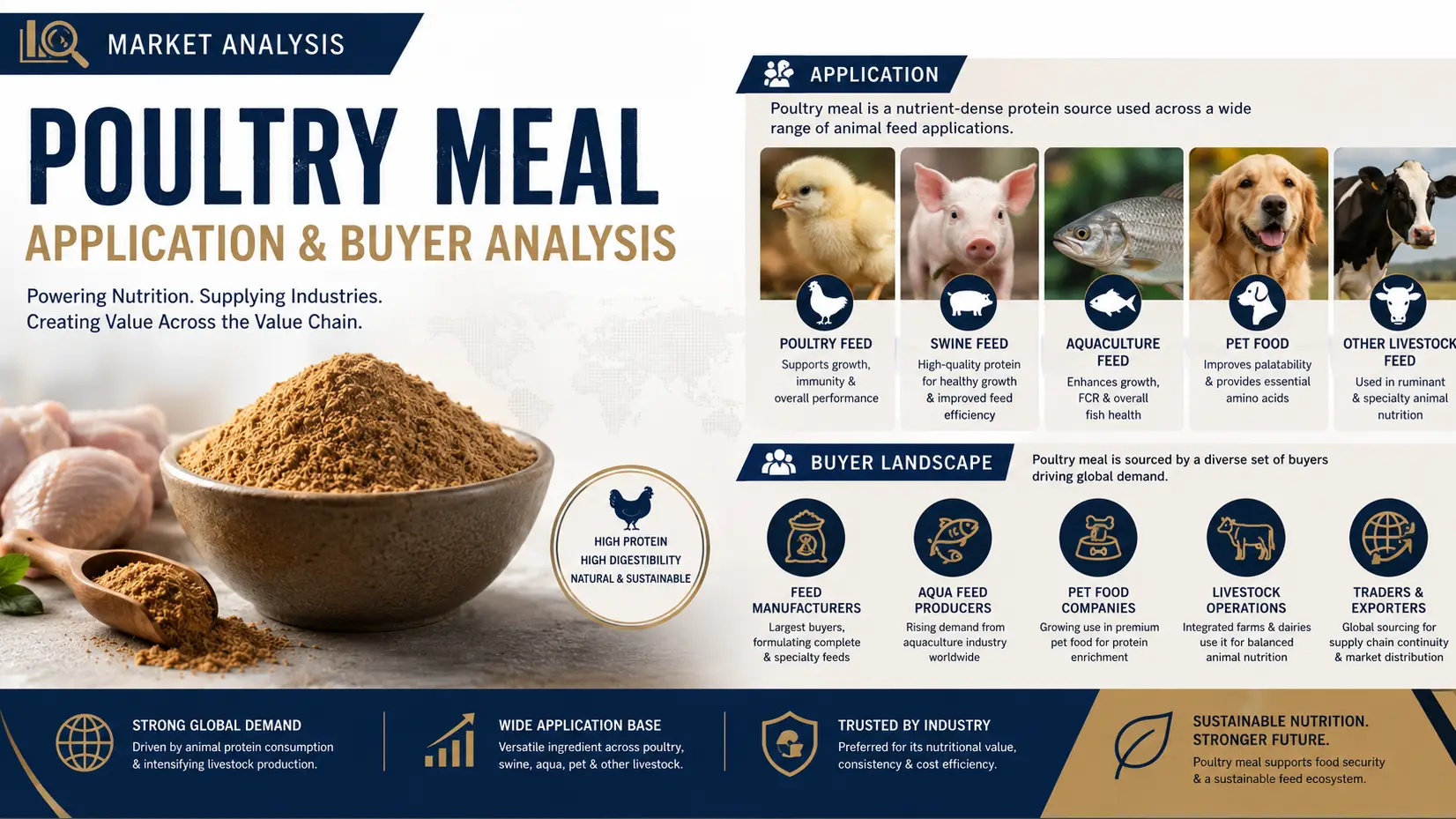
The largest buyer segment remains compound feed manufacturers serving poultry, swine, and ruminant operations. Poultry meal’s appeal lies in protein consistency, cost efficiency, and supply scalability. Global production is estimated at 14.2 million metric tons, largely concentrated in North America, Brazil, China, and Europe. Feed formulators increasingly favor poultry meal where price pressure affects fishmeal procurement, especially when poultry meal trades between USD 520–780/MT, creating clear formulation advantages in commercial ration design.
Aquaculture Buyers Expand Premium Protein Procurement
Aquaculture producers represent one of the fastest-growing buyer groups, particularly in shrimp and carnivorous fish feed. Poultry meal’s digestibility profile and relatively stable availability make it attractive where marine protein sourcing remains constrained. Asian feed buyers, especially in Vietnam, Thailand, and China, are increasing inclusion rates in mid-tier aquafeed formulations. This shift is commercially significant because aquaculture buyers often contract in higher volumes with tighter specification requirements, improving supplier margin predictability.
Pet Food Industry Elevates Quality Specifications
Pet food manufacturers have transformed poultry meal from a commodity ingredient into a differentiated nutritional input. Premium dry pet food brands increasingly procure low-ash, traceable poultry meal for protein fortification and label consistency. Buyers in this segment pay pricing premiums, often 15–25% above conventional feed-grade material, depending on microbiological compliance and origin assurance. For suppliers, this creates a compelling margin expansion pathway beyond traditional livestock feed channels.
Regional Supply Economics and Pricing Dynamics
Rendering capacity and poultry slaughter volumes strongly influence supply economics. Brazil and the United States remain export anchors, while Middle Eastern and Southeast Asian buyers rely heavily on imports. Freight, animal disease controls, and sustainability audits increasingly affect procurement decisions. In 2026, buyers are prioritizing long-term supplier relationships over spot purchases as protein markets remain structurally volatile, especially during seasonal feed demand peaks.
Conclusion
As a platform chemical-equivalent feed ingredient within industrial protein markets, poultry meal has moved beyond by-product status into a strategic procurement category. Its commercial versatility across livestock feed, aquaculture, and pet nutrition makes it increasingly relevant to cost-sensitive and quality-driven buyers alike. For companies seeking dependable sourcing, specification control, and global supply continuity, Tradeasia International offers a practical partnership pathway as a global solution provider serving industrial ingredient procurement across evolving feed markets.
Sources
Leave a Comment