Global Margarine Supply Chain Solutions for Industrial Food Buyers
Global Margarine Market Overview and Supply Chain Development
The Role of Margarine in Global Food Manufacturing
Margarine has become an important functional ingredient within the global food manufacturing industry, serving as a versatile fat-based product used across bakery, confectionery, foodservice, and processed food applications. Produced primarily from vegetable oils through refining, blending, and emulsification processes, margarine provides texture, stability, spreadability, and cost efficiency compared with traditional dairy-based fats. Its adaptability has positioned it as a strategic ingredient for large-scale food producers worldwide.
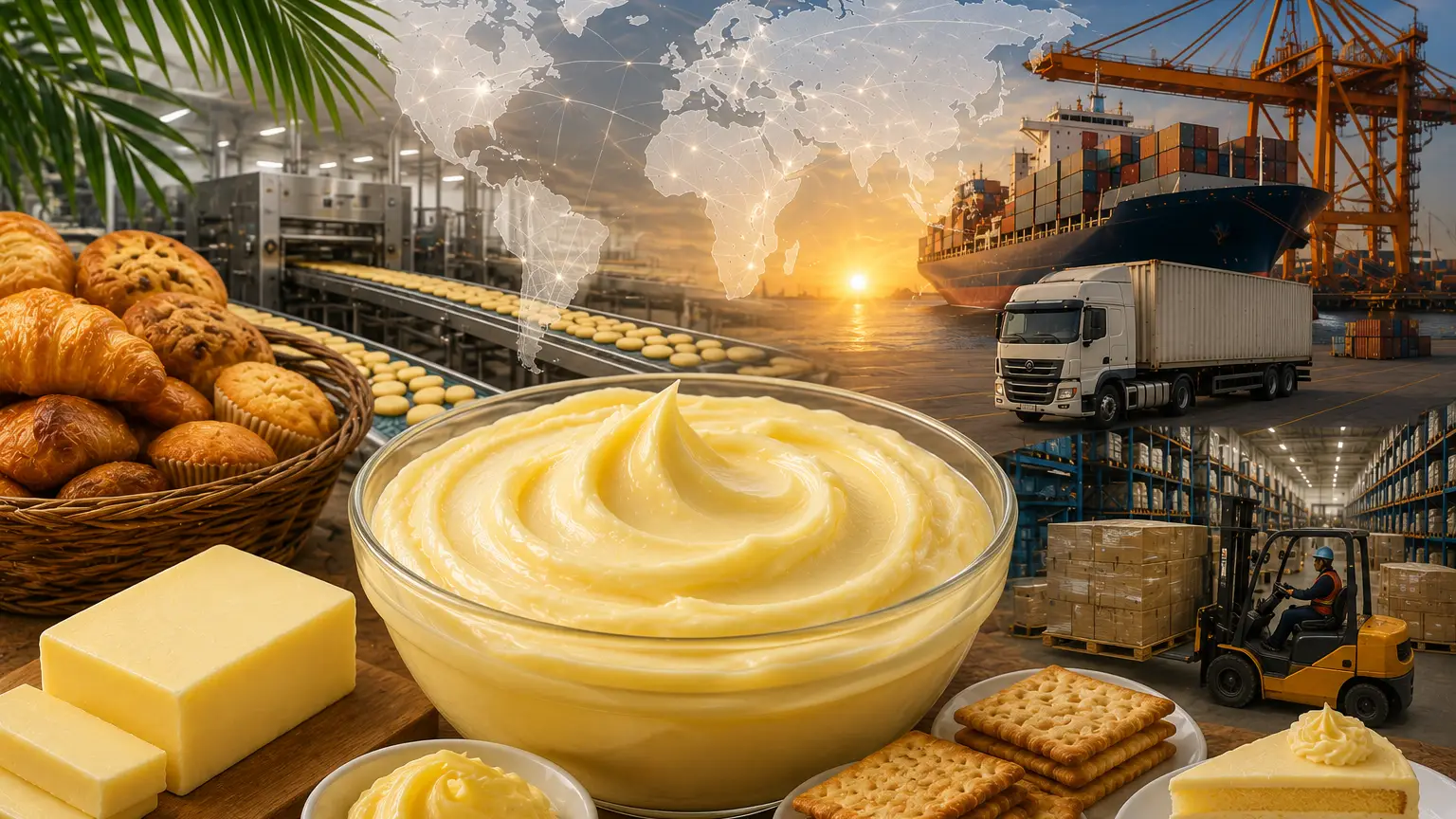
The global margarine supply chain connects agricultural producers, edible oil processors, ingredient manufacturers, distributors, and industrial end users. Major supply networks depend on consistent access to vegetable oil feedstocks such as palm oil, soybean oil, sunflower oil, and other plant-based oils. Efficient logistics and quality control systems are essential to maintain product consistency across international markets.
Expansion of International Margarine Supply Networks
Growing demand from bakery manufacturers and food processors has encouraged suppliers to develop broader international distribution channels. Industrial buyers increasingly require suppliers capable of providing stable volumes, technical documentation, food safety certifications, and customized product specifications. This has transformed margarine sourcing from a simple commodity purchase into a strategic procurement activity.
Regional production capabilities continue to influence global trade patterns, with countries possessing strong edible oil industries often becoming important supply hubs. Manufacturers that integrate refining, blending, and packaging operations can provide competitive advantages through improved cost control and shorter supply chains.
Market Growth Factors Influencing Margarine Demand
Margarine consumption continues to be influenced by changing food production trends, including growth in packaged bakery products, frozen foods, and convenience meals. Food manufacturers are seeking functional fats that deliver consistent performance while supporting cost management and product innovation. These trends continue to strengthen demand for industrial margarine solutions.
The supply chain outlook for margarine remains closely linked to vegetable oil availability, transportation costs, sustainability requirements, and global food manufacturing expansion. Suppliers that maintain reliable sourcing networks are better positioned to support international buyers seeking long-term partnerships.
Margarine Raw Material Sourcing and Production Networks
The production of margarine begins with the sourcing of vegetable oils, which represent the primary raw material in most commercial formulations. Palm oil, soybean oil, sunflower oil, and other edible oils undergo processing steps that improve stability, functionality, and suitability for food applications. Reliable access to quality feedstocks is a key factor influencing production efficiency.
Global margarine manufacturers often establish sourcing relationships with oil producers and refiners to secure consistent raw material availability. These supply agreements help reduce exposure to market fluctuations while ensuring manufacturers can meet customer demand across different regions.
Manufacturing and Processing Requirements
Industrial margarine production requires controlled blending, emulsification, cooling, and packaging processes to achieve specific performance characteristics. Manufacturers must manage factors such as melting profile, texture, shelf stability, and application suitability depending on customer requirements.
Food companies purchasing margarine in bulk typically evaluate suppliers based on production capacity, technical support, compliance standards, and consistency between batches. This makes manufacturing capability a critical component of supplier selection.
Quality Management Across the Supply Chain
Quality assurance plays a central role in the margarine supply chain because the product is widely used in food applications requiring strict safety standards. Manufacturers implement testing procedures to monitor parameters such as moisture content, stability, composition, and microbiological safety.
For international buyers, transparent documentation and traceable sourcing systems are increasingly important. Suppliers that provide reliable quality management practices can strengthen relationships with multinational food producers and regional distributors.
Industrial Applications Driving Margarine Demand
The bakery industry represents one of the largest application areas for commercial margarine due to its functional properties in dough preparation, pastry production, and baked goods manufacturing. Industrial bakeries use margarine to improve texture, flavor consistency, volume, and product stability across applications such as bread, cakes, cookies, croissants, and laminated pastries.
Large-scale bakery producers often require customized margarine formulations designed for specific processing conditions. Factors such as melting behavior, plasticity, and temperature resistance influence production efficiency and final product quality. As bakery manufacturing expands globally, demand for reliable industrial margarine suppliers continues to increase.
Food Processing and Convenience Food Applications
Beyond bakery products, margarine is widely used in processed food manufacturing, including ready-to-eat meals, sauces, spreads, and snack products. Its ability to provide functional fat properties makes it suitable for manufacturers looking to achieve consistent taste, texture, and product stability.
Food processors often source margarine through long-term supply agreements to maintain production continuity. Consistent availability and technical support are important considerations, especially for companies operating multiple manufacturing facilities across different regions.
Demand Growth from Foodservice and Retail Markets
The foodservice sector also contributes significantly to margarine demand through restaurants, catering companies, and commercial kitchens requiring cost-effective alternatives to traditional butter. Retail packaged margarine products further support market growth through consumer demand for convenient cooking and spreading solutions.
As food consumption patterns continue evolving, manufacturers are developing specialized margarine products that meet changing market requirements. These developments create opportunities for suppliers capable of supporting diverse customer needs across retail, industrial, and foodservice channels.
Key Buyers and Procurement Requirements in the Margarine Market
Industrial food manufacturers are among the most important buyers in the margarine supply chain. These companies purchase margarine in bulk quantities for continuous production of bakery goods, processed foods, and consumer products. Their purchasing decisions are typically based on supply reliability, pricing competitiveness, and technical specifications.
Procurement teams evaluate suppliers according to production capacity, product consistency, certifications, and delivery performance. A dependable supplier relationship helps manufacturers reduce operational risks and maintain uninterrupted production schedules.
Distributor and Trading Company Requirements
Food ingredient distributors and international trading companies play an important role in connecting margarine producers with regional buyers. These businesses require suppliers that can support flexible order quantities, export documentation, and international logistics management.
Distributors often look for manufacturers with strong market coverage and the ability to provide competitive pricing for different geographical markets. Efficient supply chain coordination enables distributors to serve smaller food manufacturers that may not purchase directly from producers.
Procurement Factors Influencing Supplier Selection
Modern buyers consider multiple factors when selecting margarine suppliers, including raw material sourcing transparency, quality assurance systems, packaging options, and delivery capabilities. Price remains important, but long-term supply stability has become increasingly valuable for industrial procurement teams.
Suppliers that demonstrate technical expertise and reliable logistics performance can create stronger partnerships with global buyers. This approach supports sustainable business relationships throughout the international margarine trade network.
Global Trade Flow and Supplier Selection Strategies
The global margarine trade depends on interconnected networks involving manufacturers, exporters, logistics providers, distributors, and end users. International shipments require careful coordination of production schedules, transportation planning, customs documentation, and storage requirements.
Major food ingredient markets rely on established supply channels to ensure consistent availability. Suppliers with efficient export capabilities can provide competitive advantages by reducing delays and improving customer responsiveness.
Evaluating Reliable Margarine Suppliers
Selecting a suitable margarine supplier requires buyers to assess production capabilities, quality certifications, market experience, and supply chain transparency. Industrial customers often prefer suppliers that can provide consistent specifications and scalable production support.
A reliable supplier should demonstrate the ability to manage international orders, maintain product quality, and adapt to changing customer requirements. These capabilities are essential for businesses operating in competitive food manufacturing environments.
Digital B2B Platforms and Global Sourcing Opportunities
Digital marketplaces are increasingly supporting international sourcing by connecting manufacturers, distributors, and buyers through more efficient procurement channels. B2B platforms allow companies to compare supplier capabilities, communicate requirements, and develop international business relationships.
For margarine buyers, digital sourcing solutions provide greater access to global suppliers while improving procurement efficiency. These platforms support transparency and help businesses identify suitable partners within complex international supply chains.
Challenges and Opportunities in Margarine Supply Chains
One of the major challenges affecting margarine supply chains is fluctuation in vegetable oil prices. Changes in agricultural production, weather conditions, energy costs, and international trade policies can influence raw material availability and production expenses.
Manufacturers must develop effective sourcing strategies to manage these risks. Long-term supplier relationships and diversified raw material networks can help reduce exposure to market instability.
Sustainability and Regulatory Requirements
Sustainability has become an increasingly important consideration within the margarine industry. Food manufacturers and consumers are paying greater attention to responsible sourcing practices, environmental impact, and supply chain transparency.
Suppliers that implement sustainable sourcing strategies and maintain compliance with international food standards can strengthen their position in global markets. These factors are becoming increasingly important in supplier evaluation processes.
Growth Opportunities in Emerging Markets
Emerging markets continue to provide opportunities for margarine suppliers due to expanding food processing industries and rising demand for packaged food products. Growing urban populations and increasing bakery consumption are supporting market development.
Companies that establish strong regional partnerships and efficient distribution networks can benefit from these expanding opportunities. Strategic supply chain investment remains essential for capturing future market growth.
Future Outlook for Margarine Manufacturing and B2B Sourcing
Future margarine markets are expected to experience continued innovation as manufacturers develop products with improved functionality, nutritional profiles, and application performance. Advances in formulation technology allow producers to create specialized solutions for different food manufacturing requirements.
Industrial buyers increasingly seek customized products that support efficiency and consumer preferences. Suppliers capable of offering technical collaboration will have stronger opportunities in competitive markets.
Digitalization of Supply Chain Management
Digital technologies are transforming how food ingredient supply chains operate. Manufacturers and buyers are adopting improved tracking systems, online procurement tools, and data-driven supply management solutions to enhance efficiency.
For margarine suppliers, digital integration can improve communication with international customers and strengthen supply chain visibility. These developments are expected to shape future B2B sourcing strategies.
Long-Term Market Potential
The long-term outlook for margarine remains positive due to continued demand from bakery, food processing, and foodservice industries. Global manufacturers will continue seeking dependable suppliers capable of delivering quality products with consistent supply performance.
Companies involved in margarine sourcing can benefit from building strategic partnerships with experienced international suppliers. Reliable supply networks will remain a key competitive advantage in the evolving global food ingredient market.
Conclusion: Building Reliable Margarine Supply Partnerships
Margarine plays an important role in modern food manufacturing by supporting diverse applications across bakery, processed foods, and foodservice industries. The effectiveness of the global margarine market depends on strong connections between raw material suppliers, manufacturers, distributors, and industrial buyers.
As demand continues to grow, businesses require supply partners that can provide consistent quality, competitive solutions, and efficient international logistics. A well-managed supply chain enables manufacturers to improve production reliability and respond effectively to changing market conditions.
Supporting Global Procurement Through Trusted Networks
Tradeasia International provides access to global sourcing networks designed to connect food manufacturers, distributors, and industrial buyers with reliable ingredient supply solutions. Through professional trading expertise and international market connections, businesses can explore efficient procurement opportunities for margarine and related food ingredients.
By supporting transparent sourcing, dependable supply coordination, and global trade relationships, Tradeasia International helps companies strengthen their ingredient procurement strategies in an increasingly competitive marketplace.
Sources
https://www.fao.org
https://www.usda.gov

Leave a Comment