Overview of Margarine in Global Food Supply Chains
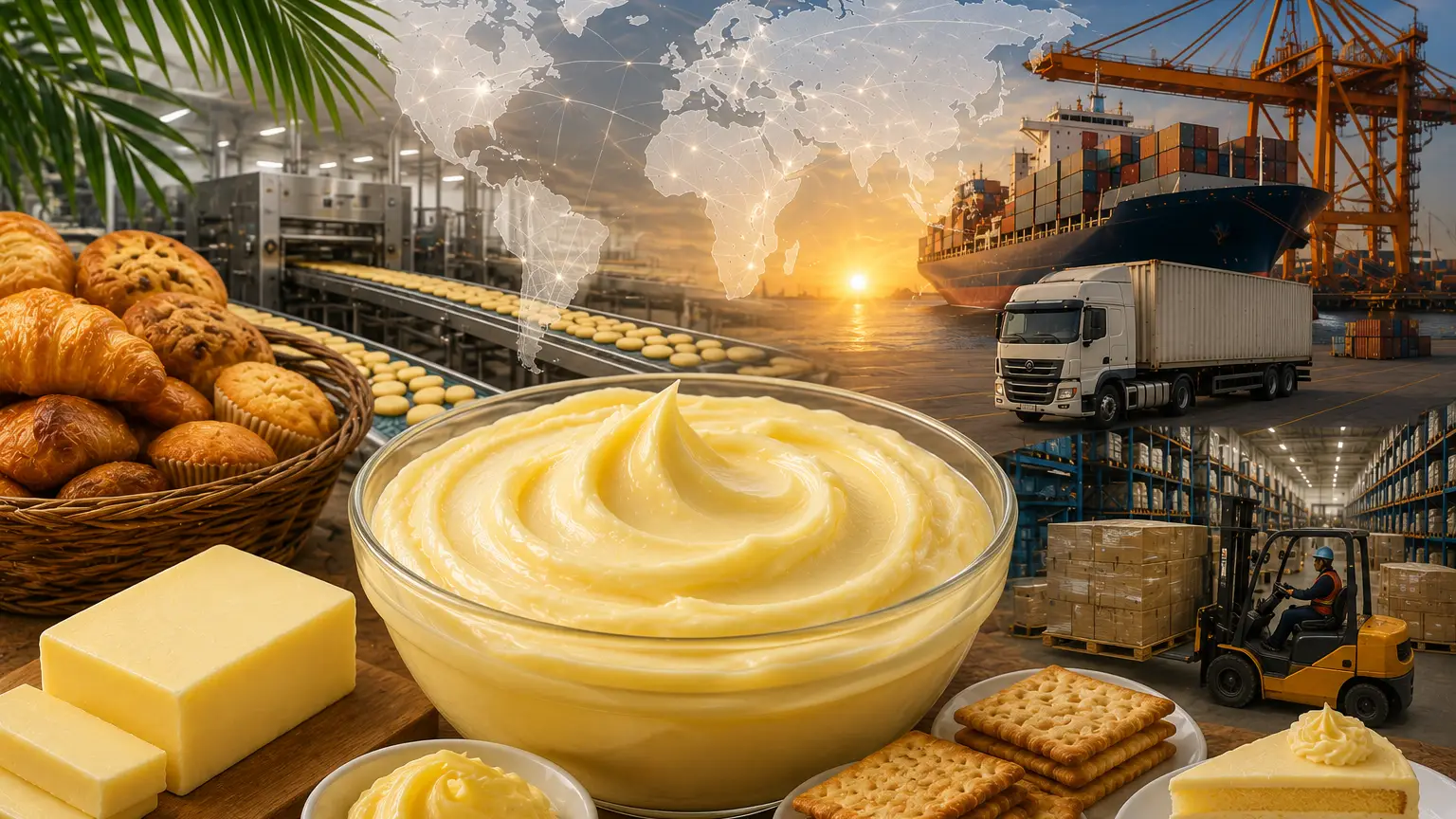
Margarine plays a foundational role in modern food manufacturing, particularly within bakery, confectionery, and processed food production systems. As a versatile fat emulsion, Margarine is widely integrated into industrial recipes due to its stability, cost efficiency, and functional performance. According to the Food and Agriculture Organization (FAO), edible fats and oils continue to be critical inputs in global food supply chains driven by population growth and processed food demand.
Role of Margarine in Industrial Food Systems
In industrial contexts, margarine is not simply a consumer product but a structured ingredient used for texture control, flavor delivery, and shelf-life extension. Food manufacturers rely on standardized fat compositions to ensure consistency across large-scale production lines.
Based on FAO and Codex Alimentarius standards, emulsified fats like margarine must comply with strict food safety and compositional guidelines to ensure global trade compatibility.
In supply chain terms, margarine is typically distributed through bulk edible oil traders and B2B ingredient suppliers, ensuring continuous availability for food processors.
Its importance continues to grow as manufacturers seek alternatives to butter and animal-based fats for cost and stability reasons.
Key Industrial Applications of Margarine
Margarine is extensively used across multiple food processing sectors due to its functional adaptability and thermal stability. Its industrial relevance spans bakery, confectionery, ready-to-eat meals, and hospitality production systems.
Bakery and Confectionery Manufacturing Uses
In bakery production, margarine is essential for laminated doughs, pastries, and cakes where texture and moisture retention are critical. It improves flakiness and consistency in high-volume baking environments.
According to industry research from the International Bakery Association and OECD food outlook reports, demand for processed baked goods is rising globally due to urbanization and changing dietary patterns.
Confectionery manufacturers also use margarine to control melting properties and improve product shelf stability in chocolates and fillings.
This makes margarine a strategic ingredient for industrial bakeries seeking standardized production efficiency.
Market Demand Drivers for Margarine in Food Industry
Global demand for margarine is influenced by shifts in food consumption, cost optimization strategies, and expanding processed food markets. The product remains a key edible fat in regions prioritizing scalable food production.
Growth in Processed Food and FMCG Sectors
The FMCG sector heavily depends on consistent and cost-effective fat ingredients such as margarine to support mass production. Rising demand for packaged foods continues to strengthen margarine consumption.
According to market analysis by Statista and USDA food consumption reports, processed food consumption has steadily increased over the past decade, particularly in urban markets.
This growth drives procurement teams to secure reliable margarine supply chains to ensure uninterrupted manufacturing.
As a result, margarine remains a stable commodity in global edible fat trade flows.
B2B Procurement Considerations for Margarine Buyers
Procurement teams evaluate margarine based on consistency, fat composition, melting profile, and compliance with food safety regulations. These factors directly affect production efficiency and product quality.
Supplier Evaluation and Quality Standards
B2B buyers prioritize suppliers that meet international food safety certifications and provide consistent batch quality. Stability in formulation is essential for industrial baking and food processing.
According to EFSA and Codex Alimentarius guidelines, edible fat suppliers must maintain strict traceability and quality assurance systems.
Buyers also evaluate packaging formats, logistics reliability, and pricing structures when sourcing in bulk quantities.
This makes supplier selection a critical strategic decision in food manufacturing procurement cycles.
Supply Chain Challenges and Opportunities
The margarine supply chain is influenced by raw material volatility, logistics disruptions, and global edible oil price fluctuations. These factors impact availability and pricing stability for industrial buyers.
Raw Material Dependency and Logistics
Margarine production depends heavily on vegetable oils such as palm, soybean, and sunflower oil, which are subject to global commodity price shifts.
According to USDA agricultural outlook reports, edible oil markets are highly sensitive to climate conditions and trade policies, affecting downstream margarine pricing.
Logistics efficiency also plays a key role in ensuring timely delivery to food manufacturers operating just-in-time production systems.
Despite these challenges, integrated supply networks offer opportunities for cost optimization and long-term sourcing contracts.
Future Outlook and Strategic Sourcing Insights
The future of margarine in industrial supply chains is shaped by sustainability trends, formulation innovation, and demand for plant-based food solutions. Manufacturers are increasingly optimizing fat blends for health and efficiency.
Strategic Positioning in Global Food Markets
As food manufacturers shift toward cost-efficient and scalable ingredients, margarine remains a key component in reformulated product lines. Its adaptability ensures continued demand across multiple sectors.
Market insights from FAO and OECD indicate sustained growth in global edible fat consumption, particularly in developing economies.
Strategic sourcing will focus on supplier diversification and supply chain resilience to mitigate price volatility risks.
For B2B buyers, securing stable margarine supply is essential for long-term production planning and competitiveness.
Sources
Leave a Comment