Global Linseed Meal Sourcing and Trade Insights for B2B Buyers
Global Supply Chain Overview of Linseed Meal
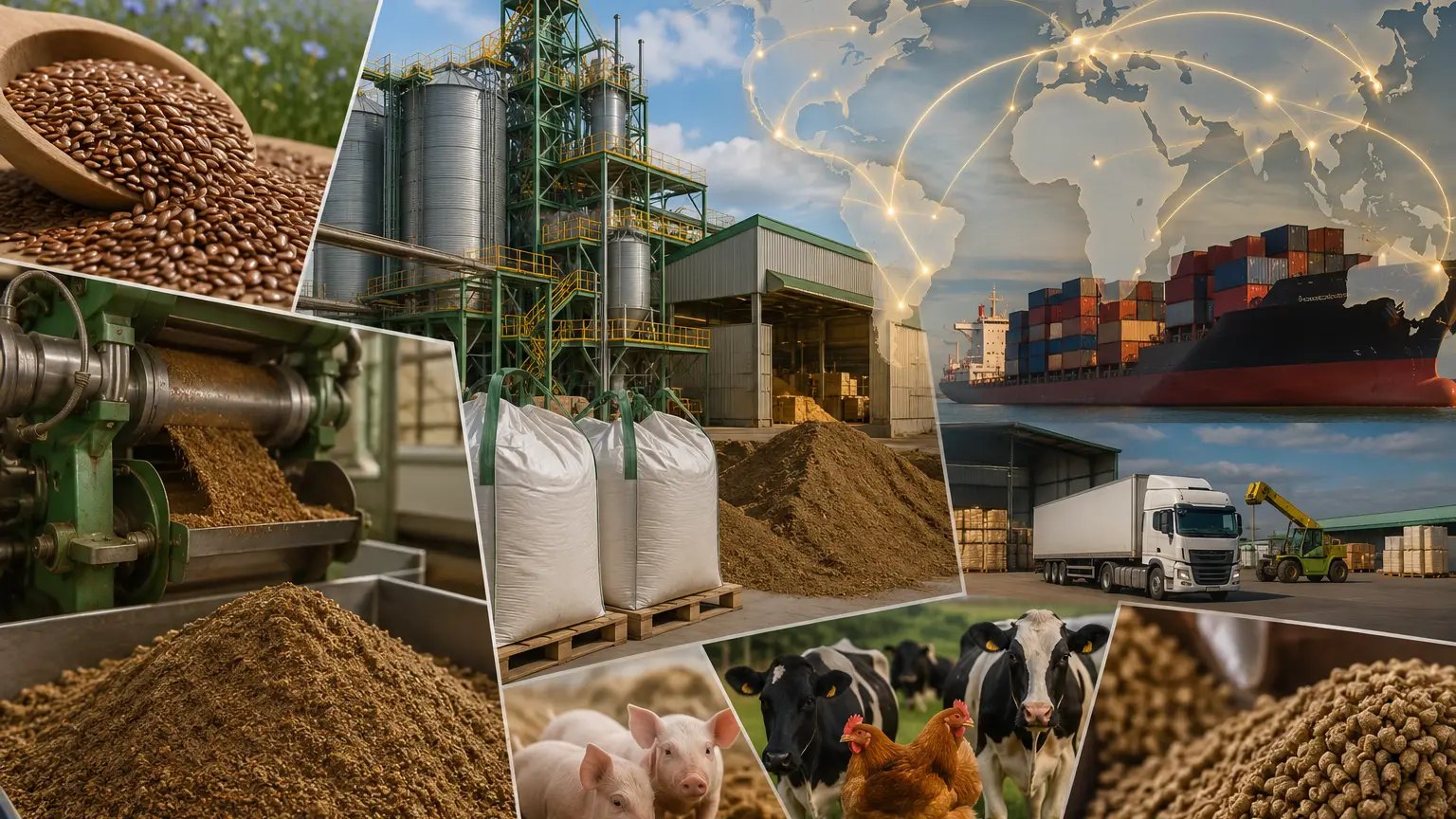
Structure of the Global Linseed Meal Trade Network
Linseed meal is a key byproduct of flaxseed oil extraction, forming part of the global oilseed derivatives supply chain. It is widely traded as a protein-rich feed ingredient in livestock nutrition markets. According to the Food and Agriculture Organization (FAO), oilseed meals play a critical role in global feed security due to rising protein demand in animal agriculture.
The supply chain typically begins with flax cultivation in major producing regions such as Canada, China, and parts of Europe. After harvest, flaxseed is processed into oil, leaving behind linseed meal as a valuable secondary product. This interconnected system links agricultural producers with feed manufacturers and commodity traders.
Global trade routes are influenced by livestock demand, feed formulation trends, and oilseed crushing capacity. Countries with strong livestock industries rely heavily on imports of protein meals to stabilize feed costs.
The integration of agricultural commodity exchanges and bulk trading platforms has increased transparency in linseed meal pricing and availability.
Market Demand Dynamics in Feed Supply Chains
Linseed meal demand is closely tied to the livestock and poultry feed industries, which continue to expand globally. OECD-FAO Agricultural Outlook reports indicate sustained growth in protein feed demand driven by population growth and protein consumption trends.
Feed manufacturers value linseed meal for its fiber and residual oil content, which contributes to digestibility and energy balance in animal diets. This makes it a complementary ingredient alongside soybean and sunflower meals.
The demand is also shaped by cost fluctuations in alternative protein sources. When soybean meal prices rise, linseed meal often gains attractiveness as a partial substitute.
This dynamic positioning makes linseed meal a strategically important component in diversified feed formulations.
Production and Oilseed Processing Pathways
Linseed meal is produced through mechanical or solvent extraction of flaxseed oil. The process involves cleaning, conditioning, pressing, and solvent extraction depending on industrial scale. USDA Agricultural Research Service highlights that oilseed processing efficiency directly affects meal yield and nutritional composition.
Mechanical pressing is common in smaller facilities, producing higher oil retention in the meal. Industrial-scale crushers typically use solvent extraction to maximize oil recovery and standardize meal output.
The resulting meal is then dried and milled to meet feed-grade specifications. Its protein content and fiber structure depend heavily on processing temperature and extraction efficiency.
This variability makes sourcing consistency a key consideration for industrial buyers.
Industrial Processing Standards and Efficiency
Modern oilseed crushing plants operate with integrated systems to optimize both oil and meal output. Efficiency improvements in crushing technology have increased global linseed meal availability over the past decade.
Processing conditions such as temperature, solvent type, and storage environment influence the final nutritional profile of the meal. The European Feed Manufacturers’ Federation (FEFAC) emphasizes standardized processing controls to ensure feed safety.
Automation and quality monitoring systems are increasingly used to reduce contamination risks and improve batch consistency. This is particularly important for export-oriented facilities.
As a result, processing capability is a major differentiator among linseed meal suppliers.
Industrial Applications in Feed and Agriculture
Linseed meal is primarily used as a protein and fiber source in livestock feed formulations. FAO livestock nutrition guidelines recognize oilseed meals as essential components in balanced feed rations.
It is commonly included in cattle, sheep, and poultry diets due to its digestible fiber content and moderate protein levels. Its nutritional profile supports gut health and energy metabolism in ruminants.
Feed formulators often blend linseed meal with soybean meal and cereal grains to optimize protein balance. This helps reduce dependency on a single protein source.
Its role in diversified feed systems makes it a stable demand commodity in agricultural markets.
Agricultural and Fertilizer Applications
Beyond feed, linseed meal is also used in organic fertilizers due to its nitrogen-rich composition. According to organic agriculture standards outlined by the USDA National Organic Program, oilseed meals are permitted soil amendments.
It contributes to soil conditioning by improving microbial activity and nutrient release. This makes it valuable in sustainable farming systems.
Agricultural users apply it in horticulture, landscaping, and regenerative farming practices. Its slow-release nutrient profile supports long-term soil fertility.
This dual-use nature increases its commercial value across multiple industries.
Quality Standards and Trade Specifications
Linseed meal traded in international markets must comply with strict feed safety regulations. The European Commission Feed Materials Regulation outlines limits for contaminants and defines quality parameters for oilseed meals.
Protein content, moisture level, and fiber composition are key quality indicators. Buyers assess these metrics to ensure suitability for specific feed formulations.
Traceability is increasingly important in global trade, especially for export shipments. Certification systems help verify origin and processing conditions.
These standards ensure safety and consistency across international supply chains.
Export Requirements and Contract Specifications
International trade contracts for linseed meal typically specify grading, packaging, and moisture limits. OECD trade documentation guidelines emphasize standardized contracts to reduce cross-border disputes.
Bulk shipments require clear specifications for protein percentage and impurity thresholds. Deviations can impact feed performance and pricing agreements.
Logistics conditions such as storage temperature and transport humidity also affect quality preservation. This makes supply chain management a critical factor in procurement.
Standardization supports smoother global trade flows and reduces buyer risk.
Regional Trade Flows and Supplier Ecosystem
Canada is one of the leading global producers of flaxseed and linseed meal, followed by parts of Europe and Asia. FAOSTAT agricultural data confirms North America’s significant role in oilseed production.
These regions supply both domestic feed markets and export-oriented industries. Crushing facilities near production zones reduce logistics costs and improve supply efficiency.
Asia and the Middle East are major import regions due to growing livestock feed demand. This creates a strong intercontinental trade network.
Trade flows are heavily influenced by harvest cycles and oilseed crop yields.
Global Distribution and Trading Channels
Linseed meal distribution is managed through commodity traders, feed distributors, and B2B marketplaces. These channels help connect producers with industrial buyers across regions.
Large-scale buyers often secure long-term contracts to stabilize pricing and supply. Smaller buyers rely on spot markets and trading platforms.
Digital procurement systems are increasingly used to streamline sourcing decisions. This improves transparency and reduces procurement lead times.
The ecosystem is becoming more integrated and data-driven.
Procurement Strategy for B2B Buyers
B2B buyers evaluate linseed meal based on protein content, consistency, and supply reliability. OECD agricultural trade reports highlight the importance of stable protein feed sourcing for livestock productivity.
Procurement teams also assess supplier certifications and production capacity. This ensures compliance with feed safety regulations and operational continuity.
Price competitiveness remains important but is balanced against quality assurance. Buyers often compare multiple suppliers before finalizing contracts.
Risk management is central to procurement strategy in volatile commodity markets.
Strategic Sourcing and Supplier Selection
Long-term sourcing strategies often involve diversifying suppliers across regions. This reduces exposure to supply disruptions and price fluctuations.
Buyers also consider logistics efficiency, including shipping routes and storage infrastructure. Reliable supply chains reduce feed production downtime.
Digital B2B marketplaces support faster supplier comparison and contract execution. This improves procurement agility.
Strong supplier relationships remain a key competitive advantage in the feed industry.
Sustainability and Future Market Outlook
Linseed meal contributes to circular economy principles by utilizing byproducts of flaxseed oil production. According to the European Environment Agency, valorization of agricultural byproducts supports sustainable resource use.
Its use in feed reduces waste and enhances resource efficiency in oilseed processing. This aligns with global sustainability goals in agriculture.
Sustainable sourcing practices are increasingly required by large feed manufacturers. Environmental certifications are becoming more common.
This positions linseed meal as a sustainable feed ingredient in modern agriculture.
Market Growth and Future Demand Trends
Global demand for plant-based protein feed ingredients is expected to rise steadily. Market research from OECD-FAO projections indicates continued growth in oilseed meal consumption.
Linseed meal is expected to benefit from diversification trends in feed formulation. Rising livestock production in emerging markets will support demand growth.
Technological improvements in oilseed processing may further enhance supply stability. This will improve market accessibility for global buyers.
Overall, the outlook remains positive for linseed meal in industrial supply chains.
Sources
https://www.fao.org
https://www.oecd.org
https://www.usda.gov

Leave a Comment