Understanding L-Valine and Its Commercial Importance
L-Valine is one of the essential branched-chain amino acids (BCAAs) widely used across nutrition, feed, pharmaceutical, and biotechnology sectors. Because it cannot be synthesized by humans or animals in sufficient quantities, industrial production plays a critical role in supporting global demand.
The commercial significance of L-Valine has increased as manufacturers seek performance-enhancing nutritional ingredients and efficient feed formulations. Its role in protein synthesis and metabolic functions has made it a strategic ingredient in multiple value chains.
Role in Modern Manufacturing
Industrial-grade and feed-grade L-Valine are commonly produced through fermentation technologies that support large-scale manufacturing. Advances in biotechnology have improved production efficiency and consistency.
According to technical information published by the Food and Agriculture Organization (FAO) and scientific literature indexed by the National Center for Biotechnology Information (NCBI), amino acids such as L-Valine are increasingly important in optimizing nutritional formulations and supporting sustainable production systems.
Key Industrial Applications Driving Demand
The largest share of L-Valine consumption is associated with animal nutrition. Feed manufacturers use amino acid supplementation to improve feed efficiency while reducing overall protein requirements in livestock diets.
The poultry, swine, aquaculture, and pet food industries continue to increase amino acid utilization as producers pursue higher productivity and sustainability goals.
Nutrition and Pharmaceutical Applications
L-Valine is also widely utilized in nutritional supplements and specialized formulations targeting sports nutrition and wellness markets. As one of the branched-chain amino acids, it is frequently incorporated into protein products and amino acid blends.
According to research published by the National Institutes of Health (NIH) and industry information from the International Feed Industry Federation (IFIF), amino acid supplementation remains a key strategy for enhancing nutritional performance in both human and animal applications.
Biotechnology and Fermentation Uses
Biotechnology companies use amino acids such as L-Valine in microbial cultivation, fermentation processes, and research applications. Growing investments in biotechnology continue to support demand for high-purity amino acid ingredients.
The expansion of industrial biotechnology has strengthened the commercial relevance of fermentation-derived amino acids, particularly in regions investing heavily in advanced life sciences manufacturing.
Global Market Trends and Industry Outlook
Demand for amino acids continues to rise alongside population growth, increasing protein consumption, and expanding animal production industries. L-Valine benefits from these trends because it contributes to more precise and efficient nutritional formulations.
The shift toward sustainable agriculture has further accelerated interest in amino acid supplementation as producers seek methods to optimize feed conversion and reduce environmental impact.
Regional Demand Developments
Asia-Pacific remains a major production and consumption center due to its extensive livestock sector and large-scale amino acid manufacturing infrastructure. Countries across the region continue to invest in feed and nutrition industries.
Market analysis published by organizations such as the Organisation for Economic Co-operation and Development (OECD) and the Food and Agriculture Organization (FAO) indicates continued growth in global livestock production, supporting long-term amino acid demand.
Emerging Commercial Opportunities
Growth in sports nutrition, functional foods, and premium animal nutrition products is creating additional opportunities for L-Valine suppliers. These sectors increasingly require consistent quality and reliable sourcing channels.
As manufacturers diversify supply networks, demand for internationally connected distributors and trading platforms is expected to increase across major importing markets.
Supply Chain Dynamics and Procurement Challenges
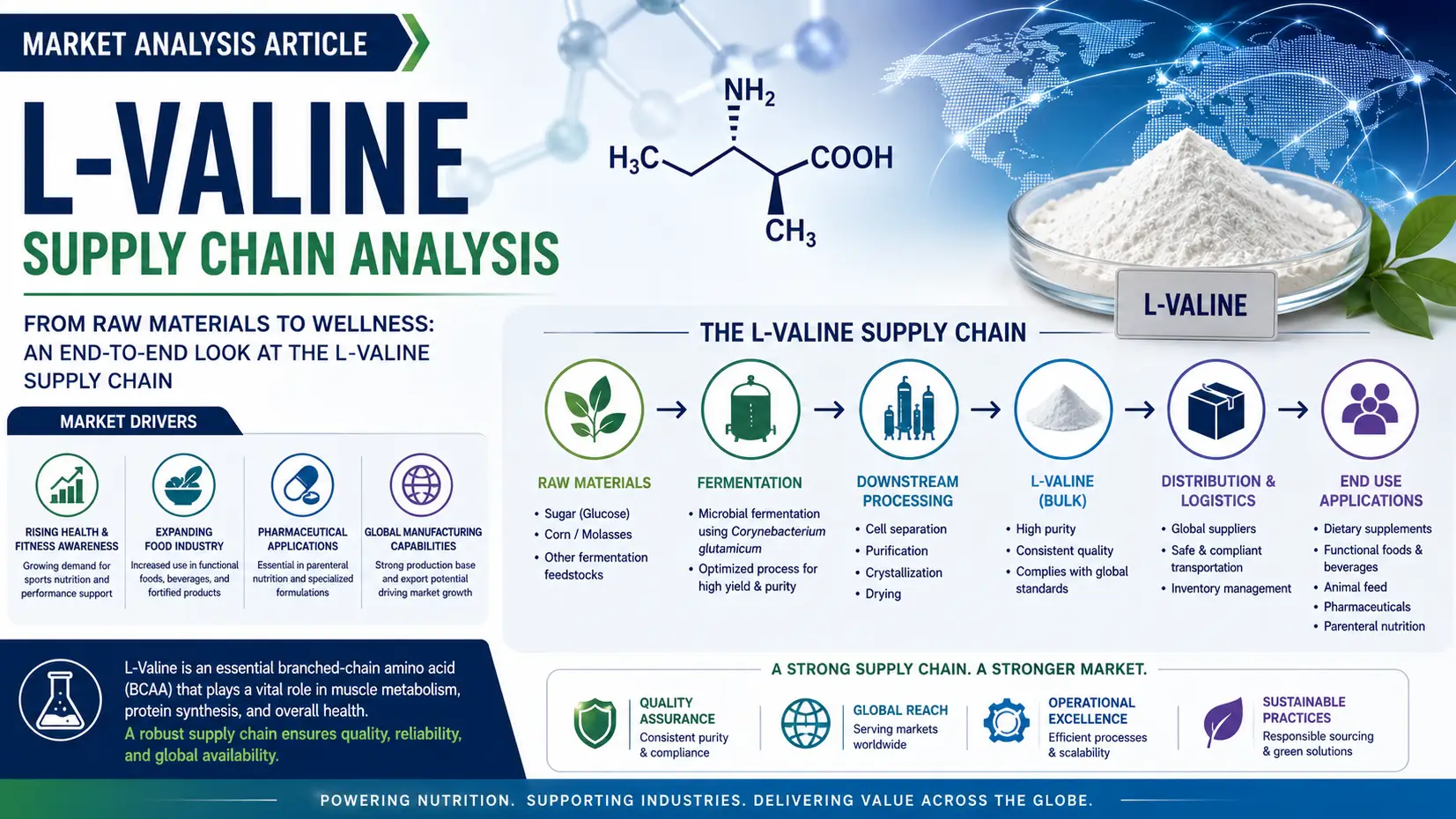
L-Valine production depends heavily on fermentation technology, raw material availability, manufacturing capacity, and logistics infrastructure. Changes in any of these factors can influence market availability and pricing.
Global supply chains have become increasingly interconnected, making procurement teams more attentive to supplier reliability, production consistency, and regulatory compliance.
Factors Affecting Supply Stability
Production costs are influenced by feedstocks, energy prices, transportation expenses, and operational efficiency. Manufacturers must balance these factors while maintaining quality standards required by international buyers.
According to industry assessments from the International Trade Centre (ITC) and agricultural market reports from the FAO, supply chain resilience remains a key concern for ingredient buyers across nutrition and feed industries.
Importance of Supplier Diversification
Procurement professionals frequently diversify supplier portfolios to reduce sourcing risks. Access to multiple qualified suppliers can help organizations maintain continuity during market fluctuations.
As international trade continues to evolve, buyers increasingly seek sourcing partners capable of supporting flexible logistics and consistent product availability.
Buyer Intent and Purchasing Considerations
L-Valine is typically purchased by feed manufacturers, nutritional supplement producers, pharmaceutical companies, ingredient distributors, and biotechnology organizations. Each buyer group evaluates suppliers according to its own quality and regulatory requirements.
Commercial buyers often prioritize product specifications, production methods, certifications, packaging options, and supply reliability before making purchasing decisions.
What Procurement Teams Evaluate
Procurement teams commonly assess purity levels, technical documentation, manufacturing standards, lead times, and supplier responsiveness. These factors directly influence operational performance and supply continuity.
According to guidance from international quality management frameworks and industry procurement standards, supplier qualification remains a critical component of strategic sourcing programs.
Why Buyers Compare Suppliers
Price competitiveness is important, but buyers also compare consistency, logistics capabilities, inventory availability, and technical support. Long-term supplier relationships often provide additional advantages in supply planning.
A well-structured product page helps procurement teams compare specifications, request quotations, review sourcing options, and identify suitable suppliers for specific application requirements.
Sourcing Opportunities Through Global B2B Marketplaces
Global B2B chemical marketplaces have become important sourcing channels for buyers seeking efficient access to qualified suppliers. These platforms simplify supplier discovery and improve procurement transparency.
Companies sourcing L-Valine often use digital marketplaces to compare supplier capabilities, evaluate commercial terms, and identify new sourcing opportunities across regions.
Benefits for Manufacturers and Distributors
Manufacturers gain greater market visibility and access to international buyers through digital trade platforms. Distributors can expand sourcing networks while improving supply flexibility.
Industry reports from the International Trade Centre (ITC) highlight the growing role of digital trade ecosystems in connecting buyers and suppliers across global markets.
Supporting Procurement Efficiency
Marketplaces such as Tradeasia, Chemtradeasia, and Tradechem Marketplace help streamline sourcing processes by providing centralized product information and supplier engagement opportunities.
As procurement becomes increasingly data-driven, digital sourcing channels are expected to play a larger role in global amino acid trade and supply chain management.
Conclusion
L-Valine remains a strategically important amino acid across animal nutrition, nutraceutical, pharmaceutical, and biotechnology industries. Its expanding range of applications continues to support steady global demand and long-term commercial relevance.
Growing interest in efficient nutrition, sustainable production, and supply chain resilience is strengthening the importance of reliable sourcing strategies. For manufacturers, distributors, and procurement teams, understanding market dynamics and supplier capabilities is essential for securing competitive advantages in the evolving L-Valine marketplace.
Sources
https://www.fao.org
https://www.ncbi.nlm.nih.gov
https://www.intracen.org

Leave a Comment