Japonica Rice and Its Role in the Global Supply Chain
Understanding Japonica Rice
Japonica Rice represents an important category within the international rice trade and is differentiated from other rice types by its grain characteristics and cooking behavior. FAO materials identify Japonica as one of the major rice market segments alongside Indica, aromatic, and glutinous rice. This segmentation matters commercially because buyers often require a specific rice type rather than treating rice as a fully interchangeable commodity.
Why Supply Chain Planning Matters
For B2B procurement teams, Japonica Rice sourcing involves more than identifying an available supplier. Buyers need to coordinate product specifications, origin, processing condition, quality documentation, packaging, shipment planning, storage requirements, and delivery schedules. These factors influence whether a shipment is suitable for food manufacturers, distributors, wholesalers, or other commercial users.
Japonica Rice also operates within a broader international commodity market where supply, demand, trade flows, harvest conditions, and export quotations can influence procurement decisions. FAO maintains dedicated rice market intelligence covering supply, demand, trade, stocks, prices, and policy developments, demonstrating the importance of monitoring market conditions when planning commercial procurement.
A structured supply-chain approach therefore helps buyers move from spot purchasing toward more predictable procurement. By defining specifications before supplier selection and aligning purchasing volumes with warehousing and distribution capacity, businesses can create a more consistent sourcing process for Japonica Rice across domestic and international markets.
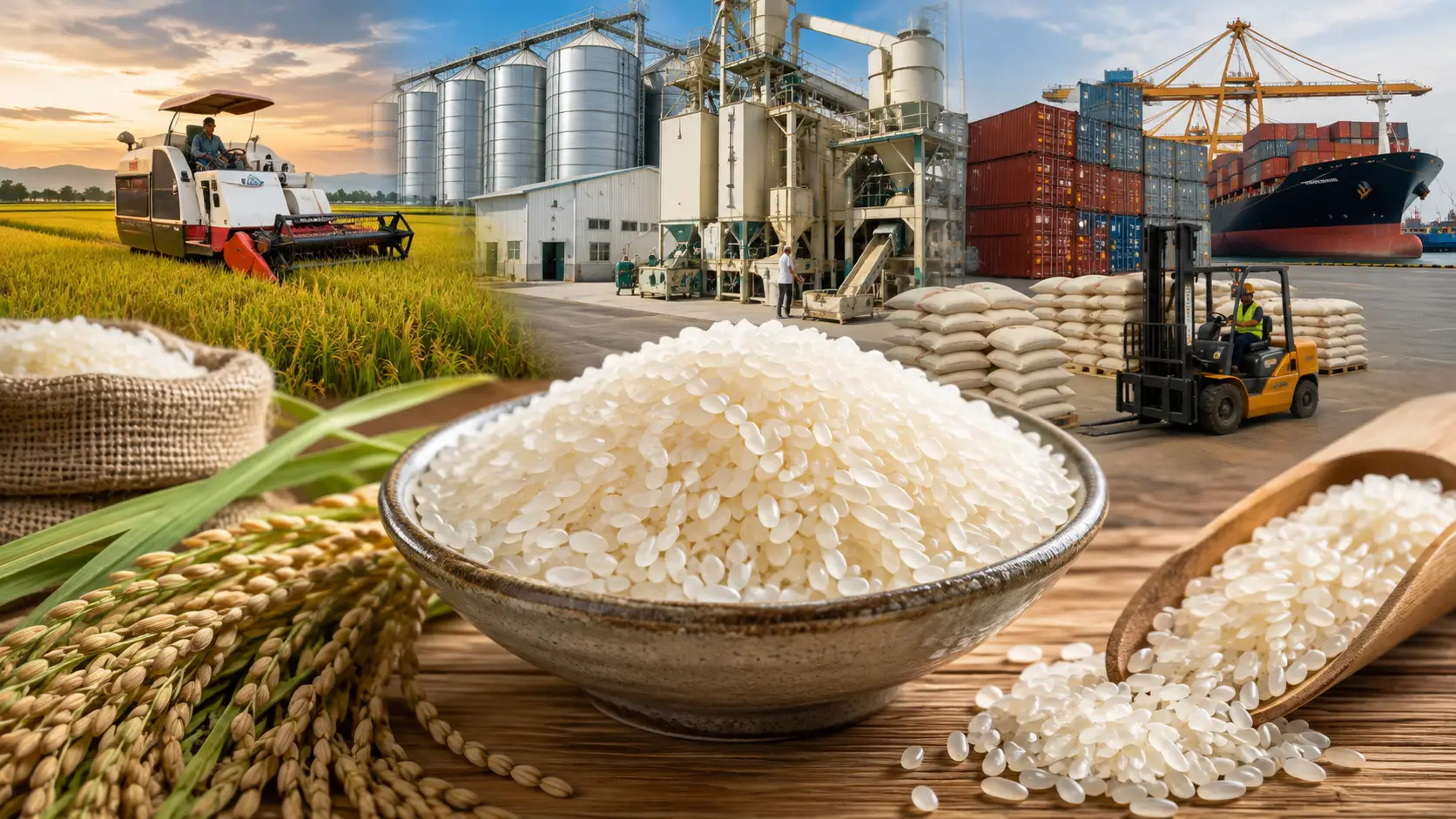
Japonica Rice Production and Processing Flow
From Cultivation to Harvest
The Japonica Rice supply chain begins with agricultural production, where cultivation conditions, seed selection, harvesting practices, and post-harvest handling can affect the characteristics of the resulting grain. For commercial buyers, origin and production practices can therefore become important elements of supplier qualification, particularly when consistent specifications are required across repeated purchases.
After harvesting, rice enters post-harvest handling and processing channels. Depending on the commercial form required, rice can be traded at different processing stages, including paddy, husked, milled, or parboiled forms. FAO documentation identifies the degree of processing as one of the criteria used to segment international rice markets.
Milling and Commercial Preparation
Milling transforms harvested rice into a commercially usable form through processes designed to remove the husk and, where applicable, additional layers. The final product specification can influence how the rice is graded, packaged, transported, and marketed. Buyers should therefore establish whether they require a particular processed form before negotiating supply terms.
Quality inspection becomes particularly important during commercial preparation. USDA's Rice Inspection Handbook describes procedures for sampling, inspecting, and certifying rice, while USDA rice standards distinguish different quality factors used in official inspection. These frameworks illustrate why commercial buyers should establish measurable specifications rather than relying solely on general descriptions such as premium or high quality.
Quality and Specification Considerations
Grain Classification and Physical Characteristics
Rice classification can be based on measurable physical characteristics such as kernel length and length-to-width ratio. The Codex Standard for Rice provides classification approaches for long-, medium-, and short-grain rice, giving international buyers a reference framework for describing physical grain characteristics.
For Japonica Rice procurement, buyers may need to specify grain dimensions, whole-kernel requirements, broken-kernel tolerance, appearance, moisture, cleanliness, and other applicable parameters according to the intended commercial use. Clear specifications help suppliers understand the required product and help procurement teams compare offers on a more consistent basis.
Inspection and Documentation
Inspection requirements can vary according to destination market, contractual terms, product form, and buyer requirements. USDA's rice inspection framework demonstrates how sampling and inspection can be used to evaluate standardized quality factors and support commercial certification.
For international sourcing, documentation can become as important as the physical product. Commercial buyers may need product specifications, certificates, analysis documentation, packing information, origin details, shipping documents, and other records required by the destination market or purchasing organization. Establishing these requirements early can reduce delays during supplier qualification and shipment execution.
Storage, Packaging, and Logistics
Warehouse Management
Japonica Rice requires coordinated storage management from the supplier's facility through distribution channels and, where applicable, the buyer's warehouse. Procurement teams should consider warehouse capacity, stock rotation, packaging integrity, environmental conditions, pest-control procedures, and inventory visibility when designing a supply plan.
Storage planning is especially relevant for businesses purchasing in larger quantities. Excess inventory can increase holding costs, while insufficient inventory can create production or distribution interruptions. A demand-based purchasing schedule can help align inbound shipments with actual consumption patterns and available storage capacity.
Packaging and Transportation
Commercial packaging should be selected according to shipment size, handling requirements, destination, and buyer specifications. Depending on the market, Japonica Rice may be supplied in consumer-ready formats, commercial bags, or larger bulk-oriented packaging. B2B buyers should define package weight, pallet configuration, labeling requirements, and handling instructions before finalizing purchase contracts.
Transportation planning connects suppliers, warehouses, ports, distributors, and end users. International shipments require coordination between inland transport, container loading, port handling, customs documentation, ocean freight, and destination delivery. Effective logistics planning can reduce avoidable delays and improve visibility across the complete supply chain.
International Japonica Rice Trade and Market Dynamics
Global Market Segmentation
The international rice market is divided into distinct segments according to rice type, quality, processing stage, and destination. FAO recognizes Japonica as one of the major varieties represented in its international rice price monitoring framework, alongside Indica, aromatic, and glutinous rice.
This segmentation is commercially significant because demand for Japonica Rice may not move in exactly the same way as demand for other rice varieties. Historical OECD-FAO analysis has also described separate trade flows and price references for Japonica Rice, demonstrating that variety-specific market conditions can matter to international procurement.
Market Monitoring for Buyers
Procurement teams can use market intelligence to evaluate purchasing conditions before committing to larger volumes. Relevant indicators include export quotations, production expectations, inventory levels, trade flows, currency conditions, freight costs, and policy developments. FAO's rice market resources provide ongoing information on international supply, demand, trade, stocks, prices, and policy factors.
For suppliers and distributors, market monitoring can also support inventory planning and customer quotations. Instead of treating Japonica Rice as a static commodity, businesses can integrate market information into purchasing cycles, contract discussions, replenishment planning, and regional distribution strategies.
Applications and Industrial Buyer Requirements
Food Manufacturing Applications
Japonica Rice is relevant to commercial food supply chains where the desired grain characteristics and eating properties match the formulation or finished-product requirements. Its use can extend across prepared foods, packaged rice products, foodservice supply, specialty rice products, and other food manufacturing applications where specific rice characteristics are required.
The application determines the appropriate procurement specification. A food manufacturer may prioritize consistency in grain characteristics, while a distributor may place greater emphasis on packaging, origin, availability, and shipment flexibility. Buyers should therefore connect product specifications directly to the intended application before selecting a supply source.
Buyer Segments
Potential B2B buyers include food manufacturers, rice processors, wholesalers, distributors, importers, foodservice suppliers, and specialty food businesses. Each segment can have different requirements concerning order quantities, packaging formats, documentation, lead times, and delivery schedules.
For procurement teams, the central objective is to match the supply offer with operational requirements. A buyer sourcing Japonica Rice for recurring production may need a different commercial arrangement from a distributor purchasing for multiple customers. Establishing the buyer profile and expected demand pattern can make supplier discussions more precise and efficient.
Sourcing Strategies for Japonica Rice Buyers
Supplier Qualification
Supplier qualification should begin with clearly defined product requirements. Buyers can evaluate whether prospective suppliers can consistently provide the required Japonica Rice specification, documentation, packaging format, order quantity, and delivery schedule. This approach creates a more transparent basis for comparing suppliers.
Quality systems and inspection procedures are also relevant when evaluating supply partners. USDA's official rice inspection resources demonstrate the role of sampling, grading, certification, and quality assessment in commercial rice handling. Buyers operating outside the United States can similarly establish appropriate inspection and verification procedures suited to their destination market.
B2B Procurement Coordination
A B2B marketplace can support sourcing by bringing product specifications, supplier information, commercial requirements, and purchasing discussions into a structured procurement environment. For Japonica Rice, this can help buyers identify suppliers according to product type, required volume, destination, and commercial terms.
Procurement teams should also assess total landed cost rather than focusing exclusively on the supplier's quoted unit price. Freight, insurance, duties, inspection, inland transportation, warehousing, packaging, financing, and potential quality-related costs can all affect the final procurement economics. A complete sourcing comparison provides a clearer picture of the commercial structure.
Supply Chain Risk Management and Procurement Planning
Managing Supply Disruptions
Agricultural commodity supply chains can be affected by harvest conditions, weather, logistics interruptions, regulatory requirements, changes in demand, and transportation costs. For Japonica Rice buyers, supplier diversification and advance procurement planning can help reduce dependence on a single supply route.
Risk management does not necessarily require purchasing from multiple suppliers at all times. Instead, buyers can establish alternative sources, maintain qualified backup suppliers, monitor inventory levels, and define contingency procedures according to the importance of Japonica Rice within their operations.
Building Supply Continuity
Longer-term supply planning can connect forecast demand with purchasing schedules, supplier capacity, warehouse availability, and transportation arrangements. Businesses with recurring Japonica Rice requirements can use historical consumption and expected production needs to determine appropriate replenishment cycles.
Reliable supply continuity also depends on communication between procurement, quality, logistics, finance, and sales teams. When specifications and delivery requirements are documented consistently, suppliers can receive clearer purchase instructions and buyers can identify deviations earlier in the procurement process.
Conclusion: Building a Reliable Japonica Rice Supply Chain
From Product Sourcing to Supply Management
Japonica Rice procurement is part of a broader agricultural supply chain extending from cultivation and processing to inspection, packaging, transportation, warehousing, distribution, and end-use markets. Its segmentation within international rice trade makes product-specific sourcing important for buyers seeking consistent characteristics and dependable supply.
A commercial sourcing strategy should therefore combine product specifications with supplier qualification, market monitoring, logistics planning, documentation, and inventory management. International standards and inspection frameworks can provide useful reference points for establishing measurable quality expectations.
B2B Opportunities for Buyers and Suppliers
For buyers, a structured Japonica Rice sourcing process can improve supplier comparisons, purchasing visibility, and supply planning. For suppliers and distributors, understanding buyer requirements can support more accurate commercial offers and stronger long-term business relationships.
Trade-focused platforms such as Tradeasia / Chemtradeasia / Tradechem Marketplace can position Japonica Rice within a broader B2B sourcing environment where buyers can evaluate commercial supply options according to their product, application, volume, quality, and logistics requirements. The objective is to connect product demand with appropriate supply-chain capabilities while maintaining clear procurement specifications.
Sources
https://www.fao.org
https://www.ams.usda.gov
https://www.fao.org

Leave a Comment