Japonica Rice Applications, Buyers, and Global Sourcing Insights
Japonica Rice and Its Commercial Characteristics
Understanding Japonica Rice
Japonica Rice is a commercially important rice category generally associated with shorter, rounder, and relatively plump grains compared with long-grain Indica varieties. Its cooking behavior is particularly relevant to applications where a cohesive texture and ability to hold together are desired. Short-grain Japonica is widely associated with Japanese-style foods, including sushi and molded rice products, while different cultivars and processing specifications can serve broader food applications.
For B2B buyers, the value of Japonica Rice is therefore connected not simply to grain length but to the functional performance required in the finished food. The relationship between starch composition, cooking conditions, moisture, and texture can influence how rice behaves after cooking. This makes application-specific procurement important for manufacturers and distributors that need predictable performance across production batches.
The commercial category can include different cultivars, origins, milling conditions, and grades. Buyers may therefore encounter Japonica Rice intended for retail packing, foodservice, prepared meals, sushi production, specialty foods, or other food-processing channels. Understanding the intended application before purchasing helps procurement teams define the appropriate grain characteristics, packaging format, quality documentation, and supply requirements.
From a marketplace perspective, Japonica Rice can be evaluated as a functional food ingredient as well as an agricultural commodity. Its commercial suitability depends on the relationship between product specifications and buyer requirements, including grain appearance, milling quality, moisture management, consistency, origin, packaging, order volume, and delivery capability. These factors should be assessed before establishing a recurring supply program.
Key Applications of Japonica Rice
Sushi and Japanese-Style Foods
One of the most recognizable applications for Japonica Rice is sushi. Short-grain Japonica is valued for its cooked texture and ability to maintain cohesion, characteristics that support sushi preparation and other foods where cooked rice needs to retain its form. Industry guidance on Japanese rice similarly identifies short-grain Japonica as suitable for sushi, onigiri, and donburi-style dishes.
The same characteristics create opportunities in onigiri, rice bowls, bento products, and other Japanese-style prepared foods. For commercial kitchens and food manufacturers, rice performance can influence portion formation, filling, handling, presentation, and consumer eating experience. Consistency is therefore important when Japonica Rice is used at commercial scale rather than prepared only for household consumption.
Restaurants, sushi chains, catering businesses, and prepared-food manufacturers may purchase Japonica Rice according to different volume and specification requirements. A restaurant may prioritize culinary performance and packaging convenience, while a central food-production facility may focus more heavily on batch consistency, delivery schedules, storage requirements, and documented specifications.
For suppliers, this application diversity creates opportunities to serve both specialty and mainstream buyers. A well-defined product offering can distinguish between sushi-oriented requirements, general Japanese cuisine, prepared meals, and foodservice applications instead of treating all Japonica Rice as a single undifferentiated commodity.
Japonica Rice in Food Manufacturing and Foodservice
Prepared Meals and Convenience Foods
Japonica Rice can support commercial production of prepared meals where cooked rice is assembled, packaged, transported, refrigerated, or reheated as part of a finished product. Its cohesive cooked texture can be relevant to meals where rice needs to remain together during portioning and handling. This is particularly applicable to bento-style products, rice bowls, ready meals, and Asian-inspired convenience foods.
Food manufacturers must consider more than the raw grain when selecting rice for prepared foods. Cooking conditions, water absorption, holding time, cooling, packaging, and reheating can affect final texture. Consequently, procurement teams may evaluate samples under actual production conditions before approving a supplier for long-term commercial supply.
Foodservice distributors represent another important buyer segment. They may require standardized packaging sizes, dependable replenishment, stable quality, and delivery schedules compatible with restaurant and institutional demand. Suppliers that can support different order quantities can serve distributors, restaurant groups, caterers, and centralized kitchens through a broader B2B sourcing model.
For manufacturers and foodservice businesses, the commercial objective is predictable performance rather than simply acquiring the lowest-priced rice. A product that consistently meets the required cooking and handling profile can help reduce formulation adjustments, production variability, and procurement interruptions. This makes application testing and supplier qualification important parts of the purchasing process.
Buyer Requirements for Japonica Rice
What Commercial Buyers Evaluate
Commercial buyers typically assess Japonica Rice according to the requirements of their final application. Physical characteristics such as grain size, appearance, broken-grain percentage, milling condition, moisture, and cleanliness can become part of a product specification. The appropriate parameters depend on the buyer's intended use and local regulatory requirements.
For sushi and specialty Japanese food production, buyers may place greater emphasis on cooking behavior, texture, grain appearance, and consistency between lots. Prepared-food manufacturers can additionally evaluate cooking yield, handling performance, cooling behavior, and suitability for their packaging process. These requirements should be converted into clear procurement specifications before supplier comparison.
Documentation can also influence supplier qualification. Buyers may request product specifications, certificates of analysis, origin information, food-safety documentation, packaging details, shelf-life information, and relevant compliance records. The exact documentation depends on the destination market, product form, intended application, and applicable regulations.
A professional sourcing process should therefore connect the technical specification with the commercial purchase requirement. Procurement teams can compare suppliers more effectively when they assess product quality, documentation, minimum order quantity, packaging, lead time, logistics capability, and commercial terms together rather than evaluating price alone.
Quality, Processing, and Specification Considerations
Milling, Grain Quality, and Cooking Performance
Processing has a direct commercial role in rice quality. Milling and polishing influence the appearance and physical condition of the finished grain, while storage and handling can influence moisture and overall quality. For Japonica Rice, these considerations are especially relevant when the buyer's application depends on a consistent cooked texture and attractive grain appearance.
Cooking performance should be assessed in relation to the intended product rather than treated as a universal characteristic. Different cultivars and processing specifications can behave differently, and preparation conditions can influence gelatinization, texture, and water absorption. Research on short-grain rice has highlighted the importance of starch characteristics and processing conditions in determining cooking and texture outcomes.
Food businesses also need to establish suitable quality controls for incoming shipments. Depending on the procurement program, checks can include visual inspection, moisture assessment, broken-grain levels, foreign-material controls, packaging integrity, and laboratory testing where required. Consistent incoming quality can help manufacturers maintain stable production parameters.
International buyers should also consider the applicable food standards of the destination market. The Codex Alimentarius Commission maintains an international Standard for Rice, CXS 198-1995, providing a useful reference point for rice quality and trade requirements. Importers must nevertheless verify the specific legal and regulatory requirements applicable to their destination country.
Japonica Rice Sourcing and Supplier Selection
Finding a Suitable B2B Supplier
Selecting a Japonica Rice supplier begins with identifying the exact commercial requirement. Buyers should define the preferred cultivar or grade where relevant, intended application, annual or monthly volume, packaging format, destination, delivery schedule, and documentation requirements. This makes supplier inquiries more precise and reduces the risk of comparing products that are not commercially equivalent.
Supplier capability should then be evaluated across product consistency, production or sourcing capacity, quality systems, documentation, packaging, logistics, and communication. For recurring procurement, buyers need confidence that future shipments can maintain the agreed specification rather than relying solely on the quality of one sample shipment.
B2B marketplaces can support supplier discovery by allowing procurement teams to identify companies offering relevant rice categories and compare sourcing possibilities. However, marketplace visibility should be followed by appropriate supplier qualification, including review of technical documents, samples, commercial terms, and regulatory suitability for the destination market.
A reliable supplier relationship is ultimately based on alignment between product specifications and operational requirements. Buyers should communicate expected volumes, shipment frequency, packaging, quality parameters, and destination requirements clearly. Suppliers, in turn, can provide more accurate commercial proposals when the procurement brief is sufficiently detailed.
Market and Supply Chain Considerations
Managing International Rice Procurement
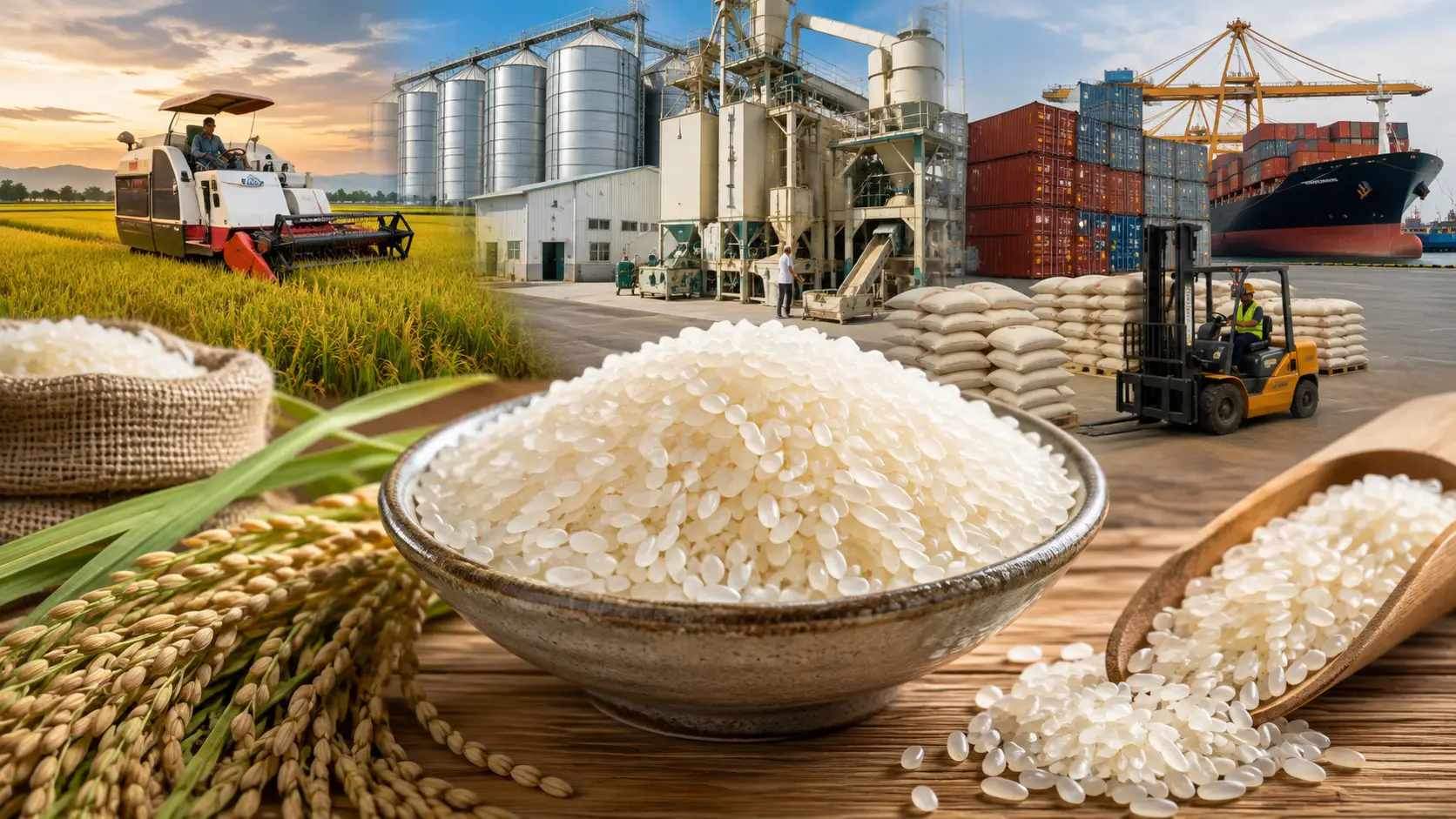
Japonica Rice sourcing can involve agricultural production, milling, packaging, warehousing, export documentation, international transportation, customs clearance, and domestic distribution. Each stage can affect lead time and landed cost. For importers and distributors, understanding the complete supply chain is therefore important when establishing procurement plans.
Origin can also influence commercial positioning. Japonica-type rice is cultivated in several regions, including East Asia and other production areas, while specific cultivars may be strongly associated with particular countries or growing regions. Buyers should distinguish between generic Japonica classification and specific cultivar or origin claims when evaluating supplier offers.
Inventory planning is another important consideration. Food manufacturers and distributors need to balance sufficient stock against storage capacity, shelf-life requirements, demand fluctuations, and working capital. Long lead times or seasonal supply conditions can make forward planning particularly valuable for buyers operating continuous production or foodservice distribution networks.
International sourcing also requires attention to import requirements and documentation. Codex standards provide an international reference for rice, but national authorities may impose additional requirements covering food safety, labeling, contaminants, pesticide residues, packaging, and import procedures. Buyers should confirm destination-market requirements before finalizing commercial shipments.
B2B Procurement Strategy for Japonica Rice
Building a Commercial Buying Framework
A structured procurement strategy allows buyers to evaluate Japonica Rice on both technical and commercial grounds. The starting point should be an application-specific specification that defines the required grain characteristics, processing condition, packaging, expected quantity, destination, and quality documentation. This specification becomes the reference for supplier quotations and sample evaluation.
Supplier comparison should then consider total landed cost rather than headline product price alone. Freight, insurance, packaging, import charges, warehousing, minimum order quantities, payment terms, lead time, and potential quality-related costs can all influence the effective procurement cost. A lower quoted price does not necessarily represent a lower overall sourcing cost if other supply-chain variables differ substantially.
Trial orders can provide an additional qualification stage for new suppliers. Buyers can evaluate the product under actual cooking and production conditions while also assessing delivery performance, packaging integrity, documentation, and communication. For larger contracts, this process can help identify operational issues before volumes are scaled up.
Long-term procurement programs can benefit from agreed specifications and clear communication procedures. Buyers and suppliers can establish expectations around quality, batch documentation, shipment scheduling, packaging, claims handling, and replenishment. This approach helps transform Japonica Rice purchasing from individual transactions into a more predictable B2B supply relationship.
Conclusion: Building Reliable Japonica Rice Supply
Connecting Applications With Sourcing
Japonica Rice has a distinctive commercial position within the global rice category because its physical and cooking characteristics support applications where cohesive, tender, and relatively short-grain rice is required. Sushi, onigiri, rice bowls, prepared meals, Japanese-style foods, and foodservice are among the application areas where these characteristics can be commercially relevant.
For buyers, successful procurement depends on matching the product to the final application. Rather than sourcing based solely on the generic term Japonica Rice, procurement teams can define the desired grain characteristics, processing requirements, quality parameters, documentation, packaging, and delivery conditions before comparing suppliers.
For distributors and B2B marketplaces, application-oriented product information can make supplier discovery more efficient. Buyers benefit when product listings clearly communicate relevant specifications and commercial capabilities, while suppliers can reach customers whose requirements are aligned with their product and logistics capabilities.
The global sourcing opportunity for Japonica Rice therefore extends beyond commodity purchasing. By connecting application requirements, technical specifications, supplier qualification, logistics planning, and regulatory considerations, food manufacturers, distributors, foodservice operators, and procurement teams can develop more structured sourcing programs for this specialized rice category.
Sources
https://www.fao.org
https://www.ams.usda.gov
https://www.fao.org

Leave a Comment