Japonica Rice in the Global Food Ingredient Market
Understanding Japonica Rice
Japonica Rice occupies a distinct position within the international rice market because it is differentiated by grain characteristics and cooking behavior rather than being treated simply as interchangeable rice. FAO identifies Japonica as one of the major internationally traded rice categories alongside Indica, Aromatic, and Glutinous rice. Its relatively short-to-medium grain profile and characteristic cooked texture make it relevant to food applications where consistency and eating quality are important.
For B2B procurement teams, this differentiation is commercially significant. Buyers are not necessarily looking only for the lowest rice price; they may require a specific grain type, milling condition, origin, broken-kernel tolerance, moisture specification, packaging format, or processing grade. This creates a sourcing environment where product specification and supplier reliability can be as important as headline commodity pricing.
Why Product Differentiation Matters
Japonica Rice can serve markets where texture, appearance, cooking performance, and product consistency influence the finished food. Its commercial positioning therefore extends across foodservice, packaged foods, prepared meals, specialty retail, and food manufacturing. Buyers may also distinguish between paddy, brown, and milled formats depending on their processing capabilities and downstream requirements.
This product segmentation supports a B2B marketplace approach in which buyers can evaluate Japonica Rice according to application, technical specification, origin, volume, and delivery requirements. FAO's rice market methodology also recognizes Japonica as a distinct price category, demonstrating that international rice pricing is segmented by rice type rather than represented by one universal market price.
Key Applications of Japonica Rice
Prepared and Convenience Foods
One important application area for Japonica Rice is prepared and convenience food manufacturing. The grain's distinctive cooked texture can be useful in products where rice must maintain a recognizable structure while delivering a particular eating experience. Manufacturers of ready meals, frozen meals, rice bowls, and other prepared foods may therefore evaluate Japonica Rice based on cooking consistency and finished-product performance.
For commercial buyers, application requirements can determine the appropriate specification more effectively than the product name alone. A manufacturer producing chilled meals may have different requirements from a restaurant distributor or a packaged-food producer. Procurement teams should therefore connect grain specification with the intended processing method, cooking equipment, packaging environment, and shelf-life expectations.
Specialty and Foodservice Applications
Japonica Rice is also relevant to specialty food and foodservice channels where specific rice characteristics are part of the product proposition. Restaurants, catering operators, wholesalers, and distributors may source Japonica Rice for menus and prepared dishes where grain texture and appearance influence consumer expectations. This creates recurring B2B demand for dependable grades rather than purely opportunistic commodity purchases.
The commercial opportunity is particularly relevant for distributors serving markets with established demand for differentiated rice varieties. USDA describes Japonica as a globally traded category concentrated in cooler-climate production regions and estimates that it represents approximately 9–10% of global rice trade, illustrating its role as a meaningful specialty segment within the broader rice market.
Food Manufacturing and Processing Demand
Rice-Based Product Manufacturing
Food manufacturers can use Japonica Rice as a primary grain ingredient in products where rice is central to the finished formulation. Procurement decisions may involve raw or milled formats, grain integrity, cleanliness, consistency, and suitability for industrial cooking and packaging operations. For manufacturers, a stable specification can reduce production variability and simplify quality-control procedures across multiple production batches.
This makes supplier qualification particularly important. A buyer sourcing commercially significant volumes needs more than a product description; it needs confidence that successive shipments can meet agreed specifications. Quality documentation, sampling procedures, packaging standards, shipment planning, and clear commercial terms can therefore become decisive factors in supplier selection.
Processing and Format Requirements
The form in which Japonica Rice is purchased can also influence its commercial application. Rice may enter international trade as paddy, husked, milled, or parboiled product, creating different requirements for processors, importers, and finished-food manufacturers. FAO identifies the degree of processing as one of the principal ways in which the international rice market is segmented.
For B2B buyers, this means sourcing should begin with the intended processing route. A milling company may prioritize raw material characteristics, while a food manufacturer may require a finished milled specification ready for production. Matching the commercial form of Japonica Rice to the buyer's operation helps reduce unnecessary processing steps, quality disputes, and logistics inefficiencies.
Major B2B Buyers and Procurement Requirements
Food Manufacturers and Distributors
The buyer base for Japonica Rice includes food manufacturers, importers, wholesalers, distributors, foodservice suppliers, retailers, and companies operating private-label food programs. Each buyer group can have different volume requirements and quality priorities, ranging from bulk industrial shipments to packaged retail formats.
For procurement professionals, the most valuable supplier is therefore not necessarily the supplier offering the lowest quoted unit price. A commercially suitable partner should be capable of aligning product specifications, shipment volumes, documentation, packaging, lead times, and destination-market requirements. These factors become especially important when rice is incorporated into standardized food production.
Institutional and International Buyers
International buyers may also source Japonica Rice according to regional consumption patterns and established procurement channels. USDA research has identified Northeast Asia as a major market for Japonica shipments while also highlighting demand in the Middle East and North Africa. This demonstrates that the product serves multiple geographic markets with different sourcing preferences.
For distributors and importers, geographic diversification can create opportunities to build supply programs around specific customer requirements. However, each destination market can impose different expectations regarding product standards, documentation, labeling, packaging, and import procedures. Consequently, a B2B sourcing strategy should combine product availability with destination-market compliance and logistics planning.
Japonica Rice Market and Trade Dynamics
Global Market Segmentation
The international rice market is highly segmented, and Japonica should be evaluated within that differentiated structure. FAO's rice pricing framework separately tracks Japonica alongside Indica, Aromatic, and Glutinous rice, confirming that international buyers and sellers can experience different market conditions depending on the rice category.
This segmentation is important for commercial planning because substitution between rice varieties may be limited. A buyer seeking Japonica for a specific finished-food application cannot always replace it with another rice type simply because another variety is cheaper. Grain characteristics, cooking behavior, consumer expectations, and production specifications can constrain substitution and support differentiated procurement strategies.
Price and Supply Monitoring
Japonica Rice sourcing also requires attention to international price movements and origin-specific supply conditions. FAO publishes a monthly Rice Price Update covering export prices from major origins and an All Rice Price Index, providing a recognized framework for monitoring international rice-price developments.
For B2B procurement teams, market monitoring can support better purchasing decisions by helping buyers distinguish temporary price movements from broader supply trends. Rather than relying on a single quotation, buyers can evaluate origin, grade, quality, freight, packaging, shipment timing, and market conditions together when assessing the landed cost of Japonica Rice.
Sourcing, Quality, and Supply Chain Considerations
Quality Specification
Quality specification is central to commercial Japonica Rice sourcing. Buyers may assess parameters such as grain appearance, broken-kernel percentage, moisture, impurities, milling quality, packaging condition, and overall conformity with contractual specifications. FAO's international rice price methodology itself uses broken-kernel percentage as one quality distinction, demonstrating the commercial importance of measurable grain characteristics.
Food-sector buyers should also consider the destination market's regulatory and food-safety requirements before finalizing a supply contract. The Codex Alimentarius Commission maintains an international Standard for Rice, CXS 198-1995, providing a recognized reference framework for rice specifications and international food trade.
Logistics and Supplier Reliability
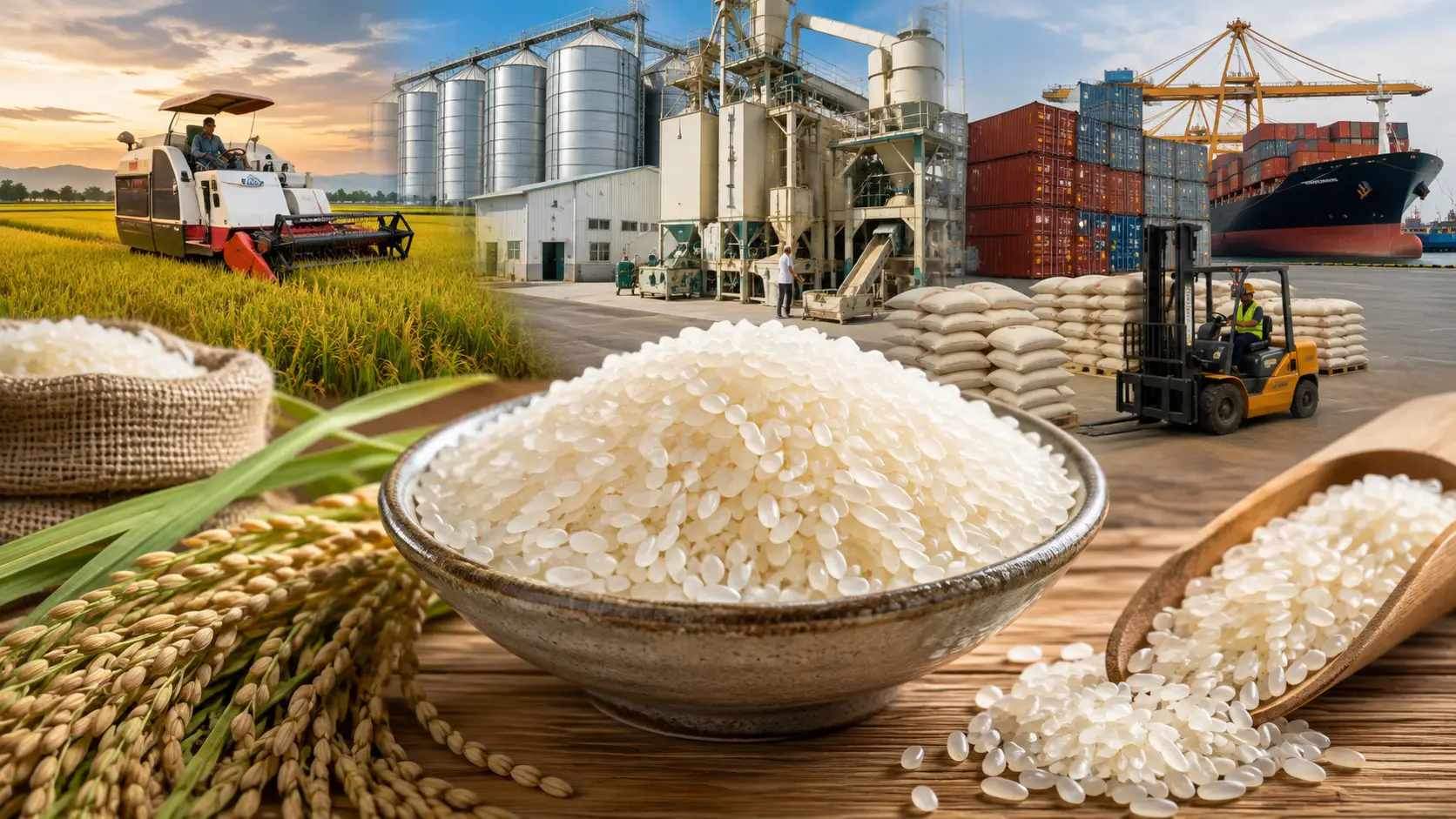
Reliable logistics are equally important when purchasing agricultural commodities at commercial scale. Japonica Rice can move through different supply-chain stages, from cultivation and milling to storage, export handling, ocean freight, customs clearance, warehousing, and final distribution. Delays or poor storage conditions can affect commercial performance even when the original product specification is appropriate.
A strong sourcing program therefore considers the complete supply chain rather than focusing only on the supplier's quoted product price. Procurement teams should assess shipment frequency, packaging suitability, documentation, loading capabilities, lead time, destination requirements, and communication procedures. This integrated approach can improve supply continuity and reduce operational risk for food manufacturers and distributors.
Strategic B2B Sourcing Opportunities and Conclusion
Building Long-Term Supply Programs
The strongest commercial opportunity for Japonica Rice lies in connecting differentiated product requirements with dependable B2B supply. Buyers that regularly consume Japonica Rice can benefit from structured sourcing programs that establish agreed specifications, forecast volumes, quality procedures, and delivery schedules rather than relying entirely on spot purchasing.
For suppliers and distributors, this creates opportunities to serve customers through application-specific sourcing. A manufacturer producing prepared foods, a foodservice distributor, and a specialty retailer may all require Japonica Rice but purchase different grades, formats, quantities, and packaging configurations. Understanding these differences can create stronger commercial relationships and more sustainable procurement programs.
Tradeasia as a B2B Sourcing Partner
For companies evaluating Japonica Rice suppliers, the priority should be a combination of product suitability, commercial transparency, supply reliability, and international trade capability. Tradeasia International can support B2B sourcing requirements by connecting buyers with supply solutions designed around product specifications, application needs, shipment requirements, and international procurement considerations.
As Japonica Rice continues to occupy a differentiated position within global rice trade, procurement teams can benefit from treating it as a specification-driven food commodity rather than a generic grain. A structured approach to applications, quality, market monitoring, logistics, and supplier evaluation can help manufacturers, distributors, and importers make more informed sourcing decisions and build resilient international supply chains.
Sources
www.ers.usda.gov
www.fao.org
www.fao.org
Leave a Comment