Global Millet Supply Trends and Industrial Applications for B2B Buyers
Understanding Millet as a Strategic Agricultural Commodity
Millet Production and Commodity Characteristics
Millet is a group of small-seeded cereal grains cultivated globally for food, feed, and industrial applications. Major varieties include pearl millet, foxtail millet, proso millet, and finger millet, with pearl millet representing one of the most commercially significant varieties. The grain is valued for its adaptability, nutritional profile, drought tolerance, and suitability as an alternative cereal ingredient.
According to the Food and Agriculture Organization (FAO), millet remains an important cereal crop in regions facing climate challenges because of its ability to grow under lower rainfall conditions compared with conventional grains. This resilience has increased interest among agricultural traders and food supply chain companies seeking diversified grain sources.
Commercial Importance in Global Grain Markets
The global millet market supports multiple supply chain participants, including farmers, grain aggregators, exporters, distributors, feed manufacturers, and food processors. Buyers typically evaluate millet based on grain quality, moisture content, purity level, availability, and compliance with international trade requirements.
Market demand has expanded as industries look for sustainable agricultural commodities with nutritional advantages and flexible applications. Millet’s role as a climate-resilient crop has positioned it as a valuable ingredient within global agricultural sourcing strategies.
Growing Industrial Demand for Millet in Animal Feed Markets
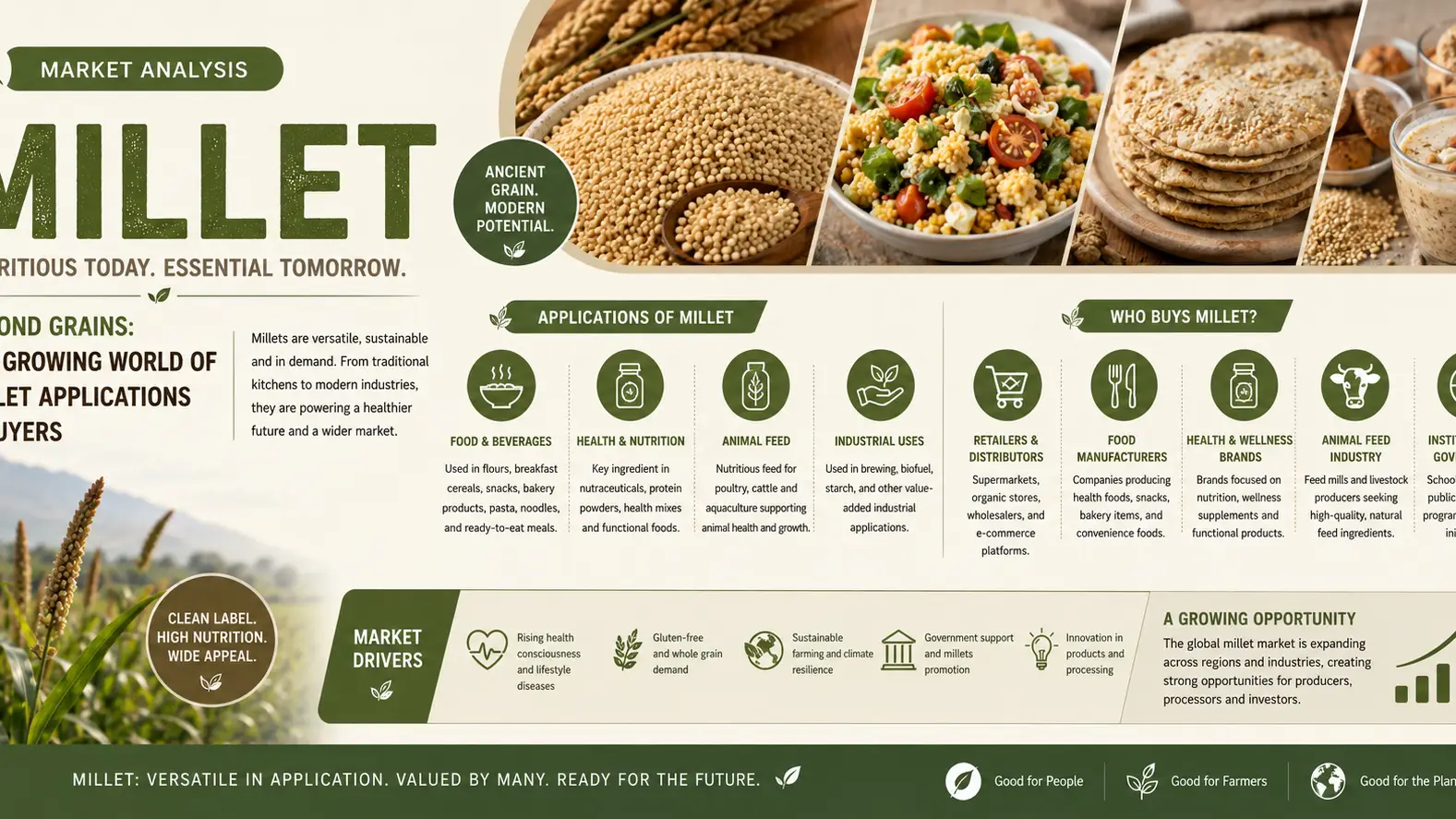
Millet is increasingly used as an ingredient in animal feed formulations due to its carbohydrate content, digestible energy value, and nutritional contribution. Feed manufacturers may incorporate millet into poultry, livestock, and specialty animal diets depending on regional availability and formulation requirements.
Technical information from agricultural extension resources highlights that millet grains can provide energy comparable to other cereal grains while offering flexibility for feed formulation. This makes millet attractive for feed producers seeking alternatives to traditional grains such as corn and wheat.
Feed Manufacturers and Buyer Requirements
Large-scale feed producers, livestock farms, and animal nutrition companies represent key buyer groups for industrial millet supply. Procurement teams generally assess supplier reliability, shipment consistency, grain specifications, storage conditions, and export documentation before establishing long-term partnerships.
According to industry analysis from the International Grains Council (IGC), global grain markets increasingly emphasize supply diversification and risk management. This trend encourages feed buyers to evaluate alternative cereal sources such as millet to improve supply chain resilience.
Millet Applications Across Food and Nutrition Industries
Beyond animal feed, millet has significant applications in food manufacturing, including breakfast cereals, bakery products, gluten-free foods, snacks, and nutritional formulations. Its naturally gluten-free characteristics have supported demand from manufacturers developing alternative grain-based products.
Research published by scientific institutions, including information compiled by the United States Department of Agriculture (USDA), identifies millet as a nutrient-rich cereal containing dietary fiber, minerals, and plant-based compounds valuable for food innovation.
Industrial Food Processing Opportunities
Food processors purchase millet based on factors such as grain consistency, processing suitability, certification requirements, and supply availability. International food brands and ingredient manufacturers increasingly explore millet as consumers show greater interest in functional and sustainable grain products.
For B2B suppliers, this creates opportunities to serve multiple sectors by providing reliable bulk millet supplies suitable for food manufacturing and ingredient distribution networks.
Global Millet Supply Chain and Procurement Considerations
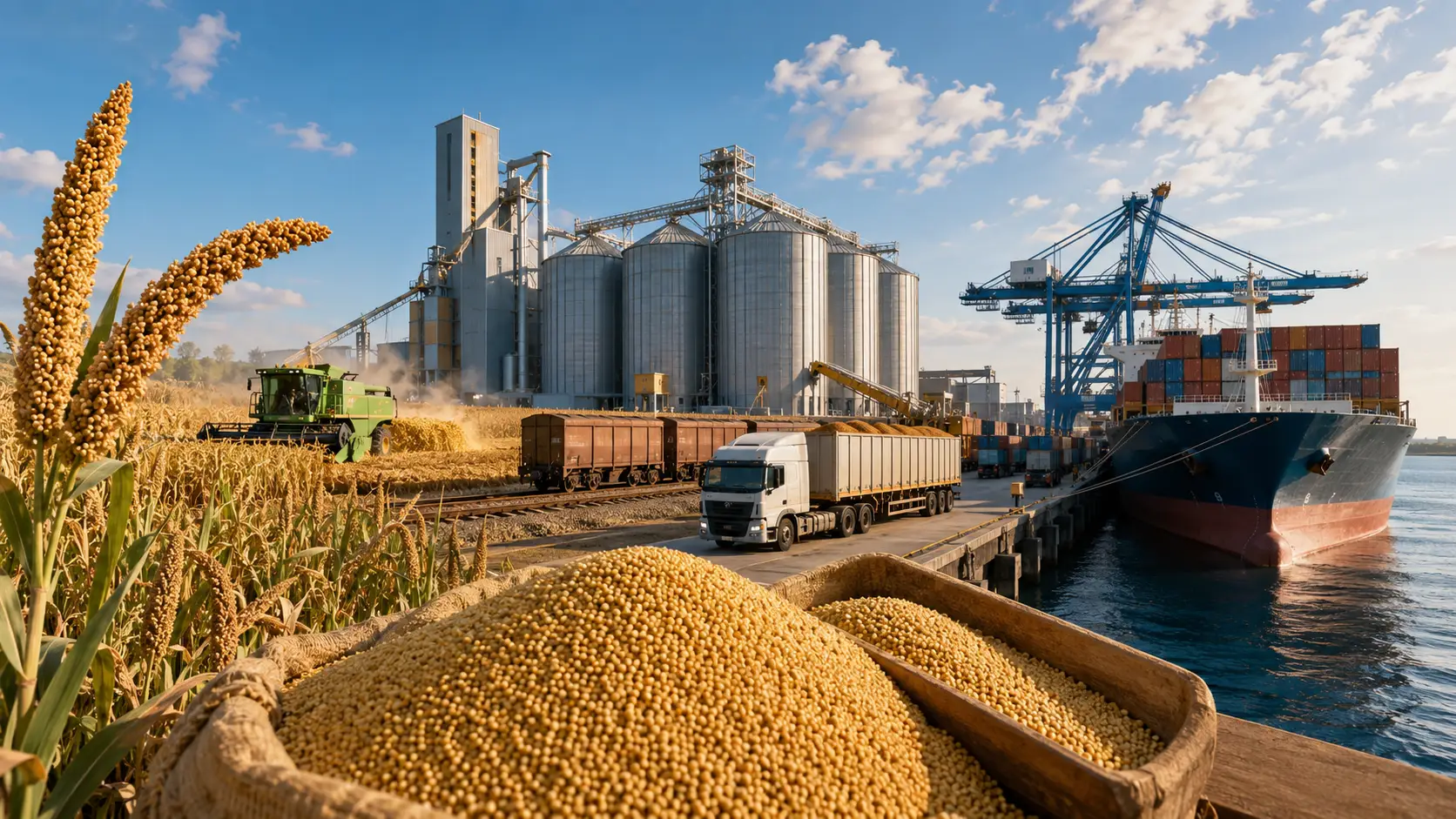
Millet production is concentrated in regions across Asia and Africa, with India, Niger, Nigeria, and other agricultural economies contributing significantly to global output. Exporters and commodity traders play an important role in connecting production areas with international buyers.
According to FAO agricultural statistics, cereal supply chains continue evolving due to climate conditions, changing consumption patterns, and international commodity demand. These factors influence millet availability, pricing, and sourcing strategies.
Supplier Evaluation for Bulk Millet Buyers
Industrial buyers typically compare suppliers based on product specifications, export experience, logistics capability, certifications, and documentation support. Reliable sourcing partners help manufacturers maintain production continuity and manage fluctuations in agricultural commodity markets.
For companies purchasing millet in bulk, supplier transparency and consistent quality control are essential factors when selecting international trading partners.
Buyer Intent and Commercial Sourcing Opportunities for Millet
Millet buyers include animal feed manufacturers, livestock producers, grain trading companies, food processors, ingredient distributors, and agricultural importers. These organizations purchase millet to secure raw materials for production, distribution, and product development.
Procurement teams evaluate millet suppliers based on price competitiveness, availability, quality specifications, shipment capacity, and regulatory compliance. Buyers often compare multiple suppliers because agricultural commodities can experience seasonal production changes and market price fluctuations.
Supporting B2B Procurement Decisions
A professional marketplace platform helps buyers identify suitable millet suppliers, review product specifications, and connect with international trading partners. Platforms such as Tradeasia, Chemtradeasia, and Tradechem Marketplace support industrial sourcing by improving supplier visibility and simplifying global procurement communication.
The increasing demand for sustainable grain ingredients creates opportunities for suppliers, exporters, and distributors to expand their presence in international markets.
Future Market Outlook for Global Millet Trade
The future millet market is expected to benefit from growing interest in climate-resilient crops and diversified agricultural supply chains. Food companies and feed manufacturers are increasingly exploring grains that support sustainability goals while maintaining commercial performance.
Industry reports from global agricultural organizations indicate that demand for resilient cereal crops is likely to remain relevant as climate variability affects traditional grain production systems.
Expanding Global Sourcing Opportunities
For international buyers, millet represents an opportunity to diversify agricultural sourcing portfolios and access a flexible grain ingredient with applications across multiple industries. Suppliers capable of maintaining consistent quality and dependable logistics will be positioned to participate in expanding global trade networks.
As demand continues developing across feed, food, and nutrition sectors, millet remains a commercially relevant agricultural commodity for global B2B markets.
Sources
https://www.fao.org
https://www.igc.int
https://www.usda.gov
Leave a Comment