Millet Applications and Buyer Market Analysis 2026: Expanding Industrial Demand
Introduction
Millet is rapidly emerging as a commercially significant agricultural commodity within the global food, nutrition, and industrial sectors. Traditionally consumed in Asia and Africa, millet has evolved into a versatile platform ingredient increasingly integrated into modern manufacturing, health-focused food formulations, and sustainable procurement programs. In 2026, rising consumer awareness regarding gluten-free nutrition, climate-resilient crops, and functional ingredients is accelerating demand across diversified buyer categories.
The global millet market is forecast to expand at a CAGR of 6.1% through 2031, supported by increasing applications in processed foods, nutraceuticals, and animal nutrition. Global millet production is expected to surpass 42 million metric tons in 2026, while international bulk pricing ranges between USD 280–430/MT, depending on processing grade and export origin.
Food and Beverage Applications Driving Commercial Expansion
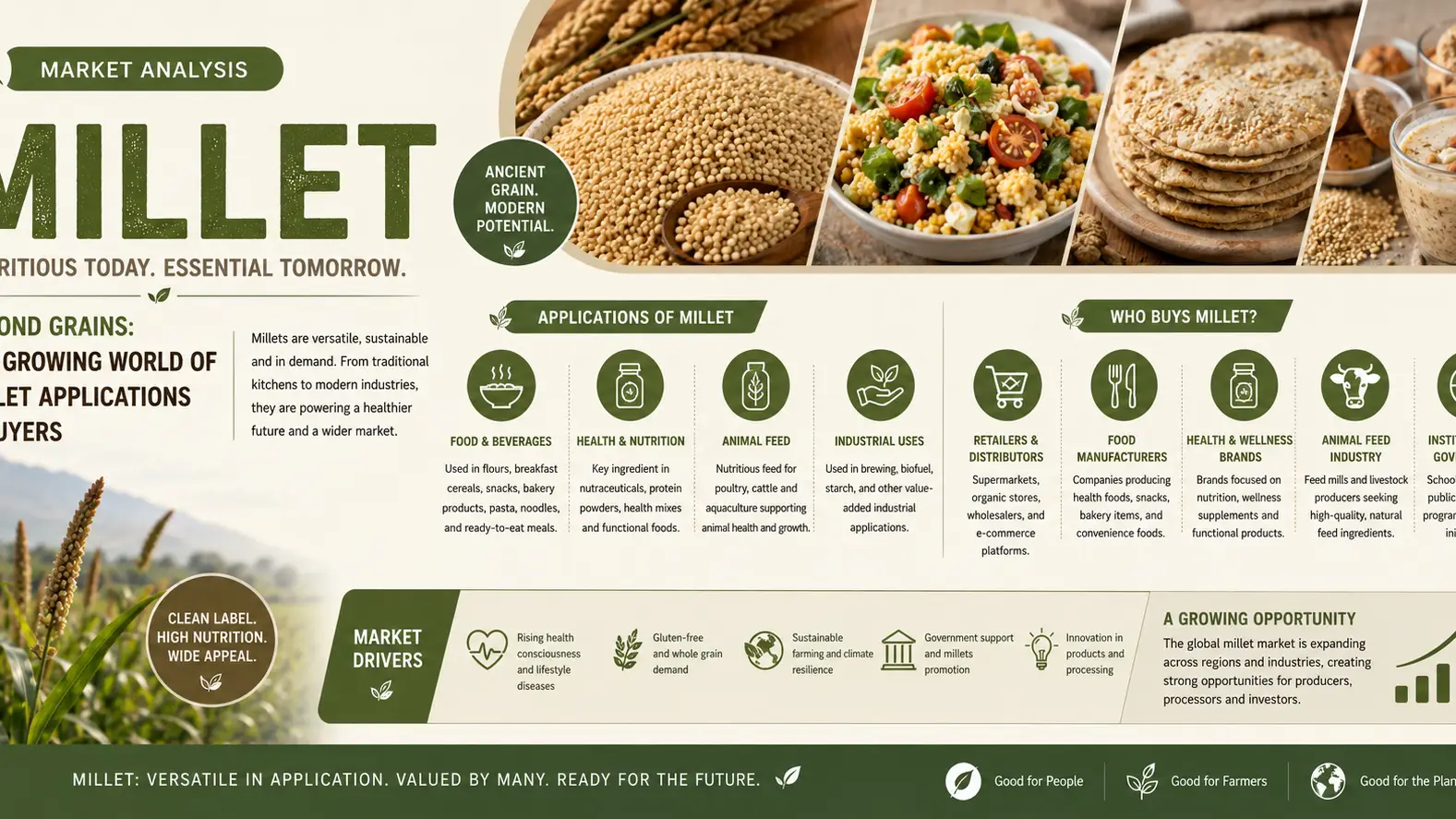
The food and beverage industry remains the largest application segment within the millet market. Food processors are increasingly incorporating millet into bakery products, breakfast cereals, snack bars, dairy alternatives, and ready-to-eat meals to address rising demand for plant-based and gluten-free products.
Millet flour and flakes are gaining traction among manufacturers seeking alternative grains with higher nutritional value and improved sustainability positioning. In North America and Europe, premium food brands are actively promoting millet-based formulations as part of clean-label and high-fiber product strategies. This trend is expanding procurement activity among large-scale food ingredient distributors and contract manufacturers.
Health and Wellness Brands Reshaping Buyer Segments
Health and wellness companies have become major commercial buyers within the millet supply ecosystem. Nutraceutical producers are utilizing millet in protein powders, fortified beverages, and digestive health supplements due to its mineral-rich composition and low glycemic index.
In 2026, the health-focused millet product segment is estimated to contribute nearly 30% of value-added market demand, particularly across urban consumer markets. Buyers in this category prioritize traceability, organic certification, and stable sourcing contracts, encouraging exporters and aggregators to strengthen quality assurance standards throughout the supply chain.
Industrial and Animal Feed Applications Supporting Volume Demand
Beyond food applications, millet is increasingly utilized within animal feed and industrial processing sectors. Feed manufacturers value millet for its digestibility and cost competitiveness compared to corn and wheat, particularly in poultry and livestock nutrition.
Industrial applications are also developing steadily, including brewing, starch extraction, and bio-based processing. These emerging sectors are supporting broader commercial utilization while improving overall market absorption capacity for lower-grade grain output.
Institutional Procurement and Global Distribution Trends
Institutional procurement continues influencing millet demand growth across schools, food assistance programs, and public nutrition initiatives. Governments and international development agencies are promoting millet consumption to support food security and climate adaptation objectives.
The Middle East, Southeast Asia, and Europe are becoming increasingly important import regions, with buyers prioritizing long-term procurement agreements and sustainable sourcing partnerships. As distribution networks modernize, exporters with reliable logistics capabilities and diversified sourcing portfolios are expected to gain competitive advantages in global trade markets.
Conclusion
As a platform agricultural commodity, millet is securing a stronger position across food manufacturing, wellness products, animal nutrition, and institutional procurement channels. Its adaptability, sustainability profile, and nutritional value continue attracting a broader spectrum of global buyers in 2026.
For businesses seeking dependable sourcing and international supply chain support, Tradeasia International provides tailored commodity trading solutions, reliable distribution capabilities, and global market access designed to meet evolving industrial and commercial millet demand.
Sources
Leave a Comment