Global Linseed Meal Supply Chain Trends for Feed Manufacturers and Traders
Introduction to the Global Linseed Meal Supply Chain Market
Understanding Linseed Meal as an Agricultural Feed Ingredient
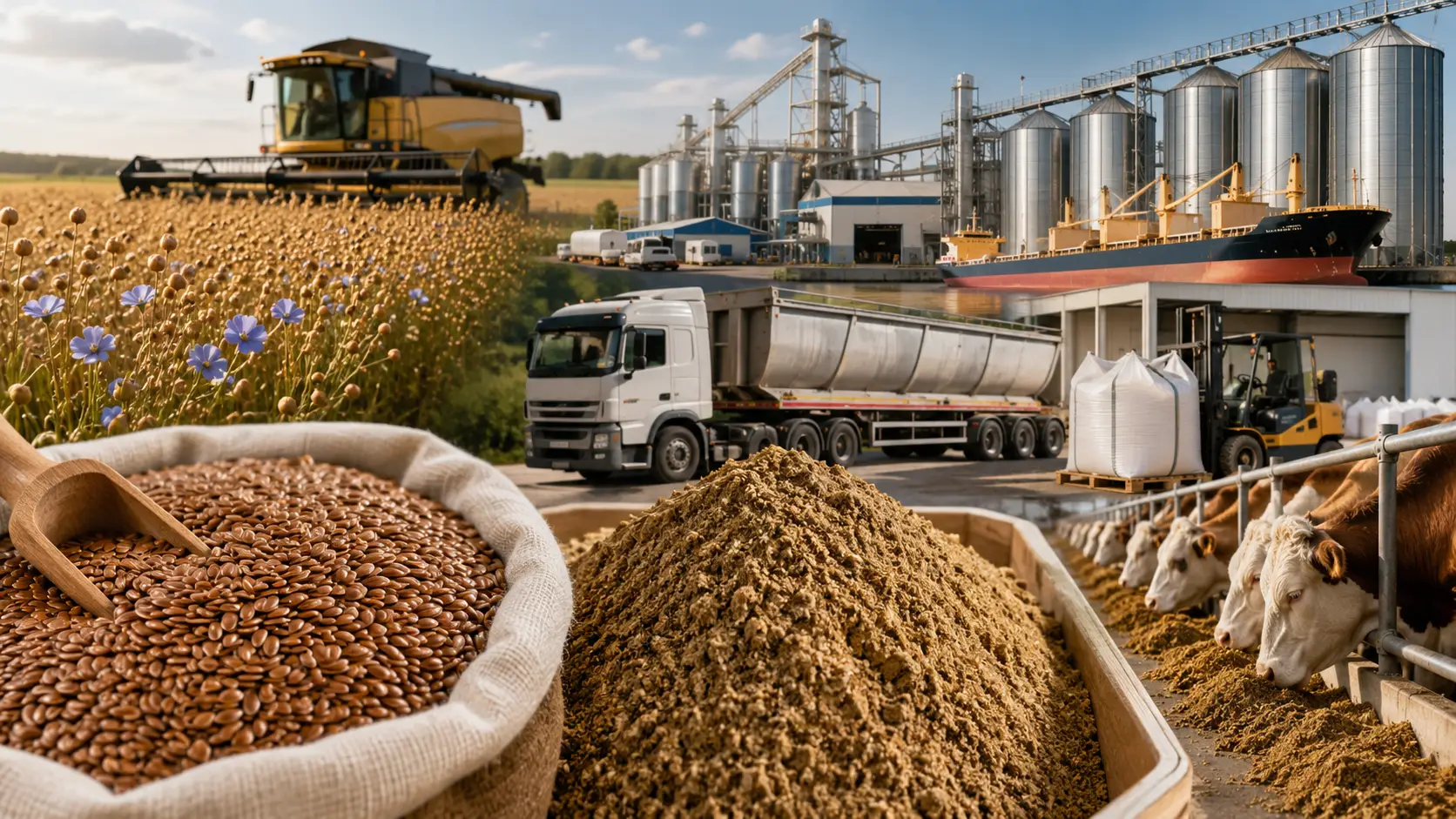
Linseed meal is a protein-rich by-product generated after extracting oil from linseeds, also known as flaxseeds. As global demand for plant-based feed ingredients continues to increase, linseed meal has become an important commodity for livestock nutrition markets due to its protein content, fiber profile, and nutritional contribution. The product is mainly produced in regions with established flaxseed cultivation and oil-processing industries, creating a connected supply chain between agricultural producers, crushers, exporters, distributors, and feed manufacturers.
According to agricultural information from the Food and Agriculture Organization (FAO), oilseed processing industries play an important role in global agricultural commodity markets by creating valuable co-products used in food and animal feed applications. Linseed meal represents a strategic example of how oilseed processing contributes additional value beyond primary oil production.
Growing Importance of Sustainable Feed Ingredient Supply
The increasing focus on sustainable livestock production has encouraged feed manufacturers to diversify their raw material portfolios. Linseed meal provides an alternative plant-derived protein source that supports feed formulation strategies for cattle, poultry, and other livestock segments. Buyers increasingly evaluate ingredients based on nutritional performance, availability, traceability, and supply reliability.
Market participants are also paying closer attention to circular agricultural systems where processing residues become commercially valuable feed materials. This trend strengthens the role of linseed meal suppliers within global agricultural supply chains.
The international trade environment for feed ingredients requires consistent sourcing strategies because agricultural commodities are influenced by crop cycles, weather conditions, transportation costs, and regional production variations. For procurement teams, identifying reliable suppliers has become essential for maintaining stable feed manufacturing operations.
Linseed Meal Production and International Supply Dynamics
Linseed meal supply depends heavily on flaxseed cultivation volumes and oil extraction capacity. Major flaxseed-producing regions, including Canada, Russia, Kazakhstan, and parts of Europe, contribute significantly to global linseed production and processing activities. After oil extraction, the remaining meal becomes available for commercial distribution to feed markets.
According to data from the United States Department of Agriculture (USDA) Foreign Agricultural Service, global oilseed markets are strongly influenced by production conditions, trade movements, and processing demand. These factors directly impact the availability and pricing structure of oilseed-derived feed ingredients such as linseed meal.
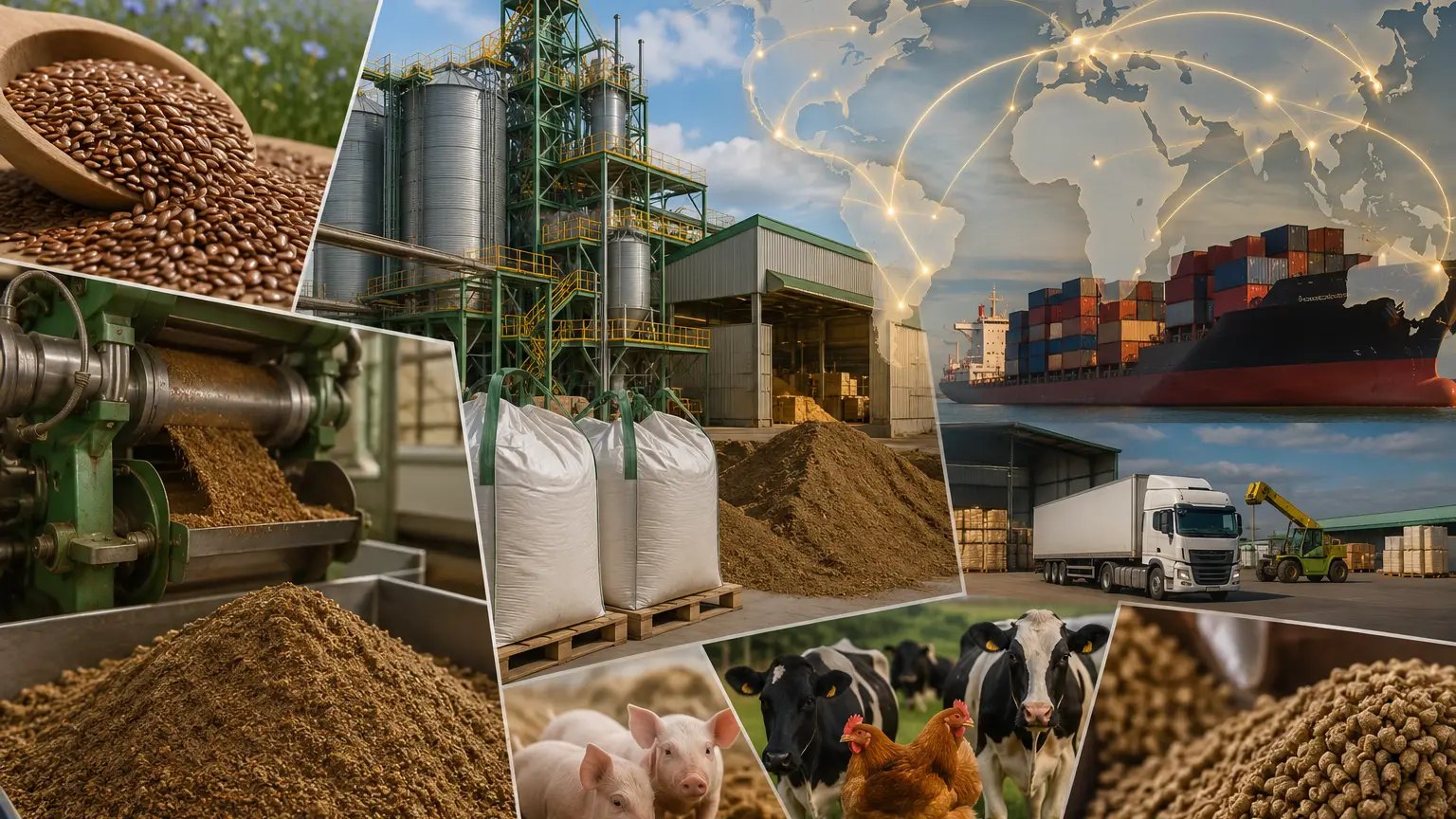
The supply chain typically involves multiple commercial stages, including farmers, oilseed processors, commodity traders, exporters, importers, and animal feed manufacturers. Efficient coordination between these stakeholders helps ensure product quality, documentation compliance, and international delivery performance.
Factors Influencing Linseed Meal Availability and Pricing
Linseed meal pricing is affected by several supply-side and demand-side factors. Agricultural yields, crushing capacity, energy costs, freight rates, and livestock industry demand all influence market conditions. Buyers sourcing internationally often compare suppliers based on pricing stability, production capability, logistics options, and quality certifications.
Feed producers commonly assess specifications such as protein percentage, moisture content, fiber levels, and contamination controls before establishing long-term purchasing agreements. These technical requirements influence supplier selection and determine whether a producer can meet industrial-scale demand.
Industry analysis from the International Grains Council highlights the importance of transparent commodity supply chains and reliable trade infrastructure for agricultural raw materials. As global feed production expands, professional sourcing platforms become increasingly valuable for connecting buyers with qualified suppliers.
Linseed Meal Applications in Livestock Feed Manufacturing
Linseed meal is primarily utilized as an ingredient in animal feed formulations because of its plant-based protein content and nutritional characteristics. Feed manufacturers incorporate linseed meal into diets for cattle, dairy animals, poultry, and other livestock categories where balanced protein sources are required. Its fiber content and amino acid profile make it suitable for specialized feed formulations, particularly in ruminant nutrition.
According to technical information published by the National Research Council, feed ingredients are evaluated based on nutrient composition, digestibility, and their ability to support animal performance. This approach encourages feed producers to select raw materials that provide functional nutritional benefits while maintaining cost efficiency.
The demand for linseed meal is closely connected to the growth of industrial livestock production. Large-scale feed manufacturers require consistent access to agricultural ingredients that can be supplied in bulk quantities with predictable specifications. As livestock producers continue improving feed efficiency, ingredient sourcing has become an important factor in production planning.
Beyond nutritional value, linseed meal also benefits from its position as a co-product of flaxseed oil production. This improves resource utilization within agricultural processing systems and creates additional commercial opportunities for suppliers, traders, and distributors operating in global feed markets.
Expanding Use Across Sustainable Feed Supply Chains
The global animal feed industry is increasingly exploring alternative protein and fiber ingredients to reduce dependency on limited conventional feed materials. Linseed meal contributes to this diversification strategy by offering a plant-derived ingredient that fits within sustainable agricultural supply models.
Research from agricultural institutions has highlighted the importance of oilseed meals as valuable components in livestock diets. According to the European Food Safety Authority, feed ingredient safety evaluation and nutritional assessment remain essential factors in supporting reliable animal production systems.
Feed companies and agricultural traders are increasingly interested in suppliers that can provide documentation, consistent quality, and traceable supply chains. These requirements influence how international linseed meal suppliers position themselves in competitive commodity markets.
As sustainability reporting becomes more important across food and agriculture industries, buyers are considering not only price competitiveness but also responsible sourcing practices, production transparency, and supply continuity when selecting partners.
Buyer Requirements and Procurement Considerations for Linseed Meal
The main buyers of linseed meal include compound feed manufacturers, livestock nutrition companies, agricultural commodity traders, feed distributors, and farming cooperatives. These organizations purchase linseed meal in commercial quantities to support continuous feed production and regional distribution networks.
Procurement teams typically evaluate suppliers based on product specifications, availability, export capability, packaging options, logistics performance, and compliance documentation. For international transactions, buyers also consider factors such as loading capacity, shipping routes, customs requirements, and supplier reliability.
According to market guidance from the International Trade Centre, successful agricultural commodity trade depends on transparent supplier relationships, quality assurance systems, and effective international logistics management.
The increasing complexity of global sourcing has encouraged buyers to use specialized B2B marketplaces to identify verified suppliers and compare commercial opportunities. Digital platforms help procurement teams access wider supplier networks while improving communication between producers, traders, and end users.
Quality Evaluation and Supplier Selection Factors
Before purchasing linseed meal, buyers commonly review nutritional specifications including protein content, moisture levels, fiber composition, and overall product consistency. Feed manufacturers may also request laboratory analysis reports and quality documentation to ensure compatibility with their production standards.
Supplier selection is rarely based only on product price. Industrial buyers prioritize suppliers capable of maintaining stable supply volumes, meeting delivery schedules, and supporting long-term procurement agreements. These factors are particularly important because agricultural commodities can experience seasonal fluctuations.
A reliable sourcing partner can help companies manage supply risks by providing market visibility, multiple sourcing options, and professional trade support. For distributors and manufacturers, access to dependable linseed meal suppliers improves operational planning and strengthens competitiveness.
B2B marketplace platforms supporting agricultural commodities provide a practical connection point between global suppliers and industrial buyers. Product listings, technical details, and supplier communication channels allow procurement teams to make informed sourcing decisions.
Regional Market Opportunities and Future Supply Outlook
The future outlook for linseed meal is closely connected to global growth in animal feed consumption and increasing demand for diversified agricultural ingredients. Regions with expanding livestock industries, including Asia-Pacific, the Middle East, and parts of Africa, represent potential growth markets for imported feed materials.
According to agricultural market analysis from the United States Department of Agriculture Foreign Agricultural Service, international agricultural commodity markets continue to evolve based on livestock production trends, trade policies, and regional supply conditions.
Exporters and distributors with strong logistics networks can capture opportunities by supplying consistent-quality linseed meal to markets where domestic production is limited. Competitive advantages include efficient transportation solutions, reliable documentation, and the ability to meet buyer-specific requirements.
The development of global agricultural trade channels has created opportunities for manufacturers and traders to expand their customer base. Companies that understand regional demand patterns and maintain flexible sourcing strategies are better positioned to participate in future market growth.
Future Trends in Linseed Meal Supply Chain Development
Technology, sustainability initiatives, and digital procurement systems are expected to influence the next stage of agricultural commodity trading. Buyers increasingly prefer suppliers that provide transparent information, faster communication, and efficient transaction processes.
The continued expansion of livestock industries will likely maintain demand for protein-rich feed ingredients. However, market participants must manage challenges including climate-related production changes, transportation costs, and fluctuating commodity prices.
For suppliers, investing in quality management and international trade capabilities will become increasingly important. For buyers, establishing relationships with dependable sourcing partners can improve supply security and reduce procurement risks.
As global feed markets become more interconnected, linseed meal will continue to represent a valuable agricultural co-product with opportunities across international supply chains.
Conclusion: Building Reliable Linseed Meal Sourcing Networks
Linseed meal has developed into an important agricultural commodity supporting the global animal nutrition industry. Its role as a protein-containing feed ingredient, combined with its connection to flaxseed oil processing, creates commercial value throughout the agricultural supply chain.
Market participants require reliable sourcing solutions that provide quality consistency, competitive pricing, and dependable international logistics. Manufacturers, distributors, and traders must evaluate suppliers carefully to ensure long-term supply stability.
According to agricultural trade research from organizations such as FAO and USDA, efficient commodity supply chains remain essential for supporting global food and feed production systems. These insights highlight the importance of professional sourcing networks in agricultural markets.
For companies seeking dependable linseed meal supply opportunities, Tradeasia International provides a global platform connecting buyers with international suppliers across agricultural commodity markets. Through market access, supplier networks, and B2B sourcing capabilities, Tradeasia supports businesses looking to develop efficient and reliable procurement strategies.
Sources
https://www.fao.org
https://www.usda.gov
https://www.intracen.org
Leave a Comment