Global Distillers Dried Grains with Solubles Supply Chain: Market Trends and Procurement Strategies
Introduction to Distillers Dried Grains with Solubles
Understanding Distillers Dried Grains with Solubles
Distillers Dried Grains with Solubles (DDGS) are nutrient-rich co-products generated during the production of bioethanol from cereal grains, particularly corn. After starch is converted into ethanol, the remaining protein, fiber, oil, minerals, and yeast nutrients are concentrated into DDGS, making it one of the most valuable feed ingredients in the global livestock sector.
As demand for sustainable animal nutrition continues to rise, DDGS has become an essential ingredient for feed manufacturers seeking cost-effective alternatives to conventional protein meals. Its consistent nutritional profile and competitive pricing have encouraged adoption across poultry, dairy, swine, beef, and aquaculture industries.
Strategic Importance in Agricultural Supply Chains
The global DDGS market is closely linked to ethanol production, grain availability, transportation infrastructure, and international trade policies. Because it is produced as a co-product rather than a primary commodity, DDGS availability often reflects fluctuations in biofuel production and agricultural harvests.
According to the U.S. Department of Agriculture (USDA), the United States remains one of the world's largest producers and exporters of DDGS, supplying major feed-importing countries across Asia, Latin America, and the Middle East. Industry reports from the Renewable Fuels Association (RFA) also highlight continued international demand driven by expanding livestock production and increasing emphasis on feed efficiency.
Global DDGS Supply Chain Overview
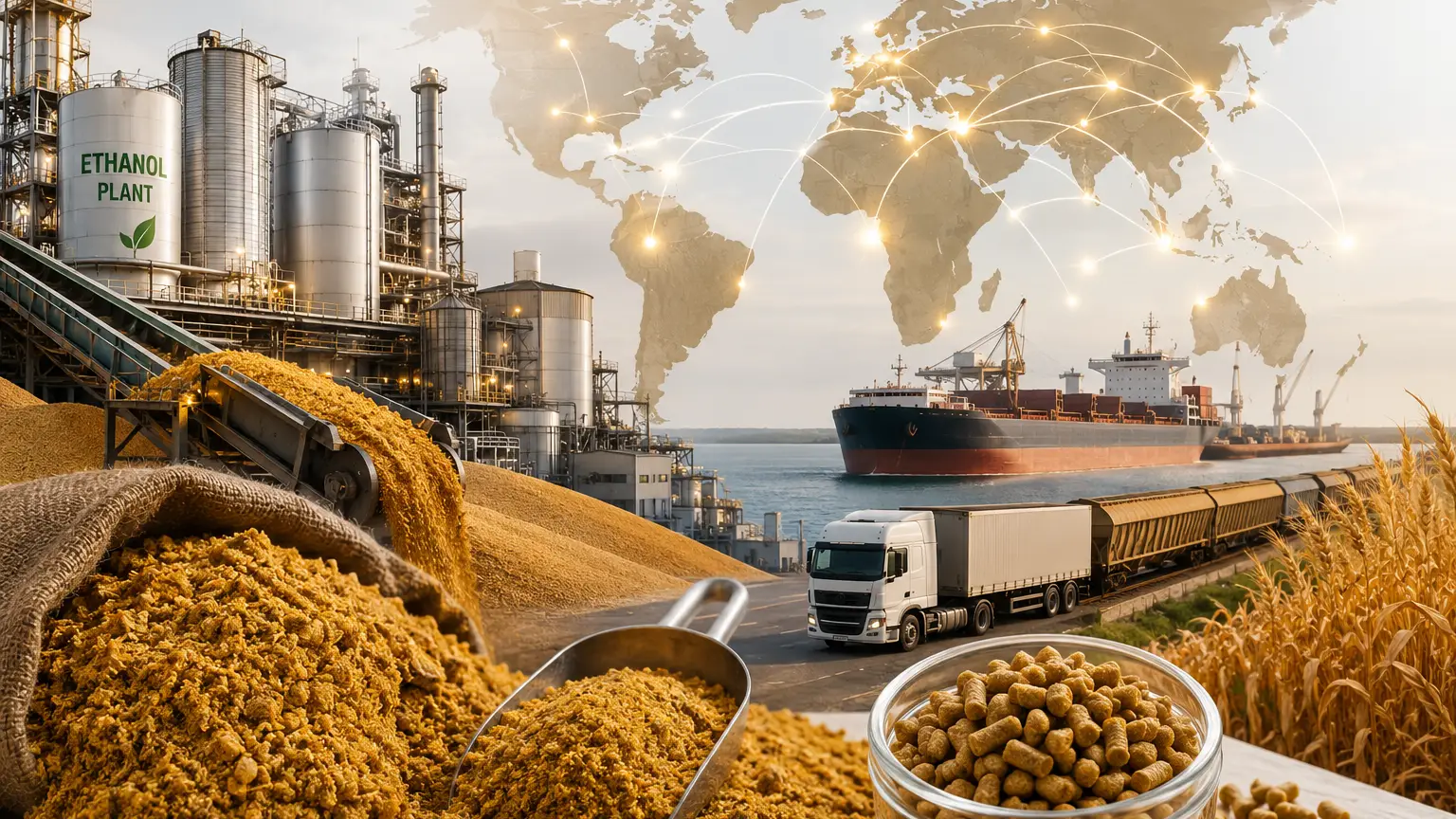
The DDGS supply chain begins at ethanol manufacturing facilities, where corn and other grains are processed into renewable fuel. Following fermentation and distillation, the remaining solids are dried and blended with condensed solubles before being prepared for domestic distribution or export.
Efficient logistics play a crucial role in maintaining product quality. Bulk transportation via rail, truck, and ocean freight enables suppliers to deliver DDGS to feed mills, distributors, and integrated livestock producers worldwide. Export terminals located near major grain-producing regions help streamline international shipments while reducing transportation costs.
Global Trade and Procurement Networks
International procurement teams often source DDGS through long-term contracts with exporters, commodity traders, and specialized agricultural distributors. Buyers evaluate shipment schedules, seasonal grain production, export regulations, and port accessibility to minimize supply disruptions.
According to market information published by the International Grains Council (IGC), global feed demand continues to support steady international trade in feed ingredients, while the USDA reports that export competitiveness depends on grain prices, freight availability, and ethanol production volumes. These interconnected factors shape purchasing decisions across regional feed markets.
Production Trends and Market Dynamics
Growing global demand for meat, dairy, poultry, and aquaculture products has significantly increased the consumption of high-quality feed ingredients. DDGS offers an attractive balance of protein, digestible fiber, energy, and phosphorus, making it a preferred ingredient in many commercial feed formulations.
Expanding biofuel production has also strengthened DDGS availability. As governments continue promoting renewable energy initiatives, ethanol production supports a stable supply of co-products that contribute to circular economy principles by maximizing agricultural resource utilization.
Factors Influencing Supply Stability
Despite positive long-term demand, DDGS markets remain sensitive to fluctuations in corn prices, ethanol margins, weather conditions, and international trade policies. Changes in export tariffs, transportation costs, or grain harvest volumes can influence regional pricing and availability.
According to the Food and Agriculture Organization (FAO) and agricultural market analyses published by the USDA, global feed ingredient markets are increasingly influenced by sustainability initiatives, feed cost optimization, and supply chain resilience. Procurement teams therefore monitor both agricultural commodity trends and biofuel production forecasts when planning long-term sourcing strategies.
Applications Across Feed Industries
Distillers Dried Grains with Solubles (DDGS) have become a widely accepted feed ingredient because they provide protein, digestible fiber, energy, essential amino acids, and minerals in a single product. Feed formulators incorporate DDGS into balanced diets to improve nutritional efficiency while helping manage overall feed costs. Depending on species and formulation objectives, DDGS can partially replace traditional ingredients such as corn, soybean meal, and other protein sources.
The product is extensively used in beef cattle, dairy cattle, swine, poultry, and aquaculture production. Modern feed technologies have also improved consistency in nutrient composition, allowing nutritionists to formulate diets with greater precision. According to technical publications from the U.S. Grains Council, DDGS continues to demonstrate strong nutritional performance across multiple livestock species when used within recommended inclusion rates.
Expanding Demand Across International Feed Markets
The increasing commercialization of livestock production in Asia, the Middle East, Africa, and Latin America has accelerated demand for imported feed ingredients. As producers focus on improving feed conversion ratios and production efficiency, DDGS has become an attractive option due to its competitive nutritional profile and reliable availability from major exporting countries.
Market assessments published by the Food and Agriculture Organization (FAO) indicate that rising global consumption of animal protein continues to support long-term growth in compound feed production. This trend creates sustained opportunities for DDGS suppliers, exporters, distributors, and procurement specialists seeking dependable feed ingredient solutions for expanding agricultural markets.
Buyer Intent and Procurement Considerations
Industrial buyers of DDGS include feed manufacturers, integrated livestock companies, commercial feed mills, agricultural distributors, commodity trading firms, and importers serving regional feed markets. Procurement teams typically assess product specifications such as crude protein, moisture, fiber, fat content, sulfur levels, particle size, color consistency, and storage stability before selecting a supplier.
Beyond product quality, buyers also evaluate manufacturing standards, origin, production capacity, export documentation, shipment reliability, and supplier responsiveness. According to guidance from the U.S. Grains Council, maintaining consistent quality specifications and transparent technical documentation is essential for building confidence among international buyers.
Why Procurement Teams Compare Suppliers
Large-volume feed manufacturers often compare multiple suppliers to reduce procurement risks, optimize costs, and maintain uninterrupted production schedules. Supply consistency is especially important because fluctuations in raw material availability can directly affect feed manufacturing operations and livestock productivity.
A comprehensive product page supports sourcing decisions by presenting technical specifications, packaging options, logistics capabilities, quality certifications, and supply availability in one location. Buyers increasingly value suppliers capable of providing technical assistance, flexible shipment arrangements, and dependable after-sales communication throughout the procurement process.
Future Outlook for the Global DDGS Market
Global interest in sustainable agriculture and renewable energy continues to strengthen the long-term outlook for DDGS. Since DDGS is produced as a co-product of ethanol manufacturing, its utilization contributes to resource efficiency by maximizing the value extracted from agricultural crops. This circular production model aligns with sustainability initiatives increasingly adopted across food, feed, and agricultural industries.
Growing investments in ethanol production capacity, improvements in grain processing technology, and enhanced nutritional research are expected to further improve DDGS quality and expand market acceptance. According to industry reports published by the Renewable Fuels Association (RFA), continued development of renewable fuels is likely to support stable DDGS production over the coming years.
Market Outlook for Global Procurement
International demand for feed ingredients is expected to remain strong as livestock production expands to meet growing global food requirements. Buyers will continue seeking reliable suppliers capable of ensuring consistent quality, competitive pricing, and efficient logistics while complying with international feed safety standards.
Organizations that strengthen supply chain resilience through diversified sourcing strategies and long-term supplier partnerships will be better positioned to manage market volatility. As global trade networks evolve, DDGS is expected to remain an important ingredient supporting efficient and sustainable animal nutrition across multiple regions.
Conclusion
Distillers Dried Grains with Solubles have established themselves as an essential feed ingredient within the global agricultural supply chain. Their combination of nutritional value, cost competitiveness, and broad applicability across livestock sectors continues to support growing international demand. Market dynamics remain closely connected to ethanol production, grain availability, logistics infrastructure, and global feed consumption, making supply chain visibility increasingly important for procurement teams.
For manufacturers, distributors, traders, and feed producers, selecting experienced sourcing partners can improve supply reliability and reduce procurement risks. As a global chemical and industrial raw material marketplace, Tradeasia International, Chemtradeasia, and Tradechem Marketplace support B2B buyers by connecting them with dependable supply networks, technical product information, and international sourcing solutions for feed ingredients, helping businesses build resilient procurement strategies in an increasingly competitive global market.
Sources
https://www.grains.org
https://www.fas.usda.gov

Leave a Comment