Global Citrus Pulp Supply Chain and B2B Sourcing Guide for Feed Industry
Global Citrus Pulp Supply Chain Overview
Citrus pulp as a global agro-industrial feed ingredient
Citrus pulp is a byproduct derived from orange, lemon, and other citrus fruit processing industries, primarily used in animal feed production. It is obtained after juice extraction and consists of peel, rag, and segment membranes, later processed into wet or dried forms for storage and trade. According to the Food and Agriculture Organization (FAO), citrus processing byproducts represent a significant portion of global fruit waste valorization streams.
The global supply chain of citrus pulp is closely linked to juice production hubs in Brazil, the United States, and Mediterranean countries. These regions dominate citrus cultivation and therefore generate large volumes of pulp available for feed markets. Its availability is highly seasonal and dependent on harvest cycles and juice production output.
Supply chain integration from juice industry to feed manufacturers
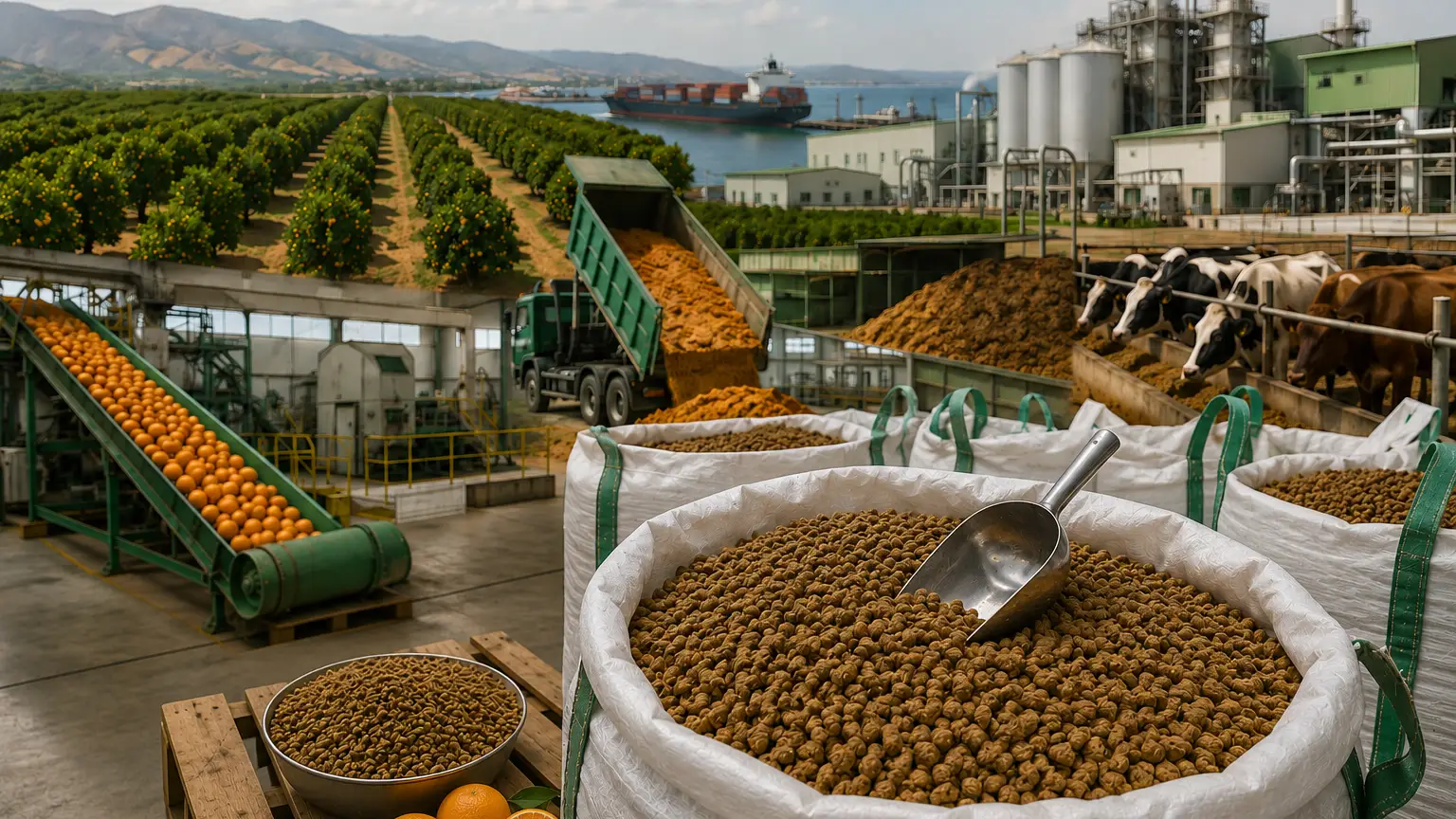
Within the supply chain, citrus pulp moves from juice processors to drying facilities and then to feed compounders or traders. The transformation process ensures extended shelf life and easier transportation for international trade.
Based on industry analysis by the European Feed Manufacturers’ Federation (FEFAC), agro-industrial byproducts like citrus pulp are increasingly integrated into circular economy models in feed production systems.
Citrus pulp supply chains are also influenced by energy costs, drying technology availability, and logistics infrastructure. These factors determine pricing volatility and export competitiveness in global markets.
Industrial Applications in Animal Feed and Feed Formulation
Citrus pulp is widely used as a fiber-rich feed ingredient in ruminant nutrition, particularly for dairy and beef cattle. It provides digestible fiber, moderate energy content, and improves rumen fermentation efficiency. According to research published in the Journal of Animal Science, citrus byproducts can partially replace traditional energy feeds like corn in certain formulations.
Its palatability makes it attractive for feed manufacturers seeking cost-effective alternatives to grains. It also contributes to improved feed intake and digestion balance in livestock production systems.
Functional use in compound feed manufacturing
In compound feed production, citrus pulp is blended with other ingredients such as grains, protein meals, and mineral premixes. Feed formulators use it to optimize cost-performance ratios while maintaining nutritional balance.
The U.S. Department of Agriculture (USDA) highlights the increasing use of fruit processing byproducts in sustainable feed formulation strategies. Citrus pulp plays a key role in reducing reliance on conventional feed grains.
Its binding properties and fiber structure also enhance pellet quality in manufactured feeds, making it valuable for industrial-scale feed mills.
Regional Trade Dynamics and Market Growth
The global citrus pulp trade is dominated by exporting countries such as Brazil, the United States, and Spain, where citrus juice industries are highly developed. These regions supply both dried and pelletized citrus pulp to international feed markets.
According to market insights from the International Trade Centre (ITC), demand for feed byproducts has increased in emerging livestock economies in Asia and the Middle East. These regions rely heavily on imported feed ingredients due to limited local agricultural byproduct availability.
Market expansion driven by livestock sector growth
The growth of dairy and beef industries in developing economies is a key driver of citrus pulp demand. Feed manufacturers are increasingly sourcing alternative fiber sources to reduce dependency on traditional grains.
FAO livestock outlook reports highlight a steady increase in global feed demand, particularly in Asia-Pacific regions. This trend directly supports the expansion of citrus pulp trade flows.
Trade dynamics are also influenced by freight costs, port infrastructure, and feed regulation policies across importing countries.
Processing, Drying, and Supply Chain Logistics
Citrus pulp undergoes drying processes such as drum drying or pressed drying to reduce moisture content and extend shelf life. This transformation is essential for long-distance transport and storage stability in international trade.
According to technical documentation from the Agricultural Research Service (ARS), drying methods significantly impact nutrient retention and feed quality. Proper processing ensures consistent product performance in livestock diets.
Logistics efficiency and bulk commodity handling
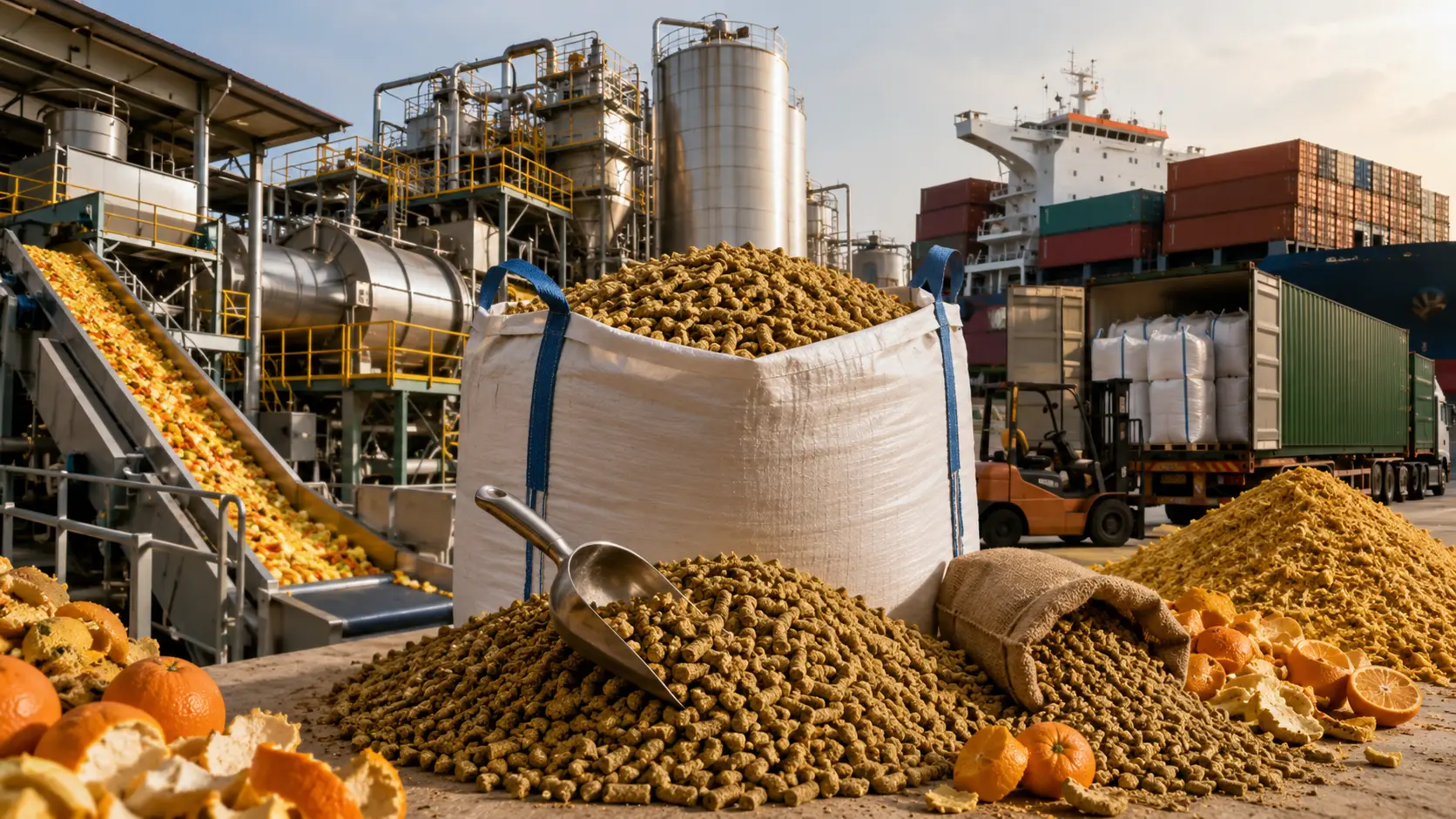
Once processed, citrus pulp is transported in bulk shipments, typically in pellet or meal form. Efficient logistics systems are essential to maintain product quality and prevent spoilage during transit.
Global feed supply chains rely on standardized packaging and moisture control measures to ensure safe delivery to feed mills. These logistics practices are crucial for maintaining competitiveness in international markets.
Quality Standards, Safety, and Sustainability Factors
Citrus pulp used in animal feed must comply with feed safety regulations established by authorities such as the European Food Safety Authority (EFSA). These standards ensure that feed ingredients are free from contaminants and meet nutritional requirements.
Quality control includes moisture level monitoring, fiber content testing, and microbial safety checks. These measures ensure consistent feed performance across different livestock systems.
Sustainability and circular economy benefits
Citrus pulp contributes to sustainable agriculture by reducing food processing waste and supporting circular economy models. Instead of disposal, citrus residues are converted into valuable feed resources.
Industry studies from the World Resources Institute (WRI) highlight the importance of agro-industrial byproducts in reducing environmental impact. Citrus pulp plays a key role in improving resource efficiency in the food-feed system.
Sustainability-driven procurement is increasingly influencing buyer decisions in the global feed industry.
Buyer Intent and Procurement Strategy for Citrus Pulp
Buyers of citrus pulp typically include feed manufacturers, livestock producers, and commodity trading companies. Their primary considerations include price stability, nutrient consistency, and supply reliability.
Procurement teams evaluate supplier capacity, processing standards, and logistics capabilities before entering long-term contracts. Seasonal availability also plays a critical role in sourcing decisions.
Commercial sourcing behavior and supplier comparison
Buyers often compare multiple suppliers to assess quality certifications, delivery timelines, and bulk pricing structures. Trade transparency and consistent supply are essential for minimizing operational risk.
Citrus pulp product pages on B2B marketplaces help procurement teams evaluate specifications and negotiate supply agreements efficiently.
Reliable sourcing ensures continuity in feed production cycles and supports large-scale livestock operations globally.
Conclusion: Strategic Outlook for Global Buyers
Citrus pulp continues to play a strategic role in global feed supply chains as demand for sustainable and cost-effective animal nutrition grows. Its integration into circular economy models strengthens its importance in agro-industrial trade networks.
For B2B buyers, the product represents both a cost-efficient feed ingredient and a stable sourcing opportunity in volatile grain markets.
Future demand will likely be shaped by livestock expansion, sustainability policies, and advancements in feed processing technologies.
Sources
https://www.fao.org
https://www.efsa.europa.eu
https://www.ers.usda.gov
Leave a Comment