Understanding Citrus Pulp in the Feed Supply Chain
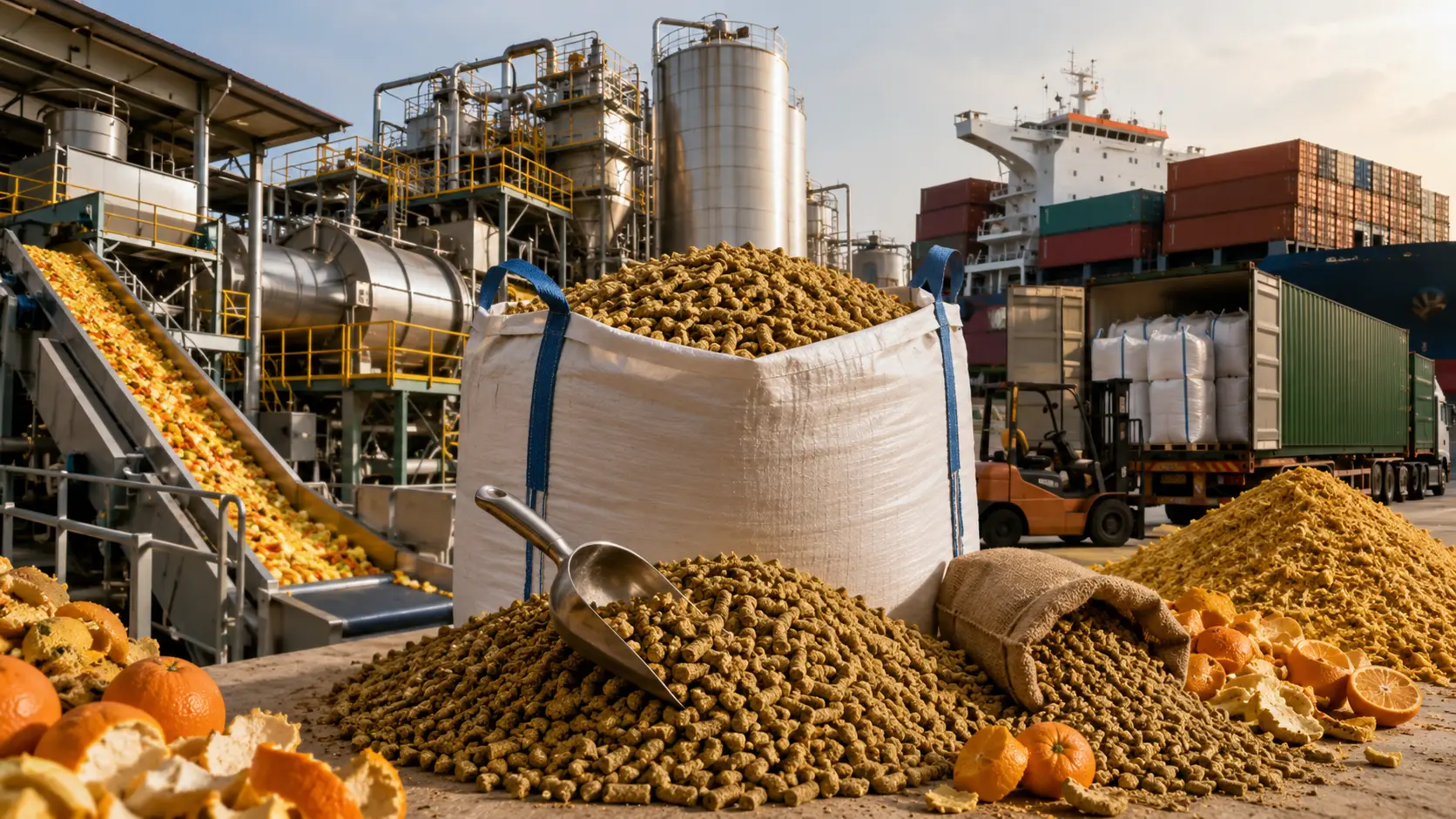
Citrus pulp is a valuable agricultural byproduct generated during the processing of citrus fruits such as oranges, lemons, and grapefruits. After juice extraction, the remaining peel, pulp, and seeds are processed and dried to create a feed ingredient widely used in livestock nutrition.
The growing emphasis on circular economy practices has increased interest in agricultural byproducts such as citrus pulp. According to the Food and Agriculture Organization (FAO), utilizing agro-industrial residues contributes to improved resource efficiency and sustainability across agricultural supply chains.
Characteristics That Support Commercial Demand
Citrus pulp is recognized for its digestible fiber content and energy value, making it a practical feed ingredient for ruminant animals. Its nutritional profile allows feed formulators to incorporate alternative energy sources into livestock diets while supporting cost management objectives.
Technical information published by research institutions such as the University of Florida Institute of Food and Agricultural Sciences highlights citrus pulp's role as an effective feed component in cattle nutrition, particularly where fiber and energy balance are important considerations.
Industrial Applications Driving Citrus Pulp Demand
The primary commercial application of citrus pulp is within the animal feed industry. Feed manufacturers use dried citrus pulp as an ingredient in cattle, dairy, sheep, and goat feed formulations due to its nutritional and economic benefits.
As livestock producers seek alternatives to conventional feed ingredients, citrus pulp has gained attention as a sustainable feed resource. According to research from the United States Department of Agriculture (USDA), agricultural byproducts continue to play an increasingly important role in feed diversification strategies.
Feed Formulation and Nutritional Uses
Feed formulators value citrus pulp because it can contribute digestible fiber while supporting ration optimization. The ingredient is particularly attractive in regions where feed cost volatility encourages the adoption of alternative feed materials.
Industry studies published by academic livestock nutrition programs indicate that citrus pulp can help balance feed formulations while supporting efficient utilization of agricultural processing byproducts, creating value for both processors and livestock producers.
Global Citrus Pulp Market and Supply Outlook
Global citrus pulp availability is closely linked to citrus juice production volumes. Major producing regions include Brazil, the United States, Mexico, and several Mediterranean countries where large citrus processing industries generate substantial byproduct streams.
Market analysis from organizations monitoring agricultural commodity flows indicates that fluctuations in citrus harvests, weather conditions, and juice consumption patterns directly influence citrus pulp supply availability and pricing dynamics.
International Trade and Export Opportunities
Brazil remains one of the most significant suppliers of citrus-derived feed ingredients due to its large-scale citrus processing infrastructure. Export-oriented production supports demand from feed manufacturers in Asia, Europe, and the Middle East.
According to market information from industry trade associations and agricultural export reports, growing demand for sustainable feed ingredients continues to support international trade opportunities for citrus pulp suppliers and distributors.
Key Buyer Groups and Procurement Considerations
Citrus pulp is commonly purchased by animal feed manufacturers, livestock nutrition companies, feed premix producers, commodity traders, distributors, and large-scale livestock operations. These buyers typically evaluate both nutritional performance and commercial supply reliability.
Procurement teams increasingly seek suppliers capable of maintaining consistent quality specifications, reliable logistics, and long-term supply commitments. Market intelligence published by feed industry organizations highlights the importance of supplier stability in feed ingredient procurement.
Quality and Supply Requirements
Buyers often assess factors such as moisture content, fiber composition, particle consistency, packaging options, and shipment reliability. Consistency across deliveries is particularly important for manufacturers operating large feed production facilities.
Industry guidance from feed safety and quality management programs emphasizes the need for traceability, quality assurance documentation, and transparent sourcing practices throughout agricultural ingredient supply chains.
Strategic Sourcing and Supply Chain Management
Successful citrus pulp procurement requires a comprehensive understanding of regional production cycles, export availability, transportation infrastructure, and inventory planning. Supply chain disruptions can influence both availability and pricing.
According to reports from international agricultural trade organizations, supply chain resilience has become a major focus area for feed ingredient buyers seeking to reduce procurement risks and improve operational continuity.
Building Reliable Supplier Relationships
Long-term supplier partnerships can help buyers secure stable access to citrus pulp while improving forecasting accuracy and procurement planning. Strategic relationships may also provide greater visibility into production trends and market conditions.
Industry experts frequently recommend supplier diversification and multi-region sourcing strategies to reduce exposure to weather-related production risks and fluctuations in regional agricultural output.
Buyer Intent and Supplier Evaluation Factors
The typical buyer searching for citrus pulp is looking for dependable feed ingredient sources that can support production efficiency, nutritional objectives, and cost competitiveness. Commercial buyers often compare multiple suppliers before making purchasing decisions.
Market studies across the feed industry show that procurement teams increasingly prioritize supplier transparency, quality documentation, logistics capabilities, and inventory availability when evaluating sourcing options.
How Procurement Teams Make Purchasing Decisions
Before purchasing citrus pulp, buyers commonly evaluate product specifications, consistency, regulatory compliance, export capabilities, delivery schedules, and commercial pricing structures. These factors help determine the overall value proposition of a supplier.
A comprehensive product page on a B2B marketplace can support sourcing decisions by providing technical information, supply availability insights, product specifications, and direct communication channels between buyers and suppliers.
Future Opportunities in the Citrus Pulp Market
Sustainability trends are expected to continue driving interest in agricultural byproducts such as citrus pulp. Feed manufacturers are increasingly exploring alternative ingredients that support both environmental objectives and cost optimization efforts.
Research published by global agricultural organizations indicates that circular economy principles and resource-efficient production models are becoming increasingly important throughout food and feed supply chains.
Emerging Market Developments
Advancements in feed formulation technologies may further enhance the commercial value of citrus pulp by improving its integration into livestock nutrition programs. Innovations in logistics and supply chain management may also expand market accessibility.
As global demand for livestock products continues to grow, citrus pulp is expected to remain an important feed ingredient within sustainable agricultural supply networks, creating opportunities for suppliers, distributors, and procurement professionals.
Conclusion
Citrus pulp has evolved from a processing byproduct into a commercially significant feed ingredient within global livestock nutrition markets. Its combination of nutritional value, sustainability benefits, and widespread availability supports continued demand across multiple regions.
For feed manufacturers, distributors, traders, and procurement teams, understanding citrus pulp supply chains is essential for developing resilient sourcing strategies. As sustainability and feed efficiency remain priorities across the agricultural sector, citrus pulp is expected to maintain its relevance in global feed ingredient markets.
Sources
https://www.fao.org
https://www.usda.gov
https://www.ufl.edu

Leave a Comment