Global Citrus Pulp Supply Chain Trends Creating Opportunities for Feed Manufacturers
Introduction to Citrus Pulp in the Global Feed Industry
Citrus pulp is a nutritious co-product generated during the processing of oranges, lemons, grapefruits, and other citrus fruits into juice. After removing the juice, the remaining peel, pulp, and seeds are dried or pelleted to produce a valuable feed ingredient rich in digestible fiber, pectin, and energy. Its sustainable origin and nutritional profile have made citrus pulp an increasingly important ingredient in commercial livestock feed formulations.
The Growing Importance of Citrus Pulp in Animal Nutrition
The livestock industry continues to seek alternative feed ingredients that balance nutrition, cost efficiency, and sustainability. Citrus pulp has become an attractive option because it can partially replace cereal grains while supporting rumen health in cattle and improving feed utilization. According to the Food and Agriculture Organization (FAO), the efficient use of agricultural by-products contributes to more sustainable livestock production systems and improved resource efficiency.
Growing consumer demand for meat and dairy products has encouraged feed manufacturers to diversify raw material sourcing. Citrus pulp aligns well with circular economy initiatives by converting fruit processing residues into valuable nutritional products instead of waste.
As sustainability becomes a procurement priority across the feed industry, citrus pulp continues to gain commercial relevance among manufacturers seeking dependable, environmentally responsible feed ingredients.
Citrus Pulp Production and Global Supply Chain Overview
Citrus pulp production is closely linked to global citrus juice manufacturing. Countries with large citrus processing industries generate substantial volumes of citrus pulp, making production highly seasonal and geographically concentrated. Brazil remains the world's largest producer and exporter, while the United States, Mexico, Spain, China, and several Mediterranean countries also contribute significantly to global supply.
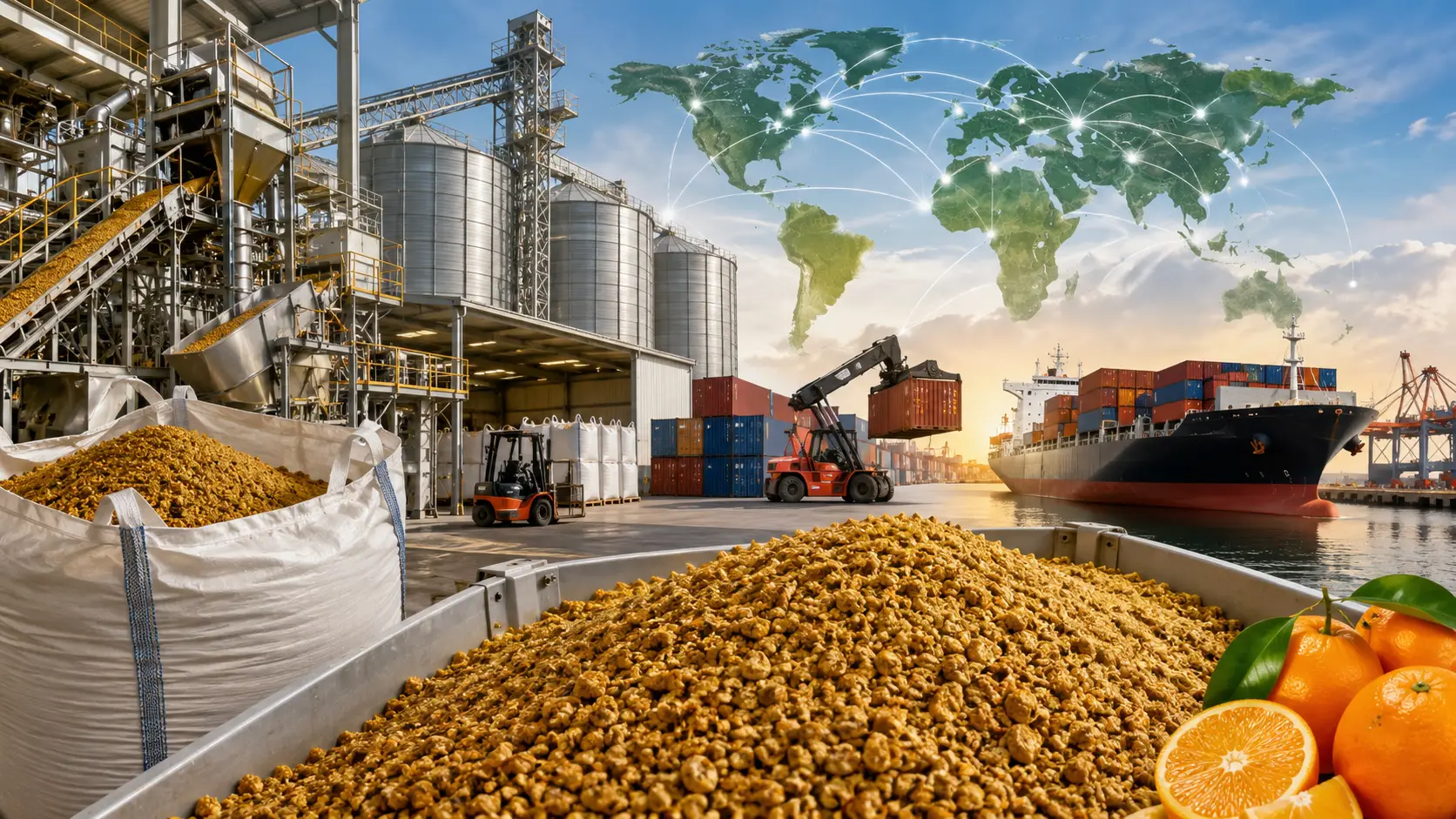
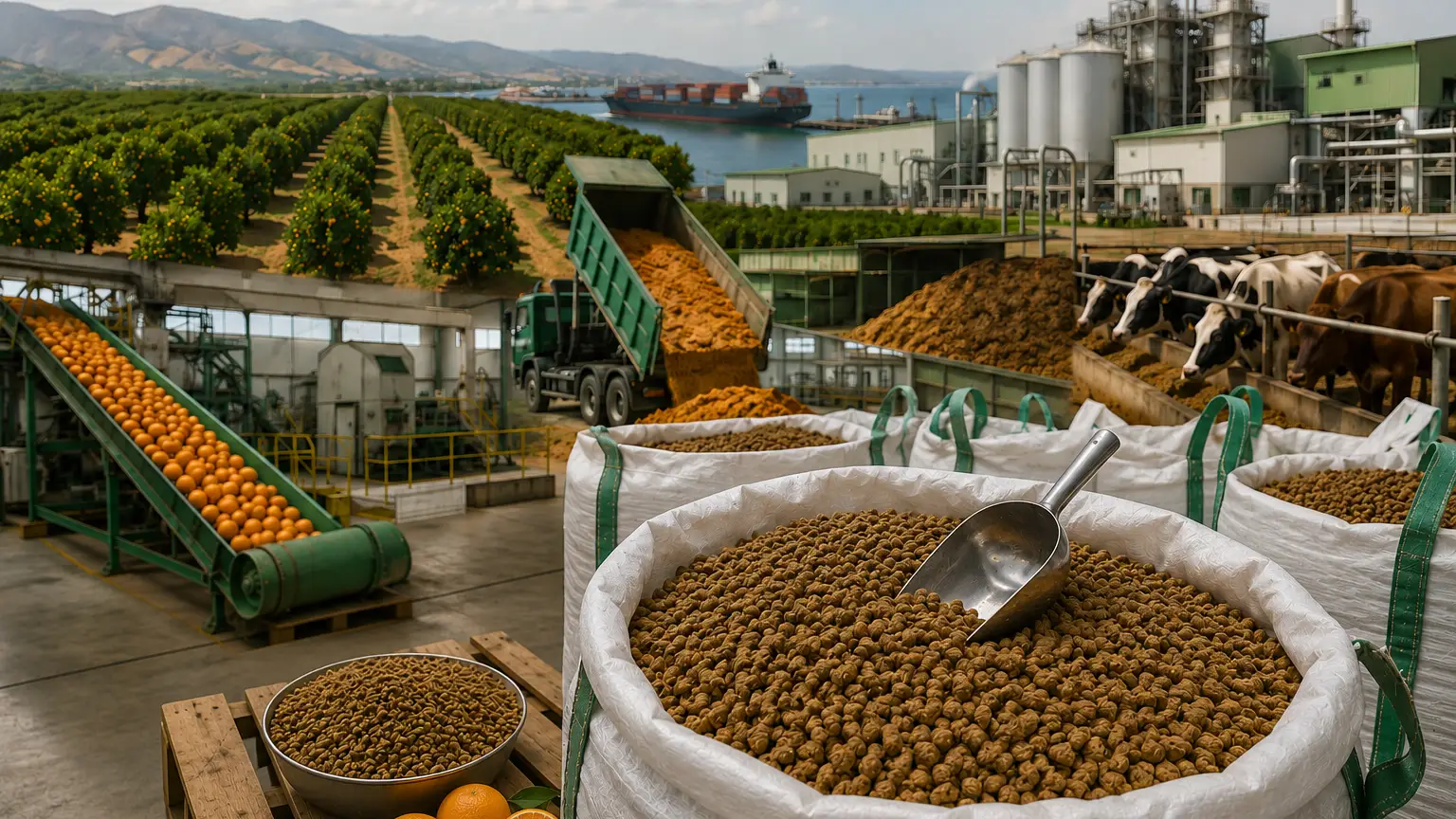
From Juice Processing to Global Feed Markets
The supply chain begins at juice processing facilities, where fresh citrus residues are collected immediately after extraction. These materials undergo drying or pelletizing to reduce moisture, improve shelf life, and facilitate transportation. Product quality depends on processing technology, storage conditions, and moisture control throughout production.
According to the United States Department of Agriculture (USDA), fluctuations in citrus harvest volumes directly influence the availability of citrus by-products, including dried citrus pulp. Weather events, disease outbreaks affecting citrus orchards, and processing capacity all play important roles in determining annual supply.
After processing, citrus pulp is transported through exporters, commodity traders, and global distributors before reaching feed manufacturers. International logistics, warehousing capabilities, and quality assurance programs are essential components that ensure consistent product availability for commercial buyers.
International Trade and Regional Supply Outlook
International trade has become a critical factor in maintaining a stable citrus pulp supply for feed manufacturers, particularly in regions where domestic citrus processing is limited. As demand for sustainable feed ingredients grows, importers increasingly rely on established exporting countries to secure consistent volumes and quality. Global trade networks enable citrus pulp to reach livestock producers, feed mills, and distributors across Asia, Europe, the Middle East, and Latin America.
Regional Market Dynamics and Export Opportunities
Brazil remains the dominant exporter of dried citrus pulp, supported by its large-scale orange juice industry and advanced processing infrastructure. Spain also serves as a significant supplier within Europe, while the United States and Mexico contribute to regional and international markets depending on harvest conditions. According to the International Trade Centre (ITC) Trade Map, global trade in agricultural by-products continues to expand as buyers diversify sourcing strategies to strengthen supply security.
Demand growth in Asia-Pacific is driven by expanding livestock production, rising consumption of meat and dairy products, and increasing adoption of alternative feed ingredients. Feed manufacturers in countries with limited citrus production often depend on imports to ensure year-round availability and maintain consistent feed formulations.
As international trade evolves, procurement teams are placing greater emphasis on supplier reliability, logistics capabilities, regulatory compliance, and product consistency. Exporters that provide transparent documentation, stable production capacity, and dependable shipping schedules are well positioned to capture long-term opportunities in the global citrus pulp market.
Supply Chain Challenges and Procurement Strategies
Like many agricultural commodities, the citrus pulp supply chain is influenced by seasonal production cycles, weather variability, transportation costs, and fluctuations in global demand. These factors can affect product availability, pricing, and delivery schedules, making proactive procurement planning essential for commercial buyers.
Building a Resilient Procurement Strategy
Extreme weather events, citrus crop diseases, and changing agricultural conditions can reduce fruit harvests and limit the volume of citrus by-products available for processing. According to the Food and Agriculture Organization (FAO), climate-related risks continue to impact agricultural supply chains worldwide, encouraging buyers to diversify sourcing and strengthen supplier relationships.
Procurement teams often evaluate suppliers based on product quality, moisture content, pellet consistency, nutritional composition, production capacity, export experience, and adherence to international quality standards. Reliable suppliers also provide traceability, technical documentation, and responsive customer support, helping buyers manage operational and regulatory requirements.
To minimize supply disruptions, many feed manufacturers establish long-term partnerships with experienced exporters and distributors operating across multiple sourcing regions. This approach improves supply continuity, reduces procurement risks, and enables businesses to respond more effectively to changing market conditions while maintaining consistent feed production.
Buyer Intent and Choosing Reliable Citrus Pulp Suppliers
Companies purchasing citrus pulp typically seek consistent product quality, dependable logistics, and competitive pricing to support efficient feed production. Commercial buyers include feed manufacturers, livestock integrators, dairy producers, commodity traders, feed ingredient distributors, and agricultural procurement organizations. As feed formulations become more cost-sensitive and sustainability-focused, procurement teams increasingly evaluate suppliers based on long-term value rather than price alone.
What Procurement Teams Evaluate Before Purchasing
Before placing orders, buyers commonly review product specifications such as moisture content, crude fiber, pectin levels, pellet durability, storage stability, and compliance with applicable quality and food safety standards. According to technical guidance published by the United States Department of Agriculture (USDA) and industry references from the International Feed Industry Federation (IFIF), consistent nutritional composition and documented quality assurance are essential for maintaining predictable feed performance.
Supplier capability is another important consideration. Procurement professionals compare manufacturers and distributors based on production capacity, export experience, inventory availability, documentation support, packaging options, and the ability to meet delivery schedules across international markets. Suppliers with established logistics networks and responsive customer service often provide greater confidence for long-term sourcing agreements.
A comprehensive product page supports sourcing decisions by providing clear technical specifications, application guidance, packaging information, and supply capabilities. For B2B buyers, access to accurate product data and responsive commercial support simplifies supplier evaluation, shortens procurement cycles, and strengthens purchasing confidence in competitive global markets.
Conclusion
Citrus pulp has evolved from a fruit processing by-product into a strategically important feed ingredient that supports sustainable livestock nutrition and efficient agricultural resource utilization. Its growing role in global animal feed production reflects increasing demand for cost-effective, fiber-rich alternatives that contribute to both nutritional performance and circular economy objectives.
The global citrus pulp supply chain continues to expand through established production hubs, international trade networks, and improvements in processing technology. While seasonal production, weather conditions, and logistics remain important market variables, experienced suppliers help maintain stable availability through diversified sourcing strategies and reliable export operations.
For feed manufacturers, distributors, and procurement teams, understanding supply chain dynamics is essential for securing dependable product quality and minimizing procurement risks. Evaluating supplier capabilities, technical documentation, and logistics performance enables businesses to make informed purchasing decisions that support long-term operational success.
As a trusted global chemical and feed ingredient supplier, Tradeasia International connects buyers with reliable citrus pulp manufacturers and international supply partners. Through extensive sourcing networks, quality-focused procurement, and global distribution capabilities, Tradeasia helps businesses secure consistent citrus pulp supplies that meet the evolving demands of the modern animal nutrition industry.
Sources
https://www.fao.org
https://www.usda.gov
https://www.trademap.org
Leave a Comment