Industrial Applications and Buyer Trends Driving Global Citrus Pulp Demand
Introduction to Citrus Pulp
Citrus pulp has become an increasingly valuable agricultural by-product in the global feed industry. Produced from the residues of oranges, lemons, grapefruits, and other citrus fruits after juice extraction, it is commonly dried and pelletized to improve storage stability and transportation efficiency. Rich in digestible fiber and natural carbohydrates, citrus pulp is widely incorporated into livestock feed formulations as a cost-effective energy source.
Understanding the Commercial Value of Citrus Pulp
The growing emphasis on sustainable agriculture has significantly increased the commercial value of citrus pulp. Rather than being treated as processing waste, citrus residues are converted into high-value feed ingredients that support circular economy initiatives. According to the Food and Agriculture Organization (FAO), agricultural by-products play an essential role in improving feed resource efficiency while reducing environmental waste.
Feed manufacturers continue to utilize citrus pulp because it offers favorable nutritional characteristics, including highly digestible fiber and moderate energy content. Its consistent availability in major citrus-producing countries also supports reliable commercial supply throughout international markets.
As sustainability becomes a greater priority across the feed industry, citrus pulp continues to gain recognition as an economical and environmentally responsible feed ingredient for industrial buyers.
Industrial Applications of Citrus Pulp
Citrus pulp serves multiple commercial applications across livestock production systems due to its nutritional profile and functional characteristics. It is commonly used in compound feed formulations designed for dairy cattle, beef cattle, sheep, goats, and other ruminants requiring fiber-rich energy sources.
Expanding Use Across Modern Feed Manufacturing
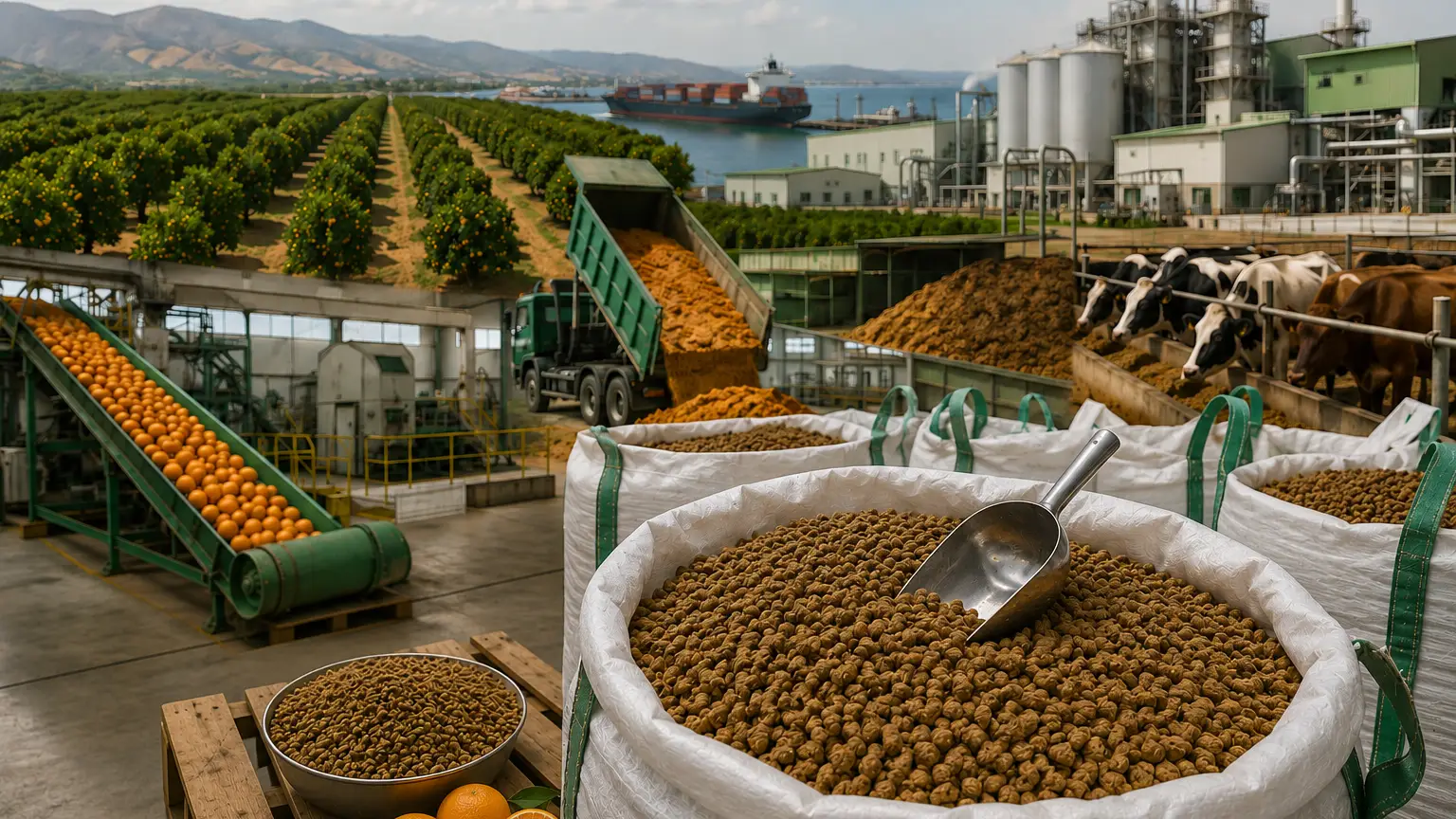
Within dairy production, citrus pulp helps provide fermentable fiber that supports rumen health while contributing to energy intake. Beef producers also value its ability to partially replace cereal grains during feed formulation, helping optimize feed costs without significantly affecting animal performance. Technical information published by the United States Department of Agriculture (USDA) highlights the growing use of agricultural co-products to improve feed efficiency and sustainability.
Feed mills appreciate citrus pulp because it blends well with other ingredients and can be supplied in pellet or meal form depending on manufacturing requirements. Its relatively low starch content also makes it suitable for balanced ruminant nutrition programs.
Beyond traditional livestock sectors, some specialty feed producers incorporate citrus pulp into equine and companion animal feed products where dietary fiber contributes to digestive health. As feed formulation technologies continue to evolve, manufacturers are identifying additional opportunities to maximize its nutritional benefits while supporting sustainable ingredient sourcing.
Market Trends Supporting Citrus Pulp Demand
Global demand for citrus pulp continues to rise as feed manufacturers seek sustainable, cost-effective ingredients that align with modern livestock nutrition strategies. The increasing production of citrus fruits, particularly in Brazil, the United States, China, and parts of the Mediterranean region, has strengthened the availability of citrus processing by-products for commercial feed applications. According to the Food and Agriculture Organization (FAO), global citrus production remains robust, supporting a stable supply of raw materials for dried citrus pulp manufacturing.
Sustainability and Feed Cost Optimization
Volatility in grain prices has encouraged feed producers to diversify their ingredient portfolios with alternative energy sources such as citrus pulp. By utilizing a co-product from the fruit processing industry, manufacturers can reduce dependence on conventional feed grains while improving overall formulation economics. Market analyses published by organizations such as Rabobank indicate that alternative feed ingredients are becoming increasingly important as livestock producers navigate fluctuating raw material costs and sustainability requirements.
Another notable trend is the growing adoption of circular economy principles throughout the food and agriculture sectors. Citrus processors are investing in technologies that improve drying efficiency, enhance product consistency, and minimize waste generation. These improvements have increased the commercial attractiveness of citrus pulp for international buyers seeking dependable quality and long-term supply partnerships.
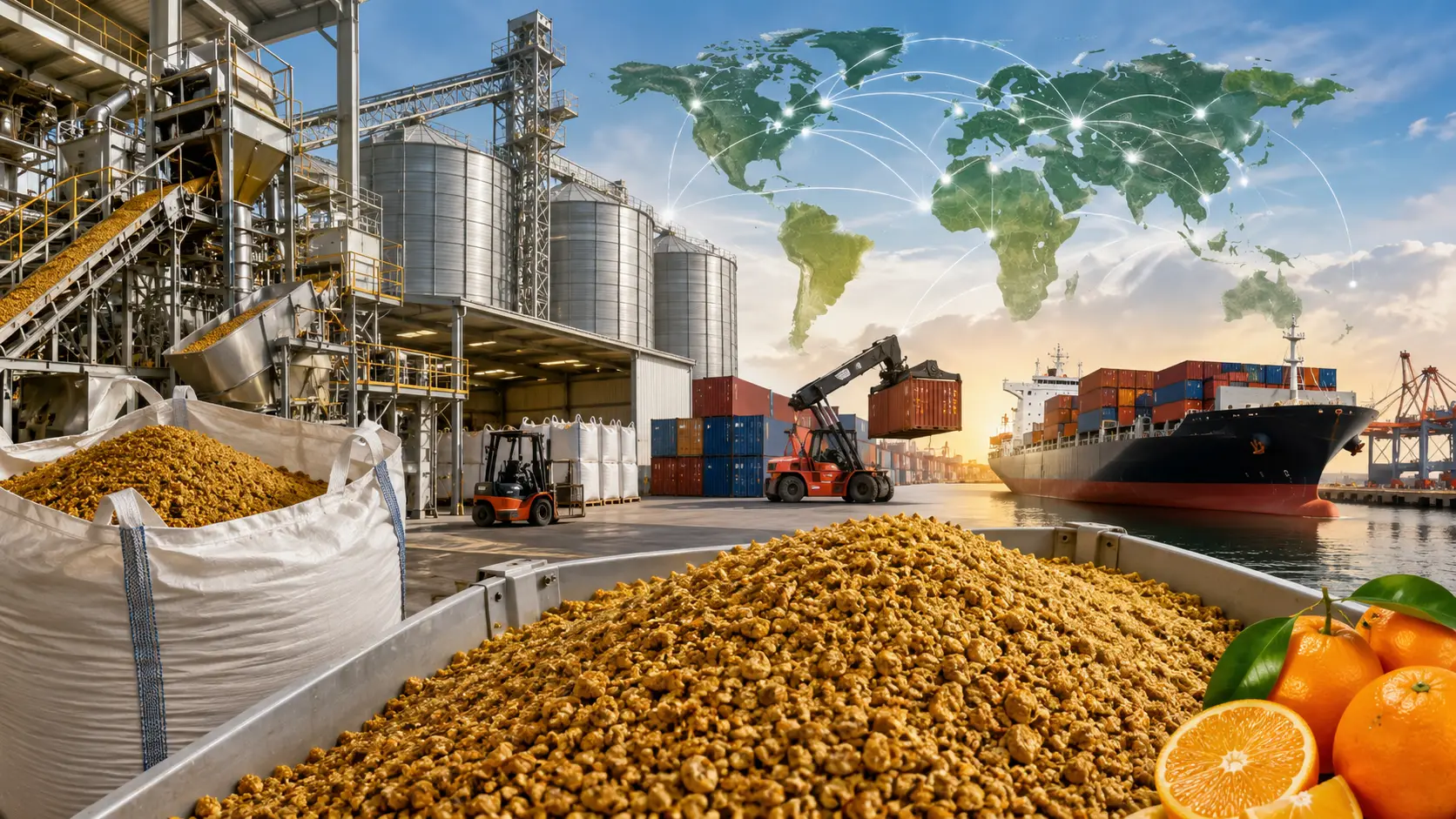
The expansion of international trade has also improved access to citrus pulp in regions with limited domestic citrus production. As logistics networks and export capabilities continue to improve, suppliers are reaching a broader range of feed manufacturers, creating new opportunities for global procurement and market growth.
Key Buyers and Procurement Considerations
Citrus pulp is purchased by a diverse group of commercial buyers operating across the livestock nutrition value chain. Major buyers include compound feed manufacturers, dairy cooperatives, beef producers, livestock integrators, feed distributors, agricultural trading companies, and importers specializing in feed ingredients. These organizations typically purchase citrus pulp in bulk to support continuous feed production and maintain stable inventory levels.
What Procurement Teams Evaluate Before Purchasing
Professional procurement teams assess several factors before selecting a citrus pulp supplier. Product consistency, moisture content, crude fiber levels, pellet durability, storage stability, and compliance with international feed safety standards are among the primary evaluation criteria. According to guidance from the European Feed Manufacturers' Federation (FEFAC), ingredient traceability and quality assurance have become increasingly important in responsible feed sourcing.
Buyers also compare suppliers based on production capacity, export experience, packaging options, documentation, shipping reliability, and responsiveness to technical inquiries. Certifications, laboratory analyses, and transparent quality control processes help reduce procurement risks and support long-term commercial relationships.
A comprehensive product page on a B2B marketplace enables buyers to review technical specifications, available grades, packaging formats, origin, and supply capabilities in one location. This simplifies supplier comparison, accelerates purchasing decisions, and improves confidence throughout the sourcing process, particularly for international procurement teams managing multiple suppliers.
B2B Sourcing Opportunities for Global Buyers
The globalization of agricultural commodity trade has expanded sourcing opportunities for citrus pulp buyers worldwide. Exporters from leading citrus-producing countries increasingly serve customers across Asia, the Middle East, Europe, Africa, and Latin America, enabling feed manufacturers to diversify their supplier base while maintaining consistent production schedules. According to the International Trade Centre (ITC), global agricultural trade continues to support cross-border procurement of value-added feed ingredients.
Building Reliable Supply Partnerships
Selecting a reliable supplier extends beyond securing competitive pricing. Buyers often seek partners with established export capabilities, dependable logistics networks, consistent production volumes, and comprehensive documentation for international shipments. Long-term supplier relationships help reduce supply chain disruptions and improve procurement planning.
Distributors and trading companies also play an important role by connecting regional buyers with global manufacturers. Their market expertise, inventory management, and logistics support enable customers to source citrus pulp efficiently while minimizing operational complexity.
For procurement professionals, working with established B2B marketplaces provides greater visibility into supplier capabilities and available product specifications. This approach streamlines supplier evaluation, enhances sourcing transparency, and supports informed purchasing decisions in increasingly competitive global feed markets.
Future Outlook for Citrus Pulp Applications
Growing demand for sustainable livestock production is expected to strengthen the long-term outlook for citrus pulp. As feed manufacturers continue to seek nutritious and economical alternatives to conventional grains, citrus pulp is likely to remain an important ingredient in commercial feed formulations. According to projections from the Food and Agriculture Organization (FAO), increasing global demand for animal protein will continue to drive innovation in feed ingredient sourcing and resource efficiency.
Innovation and Expanding Commercial Potential
Advancements in feed processing technologies are improving the consistency, storage stability, and nutritional value of dried citrus pulp. Manufacturers are investing in modern drying systems, quality assurance programs, and traceability solutions that meet the evolving expectations of international buyers. These improvements help position citrus pulp as a dependable ingredient for large-scale feed production.
The industry's growing focus on environmental responsibility is also creating new opportunities for citrus pulp. By converting fruit processing by-products into valuable feed ingredients, manufacturers contribute to waste reduction while supporting circular economy initiatives. Sustainability goals established by governments and food producers are expected to further encourage the adoption of agricultural co-products across the feed sector.
As international trade networks continue to expand, procurement teams will benefit from broader supplier options, improved logistics, and enhanced product availability. Companies that prioritize quality, consistency, regulatory compliance, and reliable delivery will be well positioned to meet the increasing demand for citrus pulp in global livestock nutrition markets.
Conclusion
Citrus pulp has evolved from a fruit processing by-product into a commercially valuable feed ingredient that supports efficient, sustainable, and cost-effective livestock production. Its high digestible fiber content, dependable nutritional profile, and compatibility with modern feed formulations make it an attractive option for feed manufacturers, livestock producers, distributors, and agricultural traders worldwide.
Increasing emphasis on sustainable agriculture, circular economy practices, and feed cost optimization continues to strengthen global demand for citrus pulp. As buyers evaluate suppliers, factors such as product quality, technical specifications, supply consistency, certifications, and logistics capabilities remain critical to successful procurement decisions.
For businesses seeking dependable citrus pulp suppliers, partnering with an experienced global sourcing company can simplify procurement while ensuring consistent product quality and supply reliability. Through Tradeasia International, Chemtradeasia, and Tradechem Marketplace, buyers gain access to trusted sourcing solutions, comprehensive product information, and an international supplier network designed to support the evolving needs of the global feed industry.
Sources
https://www.fao.org
https://www.usda.gov
https://www.intracen.org
Leave a Comment