Introduction to Butter Oil Replacer in B2B Food Supply
Understanding Butter Oil Replacer
Butter Oil Replacer is a functional fat ingredient used by food manufacturers seeking to reproduce important characteristics associated with butter oil or milk fat while gaining greater flexibility in formulation and procurement. In industrial food production, fat selection influences texture, mouthfeel, processing behavior, flavor delivery and finished-product consistency. This makes Butter Oil Replacer more than a simple substitute; it can function as part of a broader formulation and cost-management strategy. Codex recognizes edible fats and oils as food ingredients that can include mixtures and modified fats, providing an important international framework for the category.
From a procurement perspective, the value of Butter Oil Replacer is closely connected to consistency. Large-scale bakeries, confectionery producers, food processors and dairy-alternative manufacturers need ingredients that perform predictably across repeated production cycles. Variations in melting behavior, texture, flavor profile or handling characteristics can affect finished products and production efficiency. Consequently, buyers increasingly assess specialty fats according to technical performance rather than simply comparing nominal purchase prices.
Strategic Role in Food Manufacturing
Butter Oil Replacer can support manufacturers that need to balance sensory expectations with manufacturing economics. Its relevance becomes particularly clear when food producers operate multiple production lines or supply products across different climates and distribution channels. A suitable fat system can help manufacturers establish more consistent processing characteristics while reducing dependence on a single source of dairy fat. This makes supplier reliability and specification control important elements of the purchasing decision.
For B2B buyers, the commercial opportunity therefore extends beyond finding a replacement for butter oil. Procurement teams must evaluate whether a supplier can provide consistent material, appropriate documentation, dependable packaging, responsive technical support and predictable international delivery. The strongest sourcing strategy connects product specifications with production requirements, market positioning and long-term supply continuity.
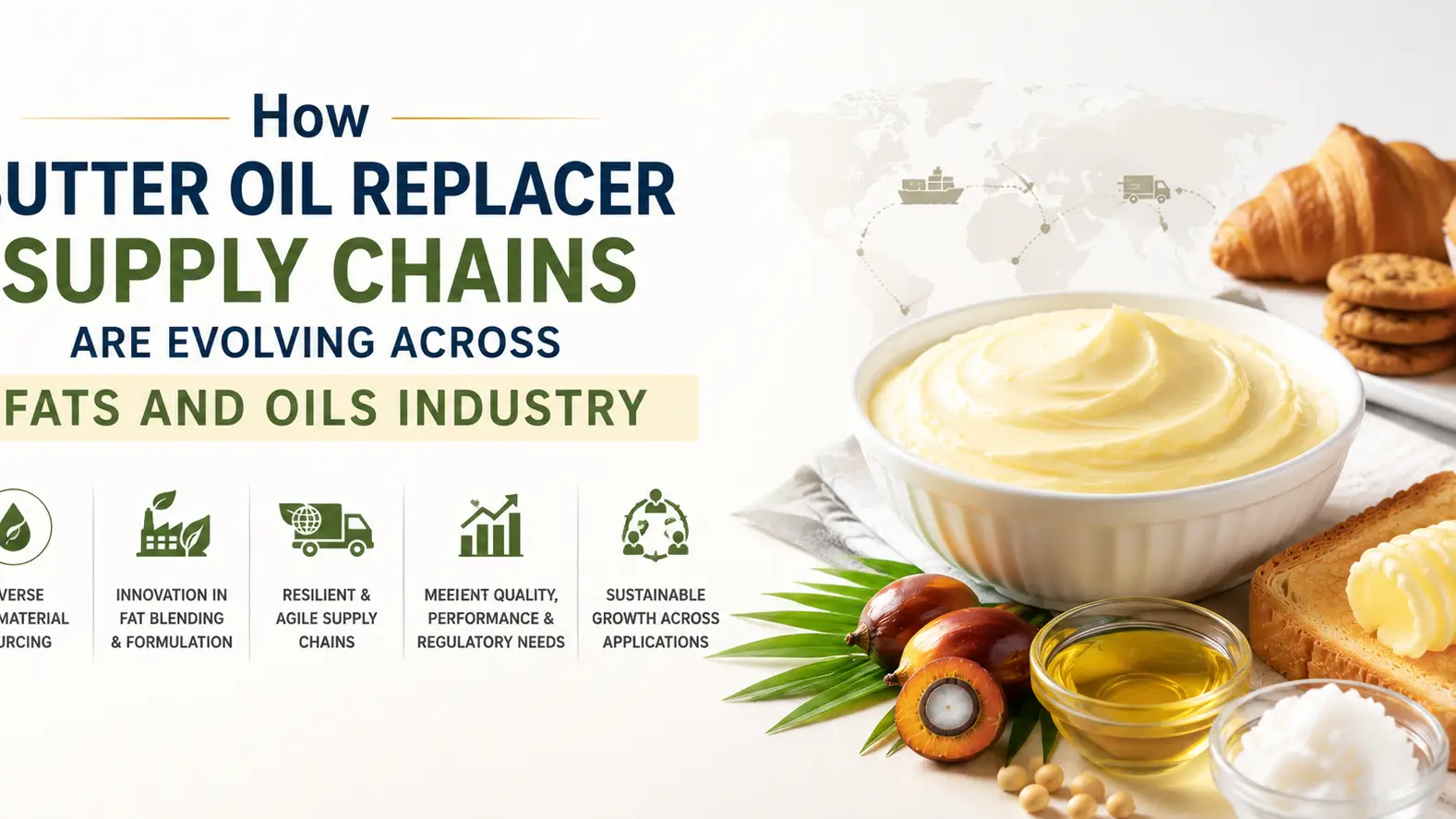
Butter Oil Replacer Supply Chain Structure
The Butter Oil Replacer supply chain begins with edible fat and oil feedstocks, followed by formulation, processing, quality control, packaging and distribution. Depending on the specific product design, specialty fat systems may use vegetable-derived fats or blends engineered to deliver targeted melting and functional characteristics. Codex standards cover edible fats and oils, including products that have undergone processes such as modification or fractionation, which is relevant when evaluating structured food-fat systems.
Feedstock availability can therefore influence the reliability and economics of Butter Oil Replacer production. Agricultural conditions, oilseed and palm-related supply dynamics, energy costs and regional processing capacity can all influence upstream availability. For manufacturers and distributors, this means that a supplier should not be evaluated solely on its immediate stock position. Understanding the broader sourcing structure can provide better visibility into the resilience of future supply.
Regional Supply and Procurement
Regional production capabilities also influence how Butter Oil Replacer moves through international markets. Specialty fat manufacturers with established refining, fractionation and formulation infrastructure can serve multiple food-industry segments while maintaining standardized production controls. For importers and distributors, access to established manufacturing regions can create procurement opportunities, but it also requires attention to freight schedules, export documentation and destination-market requirements.
A resilient supply strategy typically combines qualified suppliers with clear specifications and realistic replenishment planning. Buyers should establish expected annual demand, preferred shipment sizes and acceptable lead times before entering long-term negotiations. This approach allows procurement teams to compare suppliers on total supply performance rather than treating the lowest quoted price as the only purchasing criterion.
Industrial Applications Driving Procurement
Bakery is an important application area for Butter Oil Replacer because fats influence dough handling, tenderness, aeration, texture and finished-product characteristics. Products such as biscuits, cookies, cakes, pastries and other baked foods require controlled fat behavior throughout mixing, forming and baking. Specialty fat suppliers commonly position butter oil substitutes for bakery products where buttery taste, aroma and functional performance are required.
For industrial bakeries, application performance can determine purchasing specifications. A buyer may evaluate melting profile, plasticity, flavor, oxidative stability, storage behavior and compatibility with existing production equipment. These requirements make technical documentation and product samples valuable during supplier qualification. A material that performs well at laboratory scale must also demonstrate repeatability under commercial production conditions.
Confectionery and Dairy-Alternative Applications
Confectionery manufacturers can use butter-fat replacement systems in fillings, creams, coatings and other fat-based formulations where mouthfeel and structural stability are important. Dairy-alternative and recombined-food manufacturers can likewise consider specialty fats when developing products that require a creamy or buttery sensory profile. The exact formulation, however, depends on the finished product, processing conditions and regulatory requirements of the destination market.
Application diversity increases the importance of product segmentation in B2B procurement. A supplier should be able to identify which Butter Oil Replacer grade is appropriate for the customer's processing conditions instead of treating every application as interchangeable. Buyers should therefore communicate the target product, processing temperature, desired texture, storage conditions and sensory objectives when requesting technical recommendations or quotations.
Quality and Technical Requirements for Buyers
Quality evaluation is central to Butter Oil Replacer procurement because specialty fats can influence several measurable and sensory properties simultaneously. Buyers should establish a technical specification covering parameters relevant to their formulation, such as appearance, odor, flavor, melting characteristics, fat composition and other agreed quality indicators. The exact specification should reflect the intended application rather than relying on a generic industry description.
Documentation is equally important. Food manufacturers commonly require certificates of analysis, product specifications, safety documentation, allergen information and applicable regulatory declarations before approving an ingredient. In the United States, the FDA notes that food manufacturers generally must declare ingredients on food labels and that ingredients must meet applicable safety requirements.
Food Safety and Regulatory Compliance
International buyers must also assess regulatory compatibility before importing Butter Oil Replacer. Requirements can differ according to the composition of the fat system, intended food category, additives used, labeling rules and destination-country legislation. Codex provides internationally recognized standards and guidance for edible fats and oils, but buyers should still verify the requirements applicable to the specific market where the finished food will be sold.
Supplier qualification should therefore include regulatory verification as well as commercial evaluation. Procurement teams can request current technical specifications, certificates, manufacturing information and supporting compliance documents before approving a supplier. This reduces the risk of discovering regulatory or documentation gaps after a shipment has already been contracted.
Supplier Evaluation and Strategic Sourcing
A reliable Butter Oil Replacer supplier should demonstrate consistency in product quality, documentation, communication and delivery performance. Buyers should assess whether the supplier understands food-industry applications and can provide material that matches the customer's processing requirements. Product availability is useful, but technical competence and supply transparency are equally important for long-term procurement.
Supplier evaluation can also consider manufacturing controls and certification coverage. Specialty-fat manufacturers may maintain food-safety management systems and certifications covering the production of butter oil substitutes and related functional fats. For example, Apical identifies Butter Oil Substitute among its specialty-fat products and describes certification coverage for its specialty-fat manufacturing activities.
Commercial Procurement Strategy
Commercial sourcing should compare suppliers according to total delivered value rather than the headline product price. Freight, packaging, minimum order quantities, payment conditions, lead times, documentation and inventory requirements can materially affect the final procurement cost. A supplier offering slightly higher material pricing may still provide better commercial value if it reduces delays, quality deviations or emergency purchases.
For distributors and food manufacturers, framework agreements can provide another layer of supply stability. Buyers can establish agreed specifications, delivery expectations and quality procedures while retaining flexibility to adjust order volumes according to production demand. This creates a clearer procurement relationship and reduces repeated qualification work when regular replenishment is required.
Logistics, Storage and Supply Chain Risk
Logistics performance is particularly important for specialty fats because physical condition and handling can affect usability. Shipment planning should account for packaging configuration, temperature exposure, transit duration and warehouse conditions. The objective is to ensure that the product reaches the manufacturing site in a condition consistent with the approved specification.
International procurement also requires accurate commercial and shipping documentation. Buyers should coordinate purchase orders, commercial invoices, packing lists, certificates and any required regulatory documents before shipment. Clear documentation helps reduce customs delays and supports traceability throughout the distribution chain.
Risk Management and Inventory Planning
Supply-chain risk can arise from upstream feedstock disruptions, manufacturing interruptions, freight constraints, regulatory changes or unexpected demand. Food manufacturers that operate continuous production schedules are particularly sensitive to ingredient shortages because a delayed specialty fat can disrupt finished-product manufacturing. Maintaining appropriate safety stock can therefore be part of the overall sourcing strategy.
Risk management does not necessarily mean holding excessive inventory. Instead, buyers can establish realistic reorder points based on consumption rates, supplier lead times and the criticality of Butter Oil Replacer within the formulation. Dual sourcing or maintaining an approved alternative supplier can also improve resilience when the ingredient is strategically important to production.
Market Outlook and Strategic Procurement
The outlook for Butter Oil Replacer is closely linked to the continued development of industrial bakery, confectionery, processed-food and alternative-fat formulations. Manufacturers are increasingly interested in functional ingredients that provide predictable performance while supporting cost management and formulation flexibility. Specialty-fat suppliers consequently compete not only on availability but also on application performance and technical support.
The market should therefore be viewed through a procurement lens rather than simply as a replacement-fat category. Buyers are increasingly likely to evaluate performance consistency, regulatory readiness, supply transparency and logistical capability alongside price. This creates opportunities for suppliers that can combine technical quality with dependable international distribution.
B2B Buying Priorities
For procurement teams, the most effective purchasing approach is to define the required performance before approaching the market. A clear product specification allows buyers to compare quotations on an equivalent basis and prevents unsuitable grades from being selected solely because of a lower unit price. It also gives suppliers enough technical information to recommend the correct product configuration.
Long-term sourcing decisions should combine technical qualification, commercial competitiveness and supply-chain resilience. When these three factors are evaluated together, Butter Oil Replacer can become a reliable component of a broader food-ingredient procurement strategy. B2B marketplaces and international ingredient distributors can support this process by connecting manufacturers and buyers with qualified supply options.
Conclusion: Building a Reliable Butter Oil Replacer Supply Strategy
Butter Oil Replacer occupies an important position in modern food-ingredient procurement because it connects functional fat performance with formulation flexibility and supply-chain planning. Its relevance spans bakery, confectionery, processed foods and selected dairy-alternative applications, making consistent technical performance an important purchasing consideration. Buyers should therefore approach sourcing with a clear understanding of application requirements, quality expectations and delivery needs.
The most effective procurement strategy starts with qualification and continues through supplier monitoring. Technical specifications, regulatory documentation, certificates, packaging, logistics capability and communication should all be reviewed before a supplier becomes part of the approved supply base. This structured approach helps food manufacturers reduce operational uncertainty while maintaining consistent finished-product performance.
Strategic B2B Sourcing with Tradeasia
For international buyers, working with an experienced chemical and food-ingredient trading platform can simplify supplier discovery, product evaluation and cross-border procurement. Tradeasia International can support B2B buyers by connecting sourcing requirements with suitable ingredient supply options and helping procurement teams approach international purchasing with greater transparency.
As Butter Oil Replacer remains relevant to manufacturers seeking functional fat solutions and dependable ingredient sourcing, procurement decisions should prioritize quality consistency, supply resilience and application suitability. A disciplined sourcing strategy can help buyers manage production requirements while building a more reliable international supply chain for this specialty food ingredient.
Sources
https://www.fao.org/
https://www.ncbi.nlm.nih.gov/
https://www.imarcgroup.com/

Leave a Comment