Introduction
Reconfiguring global fats logistics amid volatility and innovation
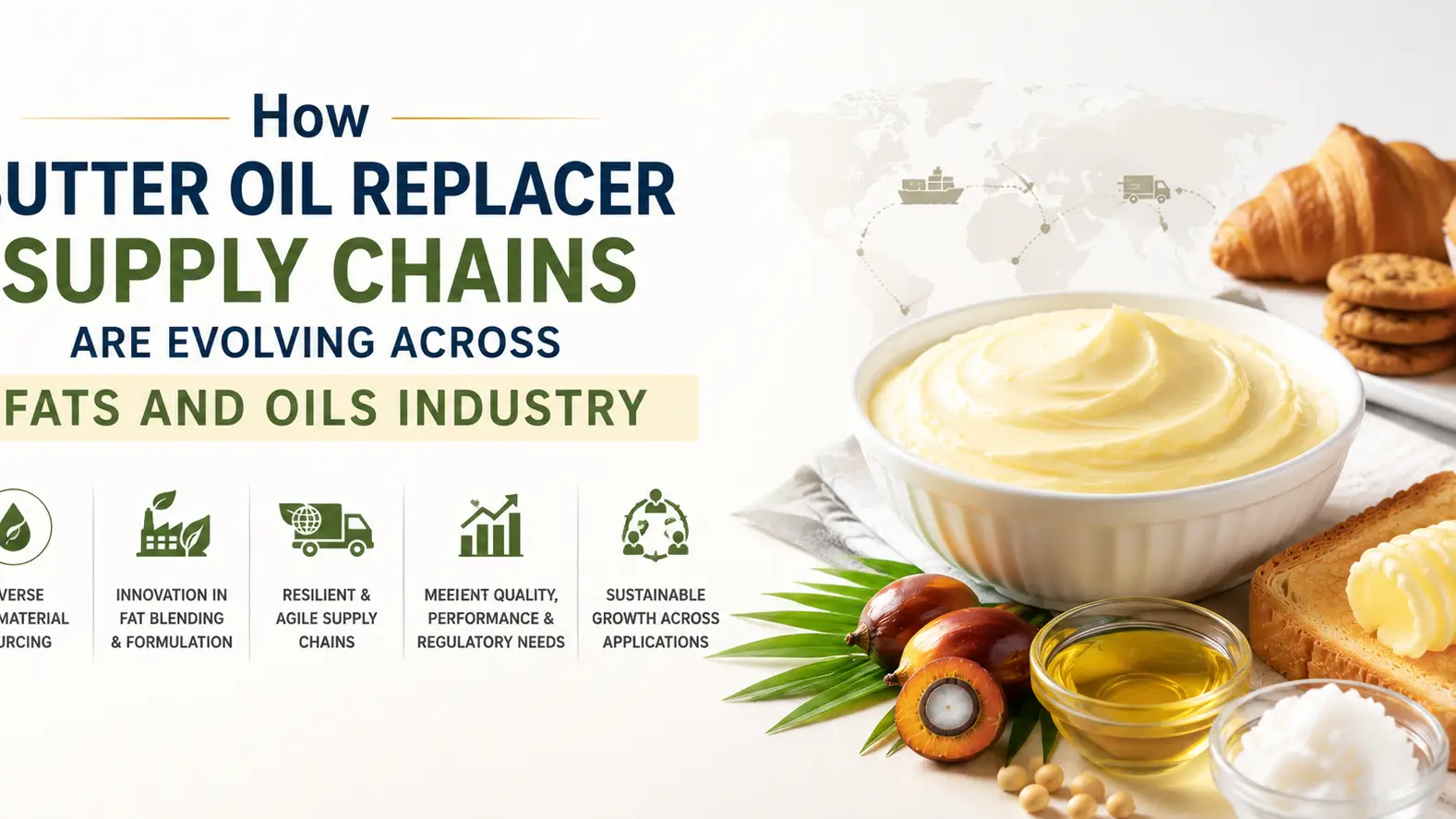
Butter oil replacers (BORs) are becoming a strategic component in the global fats and oils industry, reshaping how food manufacturers manage cost, consistency, and supply risk. Once reliant on dairy-linked sourcing, the industry is now transitioning toward diversified vegetable oil inputs and advanced fat modification technologies. As volatility in agricultural commodities intensifies, supply chains are being redesigned for resilience, flexibility, and sustainability. This shift is not only changing procurement strategies but also redefining global trade flows in edible fats.
Global Shift in Raw Material Sourcing
The foundation of butter oil replacer production is moving away from traditional dairy fat dependency toward a more complex mix of vegetable oils. Ingredients such as palm, soybean, coconut, and sunflower oils now dominate sourcing strategies. This diversification has expanded procurement networks across Asia, South America, and Europe, reducing reliance on seasonal milk production cycles while introducing new exposure to agricultural commodity fluctuations.
Volatility in Vegetable Oil Supply Networks
Supply chain stability is increasingly challenged by unpredictable vegetable oil markets. Climate disruptions, export policies, and rising biofuel demand continue to pressure availability and pricing. As a result, manufacturers are adopting multi-origin sourcing strategies and dynamic procurement models. This has made supply chain agility a core competitive factor in the fats and oils industry, especially for BOR producers managing tight cost structures.
Processing Technologies Enhancing Flexibility
Technological advancements are transforming how fats are modified and blended. Processes such as enzymatic interesterification and fractionation allow producers to achieve butter-like textures without relying on hydrogenation. These innovations enable processors to switch between raw oil inputs based on availability, improving resilience and reducing dependency on any single commodity stream.
Sustainability and Certification Requirements
Sustainability has become a defining factor in sourcing decisions. Buyers increasingly demand traceable, certified sustainable oils aligned with environmental and social governance standards. Certifications such as RSPO for palm oil are now essential in global supply contracts. This shift is pushing suppliers to invest in transparent sourcing systems and environmentally responsible production practices across the supply chain.
Regionalization of Manufacturing and Distribution
Global supply chains are gradually becoming more regionalized. Instead of centralized production hubs, companies are building localized blending and processing facilities closer to consumption markets. This reduces transportation risks, improves delivery efficiency, and helps companies adapt to regional regulatory and raw material differences. It also enhances responsiveness to changing consumer demand patterns.
Digitalization and Predictive Supply Chain Management
Digital transformation is reshaping supply chain decision-making. Predictive analytics, AI-driven forecasting, and blockchain-based traceability are enabling greater visibility across sourcing and distribution networks. These tools allow manufacturers to anticipate price shifts, optimize inventory levels, and mitigate disruption risks, making digital capability a critical advantage in modern BOR supply chains.
Conclusion
The butter oil replacer supply chain is evolving into a highly interconnected and data-driven ecosystem shaped by global commodity flows, sustainability expectations, and technological innovation. As the fats and oils industry continues to diversify, companies must prioritize flexibility and strategic sourcing to remain competitive in an increasingly volatile environment.
In this shifting landscape, reliable supply partners play a crucial role in ensuring consistency and operational efficiency. Companies like Tradeasia International are positioned as global solution providers, supporting businesses with integrated sourcing, distribution, and commodity expertise across the fats and oils value chain.
Leave a Comment