Brown Rice Supply Chain Overview
Understanding Brown Rice in B2B Trade
Brown Rice is a minimally milled rice product in which the outer husk is removed while the bran and germ layers remain around the grain. In commercial supply chains, this distinction makes product handling, quality control, milling specifications, storage, and transportation important considerations for buyers purchasing at scale. For international trade, Brown Rice is therefore more than a commodity purchase; procurement teams need to consider consistent specifications and supply continuity across multiple stages of the value chain.
The international rice trade operates within established food-quality frameworks. The Codex Alimentarius includes CXS 198-1995, Standard for Rice, providing an international reference for rice traded between markets. Codex describes its standards as references supporting food safety and fair practices in international food trade.
Supply Chain Participants
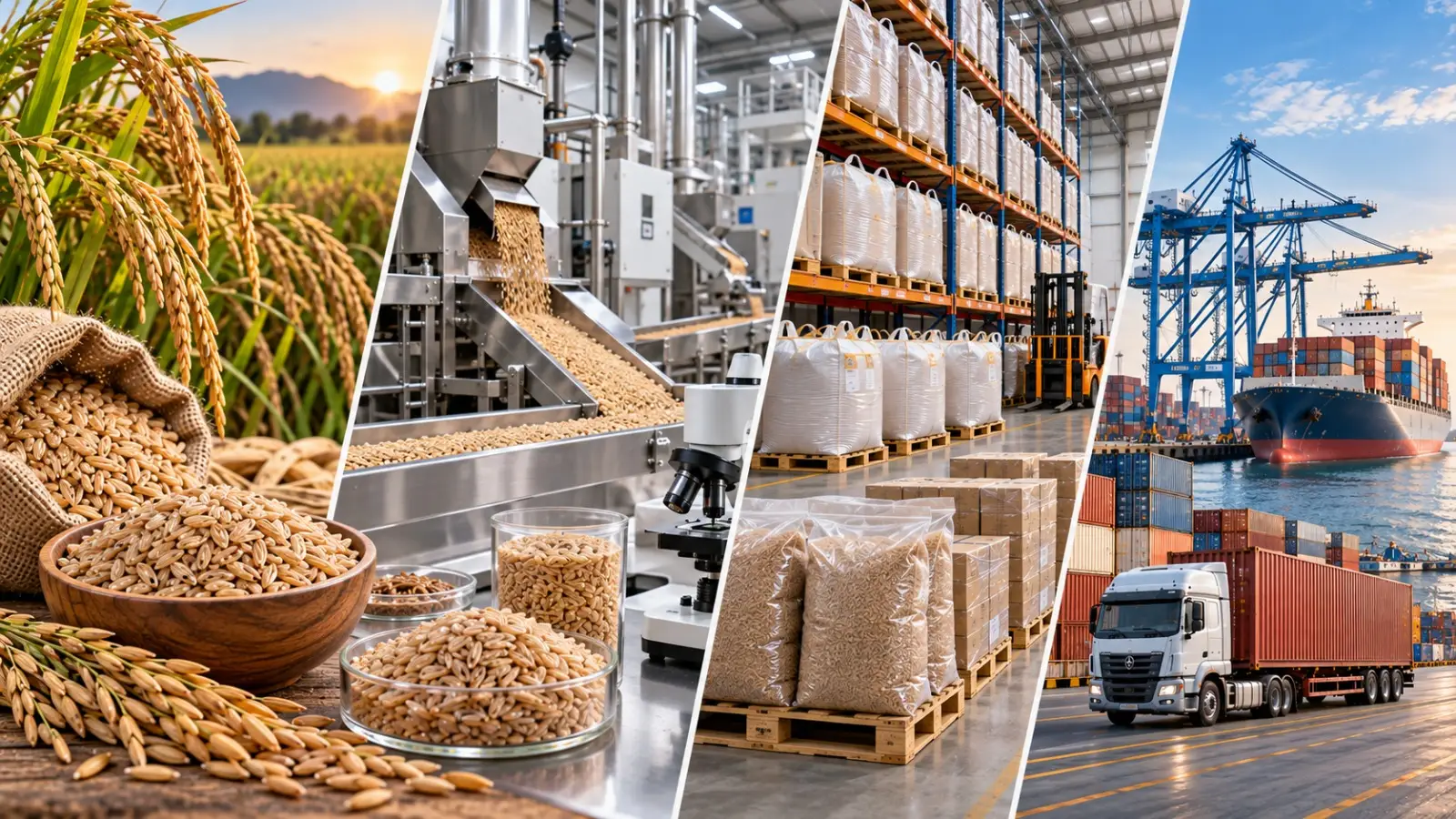
The Brown Rice supply chain can involve farmers, aggregators, rice mills, processors, quality laboratories, warehouses, exporters, freight providers, importers, distributors, and food manufacturers. Each participant contributes to maintaining product identity and commercial consistency from agricultural production through final delivery.
For B2B buyers, supplier capability is closely connected to the supplier's ability to coordinate these stages. Procurement teams may therefore evaluate not only price, but also processing capacity, specification management, documentation, packaging options, shipment planning, and the ability to maintain consistent quality across repeat orders.
Brown Rice Production and Processing
Agricultural Production
Brown Rice begins with paddy rice cultivated under agricultural conditions that influence grain quality and eventual processing performance. Variety, growing conditions, harvesting practices, drying, and handling can all affect the characteristics of the raw material entering the milling system.
After harvest, paddy generally moves through post-harvest handling before milling. Effective supply-chain management at this stage is important because moisture and physical condition can influence storage stability and processing performance. Commercial buyers therefore benefit from understanding the relationship between agricultural sourcing and the specifications of the finished Brown Rice.
Milling and Processing
The production process typically involves removing the rice husk while retaining the bran layer and germ, creating the characteristic Brown Rice form. Processing operations may also involve cleaning, grading, separation, inspection, and packaging depending on the intended market and buyer requirements.
USDA's Agricultural Marketing Service maintains specific standards for Brown Rice for Processing, demonstrating that brown rice is commercially assessed using defined quality factors. The U.S. standards address factors including kernel characteristics, milling yield, objectionable seeds, other types, and damaged kernels.
Quality Control in Brown Rice Sourcing
Commercial Quality Parameters
Quality assurance is a central component of Brown Rice procurement because buyers need material that remains consistent from shipment to shipment. Relevant commercial checks can include grain appearance, kernel condition, broken kernels, moisture, foreign material, damage, variety or grain type, and other specifications established in the purchasing contract.
USDA's rice inspection framework demonstrates how formal grading can assess defined quality factors and certify the applicable grade. Its rice standards specifically distinguish Brown Rice for Processing from other rice categories.
Food Safety and Compliance
Food safety documentation is equally important when Brown Rice crosses international borders or enters food manufacturing operations. Buyers may request certificates of analysis, laboratory reports, origin documentation, phytosanitary documentation where applicable, and evidence that shipments meet destination-market requirements.
Rice also requires attention to contaminant controls. Codex has established a maximum level for inorganic arsenic in husked rice, which it defines as rice from which only the husk has been removed and which is also known as brown or cargo rice. This illustrates why analytical testing and compliance management should form part of responsible Brown Rice sourcing programs.
Brown Rice Storage and Warehouse Management
Maintaining Product Condition
Brown Rice requires appropriate warehouse management because retaining the bran and germ can influence its storage characteristics compared with more extensively milled rice. Commercial storage programs should therefore control environmental conditions and protect the product from moisture, pests, contamination, and unsuitable handling.
For B2B suppliers and distributors, warehouse procedures should also support batch identification and stock rotation. Clear lot records help procurement teams trace material through receiving, storage, dispatch, and customer delivery, particularly when supplying food manufacturers with recurring requirements.
Packaging and Inventory Planning
Packaging selection should correspond with shipment size, customer requirements, transportation conditions, and the intended market. Bulk formats can support industrial procurement, while smaller commercial packaging may be appropriate for distributors or foodservice channels.
Inventory planning is another important part of the supply chain. Maintaining excessive inventory can increase storage exposure and working-capital requirements, while insufficient stock can create production interruptions for downstream customers. Suppliers therefore need to balance forecast demand, lead times, storage capacity, and shipment frequency.
Brown Rice Logistics and International Trade
Transportation Planning
Brown Rice can move through domestic trucking, rail, containerized ocean freight, and other transportation modes depending on origin, destination, volume, and commercial arrangements. International procurement requires coordination between supplier production schedules, packaging, documentation, freight booking, customs procedures, and receiving operations.
Shipment planning becomes particularly important for buyers operating continuous production. A procurement program should account for lead time from order confirmation through processing, loading, transit, customs clearance, and final delivery rather than focusing only on the supplier's quoted production time.
Export and Import Coordination
International Brown Rice transactions can involve multiple documents and regulatory requirements depending on the origin and destination markets. Buyers and suppliers should establish the required documentation before shipment and clearly define product specifications in commercial contracts.
The importance of standardized specifications is reflected in international and national rice standards. Codex maintains a dedicated Standard for Rice, while USDA provides separate standards for Brown Rice for Processing and other rice categories.
Brown Rice Applications and Industrial Buyers
Food Manufacturing Applications
Brown Rice can serve as an ingredient or finished grain product across food applications where its characteristic whole-grain format is commercially relevant. Potential buyers include food manufacturers, packaged-food companies, grain processors, wholesalers, distributors, foodservice suppliers, and retailers sourcing through B2B channels.
Its application profile means procurement teams may prioritize different specifications depending on the final product. A processor requiring Brown Rice for further manufacturing may focus on grain consistency and processing characteristics, while a distributor may place greater emphasis on packaging, appearance, shelf management, and delivery reliability.
Buyer Requirements
Different buyer categories create different sourcing requirements. Large food manufacturers may require scheduled deliveries and detailed quality documentation, while wholesalers and distributors may prioritize flexible order quantities, packaging options, and dependable international logistics.
For suppliers, understanding these differences supports better commercial positioning. Rather than treating every customer as a generic commodity buyer, a B2B supplier can structure offers around specification, volume, packaging, documentation, delivery schedules, and destination-market requirements.
Brown Rice Procurement and Supplier Selection
Evaluating Suppliers
Supplier selection should begin with clearly defined product specifications. Buyers can establish requirements covering grain type, quality parameters, packaging, quantity, documentation, delivery terms, and inspection procedures before requesting quotations.
USDA's established Brown Rice for Processing standards demonstrate the value of defining measurable quality factors rather than relying solely on descriptive terms. Formal specifications can make supplier comparisons clearer and reduce ambiguity during order execution.
Building Long-Term Supply Relationships
Long-term Brown Rice procurement can benefit from supplier relationships built around repeatable specifications and transparent communication. Buyers may assess production capacity, quality systems, traceability, export experience, logistics coordination, and responsiveness when developing a sourcing program.
A reliable supply relationship should also include procedures for handling specification changes, quality claims, shipment delays, and variations between batches. Clear contractual expectations can help both parties manage commercial risks while supporting predictable procurement cycles.
Market Considerations for Brown Rice Buyers
Supply and Demand Planning
Brown Rice buyers operate within agricultural markets where production volumes, harvest cycles, weather conditions, transportation costs, currency movements, and regional demand can influence sourcing conditions. Procurement teams can reduce exposure to short-term disruptions by monitoring supplier availability and planning purchases around their operational requirements.
Market intelligence should therefore be connected to actual purchasing decisions. Instead of looking only at headline commodity prices, buyers can examine availability by origin, supplier capacity, logistics conditions, inventory requirements, and the specifications required by their downstream customers.
B2B Marketplace Opportunities
A B2B marketplace can help connect Brown Rice suppliers with food manufacturers, distributors, importers, wholesalers, and other commercial buyers. Digital sourcing environments can make it easier to compare product information, communicate specifications, identify potential supply partners, and initiate international procurement discussions.
For suppliers, marketplace visibility can extend access to buyers beyond traditional geographic networks. For procurement teams, structured product information can simplify early-stage supplier discovery before technical qualification, commercial negotiation, sampling, and formal purchasing processes.
Conclusion: Building a Reliable Brown Rice Supply Chain
From Agricultural Source to Industrial Buyer
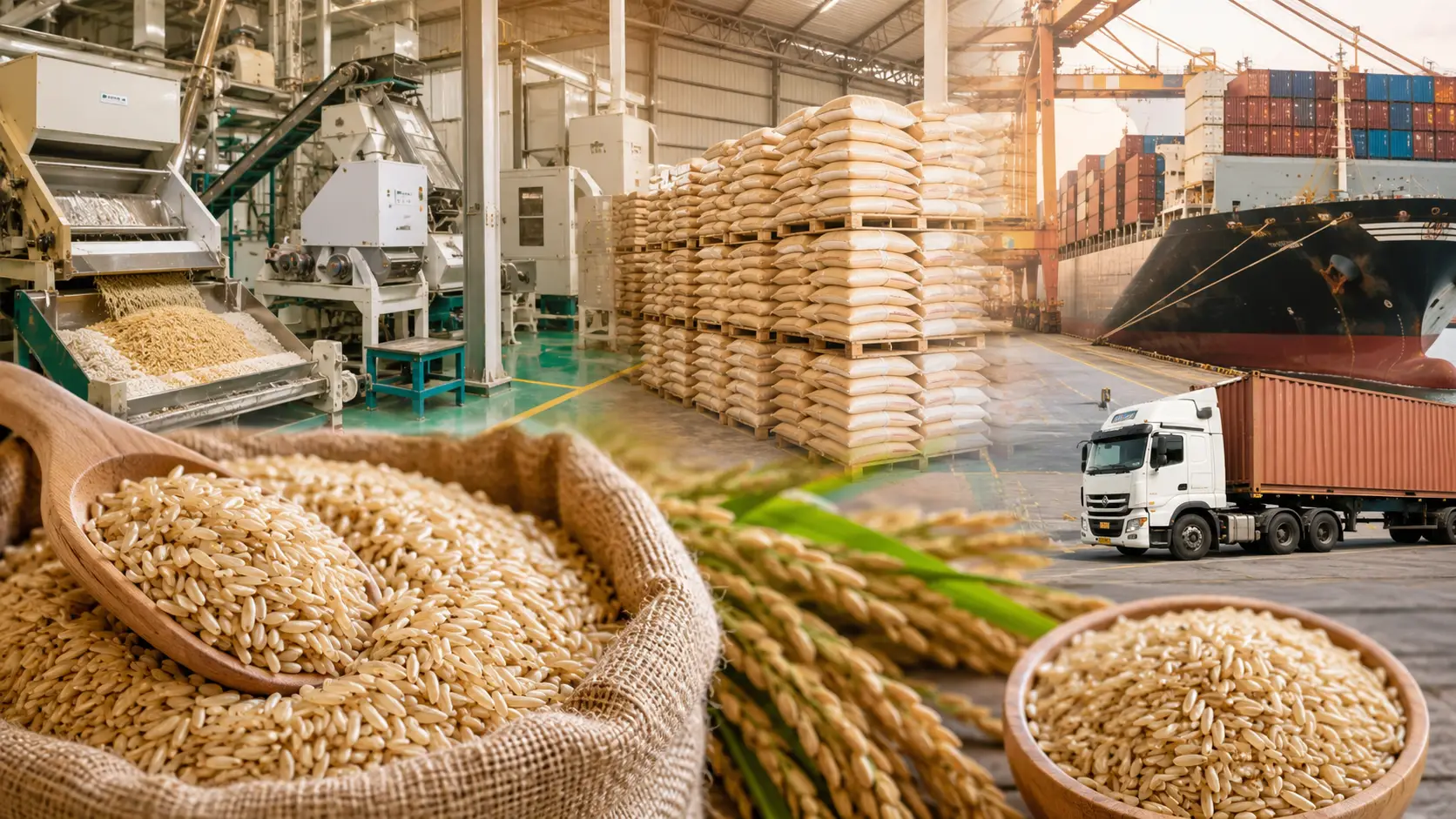
An effective Brown Rice supply chain connects agricultural production with processing, quality control, warehousing, logistics, documentation, and final delivery. Each stage can influence the consistency and commercial usability of the product, making coordinated supply-chain management essential for international B2B trade.
For food manufacturers and distributors, sourcing decisions should therefore consider more than the initial product quotation. Product specifications, quality verification, supplier capability, packaging, inventory planning, transportation, and regulatory documentation all contribute to dependable procurement.
Supporting Long-Term Procurement
Brown Rice sourcing is most effective when suppliers and buyers establish clear expectations before the transaction begins. Defined specifications, appropriate quality testing, reliable documentation, and coordinated logistics can help create a more transparent purchasing process.
For global B2B buyers, platforms such as Tradeasia / Chemtradeasia / Tradechem Marketplace can serve as a starting point for identifying supply opportunities, connecting with commercial suppliers, and developing procurement relationships around agricultural and food-industry products. The objective is to connect product availability with the technical, logistical, and commercial requirements of international buyers.
Sources
https://www.ams.usda.gov
https://www.fao.org
https://www.fao.org
Leave a Comment