Brown Rice Supply Chain: Global Sourcing and B2B Market Insights
Brown Rice Supply Chain Overview
Understanding Brown Rice in the Commercial Supply Chain
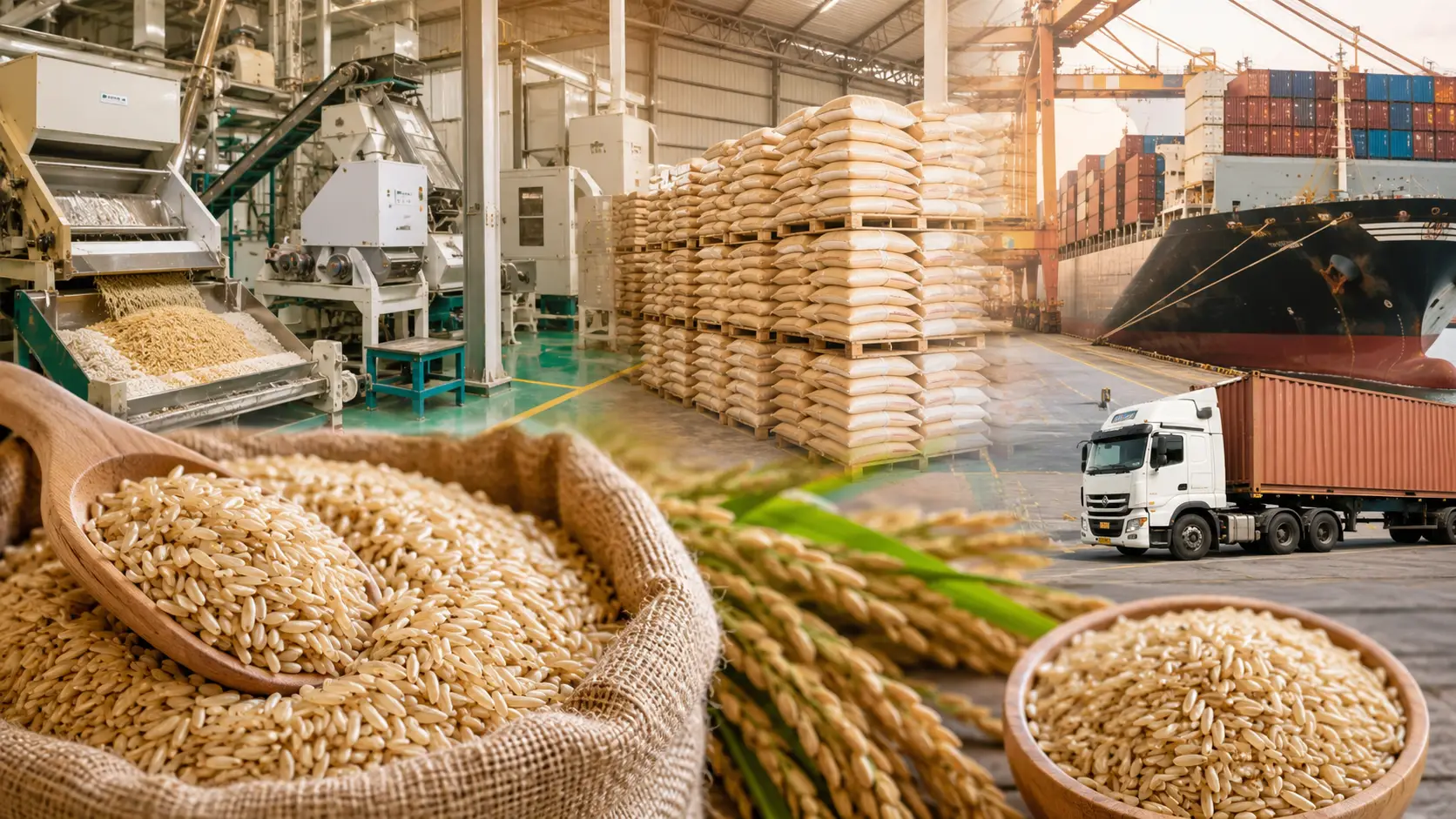
Brown Rice occupies an important position within the broader global rice industry because it undergoes less processing than fully milled white rice. From a supply-chain perspective, the product moves through interconnected stages including cultivation, harvesting, drying, milling, quality assessment, packaging, storage, export, import, and distribution. For B2B buyers, understanding these stages is essential because product consistency and availability can depend on conditions across the entire chain.
Brown Rice is particularly relevant to food manufacturers and ingredient buyers seeking rice-based raw materials for consumer food products. Its commercial value is influenced not only by agricultural output but also by milling efficiency, grain quality, moisture management, handling practices, packaging requirements, and destination-market specifications. These factors make sourcing strategy an important part of procurement planning.
Why Supply Chain Visibility Matters
The international rice market remains substantial, with the Food and Agriculture Organization forecasting 59.8 million tonnes of international rice trade in 2026, representing a 2.1% decline from the 2025 high. FAO also forecasts global rice stocks at 214.1 million tonnes at the close of the 2026/27 marketing seasons, illustrating the scale of the underlying commodity system.
For Brown Rice buyers, these broader rice-market conditions provide useful context when evaluating sourcing availability and purchasing strategies. Procurement teams should assess supplier reliability, origin, quality specifications, shipment schedules, storage capability, documentation, and market conditions together rather than treating price as the only purchasing variable.
Brown Rice Production and Processing
From Cultivation to Harvest
The Brown Rice supply chain begins with rice cultivation, where production conditions influence the eventual quality and availability of commercial grain. Agricultural variables, harvesting practices, drying conditions, and post-harvest handling can affect grain integrity and suitability for further processing or food manufacturing. Consequently, B2B buyers often need visibility into the origin and handling practices associated with their supply.
After harvesting, rice requires appropriate drying and preparation before milling and distribution. Effective post-harvest management helps maintain product quality during storage and transportation. For international buyers, the production origin can therefore be an important procurement consideration alongside specifications, volume requirements, and delivery schedules.
Milling and Quality Management
Brown Rice retains more of the grain structure than highly milled rice, making milling configuration and quality control important components of the supply chain. Processing facilities may evaluate factors such as grain appearance, foreign material, broken grains, moisture, cleanliness, and other buyer-defined specifications. These parameters can influence acceptance by downstream food processors and distributors.
Codex lists CXS 198-1995, Standard for Rice, among its standards, with the standard shown as last modified in 2025. This provides an internationally recognized reference point for rice-related quality and trade considerations. For commercial transactions, however, buyers should confirm the precise specifications and regulatory requirements applicable to the destination market.
Global Brown Rice Market and Trade Dynamics
Rice Trade Creates the Wider Market Context
Brown Rice participates in a rice market shaped by production volumes, domestic consumption, export availability, import demand, inventory levels, transportation costs, and agricultural conditions. Although broad rice statistics do not represent Brown Rice alone, they provide important context for companies planning procurement and inventory strategies.
FAO's September 2026 cereal supply and demand assessment indicates that international rice trade in 2026 is expected to remain below the previous year's record level, while rice inventories remain historically substantial. This combination highlights a market in which supply is significant but trade flows can still shift according to regional demand and exporter availability.
Market Conditions and Procurement Planning
USDA's August 2026 Rice Outlook provides another current reference for rice-market planning. Its latest outlook incorporates updated global and U.S. supply-and-use estimates, demonstrating how frequently production, stocks, imports, exports, and pricing expectations can be revised during a marketing year.
For Brown Rice procurement teams, this environment supports a structured sourcing approach. Buyers can monitor crop developments, exporter availability, freight conditions, inventory positions, and destination-market demand while maintaining qualified supplier relationships. Rather than relying exclusively on short-term quotations, companies can use market intelligence to plan purchasing windows and manage supply continuity.
Brown Rice Applications Across Food Industries
Food Manufacturing Applications
Brown Rice can serve as a raw material for a variety of food-oriented applications where rice is required as a grain or ingredient. Potential commercial applications include packaged rice products, grain-based foods, rice flour production, ready-to-cook products, snacks, cereals, and other processed food formulations where the characteristics of brown rice fit the intended recipe or manufacturing process.
For food manufacturers, application suitability depends on the required grain characteristics and processing method. Buyers may therefore evaluate grain size, appearance, moisture, cleanliness, milling characteristics, and consistency before approving a supply. These technical considerations connect the agricultural supply chain directly with downstream manufacturing requirements.
Ingredient and Process Compatibility
Brown Rice can also enter secondary processing channels where the grain is converted into another food ingredient or intermediate material. Such applications make the supply chain more complex because the purchasing specification must reflect the needs of the final manufacturing process rather than simply the commodity description.
This is particularly relevant for B2B procurement teams buying larger volumes. A supplier that can provide consistent specifications and documentation can reduce variability during manufacturing. The commercial objective is therefore not simply to source Brown Rice, but to source a grade and format that reliably matches the buyer's production requirements.
Key Buyers in the Brown Rice Supply Chain
Food Manufacturers and Processors
Food manufacturers represent an important buyer group because Brown Rice can be incorporated into finished foods or processed into ingredients. Their procurement decisions typically consider quality specifications, annual or monthly volume, delivery schedules, packaging, documentation, and supplier consistency. Larger processors may also require standardized specifications across multiple shipments.
Distributors and ingredient traders form another important part of the market. These businesses purchase Brown Rice in commercial quantities and redistribute it to manufacturers, retailers, foodservice companies, or regional buyers. Their requirements may place additional emphasis on logistics flexibility, warehouse availability, packaging formats, and dependable replenishment.
Importers and Industrial Distributors
Importers and distributors often operate between producers and downstream customers, making supply-chain coordination central to their business model. They may evaluate suppliers based on origin, export capability, commercial terms, documentation, shipment reliability, and ability to support recurring orders.
Procurement teams can benefit from distinguishing between spot purchasing and strategic sourcing. Spot transactions may address immediate requirements, while longer-term supplier relationships can support recurring demand and reduce exposure to unexpected disruptions. For both models, supplier qualification remains an important part of commercial risk management.
Brown Rice Sourcing and Procurement Considerations
Evaluating Suppliers
A reliable Brown Rice sourcing strategy should begin with clear product specifications. Buyers can define acceptable quality parameters, packaging requirements, shipment quantities, delivery locations, documentation, and inspection expectations before comparing supplier quotations. This creates a more consistent basis for supplier evaluation.
Supplier assessment should also consider production capacity, export experience, responsiveness, traceability, quality-control procedures, and ability to maintain specifications across shipments. A competitive price is valuable, but a low quotation may not provide the best commercial outcome if quality inconsistency, delays, or documentation problems create downstream costs.
Managing Procurement Risk
Rice markets can change as production estimates, inventories, trade policies, demand patterns, and logistics conditions evolve. USDA's August 2026 outlook, for example, highlights continuing adjustments to U.S. rice supply and use projections during the 2026/27 marketing year.
For Brown Rice buyers, procurement risk can be managed through supplier diversification, planned purchasing schedules, quality agreements, appropriate inventory buffers, and continuous market monitoring. A B2B marketplace can support this process by connecting buyers with suppliers and providing a structured commercial environment for sourcing discussions, qualification, and order planning.
Distribution, Storage, and Supply Chain Management
Logistics and Storage Requirements
Once Brown Rice has been processed and purchased, maintaining product condition during storage and transportation becomes a critical supply-chain responsibility. Warehousing, packaging, handling practices, shipment duration, and environmental conditions can influence the quality of agricultural commodities. Buyers should therefore align logistics arrangements with the product specification and expected storage period.
International shipments add further considerations, including container availability, port operations, customs documentation, import requirements, freight costs, and delivery schedules. These variables can influence the effective landed cost of Brown Rice and should be incorporated into procurement comparisons rather than evaluating supplier price alone.
Building Supply Continuity
Supply continuity depends on coordination between producers, processors, exporters, importers, distributors, and final buyers. A disruption at one stage can affect delivery schedules further downstream, which is why procurement planning should consider the complete chain rather than a single supplier transaction.
For companies with recurring Brown Rice requirements, maintaining qualified alternative suppliers can strengthen resilience. Combining supplier performance monitoring with market intelligence allows procurement teams to identify potential shortages, changing trade conditions, or logistical bottlenecks early and adjust purchasing plans accordingly.
Conclusion: Building a Reliable Brown Rice Supply Strategy
Turning Market Intelligence Into Procurement Decisions
Brown Rice sourcing is ultimately a supply-chain management exercise that combines agricultural availability, processing quality, market conditions, logistics, and buyer requirements. Global rice trade remains large, while current 2026 market assessments demonstrate that production, inventories, and trade expectations continue to evolve.
For B2B buyers, a reliable sourcing strategy should therefore balance price competitiveness with quality consistency, supplier capability, documentation, delivery performance, and market visibility. Clear specifications and qualified suppliers can help food manufacturers, distributors, importers, and processors make more dependable purchasing decisions.
Brown Rice Sourcing Through a B2B Marketplace
Tradeasia International and its Chemtradeasia / Tradechem Marketplace ecosystem can provide a commercial platform for businesses seeking to connect supply requirements with international sourcing opportunities. By approaching Brown Rice procurement through supplier qualification, specification matching, and supply-chain planning, buyers can pursue sourcing decisions that support both immediate requirements and longer-term business continuity.
Sources
www.fao.org
www.ers.usda.gov
Leave a Comment