Introduction
The United States animal feed industry relies heavily on fibrous by‑products to balance energy, fiber, and cost in rations for dairy cattle, beef cattle, horses, and small ruminants. Among these by‑products, beet pulp stands out as a highly digestible fiber source with relatively low starch and sugar levels compared with many cereal grains. It is widely used in two main physical forms: beet pulp pellets and beet pulp shreds. Although these formats are nutritionally similar, they often trade at different price levels, creating persistent price gaps that nutritionists and procurement teams must understand and manage.
These price differences are not arbitrary. They reflect a combination of processing costs, logistics, storage and handling characteristics, buyer preferences, and broader supply–demand dynamics in the U.S. and global feed markets. Because beet pulp is a by‑product of the sugar beet industry, its availability and pricing are also closely linked to sugar production trends in major producing regions such as the Upper Midwest and Western states. In recent years, tightening forage supplies, rising freight costs, and shifts in equine and dairy feeding practices have all contributed to changing price relationships between pellets and shreds.
Feed manufacturers, large dairies, and equine feed brands increasingly turn to specialized trading platforms such as chemtradeasia.com to secure reliable beet pulp supplies at competitive prices. Understanding the market forces that create price gaps between pellet and shred beet pulp allows buyers to choose the right format for their technical needs while optimizing total landed cost. This article examines product characteristics, market drivers, cost structures, and practical applications to explain why pellet and shred beet pulp are priced differently in the U.S. market and how professional sourcing can mitigate volatility.
Product Overview: Beet Pulp Pellets and Shreds
Beet pulp is the fibrous residue that remains after sugar is extracted from sugar beets. It is typically pressed to remove excess water, then dried and either left in flaked or shredded form or further processed into pellets. On a dry matter basis, beet pulp generally contains around 8–10% crude protein, 18–22% crude fiber, and a high level of digestible neutral detergent fiber (NDF), making it a preferred energy source especially for ruminants and horses that require fermentable fiber. Both beet pulp shreds and beet pulp pellets share this nutritional profile, though minor differences can arise from drying intensity or inclusion of molasses.
Beet pulp shreds (sometimes called flakes) are produced by drying the pressed pulp and mechanically breaking it into irregular fibrous pieces. Shreds are bulkier, have lower bulk density, and typically absorb water quickly, which many equine owners value for making soaked beet pulp mashes. They are often favored in premium horse feeds and by smaller operations that handle feed manually because the product is easy to visually inspect and mix. However, the low density of shreds means they require more storage volume and can be less efficient to transport over long distances.
Beet pulp pellets, by contrast, are made by grinding dried pulp and pressing it through a pellet mill, often with a small amount of steam and, in some cases, added molasses as a binder and palatability enhancer. The resulting pellets have significantly higher bulk density, typically around 550–650 kg/m³ compared with 250–350 kg/m³ for shreds. Pellets flow more easily in automated systems, reduce dust, and allow for more efficient long‑distance shipping and containerization. For large dairies, feed mills, and export markets, pellets are often the preferred format. Suppliers on chemtradeasia.com commonly quote both pellet and shred specifications, including moisture content (usually 10–14%), pellet diameter (often 6–10 mm), and optional molasses inclusion levels.
Key Market Factors Behind Pellet–Shred Price Gaps
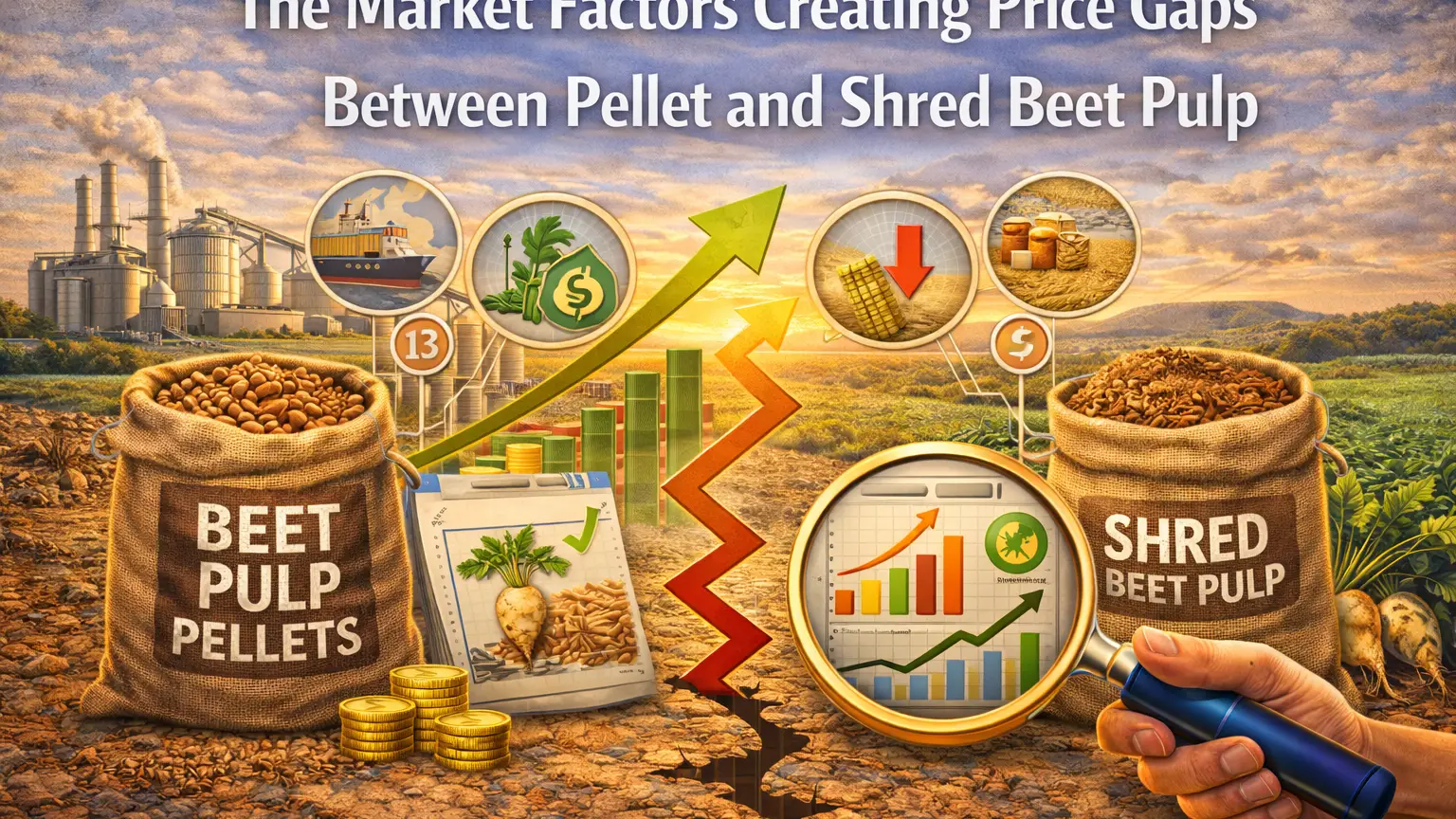
Despite similar nutritional value, beet pulp pellets and shreds frequently show price differentials in the U.S. market that can range from a few dollars per ton to double‑digit spreads, depending on region and season. One fundamental driver is the balance between local and export demand. Pellets, due to their higher density and stability, are better suited for export to Asia, the Middle East, and Latin America. When international demand is strong and ocean freight is favorable, U.S. beet sugar processors and traders may allocate more pulp to pellet production for export, tightening domestic pellet supply and supporting a price premium over shreds.
Conversely, in years when export demand softens or global freight costs spike, more pellets may remain in the domestic market, compressing the pellet premium and sometimes making pellets temporarily cheaper than shreds on a per‑ton basis. Shreds are more commonly consumed within regional markets near sugar factories, particularly in equine‑dense states. If regional forage shortages occur—such as drought‑driven hay scarcity—local demand for shreds can surge, pushing shred prices up relative to pellets. In 2021–2022, for example, drought conditions in parts of the Western U.S. led to tight hay supplies and elevated prices for fibrous by‑products, including beet pulp shreds, narrowing or even reversing the usual pellet premium in some areas.
Another key factor is buyer preference and willingness to pay. Equine owners and specialty horse feed manufacturers often exhibit a strong preference for shreds due to ease of soaking and perceived safety against choke, even though properly managed pellets are also safe. This preference can create a structural price support for shreds in equine‑focused markets. In contrast, large commercial dairies and feed mills tend to prioritize handling efficiency and storage economics, making them more inclined to pay a slight premium for pellets if it reduces logistics and labor costs. Platforms like chemtradeasia.com aggregate demand from these different buyer segments, which can influence how suppliers price and allocate pellets vs shreds to maximize returns.
Cost Structure, Logistics, and Supply Chain Dynamics
Processing costs are a visible contributor to price gaps between pellet and shred beet pulp. Producing beet pulp pellets requires additional grinding, conditioning, and pelleting steps compared with simply drying and shredding. This entails capital investment in pellet mills, higher energy consumption, and maintenance costs. Industry estimates suggest that pelleting can add several dollars per ton in processing cost, which must be recovered through higher pellet prices in most market conditions. However, this added cost is often offset by lower freight and handling expenses due to pellets’ higher density.
Logistics is where pellets can gain a decisive economic advantage, especially over long distances. Because pellets pack more dry matter into each truckload or container, the freight cost per unit of usable nutrient is typically lower than for shreds. For example, if a 25‑ton truck can carry 25 metric tons of pellets but only 18–20 metric tons of shreds due to volume constraints, the effective freight cost per ton of dry matter will be higher for shreds, particularly on routes exceeding several hundred miles. This dynamic can cause regional price inversions: near a sugar factory, shreds might be cheaper, while 800 miles away, pellets may become the more economical option even if their ex‑plant price is higher.
Supply chain reliability and storage characteristics also influence pricing. Pellets generally store more compactly, are less prone to bridging in bins, and create less dust, which is important for large feed mills and integrators. Shreds, while easier to soak, can be more vulnerable to moisture ingress and require more warehouse space. Traders and distributors listed on chemtradeasia.com often factor these handling characteristics into their pricing and contract structures, offering volume‑based discounts for pellets destined for export or large domestic users. Seasonal factors, such as the sugar beet campaign (typically from late fall through winter), also affect supply availability; prices for both pellets and shreds tend to be lower shortly after the processing season and firmer later in the year as stocks draw down.
Benefits and Applications of Beet Pulp Formats for U.S. Buyers
From a nutritional standpoint, both beet pulp pellets and shreds offer similar benefits: highly digestible fiber, moderate energy, and low non‑structural carbohydrate (NSC) content compared with many cereal grains. This makes beet pulp especially valuable in rations for high‑producing dairy cows, where it can replace a portion of starch sources to support rumen health, and in equine diets for horses that are prone to laminitis or require controlled sugar intake. Typical inclusion rates in dairy rations range from 1 to 4 kg per cow per day on a dry matter basis, while in equine diets beet pulp often comprises 10–30% of the concentrate portion, depending on the overall formulation.
The choice between pellets and shreds is often driven by application and infrastructure. Large dairies and feed mills with automated handling systems typically favor beet pulp pellets because they flow easily through augers, bins, and micro‑ingredient systems. Pellets reduce segregation in mixed feeds and allow for accurate batching. For export markets in Asia and the Middle East, pellets are the default form because they maximize container payload and minimize dust during loading and unloading. Suppliers accessible via chemtradeasia.com frequently ship pellets in bulk, big bags, or 25–50 kg bags, depending on buyer requirements and port infrastructure.
Shreds, on the other hand, are widely used in the equine sector and smaller ruminant operations where feed is often manually handled. Horse owners value the rapid water absorption and visible fiber structure of beet pulp shreds, which make it easy to prepare soaked mashes for older horses or those with dental issues. Shreds can also be blended with molasses and other ingredients to create textured feeds that appeal to picky eaters. For regional feed mills supplying local equine markets, shreds can command a premium if they align more closely with customer preferences, even when pellets are cheaper on a pure cost‑per‑nutrient basis.
Conclusion
The price gaps observed between beet pulp pellets and shreds in the U.S. market are the result of interacting factors rather than simple production cost differences. Processing intensity, export demand, freight economics, regional forage conditions, and buyer preferences all contribute to whether pellets command a premium over shreds or vice versa at any given time. Understanding these drivers allows nutritionists, purchasing managers, and feed formulators to make informed decisions about which format best balances nutritional needs, logistics, and budget constraints.
For operations with robust handling infrastructure and long supply chains, pellets often provide superior economics despite higher ex‑plant prices, thanks to lower freight costs and better storage efficiency. For equine‑focused businesses and smaller farms, shreds may justify a higher price due to ease of soaking and strong end‑user preference. In both cases, aligning product choice with the realities of the supply chain is essential to achieving a low total cost of ownership rather than focusing solely on nominal price per ton.
Professional sourcing platforms such as chemtradeasia.com help U.S. buyers navigate these complexities by providing access to multiple beet pulp suppliers, transparent specifications for pellets and shreds, and competitive offers across regions and shipment modes. By leveraging such platforms, buyers can compare pellet and shred options on a landed‑cost and nutritional basis, lock in contracts that match their risk tolerance, and respond quickly to shifts in global demand or freight markets. In an environment where fiber sources and freight costs remain volatile, informed procurement supported by reliable trading partners is key to managing the price gaps between pellet and shred beet pulp while safeguarding feed quality and animal performance.
Leave a Comment