Global Bakery Meal Market Growth and Industrial Feed Supply Opportunities
Understanding Bakery Meal as a Strategic Feed Ingredient
Bakery Meal Composition and Industrial Characteristics
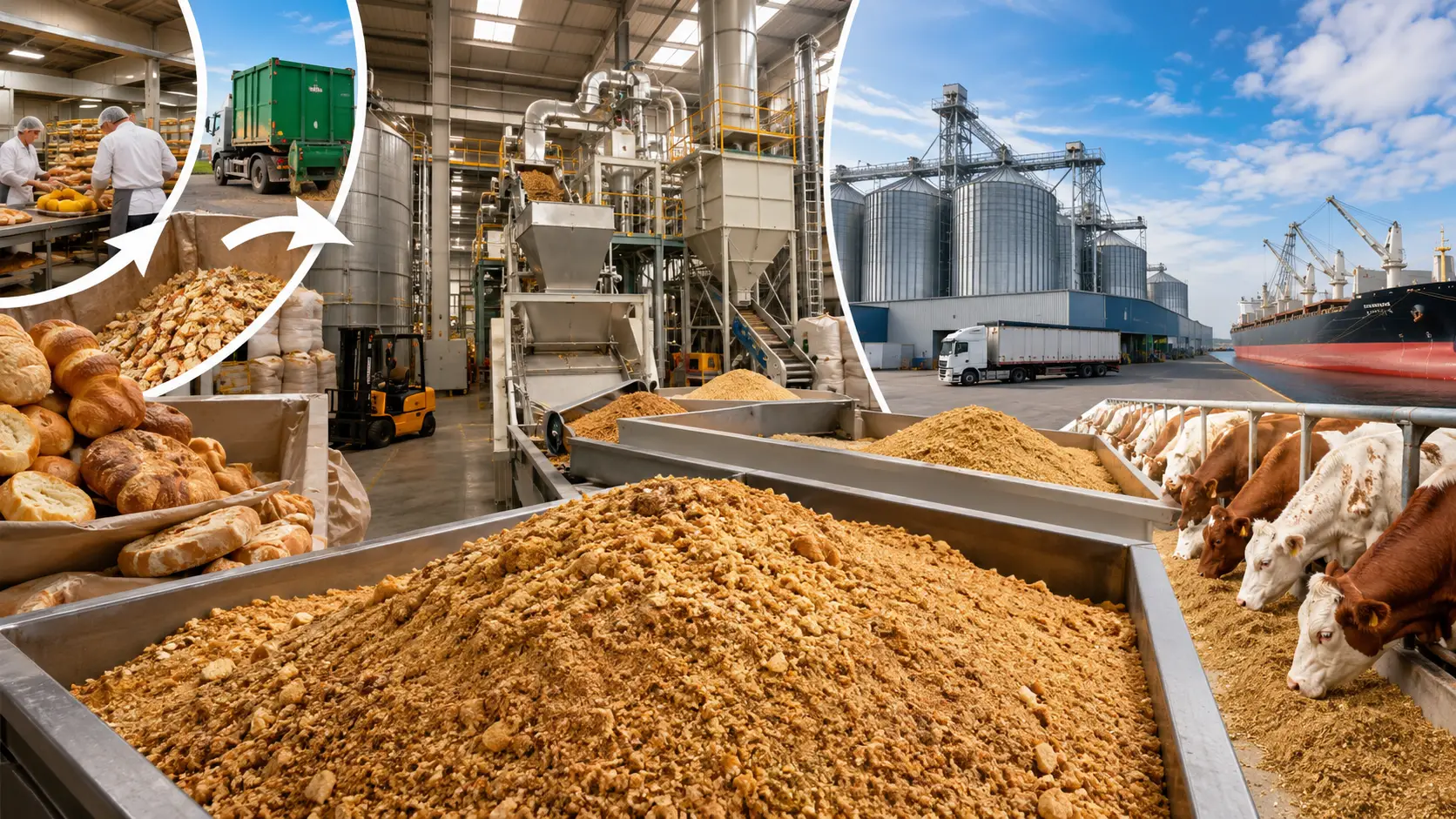
Bakery meal is a processed agricultural feed ingredient produced from surplus bakery products, including bread, biscuits, crackers, and other grain-based food residues. Through controlled collection, drying, and milling processes, these materials are transformed into a consistent feed-grade ingredient containing carbohydrates, fats, and residual proteins. According to technical information from the Association of American Feed Control Officials, processed food byproducts are commonly evaluated based on nutritional composition, safety parameters, and suitability for animal feeding applications.
The primary commercial value of bakery meal comes from its high energy content, mainly derived from starch and cereal-based ingredients. Compared with conventional grain feed materials, bakery meal provides feed manufacturers with an alternative carbohydrate source that can support formulation flexibility. Its composition may vary depending on the original bakery inputs, requiring buyers to evaluate moisture levels, nutrient consistency, and processing standards before purchasing.
Role of Bakery Meal in Sustainable Feed Production
The use of bakery meal supports circular economy practices by redirecting food manufacturing byproducts into productive agricultural applications. Instead of sending suitable food residues to disposal streams, processors can convert them into valuable livestock nutrition inputs. Research published by the Food and Agriculture Organization of the United Nations highlights the importance of improving resource efficiency and reducing food waste throughout global food systems.
For feed manufacturers, bakery meal represents both a nutritional ingredient and a sustainability-driven sourcing opportunity. Increasing attention toward responsible supply chains has encouraged buyers to explore alternative feed ingredients that combine economic value with environmental benefits.
Growing Market Demand for Bakery Meal in Animal Nutrition
Global livestock production continues to increase demand for affordable and reliable feed raw materials. Rising costs of traditional grains and increasing pressure on agricultural resources have encouraged feed producers to diversify ingredient portfolios. Industry analysis from Alltech indicates that global feed production remains closely linked with changing livestock production patterns and raw material availability.
Bakery meal benefits from this trend because it offers feed manufacturers another energy source that can complement corn, wheat, and other cereal-based ingredients. Buyers increasingly assess bakery meal as part of broader strategies to control formulation costs while maintaining nutritional performance.
Market Drivers Influencing Bakery Meal Procurement
Several factors influence commercial demand for bakery meal, including livestock expansion, feed cost management, sustainability requirements, and availability of food processing byproducts. Poultry and swine producers are among the industries where energy-dense ingredients are especially important because feed efficiency directly affects production economics.
According to market observations from agricultural commodity analysts, alternative feed ingredients are receiving increased attention as manufacturers seek more resilient supply chains. As global feed markets become more competitive, consistent bakery meal suppliers can support buyers looking for dependable ingredient sources.
Industrial Applications of Bakery Meal Across Feed Industries
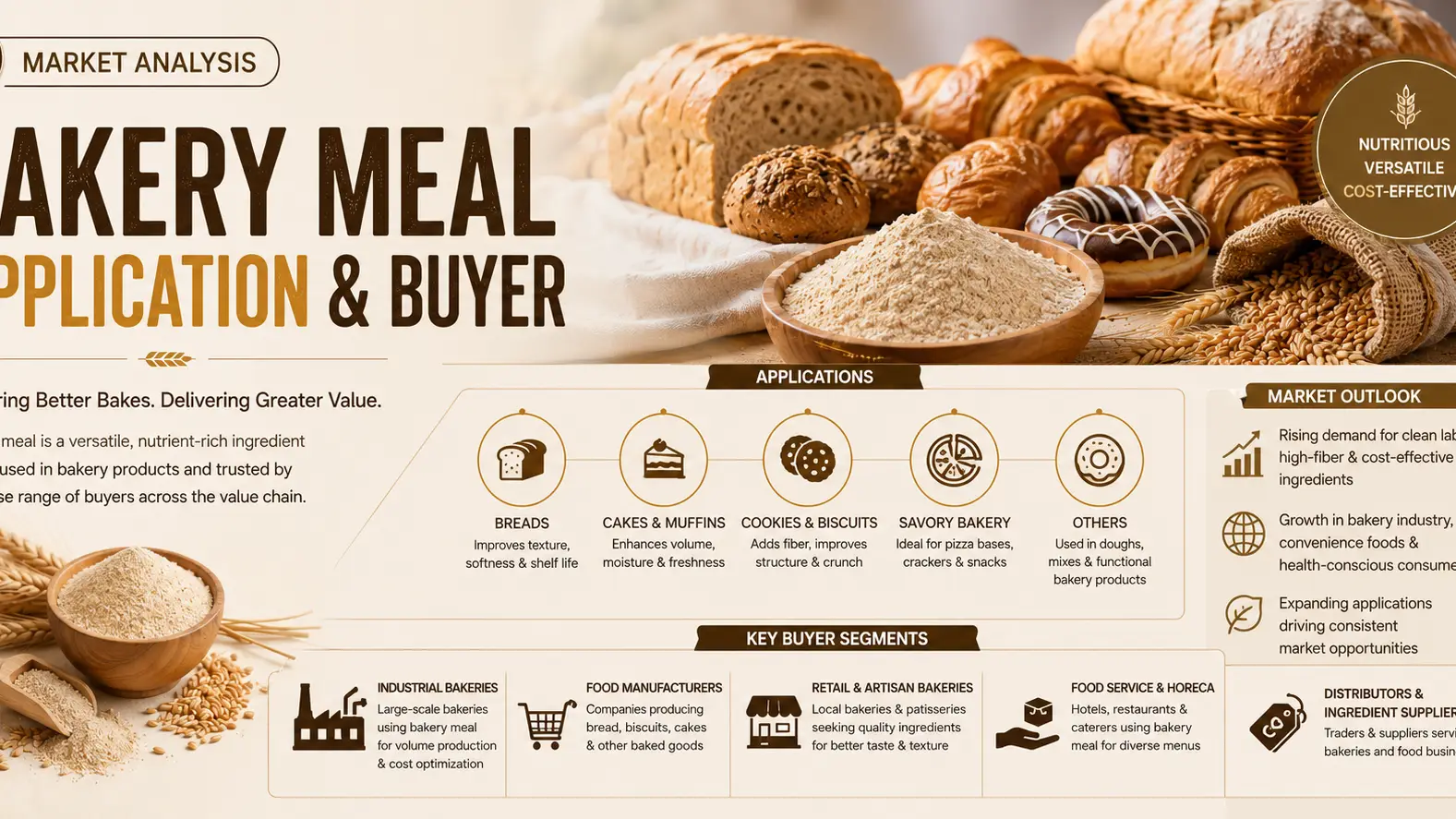
The poultry sector is one of the major application areas for bakery meal because birds require energy-rich diets to support growth and production performance. Feed producers may incorporate bakery meal into formulated diets when nutritional specifications and quality requirements are achieved. Technical feed formulation guidelines from the National Research Council emphasize the importance of balancing energy sources with protein, minerals, and other essential nutrients.
In livestock production, bakery meal can be used as part of compound feed formulations for cattle, pigs, and other farm animals. Procurement teams typically evaluate digestibility, nutrient profile, contaminant control, and regulatory compliance before approving suppliers.
Applications Beyond Traditional Livestock Markets
Bakery meal may also support specialized feed markets, including certain aquaculture and pet nutrition applications where suitable quality specifications are maintained. The increasing development of premium animal nutrition products has created demand for carefully processed feed ingredients with traceable supply chains.
For manufacturers and distributors, understanding different end-use requirements is essential because buyers from various industries may require different documentation, packaging formats, and quality standards. This creates opportunities for suppliers that can provide flexible commercial solutions.
Key Buyers and Procurement Considerations for Bakery Meal
Bakery meal buyers primarily include animal feed manufacturers, livestock integrators, agricultural commodity traders, and ingredient distributors. Large-scale feed producers often purchase bakery meal in bulk quantities to integrate into commercial feed formulations, while distributors connect suppliers with regional farming markets.
Procurement teams typically compare suppliers based on product consistency, production capacity, logistics capability, and compliance documentation. According to feed industry standards published by regulatory authorities such as the United States Food and Drug Administration, feed ingredients must meet safety and labeling requirements before entering commercial markets.
Buyer Intent and Supplier Evaluation Factors
Commercial buyers searching for bakery meal suppliers usually have specific sourcing objectives, including securing competitive pricing, ensuring stable availability, and reducing dependence on limited raw material sources. They compare international and regional suppliers to identify partners capable of supporting long-term procurement strategies.
A professional B2B marketplace product page helps buyers evaluate sourcing options by presenting product specifications, applications, supplier capabilities, and trade information. For procurement managers, transparent product information reduces sourcing risks and improves supplier selection efficiency.
Global Sourcing Opportunities and Supply Chain Development
The bakery meal supply chain connects food processors, ingredient manufacturers, feed producers, traders, and logistics providers. Regions with strong bakery industries and livestock sectors often provide favorable conditions for commercial bakery meal production and distribution.
Global buyers increasingly seek suppliers capable of maintaining reliable export operations, consistent quality control, and efficient transportation networks. A structured supply chain allows bakery meal producers to serve multiple markets while supporting feed manufacturers with alternative ingredient availability.
Building Reliable Supplier Partnerships
Successful bakery meal sourcing depends on supplier transparency, production reliability, and communication between exporters and buyers. Procurement teams often evaluate suppliers through technical specifications, certificates, shipment capabilities, and historical performance.
As demand for sustainable feed ingredients increases, companies involved in bakery meal production and distribution can create new market opportunities by connecting food industry byproducts with global animal nutrition requirements.
Conclusion: Bakery Meal as a Sustainable Feed Ingredient Opportunity
Bakery meal continues to gain commercial importance as feed manufacturers search for cost-effective, sustainable, and versatile energy ingredients. Its connection between food processing recovery and animal nutrition creates opportunities across global agricultural supply chains.
Market growth will depend on consistent quality standards, efficient processing technologies, and reliable international trade networks. Companies that understand buyer expectations and supply chain requirements will be better positioned to participate in expanding feed ingredient markets.
Supporting Global Bakery Meal Sourcing Solutions
For manufacturers, distributors, and procurement teams seeking dependable bakery meal supply, access to verified suppliers and transparent product information is essential. Trade platforms such as Tradeasia International support international buyers by connecting industrial users with global sourcing opportunities across agricultural and feed ingredient markets.
Sources
https://www.fao.org
https://www.fda.gov
https://www.alltech.com
Leave a Comment