Bakery Meal in Animal Nutrition: 2026 Market Drivers and Buyer Landscape
Introduction to Bakery Meal as a Feed Ingredient
Bakery meal has evolved into an increasingly strategic platform feed ingredient within the global animal nutrition industry. Produced from recycled bread, biscuits, cereals, pasta, and other baked food surplus, bakery meal delivers high caloric energy, digestible carbohydrates, and moderate fat content that support cost-efficient livestock production. In 2026, feed manufacturers are accelerating the use of bakery meal as volatility in corn and wheat prices pressures procurement strategies worldwide.
The market continues to expand due to sustainability initiatives and food waste recovery regulations, particularly in North America and Europe. Global bakery meal demand is projected to grow at a CAGR of 5.8% between 2024 and 2029, supported by rising commercial feed output and circular economy investments. Average global production volumes surpassed 6.5 million metric tons in 2025, with strong utilization across poultry, swine, cattle, aquaculture, and pet food applications.
Rising Demand from Commercial Livestock Feed Producers
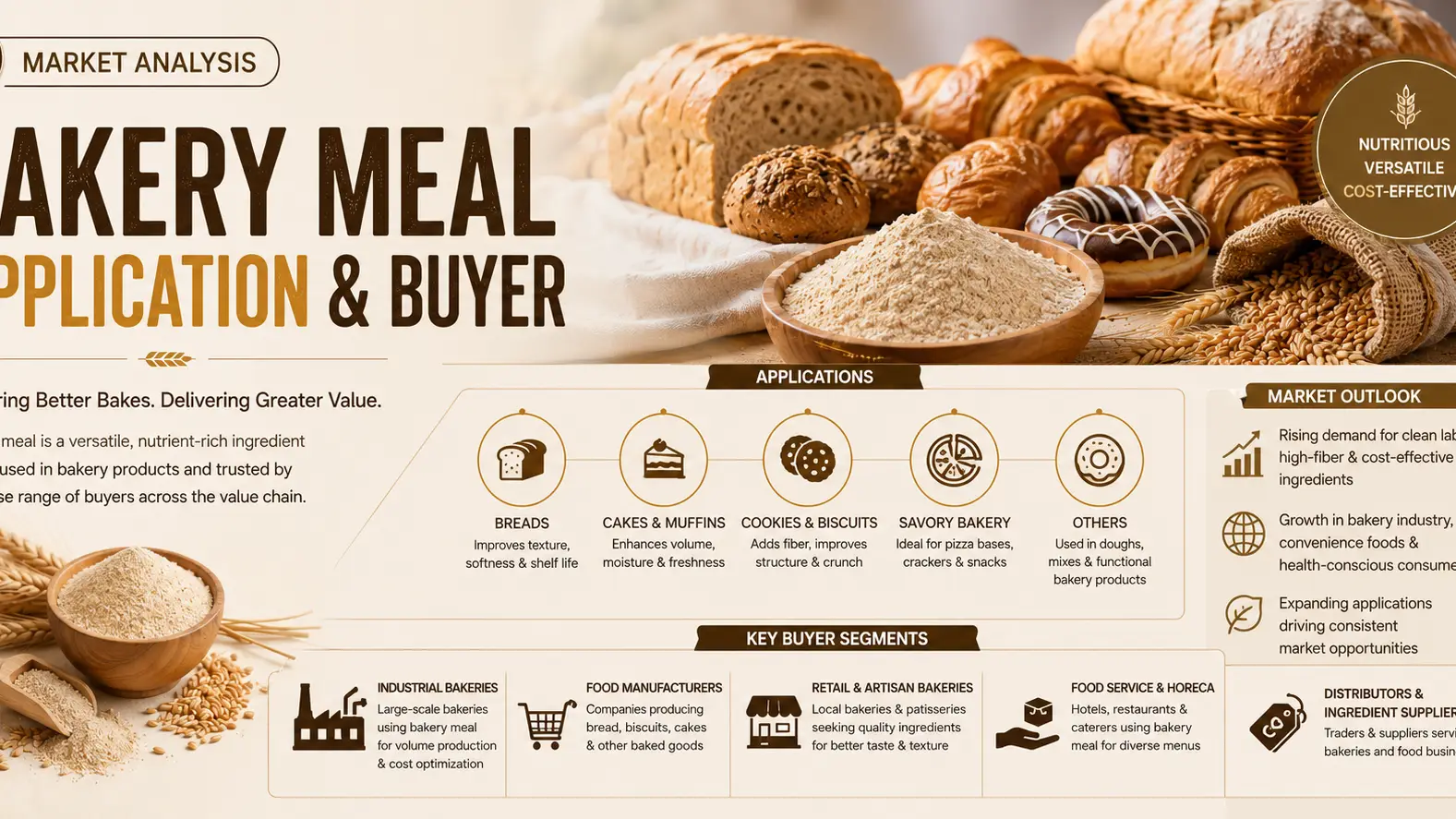
Poultry and swine feed manufacturers remain the dominant buyers in the bakery meal market. Large integrated feed mills increasingly substitute a portion of corn with bakery meal to manage formulation costs while maintaining energy density in feed rations. In 2026, bakery meal inclusion rates in poultry feed commonly range from 5% to 15%, depending on fat and sugar content.
Commercial feed buyers in Southeast Asia, the Middle East, and Latin America are actively increasing imports as feed grain inflation persists. Average bakery meal prices in export markets currently range between USD 180–260/MT, significantly below conventional feed corn in several regions. This pricing advantage continues to attract industrial livestock producers focused on feed conversion efficiency and operational margins.
Pet Food and Aquaculture Buyers Expand Market Reach
Beyond traditional livestock applications, premium pet food manufacturers are emerging as high-value buyers of bakery meal derivatives. Dry pet food formulations increasingly incorporate processed bakery carbohydrates to improve texture, palatability, and production efficiency. Aquaculture feed producers are also evaluating bakery meal as an alternative energy source in tilapia and catfish feed systems.
The pet nutrition segment alone represented nearly 18% of specialty bakery meal consumption in 2025. Demand is particularly strong in Europe, where sustainable ingredient sourcing has become a competitive purchasing criterion among major pet food brands.
Circular Economy Trends Strengthen Industrial Adoption
Governments and food processors are intensifying efforts to reduce food waste disposal, creating stronger raw material supply channels for bakery meal processors. Large bakery chains and packaged food manufacturers now partner directly with rendering and recycling facilities to redirect unsold products into feed ingredient streams.
This transition is improving raw material consistency while supporting environmental compliance targets. In the United States alone, more than 2 million metric tons of bakery by-products were redirected into feed manufacturing during 2025. Sustainability-linked procurement programs are also encouraging multinational feed companies to prioritize recycled feed inputs with measurable carbon reduction benefits.
Global Pricing, Supply Dynamics, and Trade Opportunities
The bakery meal trade landscape in 2026 remains heavily influenced by regional grain shortages, freight costs, and food processing output. North America continues to lead global exports due to abundant food processing infrastructure, while Asia-Pacific remains the fastest-growing import region.
Industrial buyers are increasingly seeking customized bakery meal specifications, including lower moisture content and standardized fat levels for automated feed production systems. Premium-grade bakery meal with stable nutritional consistency can achieve prices above USD 300/MT in specialized pet food applications.
As global feed manufacturers continue diversifying ingredient sourcing strategies, bakery meal is expected to strengthen its role as a commercially viable and sustainable feed commodity.
Conclusion
As a platform feed ingredient, bakery meal continues to bridge the gap between food waste recovery and cost-effective animal nutrition. Its expanding use across poultry, swine, aquaculture, and pet food sectors highlights the ingredient’s growing strategic value within global feed supply chains. With sustainability regulations tightening and feed cost optimization remaining critical, bakery meal is expected to maintain strong industrial relevance throughout the decade.
Companies seeking reliable sourcing, global distribution access, and tailored feed ingredient solutions are increasingly partnering with international suppliers capable of ensuring quality consistency and supply security. Tradeasia International continues supporting buyers and manufacturers worldwide through integrated chemical and feed ingredient supply solutions designed for evolving industrial markets.
Leave a Comment