Explore our network of country and industry based websites to access localized information, product offerings, and business services across our group.
Log in to start sending quotation requests for any product.
Don't have an account? Sign Up Here
Log in now to access technical product documents from our product range.
Don't have an account? Sign Up Here
Home All Products Xanthan Gum (E415)
|
IUPAC Name |
: Xanthan Gum |
|
Cas Number |
: 11138-66-2 |
|
HS Code |
: 3913.90.90 |
|
Formula |
: (C35H49O29)n |
|
Appearance Name |
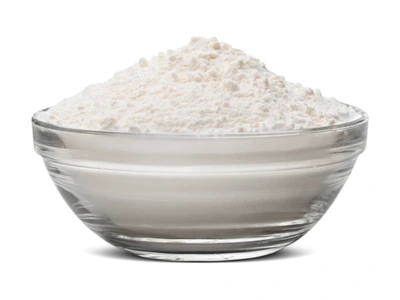
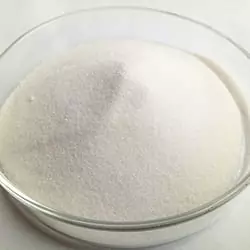
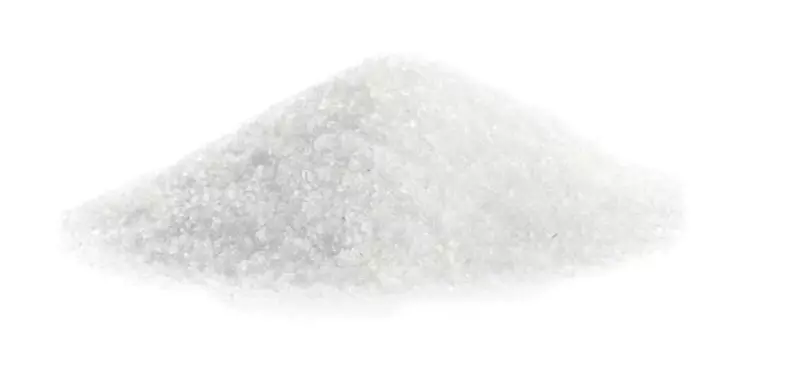
: Off white powder |
|
Common Names |
: Xanthan |
|
Packaging |
: 25kg/bag |
For more detailed information including pricing, customization, and shipping:
Xanthan gum is a microbial polysaccharide providing exceptional thickening (500-2000 cPs at 0.5%), suspension, and stabilization across pH 2-11 and temperatures -10°C to 120°C as primary thickener/stabilizer at ultra-low dosage (0.1-1%). In the food industry, it functions mainly as a viscosity modifier, suspension agent, and stabilizer to create smooth texture in sauces, prevent sedimentation in beverages, and improve freeze-thaw stability in frozen foods.
Sauces and dressings: Provides pseudoplastic shear-thinning flow for smooth mouthfeel and pumpability, stabilizes emulsions preventing oil separation, maintains viscosity through high-shear processing.
Beverages: Suspends pulp, fibers, and cloudifiers preventing sedimentation in juices, smoothies, and RTD drinks at 0.1-0.3%, heat-stable through pasteurization.
Bakery products: Improves dough hydration and gas retention in gluten-free breads, extends crumb softness preventing staling, synergizes with guar/locust bean gum.
Dairy products: Stabilizes ice cream preventing ice crystal growth and whey separation in yogurts, provides freeze-thaw stability through 5+ cycles.
Frozen foods: Prevents syneresis and texture breakdown in sauces, fillings, and ready meals during freeze-thaw cycling, maintains hot-hold viscosity.
Gluten-free products: Replaces gluten functionality creating structure and moisture retention in breads, cakes, and pasta analogs.
In cosmetics, suspends particles and stabilizes emulsions in lotions and toothpaste; in oil drilling, controls rheology and suspends cuttings; in pharmaceuticals, controlled-release matrices; in cleaners, provides vertical cling and suspension.



 English

 Indonesian
 简体字
简体字
 العربية
 Español
 Français
 Português
 日本語
日本語
 한국어
한국어
 Tiếng Việt



















---taiwan.webp)