Understanding Xylose and Its Commercial Importance
Xylose is a naturally occurring five-carbon sugar classified as an aldopentose monosaccharide. It is commonly derived from plant biomass, particularly hemicellulose-rich materials such as hardwood, agricultural residues, and other lignocellulosic feedstocks. Technical information published by PubChem identifies D-Xylose as a key carbohydrate widely utilized in industrial and food-related applications.
Xylose as a Strategic Industrial Ingredient
The commercial importance of xylose extends beyond its role as a sugar. It serves as a critical intermediate for the production of value-added ingredients, specialty chemicals, and bio-based products. Its renewable origin aligns with increasing industry interest in sustainable raw materials and circular economy initiatives.
One of the most notable uses of xylose is as a precursor for xylitol production. Research supported by the United States Department of Agriculture highlights the continued development of technologies that convert xylose into xylitol, a widely used sweetener in food and pharmaceutical products.
As industries seek alternatives to conventional petroleum-derived ingredients and traditional sweeteners, xylose continues to attract attention from manufacturers, traders, and procurement teams looking for versatile and sustainable chemical inputs.
Growing Applications of Xylose Across Industries
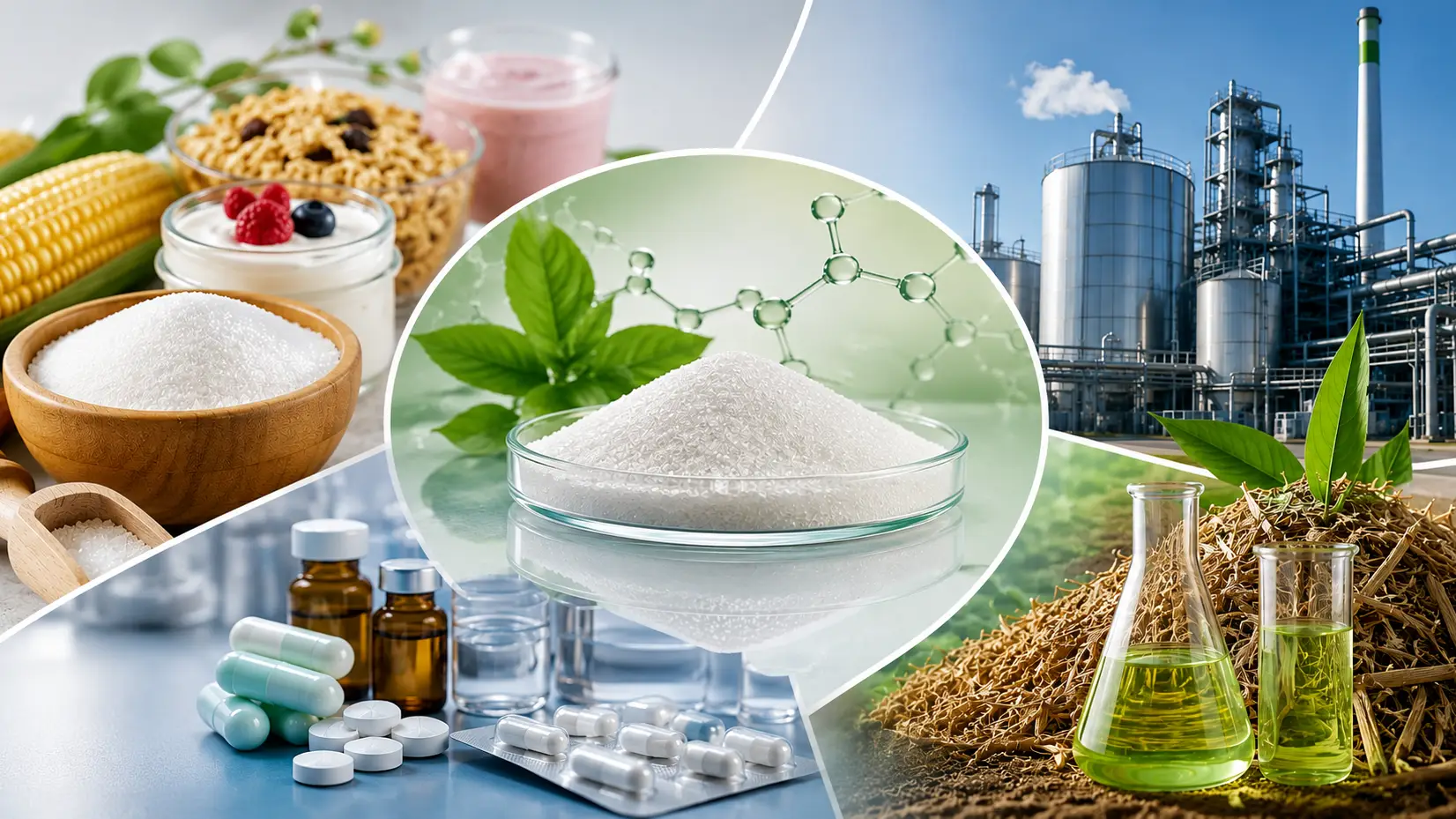
The expanding range of xylose applications has contributed significantly to its commercial relevance. Demand is increasingly linked to industries seeking multifunctional ingredients with both performance and sustainability benefits.
Food and Sweetener Manufacturing
In the food sector, xylose is used as a specialty carbohydrate ingredient and as a feedstock for xylitol production. According to USDA-supported research, xylitol derived from xylose is widely utilized in chewing gum, confectionery products, and oral care formulations due to its favorable sweetening characteristics.
Beyond sweetener production, food manufacturers continue to evaluate alternative sugar solutions that align with changing consumer preferences regarding calorie reduction and ingredient transparency. Regulatory information from the FDA emphasizes ongoing industry interest in alternative sweetening systems and novel carbohydrate ingredients.
Pharmaceutical and Biotechnology Applications
The pharmaceutical sector utilizes xylose in diagnostic, formulation, and specialty ingredient applications. PubChem notes that D-Xylose has historically been used in diagnostic testing and serves as a valuable carbohydrate source in various pharmaceutical processes.
Biotechnology companies also leverage xylose in fermentation and bioconversion pathways, particularly when developing bio-based chemicals, sustainable ingredients, and next-generation industrial biotechnology solutions. These applications continue to support long-term industrial demand growth.
Market Demand Trends Driving Xylose Consumption
Market demand for xylose is increasingly influenced by developments across food ingredients, pharmaceutical manufacturing, and renewable chemical sectors. These converging demand drivers are creating new opportunities throughout the value chain.
Expansion of Bio-Based Manufacturing
One of the most significant trends affecting xylose consumption is the expansion of bio-based manufacturing. Xylose is abundant in lignocellulosic biomass and can serve as a renewable feedstock for the production of specialty chemicals, biochemicals, and sustainable materials.
Industry analysis indicates that demand for xylose increasingly comes from multiple end-use sectors, including food processing, pharmaceutical manufacturing, and emerging biofuel applications. This diversification helps strengthen the long-term commercial outlook for the product.
Demand for Alternative Sweetening Solutions
Health-conscious product development continues to encourage exploration of alternative sweeteners and sugar-reduction strategies. Xylose and its derivatives benefit from this trend because they support the development of reduced-calorie and specialty formulations.
Market participants are also investing in technologies that improve biomass utilization efficiency. As sustainability targets become more important for manufacturers worldwide, renewable carbohydrate feedstocks such as xylose are expected to remain strategically important across multiple industries.
Buyer Intent and Procurement Considerations
Commercial buyers typically approach xylose procurement with a focus on product quality, consistency, supply security, and regulatory compliance. Understanding buyer intent helps suppliers and marketplaces better address sourcing requirements.
Who Buys Xylose?
Typical xylose buyers include food ingredient manufacturers, sweetener producers, pharmaceutical companies, biotechnology firms, nutraceutical manufacturers, and specialty chemical processors. These organizations often require reliable access to food-grade or pharmaceutical-grade material depending on the intended application.
Procurement teams evaluate purity specifications, production methods, supply availability, certifications, traceability, and supplier credibility before making purchasing decisions. These factors become increasingly important for companies operating in regulated industries.
Why Buyers Compare Suppliers
Buyers frequently compare multiple suppliers to optimize cost, quality, and supply reliability. Market analysis suggests that growing cross-industry demand has increased the importance of strategic sourcing and long-term supplier relationships.
Product pages on B2B chemical marketplaces support sourcing decisions by providing technical information, supplier access, specification visibility, and procurement channels that help reduce supplier discovery time while improving purchasing efficiency.
Global Supply Chain and Sourcing Opportunities
The global xylose supply chain is influenced by feedstock availability, production technology, transportation costs, and downstream demand from multiple industrial sectors. Understanding these dynamics is essential for successful sourcing strategies.
Key Supply Considerations
Most commercial xylose production originates from biomass-rich raw materials such as hardwood and agricultural residues. Availability of these feedstocks can influence regional production capacity and supply chain competitiveness.
Supply chain participants must also consider purity requirements, logistics networks, import regulations, and inventory management when planning procurement activities. These considerations become especially important for multinational manufacturers managing multiple production sites.
The Role of B2B Chemical Marketplaces
Digital B2B chemical marketplaces increasingly help bridge the gap between buyers and suppliers by improving market visibility and facilitating supplier discovery. Such platforms can support procurement teams seeking verified suppliers, product documentation, and sourcing alternatives.
As regulatory expectations regarding traceability and supply transparency continue to evolve, marketplace-based sourcing models may offer additional advantages by streamlining supplier evaluation and communication processes. Industry assessments indicate that traceability and compliance have become increasingly important within modern xylose supply chains.
Commercial Outlook for Xylose in Industrial Markets
The commercial outlook for xylose remains favorable due to its diverse applications and alignment with several long-term industrial trends. Demand growth is supported by both traditional and emerging end-use sectors.
Demand Growth Supported by Multiple Industries
Food manufacturers continue to explore sweetener alternatives and functional ingredients, while pharmaceutical companies require specialized carbohydrate-based materials. Simultaneously, biotechnology firms are expanding the use of renewable feedstocks in industrial production systems.
This combination of demand drivers creates a relatively diversified market foundation. Compared with products dependent on a single industry, xylose benefits from exposure to several growing sectors, helping support long-term market resilience.
Commercial Positioning for B2B Buyers
For manufacturers, distributors, and procurement teams, xylose represents more than a specialty sugar. It is a strategic raw material supporting value-added production across food, pharmaceutical, and bio-based chemical markets.
Reliable sourcing remains essential because application performance, regulatory compliance, and production continuity often depend on consistent product quality. Through global sourcing networks and B2B marketplace platforms such as Tradeasia, Chemtradeasia, and Tradechem Marketplace, buyers can identify qualified suppliers, compare sourcing options, and strengthen procurement decision-making processes without relying solely on traditional supply channels.
Conclusion
Xylose continues to expand its role across food ingredients, pharmaceutical manufacturing, biotechnology, and bio-based chemical production. Its versatility, renewable origin, and ability to serve as a precursor for high-value products contribute to growing commercial relevance.
For B2B buyers, understanding market demand, application trends, supply chain dynamics, and procurement considerations is essential when evaluating sourcing strategies. As industrial demand evolves, companies that establish reliable supplier relationships and maintain sourcing flexibility will be better positioned to capture opportunities within the growing global xylose market.
Sources
Leave a Comment