Understanding Wheat Bran and Its Role in Global Supply Chains
Wheat Bran as an Agricultural Processing Ingredient
Wheat bran is the outer layer of the wheat grain separated during flour milling. As a natural source of dietary fiber, minerals, and plant-based nutrients, wheat bran has become an important agricultural ingredient used across food manufacturing, animal nutrition, and industrial processing sectors. The product represents a valuable utilization pathway for wheat milling by-products, helping manufacturers improve resource efficiency.
According to technical information from the Food and Agriculture Organization of the United Nations, cereal by-products such as bran contribute significantly to global food and agricultural value chains because they contain nutritional components that can be utilized beyond traditional grain processing.
Role of Wheat Bran in Industrial Supply Chains
The commercial importance of wheat bran comes from its connection between agricultural production and downstream industries. Flour mills, ingredient processors, feed manufacturers, and food producers rely on consistent wheat bran supply to maintain production efficiency and product quality.
Wheat bran supply chains require coordination between agricultural processors, distributors, logistics providers, and industrial buyers. Factors such as grain availability, milling capacity, storage conditions, and transportation networks influence sourcing reliability.
For businesses looking for industrial supply options, the Wheat Bran product page provides product information and sourcing details relevant to commercial buyers evaluating ingredient suppliers.
Wheat Bran Market Demand and Industry Growth Drivers
Rising Demand for Functional and Nutritional Ingredients
Consumer interest in fiber-rich foods and functional nutrition has increased demand for naturally derived ingredients. Wheat bran is increasingly considered a valuable ingredient because of its dietary fiber content and compatibility with applications such as cereals, bakery products, and nutritional formulations.
According to research published by the National Library of Medicine, dietary fiber ingredients derived from cereal grains have gained attention due to their role in supporting healthier food formulations and improving nutritional profiles.
The expansion of health-focused food manufacturing has encouraged ingredient buyers to explore reliable wheat bran suppliers capable of providing consistent quality and supply volumes.
Growth Opportunities Across Feed and Food Industries
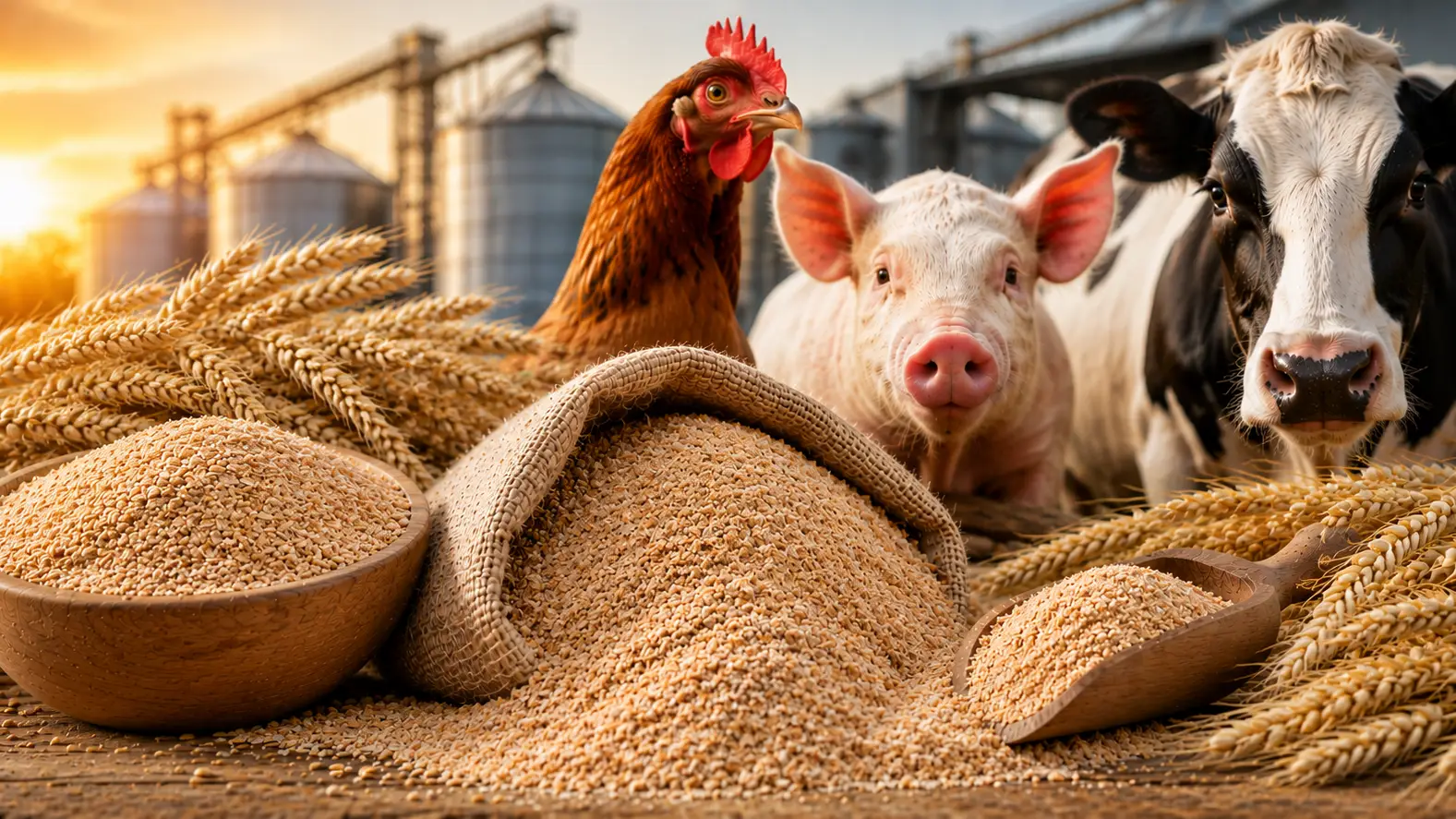
Animal feed production remains one of the largest application areas for wheat bran because of its nutritional value and suitability as a feed ingredient. Livestock producers and feed manufacturers use wheat bran as part of balanced feed formulations for various animal nutrition programs.
Industry analysis from the United States Department of Agriculture highlights the importance of grain-based commodities and processing outputs in global agricultural markets, where supply availability and pricing conditions influence feed production decisions.
The combination of food ingredient demand and animal feed consumption creates diversified market opportunities for wheat bran suppliers serving multiple industrial segments.
Industrial Applications Driving Wheat Bran Consumption
Wheat Bran Applications in Animal Nutrition
Animal feed manufacturers use wheat bran because it provides fiber, energy, and nutritional value within feed formulations. It is commonly incorporated into livestock and poultry feed products where manufacturers require dependable agricultural ingredients.
Feed producers typically evaluate wheat bran based on nutritional consistency, contamination control, moisture levels, availability, and logistics efficiency. These factors directly affect formulation performance and production economics.
Technical guidance from organizations such as the National Research Council has documented the importance of evaluating nutrient composition when developing animal feed formulations.
Wheat Bran Applications in Food Manufacturing
Food manufacturers utilize wheat bran in products including high-fiber cereals, baked goods, nutritional blends, and specialty food formulations. Its functional properties allow producers to enhance fiber content while maintaining natural ingredient positioning.
The growing demand for clean-label and plant-based ingredients has encouraged food companies to assess wheat bran as a practical ingredient option. Manufacturers often compare suppliers based on processing standards, traceability, documentation, and supply capability.
Reliable sourcing platforms help connect food producers with suppliers that can meet industrial requirements for consistent wheat bran availability.
Buyer Intent and Procurement Considerations for Wheat Bran
Who Buys Wheat Bran and Why
Wheat bran buyers include animal feed producers, food ingredient manufacturers, agricultural traders, distributors, and companies involved in nutritional product development. Each buyer group evaluates wheat bran differently depending on application requirements.
Feed manufacturers usually focus on supply continuity, nutritional specifications, and cost efficiency, while food manufacturers prioritize quality documentation, consistency, and compliance with ingredient standards.
For procurement teams, understanding supplier capability is essential because ingredient reliability directly impacts production planning and customer commitments.
Factors Procurement Teams Evaluate Before Purchasing
Industrial buyers commonly compare wheat bran suppliers based on product specifications, production capacity, shipment reliability, technical documentation, and commercial terms. Supplier transparency is increasingly important as companies seek traceable and dependable supply chains.
The Wheat Bran sourcing page supports buyer evaluation by providing access to product information for companies searching for industrial ingredient sourcing solutions.
Wheat Bran Sourcing Strategies for Global Buyers
Selecting Reliable Wheat Bran Suppliers
Choosing the right wheat bran supplier requires evaluation of production capabilities, quality systems, export experience, and supply chain management. Global buyers often prefer suppliers that can support stable long-term purchasing relationships.
Marketplaces specializing in industrial ingredients can simplify supplier discovery by connecting buyers with verified commercial supply channels. This approach helps procurement teams compare available options and identify suitable partners.
Supplier selection is particularly important for businesses operating in competitive food and feed markets where delays or inconsistent quality can affect manufacturing operations.
Importance of Supply Chain Transparency
Modern ingredient procurement increasingly depends on visibility throughout the supply chain. Buyers require confidence regarding product origin, processing standards, documentation, and delivery capability.
According to supply chain research from McKinsey & Company, companies across industries are placing greater emphasis on supply chain resilience and supplier diversification.
For wheat bran buyers, strong supply chain management can reduce procurement risks and improve operational stability.
Commercial Opportunities in the Wheat Bran Supply Market
Expanding Opportunities for Manufacturers and Traders
The wheat bran market offers opportunities for manufacturers, agricultural processors, traders, and distributors seeking growth within food and feed supply chains. Demand diversification across multiple industries creates opportunities for suppliers with reliable production and logistics capabilities.
Companies involved in wheat processing can create additional value by connecting agricultural outputs with industrial applications. This supports more efficient utilization of raw materials while meeting market demand.
B2B marketplaces provide an effective channel for suppliers and buyers to discover new commercial opportunities and develop international trade relationships.
How Trade Platforms Support Industrial Buyers
Digital marketplaces help procurement teams simplify sourcing by providing access to product information, supplier networks, and commercial opportunities. For industrial ingredients, marketplace visibility can improve supplier discovery and reduce the complexity of global purchasing.
Tradeasia / Chemtradeasia / Tradechem Marketplace positioning supports businesses by connecting industrial buyers with supply chain partners across different regions.
A structured sourcing approach allows buyers to evaluate wheat bran options based on application needs, commercial requirements, and supply reliability.
Conclusion: Building Reliable Wheat Bran Supply Partnerships
Future Outlook for Wheat Bran Demand
Wheat bran continues to hold commercial importance because of its applications across food manufacturing, animal nutrition, and agricultural supply chains. As industries seek sustainable ingredient solutions and efficient resource utilization, demand for reliable wheat bran supply is expected to remain relevant.
Market participants that understand application trends, buyer requirements, and sourcing challenges are better positioned to identify opportunities within this growing ingredient segment.
Strengthening Global Wheat Bran Sourcing Networks
For manufacturers, distributors, and procurement teams, successful wheat bran sourcing depends on dependable suppliers, transparent supply chains, and strong market understanding. The Wheat Bran product page offers a starting point for businesses exploring industrial wheat bran supply opportunities.
By combining market intelligence with effective sourcing strategies, companies can build stronger supply relationships and respond to evolving demand across global food and feed industries.
Sources
- Food and Agriculture Organization of the United Nations (FAO) – Agricultural commodities and cereal value chains
https://www.fao.org/
- National Library of Medicine – Research on dietary fiber and cereal grain ingredients
https://www.ncbi.nlm.nih.gov/
- United States Department of Agriculture (USDA) – Grain production and agricultural market information
https://www.usda.gov/
Leave a Comment