Wheat Bran Market Applications and Buyers Outlook in 2026
Introduction to Wheat Bran as a Platform Feed Ingredient
Wheat bran has evolved beyond its traditional role as a milling byproduct to become an increasingly strategic platform ingredient within the global feed and agro-industrial economy. Derived during wheat flour processing, wheat bran contains high levels of dietary fiber, protein, phosphorus, and digestible energy, making it highly valuable for livestock feed formulations. In 2026, the global wheat bran market continues to expand steadily as feed producers search for cost-efficient alternatives amid volatile grain pricing and tightening livestock margins. Global wheat bran production is estimated to exceed 165 million metric tons, while the market is projected to grow at a CAGR of 4.8% through 2030. Average export prices currently range between USD 185–310/MT depending on protein concentration, pelletization, and regional supply availability.
Expanding Applications Across Livestock Nutrition
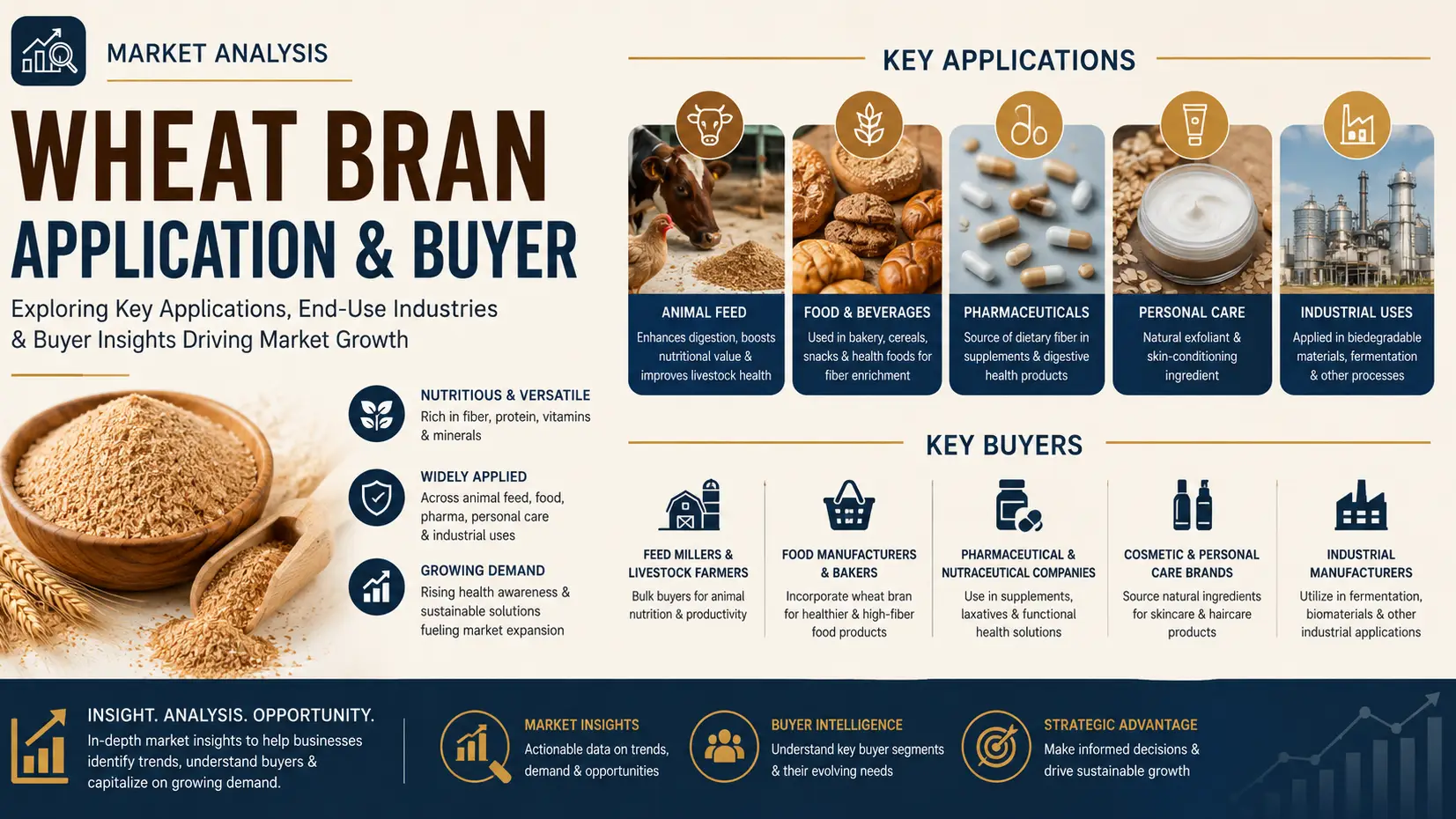
The strongest demand driver for wheat bran in 2026 remains the livestock feed industry. Poultry integrators, dairy farms, and swine producers increasingly incorporate wheat bran into feed rations because of its digestible fiber content and favorable economics compared to corn and soybean meal. Dairy cattle nutrition represents one of the fastest-growing application areas, particularly in Asia and the Middle East where feed cost optimization is becoming critical. In commercial dairy operations, wheat bran inclusion rates now frequently reach 15–25% of total feed formulations. Aquaculture feed producers are also gradually increasing adoption for selected herbivorous fish species as sustainability regulations intensify globally.
Feed Manufacturers Strengthening Procurement Activity
Large feed manufacturers remain the dominant buyer group within the wheat bran market. Integrated feed companies are securing long-term supply contracts with flour mills to stabilize raw material costs and reduce procurement volatility. In 2026, feed-grade wheat bran prices in Europe average around USD 240/MT, while Asian import markets fluctuate near USD 285/MT due to freight and seasonal wheat supply conditions. Buyers increasingly favor pelletized wheat bran because it improves storage efficiency, reduces transportation loss, and enhances feed handling performance. This shift is encouraging milling companies to invest in value-added processing infrastructure across major exporting regions.
Regional Production Trends and Export Dynamics
Asia-Pacific continues to lead global wheat bran consumption, supported by expanding poultry and dairy sectors in China, India, and Southeast Asia. Meanwhile, the European Union remains a significant exporter due to its advanced flour milling capacity. Russia and Ukraine continue to influence pricing trends because of their large wheat output and export-oriented agricultural systems. In North America, rising ethanol coproduct competition has intensified demand for alternative fiber ingredients, further strengthening wheat bran purchasing activity among commercial feed operators.
Industrial Buyers Prioritizing Sustainable Feed Economics
Sustainability objectives are increasingly shaping buyer behavior across the wheat bran market. Feed manufacturers and livestock producers are under pressure to reduce feed waste while maintaining nutritional performance. Wheat bran aligns well with circular economy strategies because it utilizes secondary outputs from flour milling operations. Industrial buyers are therefore prioritizing suppliers capable of offering consistent quality, traceable sourcing, and stable bulk shipment capacity. As feed industries continue adapting to climate-related agricultural volatility, wheat bran is expected to strengthen its role as a resilient and economically attractive feed platform ingredient.
Conclusion
As of 2026, wheat bran continues to solidify its position as a strategic platform ingredient within the global animal nutrition and feed manufacturing landscape. Its cost-efficiency, wide availability, and nutritional versatility make it increasingly attractive for industrial buyers navigating rising feed costs and supply chain uncertainty. With global demand accelerating across dairy, poultry, swine, and aquaculture applications, the market outlook remains highly favorable for producers, exporters, and feed formulators alike. Companies seeking reliable sourcing solutions, consistent feed-grade quality, and international supply chain support are increasingly partnering with global distributors such as Tradeasia International to strengthen procurement efficiency and long-term market competitiveness.
Sources
Leave a Comment