Understanding Wheat Bran in Industrial Markets
Wheat bran is the outer layer removed during wheat milling operations. It is a nutrient-rich agricultural by-product widely valued for its fiber content, proteins, minerals, and functional characteristics in commercial applications.
The increasing focus on sustainable raw material utilization has improved the value of wheat bran beyond its traditional role as a milling by-product. Various industries now recognize it as a functional ingredient and cost-efficient feed component.
Wheat Bran Composition and Commercial Characteristics
Technical information from agricultural processing organizations indicates that wheat bran contains dietary fiber, proteins, vitamins, and minerals beneficial to several industrial applications.
Its balance of nutritional properties and relatively wide availability makes it commercially attractive to manufacturers and procurement teams seeking economically viable ingredients.
Industrial Value Creation
According to data from grain processing associations, wheat bran has evolved from a secondary agricultural output into a commercial ingredient supporting multiple downstream industries.
Manufacturers increasingly evaluate wheat bran for value-added opportunities because of its flexibility in formulations and industrial processing systems.
Major Industrial Applications of Wheat Bran
Wheat bran serves multiple industries due to its functional properties and nutritional profile. Commercial demand is increasingly linked to feed optimization and ingredient innovation.
Application growth is supported by industrial efforts to maximize raw material efficiency and reduce waste within processing systems.
Animal Feed Applications
According to livestock nutrition studies published by agricultural institutions, wheat bran is widely used in cattle, poultry, and swine feed formulations because of its fiber and nutrient contribution.
Feed manufacturers frequently incorporate wheat bran to improve diet structure while maintaining cost efficiency in large-scale feed production.
Food Ingredient Applications
Food manufacturers increasingly utilize wheat bran in bakery products, cereals, and fiber-enriched formulations designed for health-conscious consumers.
Market analysis from food ingredient sectors suggests that demand for functional fiber ingredients continues to increase globally.
Global Market Trends and Demand Growth
Global demand patterns for wheat bran continue changing due to livestock production growth and rising demand for value-added food ingredients.
International trade activity has also contributed to expanded sourcing opportunities between agricultural producers and industrial buyers.
Emerging Market Demand Drivers
Market analysis published by agricultural commodity organizations indicates that developing economies continue increasing feed production capacity to support rising protein consumption.
This growth supports stronger demand for wheat processing by-products including wheat bran.
Sustainability and Circular Economy Trends
Industry reports increasingly highlight circular economy practices where agricultural by-products are integrated into valuable industrial applications.
Companies adopting sustainability strategies often evaluate wheat bran as part of resource optimization initiatives.
Buyer Intent and Procurement Considerations
Buyer intent for wheat bran frequently originates from organizations seeking nutritional value, stable supply, and cost-effective sourcing.
Procurement departments often compare specifications across multiple suppliers before establishing long-term agreements.
Who Typically Purchases Wheat Bran
Animal feed manufacturers, ingredient processors, livestock operations, agricultural distributors, and food manufacturers represent key buyer categories.
Large-scale procurement teams often secure supply contracts based on volume requirements and regional availability.
Procurement Evaluation Factors
According to purchasing practices observed in commodity ingredient markets, buyers commonly evaluate moisture levels, nutritional content, consistency, logistics capability, and documentation standards.
Supplier comparisons become important because product quality variation may influence downstream manufacturing performance.
Supply Chain and Sourcing Opportunities
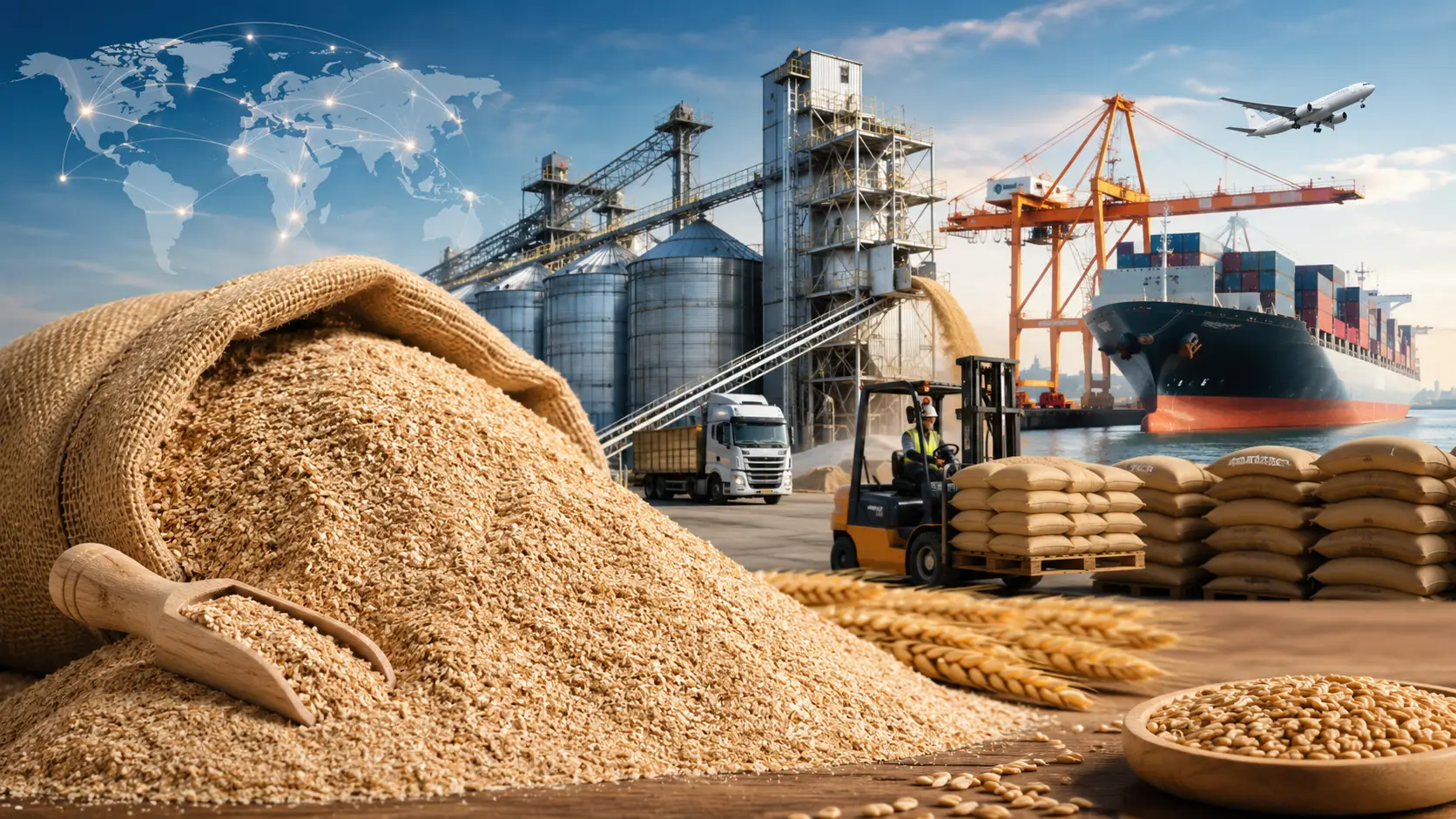
The wheat bran supply chain typically begins with wheat milling operations and extends through processors, exporters, distributors, and industrial buyers.
Commercial availability often depends on wheat production volumes, regional processing capacity, and transportation networks.
Supply Structure in Global Markets
Major wheat-producing regions support large-scale wheat bran availability because milling activity generates substantial by-product output.
Countries with established grain industries frequently become supply centers for international trade.
B2B Sourcing Advantages
Trade platforms and B2B marketplaces increasingly help procurement teams compare suppliers and identify suitable sourcing options.
These systems can improve supplier visibility, documentation access, and purchasing efficiency for buyers.
Future Outlook for Wheat Bran Markets
The long-term market outlook for wheat bran appears connected to expanding food innovation and livestock industry growth.
Industrial organizations continue exploring opportunities for functional ingredients and alternative feed materials.
Future Commercial Opportunities
Industry forecasts indicate that demand for nutrient-rich and sustainable agricultural ingredients will likely support broader wheat bran utilization.
Investment in food technology and feed efficiency programs may create additional commercial opportunities.
Evolving Buyer Expectations
Buyers increasingly seek supply transparency, quality assurance systems, and stable procurement relationships.
Companies able to meet these expectations may strengthen their position in competitive B2B markets.
Conclusion
Wheat bran continues evolving from a traditional milling by-product into an increasingly valuable commercial ingredient across feed and food industries.
Growing buyer demand, sustainability initiatives, and broader industrial applications are contributing to new sourcing and market opportunities for manufacturers, distributors, traders, and procurement professionals.
Sources
https://www.fao.org
https://www.usda.gov
https://www.world-grain.com

Leave a Comment