Introduction
Kaolin clay, also known as china clay or china mud, is a soft white clay mineral that plays a fundamental role in the manufacturing of porcelain, ceramics, and china products. Beyond ceramics, kaolin clay is widely used in paper, paint, rubber, cosmetics, pharmaceuticals, and various industrial applications.
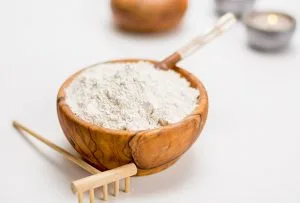
In its natural form, kaolin appears as a fine white powder composed mainly of minerals kaolinite. Under an electron microscope, kaolinite particles show a hexagonal, plate-like crystal structure, typically ranging from 0.1 to 10 micrometers in size. These particles may form book-like or vermicular structures, and in some cases, naturally visible formations approaching millimeter size can be found.
Naturally occurring kaolin often contains varying amounts of other minerals such as muscovite, feldspar, quartz, and anatase. It is frequently tinted yellow or brown due to iron hydroxide impurities. To achieve the bright white appearance required for commercial use, kaolin is refined through washing and bleaching processes to remove iron oxides and unwanted mineral content.
Role of Kaolin Clay in Ceramics and Manufacturing
Kaolin is essential in the ceramics industry because of its white-burning properties and high fusion temperature. These characteristics make it ideal for producing porcelain, refractories, and fine china products. In whiteware manufacturing, kaolin is commonly blended with feldspar and silica, along with a smaller proportion of ball clay. This balanced composition ensures proper plasticity, controlled shrinkage, vitrification, and strength during shaping and firing.
Kaolin clay is also used independently in refractory materials due to its thermal stability. Because of its broad industrial value, there are many kaolin clay producers worldwide, many of whom also operate as phosphate suppliers. Businesses typically evaluate suppliers based on quality consistency, processing standards, and customer feedback before selecting a source.
Extraction and Processing of Kaolin Clay
Kaolin is a natural resource found deep within the earth’s surface and is only available in specific geographic regions. Mining operations often involve deep drilling and substantial investment in processing plants and specialized equipment to transform raw kaolin into ready-to-use industrial material.
The extraction and processing methods vary depending on the application. Each manufacturer applies distinct techniques, which influence the final particle size, purity, and brightness of the kaolin clay produced.
Kaolin Processing for the Paper Industry
The paper industry consumes a significant share of global kaolin production. In paper manufacturing, kaolin enhances brightness, smoothness, and printability. The typical processing steps include:
-
Blunging, where raw kaolin is mixed with a controlled amount of water and chemical dispersants to form a slurry.
-
Centrifuging, which separates coarse particles from fine kaolin particles.
-
Brightness improvement, using processes such as oxidation, flotation, magnetic separation, and bleaching to achieve high whiteness.
-
Filtering and drying, where vacuum filters remove excess water and spray dryers eliminate remaining moisture to produce dry kaolin powder.
Applications of Kaolin Clay Across Industries
Kaolin clay’s versatility makes it valuable across numerous industries:
-
Skincare: Used to gently cleanse skin cells, remove impurities, and absorb excess oil, making it suitable for sensitive skin.
-
Cosmetics: Added to foundations and powders to improve texture and application.
-
Pharmaceuticals: Utilized for its absorbent properties in certain medications and supplements.
-
Ceramics and Porcelain: Strengthens products while reducing shrinkage during firing.
-
Paper Industry: Enhances paper brightness, surface smoothness, and ink adhesion.
-
Agrochemicals: Improves the effectiveness of pesticides and fertilizers.
-
Industrial Manufacturing: Used in rubber, plastics, adhesives, and sealants.
-
Food Industry: Occasionally used as a food-grade additive, particularly in products like chewing gum.
These applications demonstrate how kaolin clay supports both functional performance and product quality across diverse sectors.
Supplying Kaolin Clay to Industries in the Middle East
Tradeasia International DMCC proudly provides high-quality kaolin clay solutions for industries across the Middle East. Based in Dubai, the company ensures streamlined access to premium bulk kaolin supplies tailored to regional industrial needs.
Our refined kaolin clay meets stringent quality standards and serves industries such as cosmetics, skincare, paper manufacturing, ceramics, and industrial processing. For skincare and cosmetic manufacturers, our kaolin clay offers excellent oil absorption while remaining gentle on sensitive skin.
Tradeasia International DMCC delivers a reliable supply chain and consistent quality, enabling manufacturers to operate with confidence. Connect with us today to source high-grade kaolin clay and support your production requirements with efficiency and trust.
Leave a Comment