Global Overview of Vital Wheat Gluten in Industrial Protein Markets
Composition and Functional Role in Protein Systems
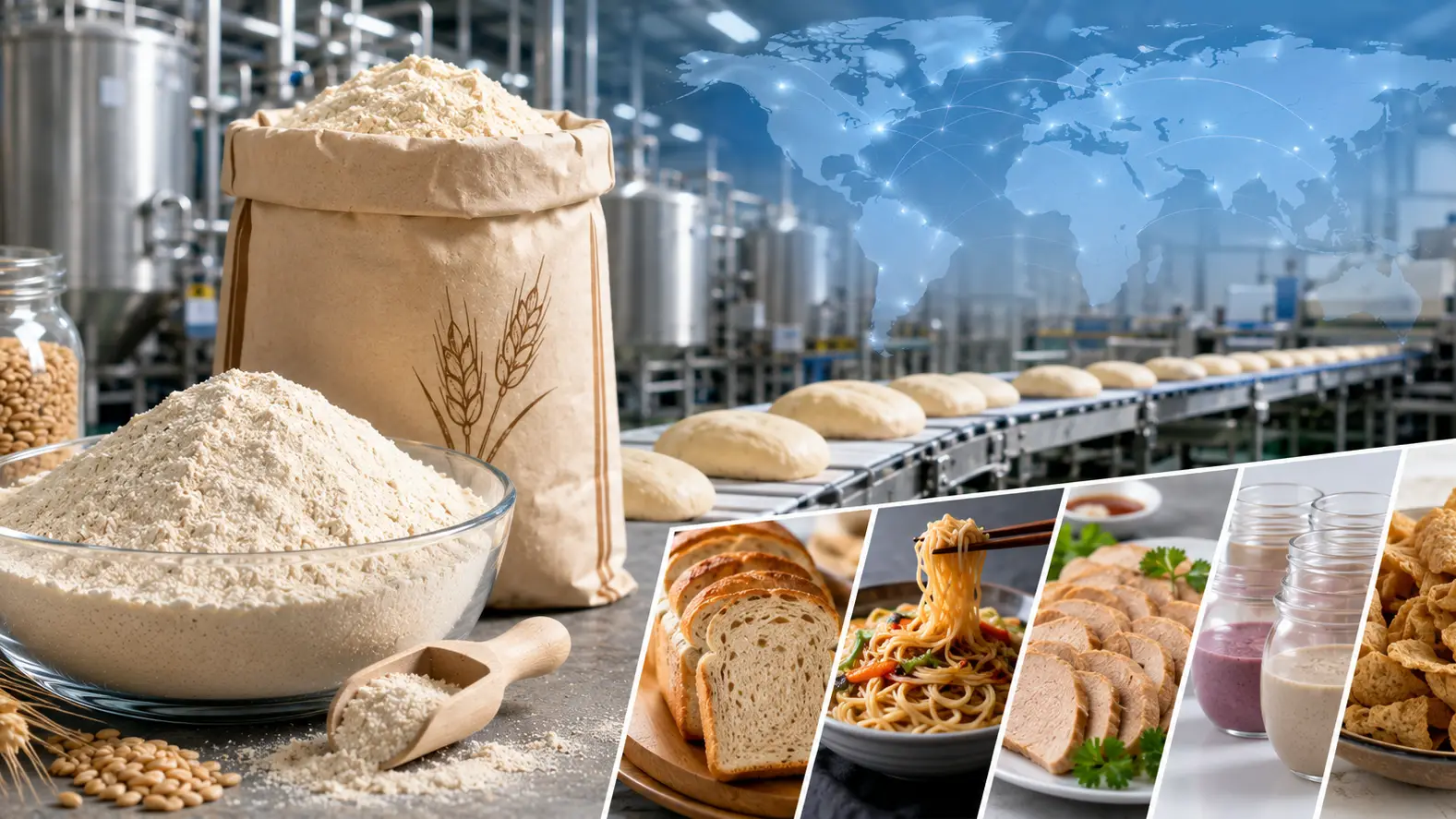
Vital wheat gluten is a concentrated wheat protein extracted through wet processing that separates gluten from starch, resulting in a high-protein functional ingredient. It is widely recognized for its elasticity, extensibility, and water-binding capacity, making it a core component in industrial food formulation. According to the Food and Agriculture Organization (FAO), wheat proteins play a critical role in global food security and processed food manufacturing systems.
From a structural perspective, vital wheat gluten is composed mainly of glutenin and gliadin proteins, which form a viscoelastic network when hydrated. This network is essential in providing structure and chewiness in processed foods. In industrial applications, this functional behavior is more important than its nutritional contribution alone.
Its ability to improve texture and binding makes it a strategic ingredient in large-scale food production systems. Manufacturers rely on it not only for product consistency but also for improving processing efficiency and reducing formulation costs.
Industrial Relevance in Global Protein Supply Chains
The global protein ingredient market has increasingly integrated wheat-based proteins into mainstream production. Based on USDA agricultural outlook reports, wheat-derived ingredients remain stable contributors to industrial food supply chains due to their scalability and cost efficiency.
Vital wheat gluten serves as a functional alternative to animal-derived proteins in multiple applications. It is especially relevant in regions where plant-based ingredient sourcing is prioritized for sustainability or cost optimization.
In addition, its compatibility with other plant proteins enhances formulation flexibility for manufacturers. This makes it a valuable ingredient in diversified supply chains across food manufacturing industries.
Growing Importance in Food Manufacturing Systems
Food manufacturers are increasingly adopting wheat gluten as part of broader ingredient optimization strategies. Its functional performance helps stabilize production processes and ensures consistent product quality across batches.
According to market insights published by OECD-FAO agricultural outlook reports, plant protein demand is expanding steadily due to changing dietary patterns and industrial innovation. Vital wheat gluten is directly benefiting from this structural shift.
This positions it as a core industrial ingredient rather than a niche additive, reinforcing its importance in global food production systems.
Functional Role in Bakery and Dough Strengthening Applications
Dough Elasticity and Structural Performance
In bakery manufacturing, vital wheat gluten is primarily used to enhance dough elasticity and structural integrity. It strengthens flour by increasing protein content, which improves gas retention during fermentation and baking. The European Food Safety Authority (EFSA) recognizes wheat gluten as a functional protein widely used in bakery systems for texture improvement.
This functionality is particularly important in industrial bread production, where consistent dough performance is required across high-volume operations. It ensures uniform loaf structure and improved shelf stability.
For large-scale bakeries, this consistency translates into operational efficiency and reduced product wastage during production cycles.
Industrial Bakery Optimization Benefits
Bakery manufacturers use vital wheat gluten to improve flour performance in weak or variable-quality wheat batches. This is especially relevant in global sourcing environments where wheat quality may differ by origin.
By standardizing protein content, manufacturers can maintain consistent baking results across multiple production lines. This improves scalability and reduces dependency on high-protein wheat varieties.
It also supports formulation flexibility, allowing bakers to produce a wide range of products from breads to pastries using standardized base ingredients.
Economic and Production Efficiency Impact
From a cost perspective, vital wheat gluten helps reduce production inefficiencies by improving dough handling properties. This reduces downtime and enhances throughput in industrial baking systems.
Industry studies referenced by FAO food processing reports indicate that functional additives like wheat gluten contribute to optimized food manufacturing economics.
As a result, it is widely adopted in both commercial bakeries and industrial food production facilities globally.
Expansion in Plant-Based Meat and Alternative Protein Industry
Role in Meat Analog Structure Formation
Vital wheat gluten plays a central role in the development of plant-based meat products due to its fibrous and elastic texture formation. It mimics the bite and chewiness of animal protein, making it essential in vegan meat formulations. According to USDA food innovation research, wheat gluten is one of the most widely used structuring agents in plant-based protein systems.
When hydrated and processed, it forms a dense protein network that replicates muscle-like textures. This makes it ideal for products such as plant-based sausages, burgers, and meat strips.
Its functionality enables manufacturers to create realistic meat alternatives without relying on animal-derived ingredients.
Growth of Alternative Protein Manufacturing
The alternative protein industry is experiencing rapid expansion driven by consumer demand for sustainable food systems. Market analysis from OECD indicates strong growth in plant-based protein consumption globally.
Vital wheat gluten is a foundational ingredient in this shift, providing both structure and cost efficiency in production. It is often blended with soy or pea protein to enhance nutritional and textural balance.
This combination approach allows manufacturers to optimize both performance and consumer acceptance of plant-based products.
Industrial Scalability in Protein Innovation
One of the key advantages of wheat gluten is its scalability in industrial production environments. It is readily available in bulk quantities and integrates easily into large-scale food processing systems.
This makes it suitable for multinational food companies expanding their plant-based product portfolios.
Its reliability and consistency make it a preferred ingredient for long-term product development pipelines in alternative protein manufacturing.
Applications in Food Processing: Noodles, Snacks, and Ready Meals
Texture Enhancement in Processed Foods
Vital wheat gluten is widely used in processed food categories such as noodles, snacks, and ready-to-eat meals. It improves chewiness, firmness, and structural integrity in finished products. According to FAO food processing guidelines, wheat proteins are essential functional ingredients in cereal-based food systems.
In noodle production, it enhances elasticity and prevents breakage during cooking. This improves product quality and consumer satisfaction in mass-produced food items.
Its binding properties also help maintain structural stability during freezing and reheating processes.
Functional Use in Convenience Foods
Convenience food manufacturers use wheat gluten to stabilize formulations in packaged meals. It helps maintain texture during storage and transport, ensuring product consistency across supply chains.
This is particularly important in global food distribution systems where products are exposed to varying temperature conditions.
Its role in moisture retention also improves the sensory quality of processed foods.
Industrial Efficiency in Food Processing
From an operational perspective, wheat gluten reduces formulation complexity in industrial food production. It allows manufacturers to streamline ingredient lists while maintaining functional performance.
This supports clean-label trends in food manufacturing while preserving product quality standards.
It also contributes to cost optimization in large-scale production environments.
Market Demand Drivers and Global Supply Chain Trends
Rising Demand in Protein Ingredient Markets
The demand for wheat-based proteins is increasing due to global shifts toward plant-based diets and functional food ingredients. USDA and FAO reports highlight steady growth in wheat protein utilization across food industries.
Vital wheat gluten benefits directly from this trend as manufacturers seek scalable protein solutions.
Its multifunctionality positions it as a strategic ingredient in both developed and emerging markets.
Supply Chain Stability and Global Trade
Wheat gluten supply chains are closely tied to global wheat production cycles. This creates both opportunities and risks in pricing and availability.
According to OECD agricultural market analysis, grain-based protein supply chains are influenced by climate conditions and trade policies.
Despite this, wheat gluten remains one of the most stable plant protein ingredients due to established global processing infrastructure.
Industry Transition Toward Functional Ingredients
Food manufacturers are increasingly prioritizing functional ingredients that improve efficiency and product performance. Wheat gluten aligns with this trend due to its versatility.
It is widely used across multiple product categories, reducing the need for multiple specialized additives.
This trend reinforces its long-term relevance in global food manufacturing systems.
B2B Sourcing and Procurement Strategy for Industrial Buyers
Procurement Considerations in Industrial Buying
B2B buyers evaluate vital wheat gluten based on protein content, consistency, origin, and functional performance. These parameters directly affect product quality in manufacturing systems.
According to FAO food trade analysis, ingredient standardization is critical for global food supply chain efficiency.
Procurement teams also assess supplier reliability and bulk availability when sourcing wheat gluten.
Supplier Evaluation and Market Comparison
Buyers often compare suppliers based on price stability, logistics capability, and quality certification. This is particularly important for multinational food producers.
Consistency in supply ensures uninterrupted production cycles and reduces operational risk.
Trade platforms like Tradeasia/Chemtradeasia enable buyers to evaluate multiple sourcing options efficiently.
Strategic Role of Reliable B2B Marketplaces
Reliable sourcing platforms play a crucial role in connecting manufacturers with verified suppliers. This improves transparency and reduces procurement complexity.
It also allows buyers to secure long-term contracts for stable ingredient supply.
Such platforms enhance global trade efficiency in the chemical and food ingredient sector.
Sources
Leave a Comment