Vietnam is forecast to import 2.8 million metric tons of soybeans in MY2025/26, a 300,000-tonne increase year-on-year, according to USDA FAS. Brazil supplies approximately 57.2% of this volume by market share, with the United States accounting for over 34% and growing. Domestic soybean production has collapsed to just 42,000–45,000 tonnes annually as Vietnamese farmers pivot to higher-margin fruit and vegetable crops, making Vietnam structurally dependent on imports for the foreseeable future. Feed mills are responding to declining domestic soybean meal prices by increasing SBM inclusion rates, pushing projected soybean meal consumption to 7.6 million metric tons by MY2025/26
Vietnam Soybean Imports Surge: Aquaculture Demand, Crushing Expansion, and the Brazil–US Battle for Market Share
Vietnam's feed sector crossed a structural threshold in 2025 with domestic soybean production already negligible at around 45,000 metric tons is declining further as Vietnamese farmers abandon soybean fields for fruits and vegetables that return two to three times more per hectare. Simultaneously, the country's aquaculture industry is expanding output, its oilseed crushing capacity is being upgraded with new production lines, and feed mills across the Mekong Delta are raising soybean meal (SBM) inclusion rates because the price makes it the cheapest available protein per unit of nutrition. The result: Vietnam now needs 2.8 million metric tons of whole soybeans per marketing year, nearly all of it imported, with demand projected to keep climbing through 2026.
This article examines what is driving the import surge, why aquaculture is a more significant demand engine than conventional animal protein sectors, how Brazil and the United States are competing for market share, and what the shift means for procurement teams sourcing soybean meal across the region.
Why Vietnamese Farmers Stopped Growing Soybeans
The economics are blunt. Vietnam's harvested soybean area fell to approximately 25,500–27,000 hectares in MY2024/25, with production forecast at only 42,000–45,000 metric tons for MY2025/26, per USDA FAS data. A decade ago, soybean cultivation was concentrated in the northern highlands and parts of the Central Plateau. Today those same plots are being converted to dragon fruit, passion fruit, and vegetables, because they are crops that return significantly higher margins under current market conditions and require less exposure to the commodity price cycle.
The math is hard to argue with for a smallholder farmer. Soybean yields in Vietnam are low by global standards, hovering around 1.5–1.7 tonnes per hectare. Domestic soybean meal prices have been falling continuously through 2024 and 2025 as global supply expanded and Vietnamese crushers increased imports of whole beans to convert domestically. A farmer can't sell raw soybeans at a price that competes with bulk Brazilian or US imports landing at port in Ho Chi Minh City. Local production will not recover while global soybean prices remain at current levels and high-value horticulture alternatives remain available.
Vietnam now imports over 93% of the soybeans it consumes. The remaining 7% produced domestically goes primarily to traditional food uses such as tofu and soy beverages but not to industrial crushing or feed production.
The Driving Forces Behind Vietnam's Soybean Demand
Boom in the Aquaculture and Seafood Sector
Vietnam ranks among the top five seafood producers globally by volume, with aquaculture contributing approximately 4–5% of national GDP. Pangasius (catfish), white-leg shrimp (Litopenaeus vannamei), and giant tiger prawn (Penaeus monodon) account for the largest farmed volumes and are Vietnam's primary seafood export earners. Soybean meal sits at the center of feed formulations for all three species.
In aquafeed formulations for shrimp and pangasius, SBM typically accounts for 15–35% of total feed ingredients by weight, a higher inclusion rate than in most terrestrial livestock feeds. The reason is nutritional: farmed fish and shrimp require high-protein, digestible diets that track closely to their natural feeding behavior. Fishmeal was the traditional protein source, but fishmeal prices are volatile and supply is limited. Soybean meal, particularly enzyme-treated or fermented SBM provides a cost-stable alternative with a consistent amino acid profile that allows feed millers to fix formulations without seasonal reformulation costs.
Plant protein ingredients now account for approximately 40.65% of Vietnam's total aquaculture feed market by ingredient share, according to Mordor Intelligence's 2026 market assessment, with soybean meal the dominant plant protein in use. The aquaculture feed market itself is expected to grow from USD 2.7 billion in 2025 to USD 4.36 billion by 2031, at an 8.3% CAGR with each percentage point of that growth translates into higher SBM demand.
The Vietnamese government's national aquaculture plan has targeted shrimp export revenues of USD 10 billion annually, a goal that requires expanding both farm density and feed efficiency. That policy direction is one of the clearest long-run demand signals for soybean meal procurement that exists in Southeast Asia right now.
Expansion of Domestic Oilseed Crushing
Vietnam's oilseed crushing industry is a less-discussed but commercially significant piece of the import surge. The USDA FAS projects crushing output to grow from 1.7 million metric tons in MY2024/25 to 2.1 million metric tons in MY2025/26: a 24% increase within a single marketing year. This expanded crush capacity will lift domestic SBM production from approximately 1.3 million metric tons to 1.6 million metric tons.
Vietnam is shifting from importing finished soybean meal to importing whole beans and crushing them locally. Imported SBM is projected to decline by around 500,000 tonnes year-on-year to approximately 6 million metric tons in MY2025/26, as domestic crush volume fills part of the gap. Whole soybean imports, by contrast, are rising hence the 2.8 million metric ton import forecast.
Domestic crushers capture the processing margin, soybean oil production rises alongside meal output, and the feed industry benefits from locally processed meal with shorter lead times and no import duty burden. Several Vietnamese crushing operators have added new production lines through 2024–2025 to accommodate this model.
The Commercial Pivot: Why Declining SBM Prices Are Accelerating Structural Change
The price mechanism in Vietnam's feed sector deserves specific attention, because it's what's driving higher SBM inclusion rates and by extension, higher import demand, independent of feed volume growth.
Vietnamese feed mills operate on tight margins. SBM inclusion decisions are primarily made on cost-per-unit-of-protein, not on brand preference or origin loyalty. When domestic SBM prices decline, feed formulators substitute SBM for rapeseed meal, sunflower meal, DDGS, or other protein sources. Domestic SBM prices have been falling continuously through 2024 and 2025, as USDA FAS confirmed in its September 2025 oilseeds update: "Domestic SBM prices have continuously decreased, encouraging feed mills to increase SBM inclusion in feed formulas as a substitute for other meals."
This dynamic creates a demand loop. Lower SBM prices increase its competitiveness against alternative proteins, raising inclusion rates and feed consumption volumes. That higher consumption drives up whole soybean import demand, which keeps crushing volumes high and domestic SBM supply elevated that keeps prices low. The loop reinforces itself until a major supply disruption or feedstock price shift breaks the cycle.
USDA FAS revised SBM feed consumption upward to 7.2 million metric tons for MY2024/25 specifically because of this price-driven substitution effect. MY2025/26 consumption is projected at 7.6 million metric tons. Total feed demand across Vietnam is forecast at 28.5 million metric tons for MY2025/26, rising to approximately 29.2 million metric tons in MY2026, driven primarily by aquaculture expansion.
Procurement teams sourcing soybean meal across Southeast Asia should account for the fact that Vietnam's feed demand is price-elastic in a way that Thailand's or Indonesia's is not Vietnamese millers switch ingredients faster and at smaller price differentials, which creates both a floor and an amplifier for SBM demand in the region.
Key Global Suppliers: The Battle for Market Share
Brazil's Dominant Position
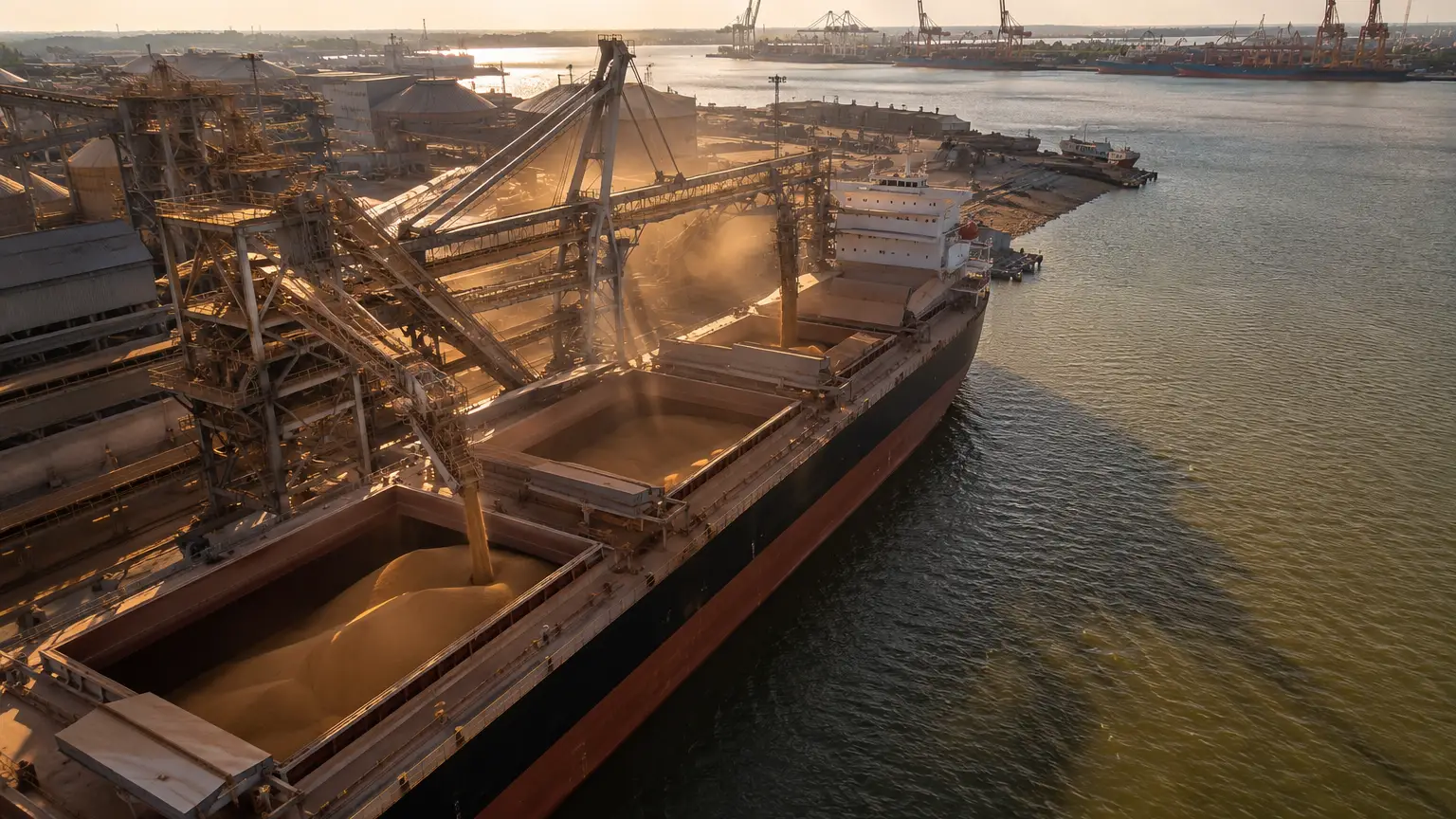
Brazil supplied approximately 57.2% of Vietnam's soybean imports through August 2025, per Vietnam's General Department of Customs data. This dominance reflects both volume and logistics advantage. Brazilian soybeans move primarily from Santos and Rio Grande in the southern states through the South Atlantic, around the Cape of Good Hope or through the Suez Canal, into the South China Sea and to the Phu My port complex near Ho Chi Minh City which are the primary discharge point for bulk soybean cargoes serving the Mekong Delta's feed and crushing industries.
Brazil's production advantage is geographic. Mato Grosso, the country's largest soybean-producing state, accounts for nearly 70% of national output. MATOPIBA , the agricultural frontier spanning Maranhão, Tocantins, Piauí, and Bahia continues expanding planted area. Brazilian production reached approximately 169–180 million metric tons in MY2024/25, with around 109 million metric tons destined for export. At that export scale, Vietnam's 1.6 million metric tons of Brazilian-origin soybean imports represents roughly 1.5% of Brazil's total export program, making Vietnam an important but not decisive market in Brazilian export planning.
The competitive risk for Brazilian supply into Vietnam is Santos port congestion. The port handled 179.8 million tonnes in 2024 and is approaching physical capacity. A R$12.6 billion modernization plan includes channel deepening to 16 meters by 2026, but terminal expansions are not complete until late 2026 at the earliest. When Santos congestion builds during peak harvest shipment windows typically March through July. Vietnamese buyers experience cargo delays of 2–4 weeks that Brazilian origins can't guarantee avoiding under standard CFR contract terms.
| Supplier |
Estimated Vietnam Market Share (Aug 2025) |
Volume Growth (Jan–Sep 2025 YoY) |
Key Port |
| Brazil |
57.2% |
Stable / dominant |
Santos, Rio Grande |
| United States |
34%+ |
+29% volume |
Gulf of Mexico ports (New Orleans, Houston) |
| Argentina |
Marginal |
Variable |
Rosario, Buenos Aires |
The Rise of US Soybeans
US soybeans now account for more than 34% of Vietnam's total import volume and approximately 33% of market value, per USDA FAS data for MY2025. In the first nine months of 2025, Vietnam imported nearly 670,000 metric tons of US soybeans, spending over USD 300 million, a 9% increase in value and 29% increase in volume versus the same period in 2024. Over the past five years, US soybean exports to Vietnam have grown 89% by volume, the second-highest growth rate globally for the US soy complex, per USSEC data.
The diplomatic dimension of the US–Vietnam soybean relationship has moved significantly in 2025. In June, Vietnam's Ministry of Agriculture and Environment led a delegation of nearly 50 enterprises to the United States, resulting in approximately 20 MOUs worth USD 3 billion in total, including agreements on soybean and soybean product imports. USSEC signed a three-year MOU with the Vietnam Fisheries Society in October 2025, specifically targeting SBM inclusion in aquafeeds, a direct play on the fastest-growing demand segment.
Vietnam removed Cirsium arvense from its quarantine pest list in September 2023, eliminating a major non-tariff barrier to US soybean imports. As of March 2025, Vietnam also eliminated the Most-Favored-Nation tariff on soybeans that have reduced the price premium buyers previously faced when selecting US-origin beans over Brazilian ones.
Tradeasia International, a global chemical and commodity supplier with over 20 years of supply chain experience, distributes soybean meal across Southeast Asian feed and aquaculture markets. For buyers sourcing SBM across Vietnam, Indonesia, and Thailand who need multi-origin documentation. Brazilian CFR pricing alongside US-origin COA verification. Tradeasia International can coordinate procurement, specification documentation, and logistics across both supply corridors. Buyers with ongoing SBM volume requirements can contact our team for grade-specific product parameters and sourcing consultation.
Future Outlook: What's Next for Vietnam's Feed and Soybean Market
The structural direction is clear. Total feed demand is growing. Aquaculture is expanding faster than terrestrial livestock production and aquaculture feed relies more heavily on SBM than any other protein source in the Vietnamese feed matrix. Domestic production is not recovering. Oilseed crushing is expanding, which shifts import composition toward whole beans but doesn't reduce total import dependence.
The one variable that could disrupt the current import trajectory is SBM price movement. If global soybean prices rally sharply — driven by, say, a La Niña-affected South American harvest or a US-China trade resolution that redirects North American supply away from Southeast Asia — Vietnamese feed mills would be forced to reduce SBM inclusion rates and substitute alternative proteins. The last major disruption of this type occurred during the 2021–22 commodity price surge, when feed cost inflation across Vietnam's aquaculture sector compressed margins sharply for shrimp producers.
Over the medium term, Vietnam's aquaculture expansion plans and the government's USD 10 billion shrimp export target indicate continued upward pressure on soybean meal demand through at least MY2026/27. USDA projects total Vietnamese feed demand will reach 29.2 million metric tons in MY2026 — each million tonnes of feed growth requiring roughly 150,000–200,000 additional metric tons of SBM depending on formulation shifts.
For feed processors in Vietnam who need documented, consistent-quality SBM across both Brazilian and US origins, and for international buyers tracking Vietnam's growing role in the regional soy trade, Tradeasia International's regional offices across Singapore, Indonesia, and Thailand support procurement teams with multi-origin sourcing, batch-specific certificates of analysis, and logistics coordination into Vietnamese ports. Contact Tradeasia International to review SBM product specifications, origin documentation, and pricing for your formulation requirements.
FAQ (Frequently Asked Questions)
What is driving the surge in Vietnam's soybean imports in 2025/26? Three forces are acting simultaneously: aquaculture feed demand is rising as Vietnam expands shrimp and pangasius production for export; domestic oilseed crushers are upgrading capacity and pulling more whole beans to process locally; and continuously declining domestic SBM prices are encouraging feed mills to substitute soybean meal for other protein ingredients at higher inclusion rates. Vietnam's domestic soybean production at just 42,000–45,000 metric tons annually is too small to affect import volume in any meaningful way.
What is soybean meal used for in Vietnam's feed industry? SBM is the primary protein source across all animal and aquafeed formulations in Vietnam, accounting for 15–35% of total feed ingredients by weight, per USDA FAS data. In aquafeed specifically, it serves as the main plant protein source for shrimp, pangasius, and other farmed species. The feed sector consumed approximately 7.2 million metric tons of SBM in MY2024/25, with that figure projected to rise to 7.6 million metric tons in MY2025/26.
Why does aquaculture rely so heavily on soybean meal compared to traditional livestock feeds? Farmed shrimp and fish require high-protein, highly digestible diets. Fishmeal was historically the standard protein source, but fishmeal prices are volatile and global supply is constrained by wild catch limits. Soybean meal, particularly processed forms with reduced anti-nutritional factors provides comparable amino acid profiles at more stable prices. Soybean meal also offers feed mills the benefit of consistent protein content and digestibility, which allows formulations to remain fixed across production batches without costly adjustments. In Vietnam's shrimp feed market, SBM is the dominant ingredient by share across all major brands.
Where does Vietnam source its soybeans? Brazil is the primary supplier, accounting for approximately 57.2% of Vietnam's whole soybean imports through August 2025. The United States is the second-largest supplier, with over 34% of import volume and 29% year-on-year volume growth in the first nine months of 2025. Argentine soybeans account for a marginal share. Cargoes arrive primarily at the Phu My port complex near Ho Chi Minh City, serving the Mekong Delta's crushing and feed industries.
How is domestic soybean crushing changing Vietnam's import mix? Crushing capacity is expanding. USDA projects Vietnamese soybean crushing output will reach 2.1 million metric tons in MY2025/26, up from 1.7 million the prior year. As local crush volume grows, Vietnam imports more whole soybeans for processing and less finished soybean meal. Imported SBM is forecast to decline by around 500,000 metric tons to approximately 6 million metric tons in MY2025/26. Whole soybean imports, by contrast, are rising to 2.8 million metric tons.
What are the main supply risks for soybean meal buyers in Vietnam? Port congestion at Santos, Brazil, is the most immediate logistics risk — the port is operating near physical capacity, with a modernization program not complete until late 2026. A sharp rally in global soybean prices driven by South American weather disruption would force Vietnamese feed mills to reduce SBM inclusion rates rapidly, tightening available supply. US-China trade policy shifts can also redirect North American supply away from Southeast Asian markets if Chinese import demand rebounds significantly.
Where can buyers source soybean meal for feed operations in Vietnam? Tradeasia International is a Singapore-headquartered global commodity distributor with over 20 years of supply chain experience, serving feed manufacturers across Southeast Asia through regional offices in Singapore, Indonesia, and Thailand. Tradeasia International supplies soybean meal across Brazilian and US origins, with batch-specific certificates of analysis and multi-origin sourcing capability suited to feed mills managing formulation documentation across different buyer specifications. Contact Tradeasia International for SBM grade parameters, origin documentation, and volume pricing.
Leave a Comment