Global Supply Chain Forces Driving the Sunflower Meal Market in 2026
Introduction: Sunflower Meal Emerges as a Strategic Feed Protein Ingredient
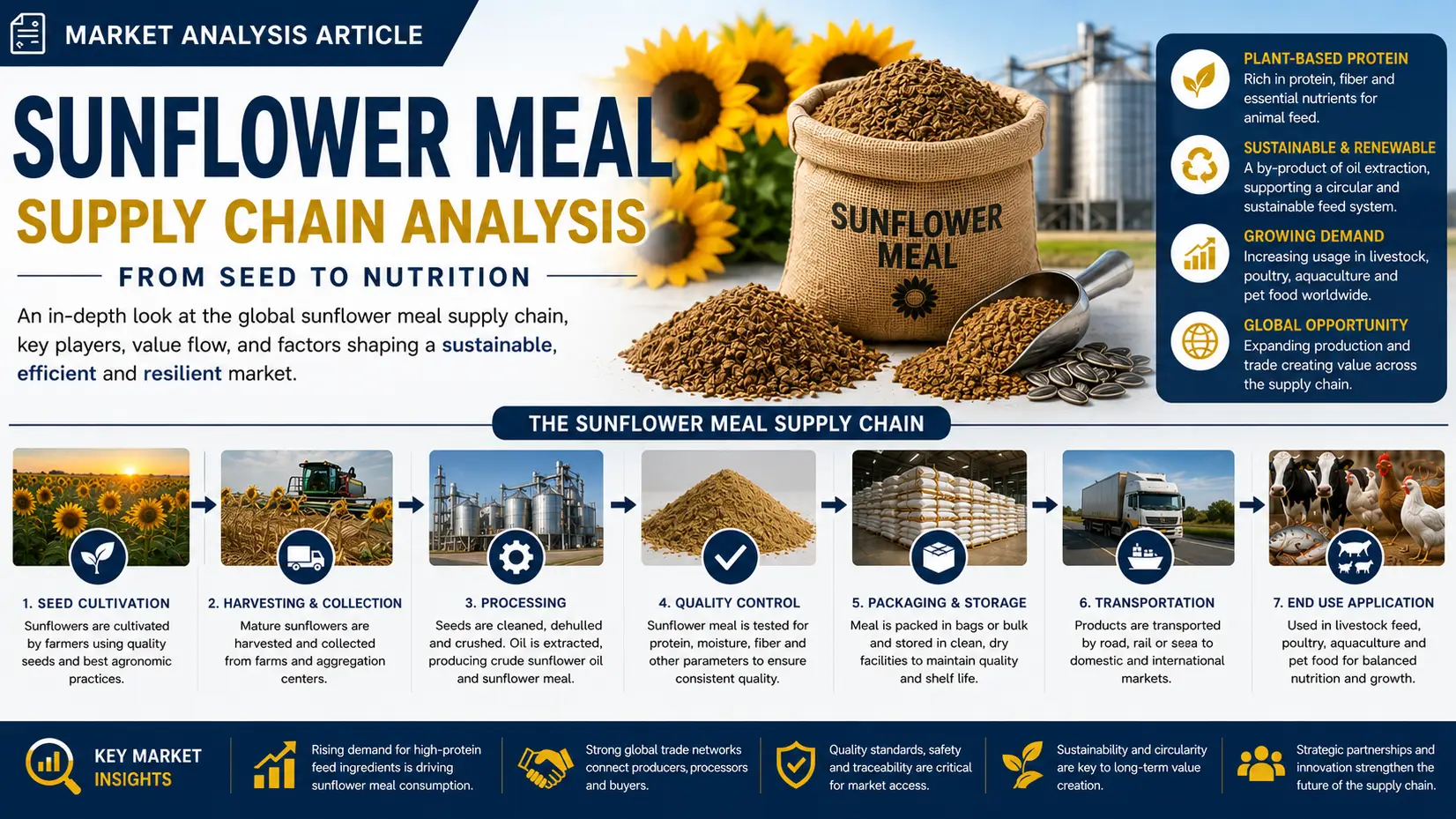
Sunflower meal has evolved into one of the most strategically traded plant-protein feed ingredients within the global agricultural supply chain. Produced as a co-product during sunflower oil extraction, sunflower meal serves as a cost-effective protein source for poultry, dairy, aquaculture, and ruminant feed formulations. In 2026, the market continues to benefit from expanding livestock production and increasing substitution away from higher-cost soybean meal in price-sensitive regions. Global sunflower meal demand is projected to grow at a CAGR of 5.1% between 2024 and 2029, supported by rising feed consumption across Asia, the Middle East, and Eastern Europe. Average export-grade sunflower meal prices are currently fluctuating between USD 220–310/MT, depending on protein content, origin, and freight conditions.
Black Sea Production Recovery Reshapes Export Channels
The sunflower meal supply chain remains heavily concentrated around the Black Sea region, particularly Ukraine and Russia, which together account for more than 55% of global sunflower seed processing volumes. In 2026, Ukraine’s sunflower seed harvest is estimated to exceed 14 million metric tons, helping stabilize downstream meal exports after years of logistical disruption. This recovery has improved crushing utilization rates across Eastern Europe while reopening rail and port corridors into Turkey, North Africa, and Southeast Asia. Buyers are increasingly diversifying procurement strategies to reduce dependency on a single origin, prompting greater sourcing activity from Argentina and the European Union.
Crushing Capacity Investments Tighten Regional Competition
Large agribusiness processors are investing aggressively in integrated crushing facilities to secure sunflower meal output closer to consumption markets. New processing projects in Romania, Bulgaria, and India are collectively adding more than 2.5 million MT of annual crushing capacity by late 2026. These investments are shortening delivery lead times and improving protein meal availability for regional feed manufacturers. At the same time, vertical integration among oilseed traders is intensifying margin competition, particularly in export-oriented supply hubs where sunflower oil and meal profitability must be balanced simultaneously.
Freight Volatility and Energy Costs Influence Pricing Structure
Transportation remains one of the most influential variables within the sunflower meal supply chain. Bulk freight rates across the Black Sea and Mediterranean corridors increased by nearly 12% year-over-year during early 2026 due to vessel insurance costs, fuel pricing, and intermittent port congestion. Energy-intensive crushing operations are also facing elevated electricity and natural gas costs, particularly across Europe. As a result, delivered sunflower meal prices in the Middle East are averaging around USD 285/MT, while Asian import markets are seeing quotations closer to USD 320/MT for high-protein grades.
Feed Industry Demand Expands Across Emerging Livestock Markets
Demand growth is increasingly being driven by emerging livestock economies where feed affordability remains critical. Poultry and dairy sectors in countries such as India, Egypt, Vietnam, and Saudi Arabia are accelerating sunflower meal imports as producers seek economical alternatives to soybean meal. Global sunflower meal production is expected to surpass 27 million MT in 2026, supported by expanding oilseed processing infrastructure and improving agricultural yields. Feed formulators are also adopting higher-fiber sunflower meal variants in ruminant nutrition programs, further broadening commercial applications.
Conclusion
As the global feed industry continues prioritizing cost efficiency and protein diversification, sunflower meal is strengthening its position as a strategic platform ingredient within agricultural commodity markets. Supply chain modernization, regional crushing investments, and improving Black Sea export stability are expected to support long-term market expansion despite ongoing freight and energy volatility. Companies seeking dependable sourcing, international trade expertise, and integrated supply solutions are increasingly partnering with global distributors such as Tradeasia International to navigate the evolving sunflower meal marketplace with greater flexibility and procurement confidence.
Sources
Leave a Comment