Global Sunflower Meal Supply Chain Trends for Industrial Feed Procurement
Introduction to the Sunflower Meal Supply Chain
Sunflower meal has become one of the world's most important plant-based protein ingredients for animal nutrition. Produced as a by-product of sunflower oil extraction, it offers an economical source of protein and dietary fiber for livestock, poultry, dairy, and aquaculture feed manufacturers. Growing demand for sustainable feed ingredients has strengthened its position within global agricultural trade.
The international sunflower meal market is closely connected to oilseed production, edible oil demand, weather conditions, and regional trade policies. Major exporting countries continuously invest in processing efficiency to ensure stable supplies for international buyers despite seasonal production fluctuations.
The Role of Sunflower Meal in International Trade
As vegetable protein consumption continues to rise, sunflower meal has become an increasingly traded agricultural commodity. Feed manufacturers value its consistent nutritional profile and competitive pricing compared with several alternative protein meals, making it attractive for large-scale procurement programs.
Global supply chains now emphasize traceability, quality assurance, and efficient logistics. International distributors, exporters, and processors collaborate to maintain uninterrupted shipments while complying with evolving feed safety regulations and customer quality specifications.
Global Production Landscape of Sunflower Meal
Global sunflower meal production depends largely on sunflower seed harvests in leading agricultural regions. Countries across Eastern Europe, the Black Sea region, South America, and parts of the European Union contribute significantly to worldwide output, supporting both domestic feed demand and export markets.
Production capacity continues expanding through investments in modern crushing facilities capable of processing large sunflower seed volumes. These integrated operations improve extraction efficiency while producing standardized sunflower meal suitable for industrial feed manufacturing.
Key Producing Regions Supporting Global Supply
The Black Sea region remains one of the most influential production hubs due to its extensive sunflower cultivation and well-developed oilseed processing infrastructure. Strong agricultural output allows exporters to supply international markets throughout the year while supporting competitive pricing.
Other producing countries continue strengthening their export capabilities through improved storage systems, logistics networks, and port infrastructure. These developments help reduce transportation bottlenecks and increase supply reliability for overseas buyers seeking long-term sourcing partnerships.
Supply Chain Structure from Processing to Export
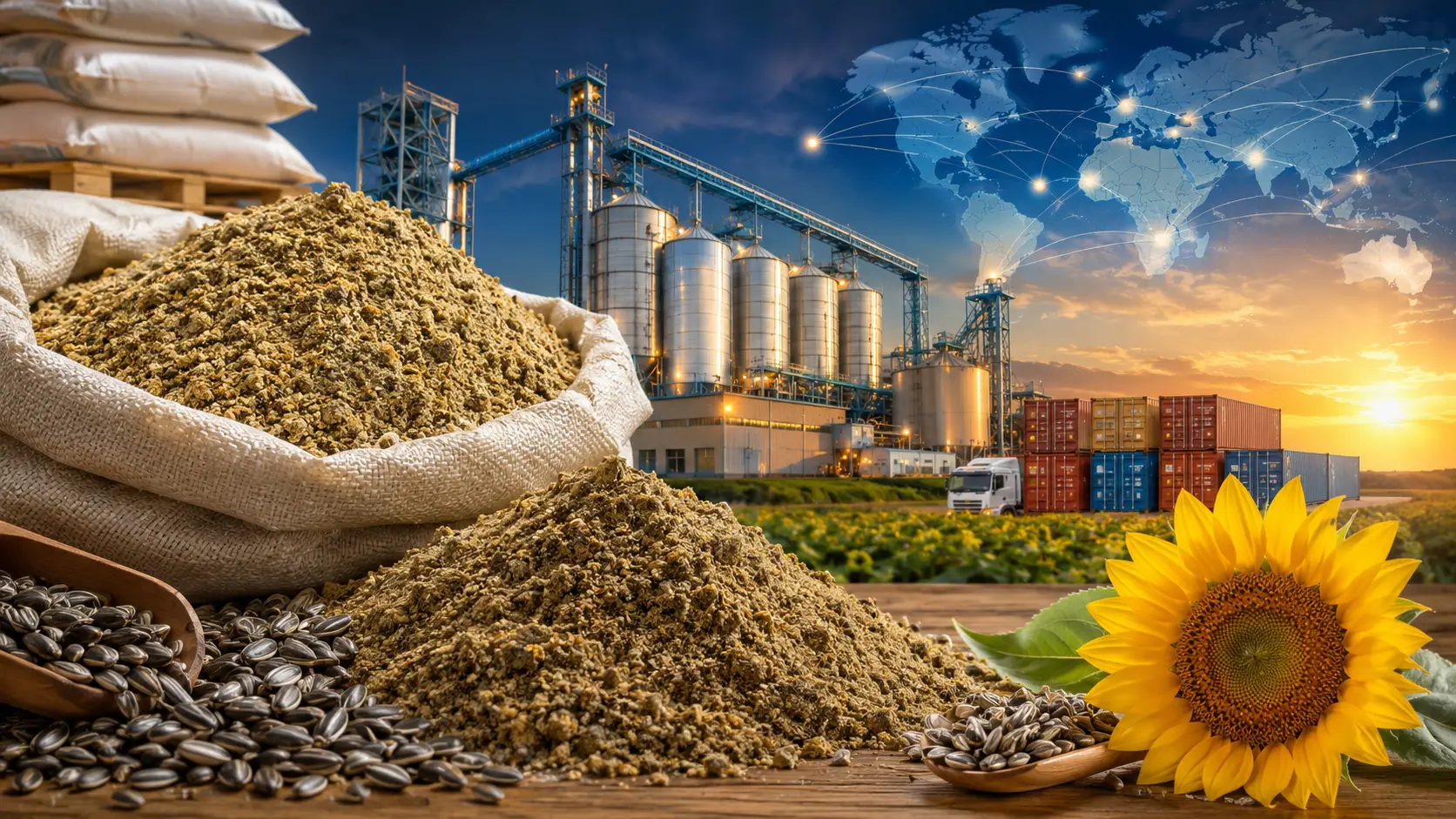
The sunflower meal supply chain begins with sunflower cultivation and harvesting before seeds are transported to crushing plants. During oil extraction, processors separate crude sunflower oil from the remaining protein-rich meal, which is then dried, cooled, tested, and prepared for commercial distribution.
Quality management plays an essential role throughout processing. Moisture control, protein consistency, fiber levels, contamination prevention, and packaging standards are carefully monitored to ensure products meet international feed industry requirements before shipment.
Export Logistics and International Distribution
Following production, sunflower meal is stored in warehouses or silos before being transported through road, rail, or inland waterways to export terminals. Bulk vessels and container shipments enable suppliers to serve customers across Asia, the Middle East, Africa, and other growing livestock markets.
International traders coordinate documentation, quality certifications, customs procedures, and freight arrangements to maintain smooth cross-border deliveries. Strong logistics partnerships help minimize delays, optimize transportation costs, and improve procurement efficiency for industrial buyers.
Market Challenges Influencing Procurement
The sunflower meal supply chain operates within a complex agricultural environment where availability, pricing, and logistics can change due to multiple external factors. Feed manufacturers and distributors must monitor crop performance, sunflower seed availability, energy costs, and international trade conditions to maintain stable purchasing strategies.
Unlike synthetic feed additives or industrial chemicals with controlled production cycles, sunflower meal availability depends heavily on agricultural seasons. Variations in rainfall, temperature, and farming conditions can directly affect sunflower harvest volumes and influence global supply balances.
Factors Affecting Sunflower Meal Market Stability
Price fluctuations remain one of the primary challenges for industrial buyers. Sunflower meal prices are influenced by sunflower seed costs, vegetable oil demand, crushing margins, transportation expenses, and competition from alternative protein meals such as soybean meal and rapeseed meal.
Supply chain disruptions can also impact delivery schedules and procurement planning. Port congestion, geopolitical developments, currency movements, and changing export regulations may create uncertainty for buyers relying on international suppliers for consistent feed ingredient availability.
Quality Standards and Buyer Expectations
Modern feed producers increasingly require suppliers to provide reliable quality documentation, including nutritional specifications, safety analysis, and compliance information. Buyers are prioritizing suppliers that can demonstrate consistent product performance across multiple shipments.
This shift has encouraged exporters and distributors to improve quality control systems throughout the supply chain. Reliable sourcing partnerships now depend not only on competitive pricing but also on transparency, technical support, and the ability to meet customer-specific requirements.
Strategic Sourcing for Industrial Buyers
For feed manufacturers, livestock producers, and international distributors, effective sunflower meal sourcing requires a balance between cost efficiency and supply reliability. Procurement teams increasingly evaluate suppliers based on production capacity, export experience, logistics capabilities, and long-term market stability.
Bulk purchasing agreements and diversified supplier networks have become important strategies for managing supply risks. By working with multiple qualified sources, buyers can reduce dependency on a single production region and maintain continuity during seasonal or market disruptions.
Building Reliable Supplier Partnerships
A strong supplier relationship provides advantages beyond product availability. Experienced sunflower meal suppliers support buyers through consistent specifications, shipment planning, documentation assistance, and market communication.
For global B2B buyers, selecting suppliers with established export infrastructure helps improve operational efficiency. Reliable partners can provide predictable delivery schedules and support manufacturers in maintaining uninterrupted feed production.
Importance of Supply Chain Transparency
Transparency has become a key factor in agricultural commodity procurement. Buyers increasingly seek visibility into product origin, processing methods, quality testing procedures, and transportation routes.
Digital trade platforms and international marketplaces are improving connections between producers, distributors, and industrial users. These platforms allow buyers to compare sourcing options, communicate with suppliers, and streamline purchasing decisions in global markets.
Future Trends Driving Global Supply
The future sunflower meal market is expected to be shaped by increasing demand for sustainable protein sources, improvements in agricultural productivity, and continued growth in global animal feed consumption. As livestock industries expand, demand for cost-effective protein ingredients will continue supporting sunflower meal utilization.
Feed manufacturers are also exploring ways to optimize formulations by combining sunflower meal with other protein sources. Its availability, nutritional contribution, and competitive market position make it an important component in balanced feed strategies.
Sustainability and Circular Agricultural Practices
Sustainability is becoming increasingly important throughout the feed ingredient industry. Sunflower meal represents an efficient use of agricultural resources because it utilizes the remaining material after sunflower oil extraction, supporting circular production models.
Processors are investing in improved energy efficiency, waste reduction, and environmentally responsible manufacturing practices. These developments strengthen the role of sunflower meal as a sustainable ingredient within modern agricultural supply chains.
Digitalization of Global Feed Ingredient Trade
Technology is transforming how buyers and suppliers manage agricultural commodity transactions. Digital marketplaces provide improved access to supplier networks, pricing information, documentation management, and international trade opportunities.
For procurement professionals, digital sourcing solutions can simplify supplier discovery and improve market visibility. As global trade becomes more connected, companies that adopt transparent and efficient sourcing approaches will be better positioned to manage future supply chain challenges.
Conclusion
Sunflower meal continues to play an important role in global feed ingredient markets due to its protein value, availability, and economic advantages for livestock and animal nutrition industries. Its supply chain connects farmers, oilseed processors, exporters, distributors, and industrial buyers through a complex international network influenced by agricultural production and trade conditions.
Future market growth will depend on reliable production systems, efficient logistics, quality management, and strategic supplier relationships. Companies involved in feed manufacturing and distribution must focus on flexible sourcing strategies to secure consistent sunflower meal supplies while responding to changing market conditions.
As global demand for sustainable feed ingredients increases, access to dependable sunflower meal suppliers becomes essential for maintaining competitive operations. Tradeasia International supports businesses by connecting global buyers with reliable sourcing solutions and facilitating efficient B2B trade across agricultural ingredient markets. Through market knowledge, supplier networks, and international trade expertise, companies can strengthen procurement strategies and build resilient supply chains.
Sources
https://www.usda.gov
https://www.fao.org
https://www.igc.int

Leave a Comment