Understanding Sunflower Meal and Its Supply Chain
Product characteristics and production route
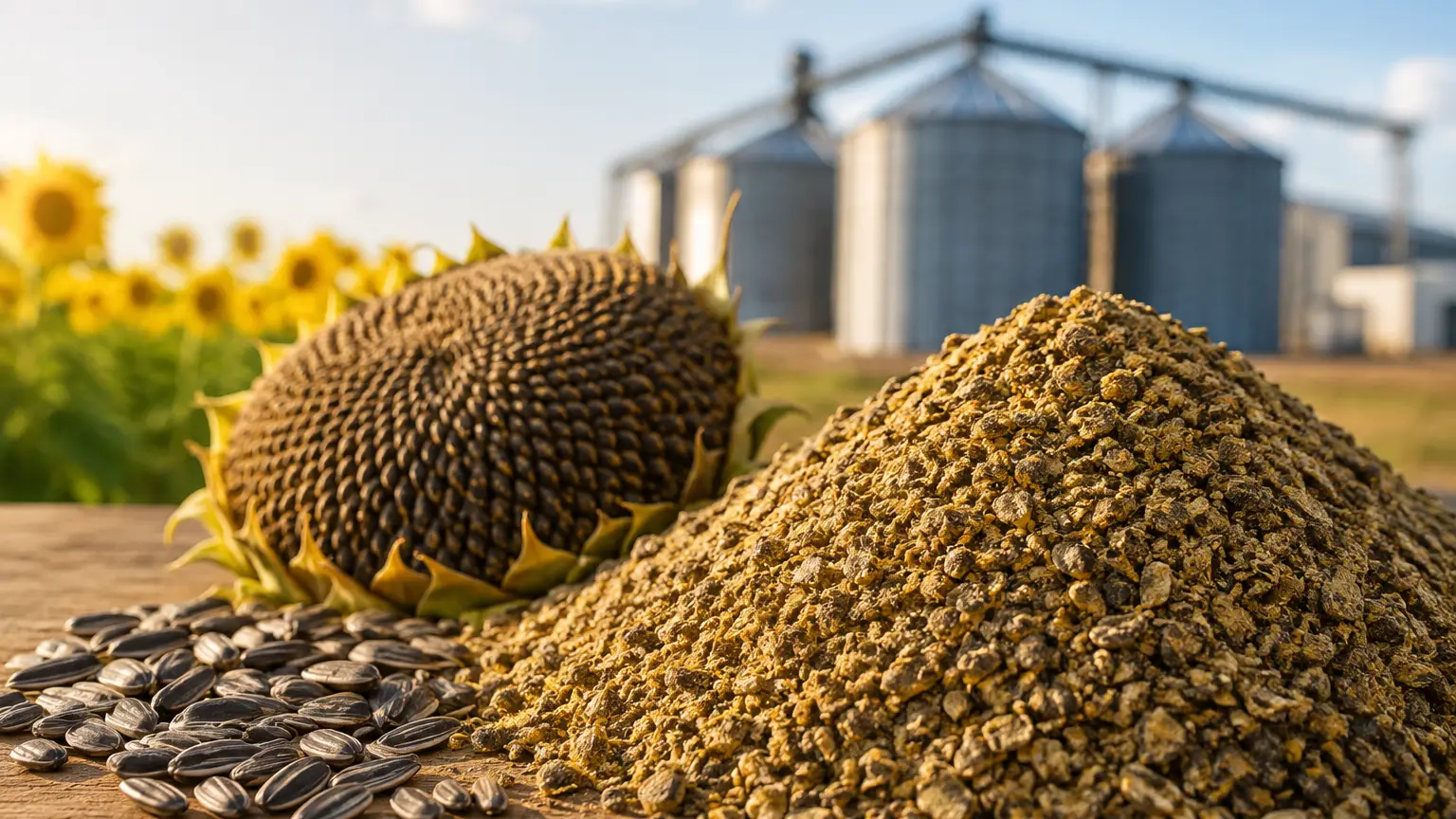
Sunflower meal is a protein-rich by-product generated during sunflower oil processing and is primarily traded as an animal-feed ingredient. The product page for Tradeasia's sunflower meal identifies Ukraine as the origin and lists HS Code 23063010, with the material supplied as grey to light-brown powder or pellets. The listed specification includes 28–36% minimum crude protein, up to 18% crude fiber, 1.5–4.0% crude fat and a maximum moisture level below 11%.
From a supply-chain perspective, sunflower meal characteristics depend strongly on the oilseed processing route. Dehulling, oil extraction efficiency and processing conditions influence protein, fiber and residual oil levels. The Tradeasia product information notes that solvent extraction generally produces meal with higher protein and lower oil and fiber than mechanical processing, making processing history an important consideration when buyers compare technically different offers.
Sunflower meal is therefore not a completely uniform commodity from a procurement perspective. Two products carrying the same commercial name can have different nutritional and handling characteristics because of hull content, extraction technology, moisture, particle form and other processing variables. Scientific literature similarly identifies hull removal and processing conditions as important determinants of sunflower meal's nutritional value and suitability for different animal species.
For procurement teams, this makes specification-based purchasing more useful than relying only on the product name. Buyers should align the required protein, fiber, moisture, microbiological, contaminant and physical specifications with their feed formulation before contracting volumes. For commercial details, buyers can review the Sunflower Meal product and supplier information and use the available technical documentation as part of their supplier evaluation.
Industrial Applications and Feed Formulation Relevance
Ruminant feed applications
The primary commercial application for sunflower meal is animal nutrition, with ruminant feeding representing an important use because its protein and fiber characteristics can fit cattle and other ruminant formulations. Technical literature summarized by ScienceDirect identifies animal feed as the principal outlet for sunflower meal and notes its use across livestock categories, while also emphasizing that incorporation levels depend on species and nutritional characteristics.
For dairy and beef producers, the commercial value of sunflower meal is not simply its crude protein percentage. Fiber level, protein degradability, energy contribution and amino-acid composition all influence how the ingredient fits into a complete ration. This means feed manufacturers typically assess sunflower meal alongside other protein and energy sources rather than treating it as a one-for-one replacement for every alternative protein ingredient.
The suitability of sunflower meal for ruminants is also connected with rumen protein utilization. Scientific reviews indicate that sunflower meal can be particularly relevant to ruminants, where differences in amino-acid composition have different practical implications than they do in monogastric nutrition. Its relatively lower lysine content therefore needs to be considered differently depending on the target species and overall ration design.
For B2B buyers, the application question should consequently be defined before procurement: whether the material is intended for dairy cattle, beef cattle, sheep, goats or another feed segment. A clear end-use specification helps procurement teams compare offers on nutritional suitability rather than focusing only on price per metric tonne.
Poultry and other feed applications
Sunflower meal can also be incorporated into poultry and swine feed, although formulation constraints become more important as fiber increases. ScienceDirect notes that hull content can reduce energy value and digestibility, while dehulled sunflower meal can provide higher protein concentrations and broader formulation opportunities for monogastric animals.
Recent technical research is also examining ways to increase the utilization of sunflower meal beyond conventional applications. A 2024 review in Food Hydrocolloids describes sunflower meal and cake as potentially valuable protein resources while noting that processing challenges, including phenolic compounds and functional limitations, currently restrict wider food applications.
This creates two distinct commercial pathways. The established pathway is animal feed, where sunflower meal is purchased as a protein-containing feed ingredient; the emerging pathway involves higher-value recovery of sunflower proteins for food and other industrial applications. The latter requires additional processing and should not be confused with conventional feed-grade sunflower meal.
Consequently, B2B sourcing requirements should match the intended application. Feed manufacturers seeking sunflower meal for ruminants may prioritize protein, fiber and consistency, while poultry or swine formulators may place greater emphasis on dehulling, amino-acid balance and digestibility. Buyers should therefore specify the target species and formulation purpose when requesting quotations.
Market Demand and Emerging Buyer Trends
Alternative feed protein demand
The broader feed-protein market is encouraging buyers to examine a wider range of protein sources. In May 2024, the European Commission reported that EU feed demand was expected to remain at approximately 71 million tonnes of crude protein and highlighted the importance of competitiveness, resilient value chains and diversification of protein sources.
That environment creates commercial relevance for sunflower meal because it provides feed manufacturers with another oilseed-derived protein option. Its economic attractiveness can change with sunflower seed availability, crushing economics, competing protein prices, freight rates and regional feed demand. Procurement teams therefore increasingly need to evaluate landed cost and nutritional contribution together.
Market research published in 2025 also identifies animal feed as the central application for sunflower meal and segments demand by livestock categories including poultry, ruminants, swine and aquaculture. Such segmentation reinforces the importance of viewing sunflower meal as a feed-industry supply-chain product rather than simply as an agricultural processing residue.
For distributors and trading companies, this demand structure creates opportunities to serve customers that need dependable alternative protein ingredients without compromising specification control. For manufacturers, it provides another ingredient to consider when managing formulation economics and supply diversification.
Sustainability and circular-economy considerations
Sunflower meal's position as a by-product of sunflower oil extraction also aligns with growing interest in resource efficiency. Rather than leaving the residual material underutilized, the feed industry converts a substantial portion of the oilseed into a commercially useful protein and fiber ingredient. Recent scientific literature continues to examine sunflower meal and hulls as materials with broader biotechnological and environmental potential.
The sustainability argument, however, should be evaluated with commercial discipline. Buyers still need to consider origin, processing route, transportation distance, quality consistency and applicable feed-safety requirements. A product's status as a by-product does not automatically guarantee a lower environmental footprint across every supply chain.
For procurement teams, sustainability is therefore becoming part of a broader supplier assessment rather than a standalone purchasing criterion. Documentation concerning origin, processing, quality management and product handling can help buyers understand the supply chain behind a sunflower meal offer.
This trend is particularly relevant to distributors serving customers with documented responsible-sourcing requirements. A marketplace that combines product specifications with supplier information can reduce the information gap between agricultural commodity availability and industrial feed procurement, helping buyers screen potential supply options more efficiently.
What B2B Buyers Should Evaluate Before Sourcing
Quality and specification parameters
The first step in bulk sunflower meal procurement is establishing a technically meaningful specification. The Tradeasia product listing provides a useful example, identifying protein, crude fat, crude fiber, ash, calcium, phosphorus, lysine, moisture, microbiological parameters and contaminant-related requirements. It also lists Salmonella as negative per 25 g and provides stated limits for aflatoxin B1 and heavy metals.
Protein content deserves particular attention because commercial sunflower meal can vary significantly depending on processing and hull removal. Fiber should be assessed alongside protein rather than separately because high hull content can influence the energy value and suitability of the material for specific feed formulations. Scientific literature likewise emphasizes that hull removal and processing conditions affect the nutritional characteristics of sunflower meal.
Feed buyers should also verify microbiological quality, moisture, contaminant compliance and storage conditions. The product listing specifies cool, dry storage protected from rain and moisture, a six-month shelf life, and packaging options including 50 kg bags and bulk formats. These details directly affect warehouse planning, transportation and inventory turnover.
A robust purchasing specification should ultimately distinguish mandatory requirements from preferred characteristics. This allows procurement teams to compare suppliers on a like-for-like basis and reduces the risk that a lower quoted price reflects differences in protein, fiber, moisture, packaging or testing rather than a genuinely more competitive offer.
Documentation and supplier verification
Supplier evaluation should extend beyond a specification sheet. Buyers should request current technical documentation, certificates where applicable, analytical data, origin information and evidence that the supplier can consistently deliver the agreed grade. For feed ingredients, traceability and quality assurance are especially important because ingredient variability can affect finished-feed formulation.
The Tradeasia listing indicates ISO/HACCP availability and states that Halal and Kosher certification can be made available on request. It also provides technical-document access for the product. These features are commercially relevant for buyers operating across markets where customer-specific certification or documented quality systems are part of supplier qualification.
Procurement teams should also evaluate the commercial reliability of the supply chain. Important questions include available packaging formats, minimum order quantities, shipment frequency, lead times, origin consistency and the supplier's ability to support repeat purchases. For international buyers, freight, port handling and customs requirements can materially influence the final delivered cost.
The strongest sourcing process therefore combines technical qualification with commercial due diligence. Buyers who evaluate only the headline price may overlook specification differences or logistics costs, while buyers who evaluate only technical quality may miss opportunities to optimize landed cost and supply continuity.
Supplier Selection, Logistics and Commercial Procurement
Bulk procurement and supply continuity
Sunflower meal is commonly traded in forms designed for efficient transportation and handling, including powder and pellets. The Tradeasia product information lists both 50 kg woven polypropylene bags and bulk packaging, giving buyers options depending on warehouse capacity, production scale and handling infrastructure.
Bulk procurement becomes especially important for feed manufacturers with predictable production schedules. Larger purchasing programs can require more structured planning around inventory levels, shipment windows and specification consistency. The procurement objective is not simply to secure the lowest unit price but to establish a dependable flow of material into the feed-production system.
Market conditions can also influence sourcing strategy. Sunflower meal availability is connected with sunflower oil processing, meaning supply can be affected by seed production, crushing activity and regional trade conditions. Market research published in 2025 highlights the importance of processing capacity, seasonal production cycles and supply-chain factors in the sunflower meal market.
For distributors, continuity is equally important because customers may expect repeat availability of a consistent grade. Maintaining more than one qualified supply option can reduce exposure to unexpected disruptions, while clear product specifications make it easier to compare alternative sources when market conditions change.
Origin, logistics and landed cost
Origin is an important part of sunflower meal sourcing because transportation economics can materially affect the delivered cost. The Tradeasia product page identifies Ukraine as the product origin, allowing buyers to incorporate origin-specific freight, import and documentation considerations into their procurement assessment.
International buyers should calculate landed cost rather than comparing supplier quotations on a product-only basis. Freight, insurance, port charges, customs duties where applicable, inland transportation, storage and handling can all influence the actual procurement economics. This is particularly relevant for feed ingredients traded across multiple regions.
Regional feed-protein strategies are also becoming more important. The European Commission's analysis of feed protein emphasizes that competitiveness and resilient value chains influence the selection and development of protein sources, demonstrating why supply security and economics increasingly sit alongside nutritional performance in procurement decisions.
A B2B marketplace can support this process by bringing product information, technical specifications and commercial inquiry functions closer together. For buyers assessing sunflower meal suppliers, the Sunflower Meal sourcing page provides a direct starting point for reviewing the available product information and initiating a commercial inquiry.
Buyer Intent and B2B Marketplace Opportunities
Who buys sunflower meal
The principal buyer groups are feed manufacturers, livestock-feed formulators, agricultural commodity distributors, feed ingredient traders and procurement teams serving dairy, beef, poultry and other animal-production markets. Their common requirement is access to a protein-containing feed ingredient that fits established formulation, quality and logistics requirements.
Buyer intent varies by stage. A feed manufacturer may search for sunflower meal specifications before approving a new supplier, while a distributor may search for bulk sunflower meal suppliers and origin information. A procurement manager may be further down the purchasing funnel, comparing price, packaging, lead time, certifications and delivered cost.
These buyer behaviors explain why a commercial product page needs to provide more than a basic product definition. Buyers require technical information to determine whether the ingredient fits their formulation, while procurement teams need commercial and logistics information to determine whether the supplier can support an ongoing purchasing program.
Tradeasia's product information addresses several of these needs by presenting product origin, HS code, physical characteristics, nutritional parameters, microbiological specifications, packaging, storage, certifications and technical-document availability. This creates a useful information base for initial supplier screening.
Why buyers compare suppliers
Supplier comparison is particularly important for agricultural feed ingredients because product characteristics can vary according to crop, processing technology, dehulling and oil extraction efficiency. A buyer therefore needs to establish whether two quotations represent genuinely comparable materials before selecting the lower-cost option.
Scientific research supports this need for technical comparison. Reviews of sunflower meal emphasize the influence of processing and hull content on protein concentration, fiber and nutritional suitability, while research into newer processing methods is exploring ways to improve the utilization of different sunflower meal fractions.
For procurement teams, supplier comparison should consequently cover both measurable quality and commercial performance. Consistent specifications, credible documentation, appropriate packaging, reliable shipment schedules and responsive technical communication can all contribute to the total value of a supplier relationship.
This is where a B2B chemical and feed-ingredient marketplace can function as a conversion entry point. By connecting product discovery with technical information and inquiry capabilities, the marketplace can help buyers move from generic searches such as “sunflower meal supplier” toward a more qualified sourcing conversation.
Commercial Outlook for Sunflower Meal Sourcing
Demand outlook and competitive positioning
The medium-term commercial outlook for sunflower meal is closely linked to animal-feed demand, protein-source diversification and the economics of oilseed processing. The European Commission's work on feed proteins highlights the strategic importance of competitive and resilient protein supply chains, while recent market research continues to identify animal feed as the dominant sunflower meal application.
Demand should not be interpreted as a uniform upward trend across every region or species. Sunflower meal competes with soybean meal, rapeseed or canola meal and other feed ingredients, and its attractiveness depends on relative prices, nutrient composition and formulation requirements. Regional livestock production and freight economics can also change the competitiveness of imported material.
One important commercial opportunity is greater specification differentiation. Dehulled or higher-protein grades can target formulations where lower fiber and greater protein density are valuable, while conventional grades can remain relevant in applications where their economics and nutritional profile fit the ration. This creates opportunities for suppliers and distributors to serve multiple buyer segments rather than treating sunflower meal as a single standardized product.
The resulting market opportunity is therefore strongest for supply chains that combine competitive pricing with consistent quality and dependable logistics. Buyers are likely to favor suppliers that can demonstrate specification control and repeatability while supporting the documentation needed for professional feed procurement.
Conclusion: Building a Reliable Sunflower Meal Supply Strategy
Turning product research into procurement action
Sunflower meal is an established feed ingredient whose commercial importance is tied to its role as a protein-containing by-product of sunflower oil processing. Its strongest current application is animal nutrition, particularly livestock feed, while research continues to investigate higher-value uses for sunflower proteins. Its suitability varies with protein concentration, hull content, fiber, processing route and intended animal species.
For B2B buyers, the central sourcing challenge is therefore not simply finding a sunflower meal supplier. It is finding a supplier capable of delivering a specification that matches the intended feed application while meeting quality, documentation, packaging and logistics requirements. Buyers should compare suppliers using consistent technical criteria and calculate total delivered economics.
Tradeasia's marketplace positioning can support this procurement journey by providing a dedicated product information point where buyers can review technical characteristics, origin, packaging and quality-related information before making an inquiry. The Sunflower Meal product page can serve as the commercial starting point for buyers seeking product and supplier information.
As feed manufacturers, distributors and procurement teams continue to diversify protein sourcing, sunflower meal can remain commercially relevant where its nutritional profile and delivered economics align with formulation requirements. A specification-led approach, combined with supplier verification and reliable logistics, gives buyers a stronger foundation for long-term sunflower meal procurement.
Sources
- European Commission — Feed protein: overview of EU production and options to diversify sources (2024). Provides authoritative context on feed-protein demand, competitiveness, diversification and supply-chain resilience.
European Commission source
- Food Hydrocolloids / ScienceDirect — Sunflower meal/cake as a sustainable protein source for global food demand (2024). Provides peer-reviewed analysis of sunflower meal composition, sustainability potential, protein applications and processing limitations.
Scientific review on ScienceDirect
- Agriculture (MDPI) — Sunflower: From Cortuso’s Description to Current Agronomy, Uses and Perspectives. Provides scientific background on sunflower meal nutrition, fiber, protein, lysine and livestock-feed applications.
Scientific sunflower review
Leave a Comment