Understanding Sunflower Meal and Its Role in Global Supply Chains
Sunflower Meal as a Strategic Agricultural Feed Ingredient
Sunflower meal is a protein-rich by-product generated during sunflower oil extraction. As global industries seek more sustainable and diversified raw materials, sunflower meal has become an important agricultural commodity for animal nutrition applications. Its availability is closely connected to sunflower seed processing activities, making supply chain efficiency a key factor for international buyers.
The product is primarily valued for its protein content, fiber characteristics, and suitability as an ingredient in livestock feed formulations. Feed manufacturers often evaluate sunflower meal based on nutritional specifications, processing methods, consistency, and compatibility with different animal diets. According to technical information from the Food and Agriculture Organization of the United Nations (FAO), oilseed meals represent significant sources of plant-based protein used in global animal feeding systems.
Role of Supply Chain Management in Sunflower Meal Trade
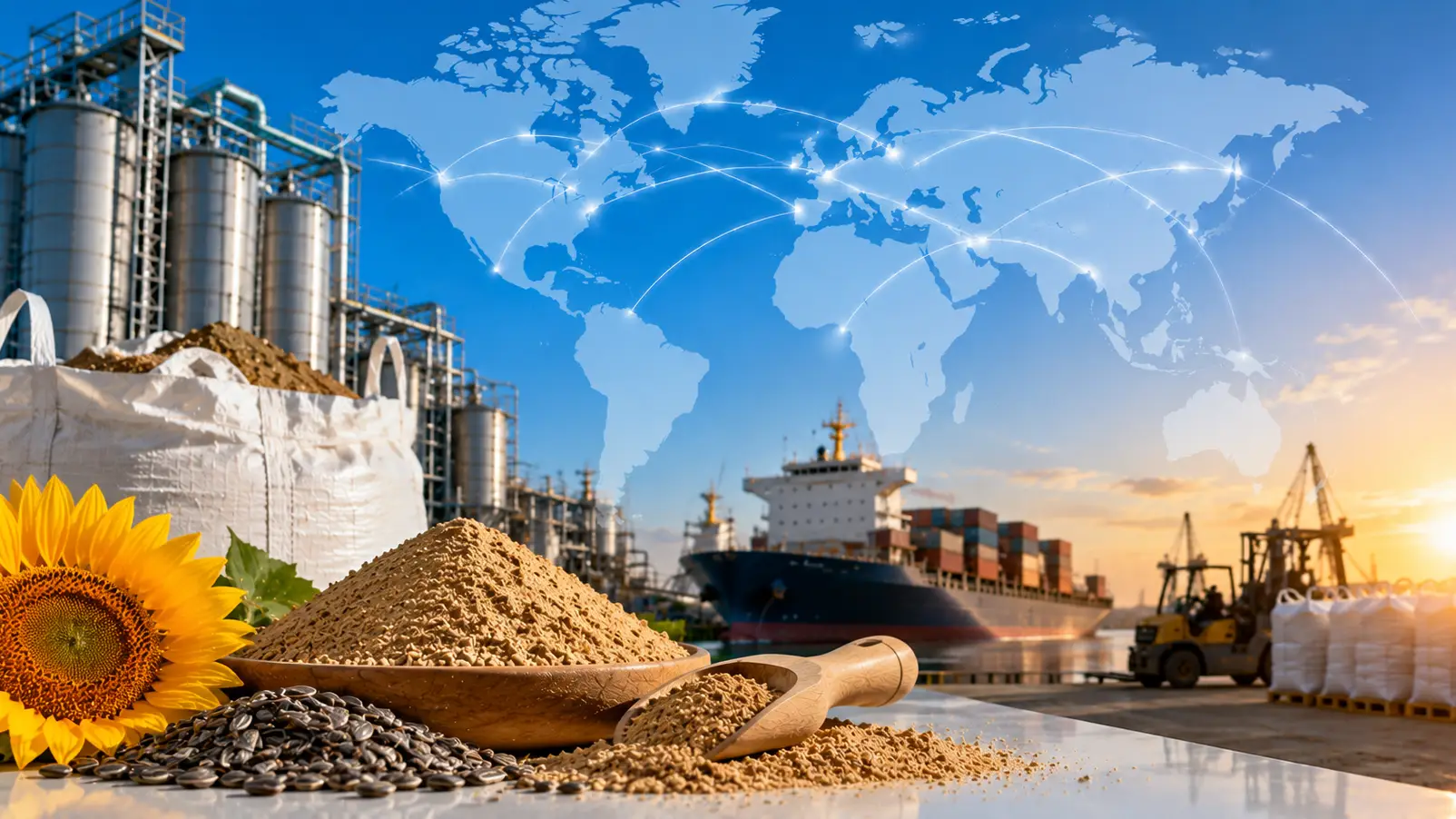
The commercial availability of sunflower meal depends on several supply chain factors, including sunflower cultivation regions, crushing capacity, processing standards, storage conditions, and international logistics. For B2B buyers, understanding these elements helps reduce sourcing risks and improves procurement planning.
As a traded agricultural by-product, sunflower meal requires coordination between processors, exporters, distributors, and end users. Reliable supply chain management enables buyers to maintain consistent feed production while managing price fluctuations and seasonal availability. Industry organizations such as the International Feed Industry Federation highlight the importance of secure ingredient supply systems in supporting global feed production.
Industrial Applications Driving Sunflower Meal Demand
Sunflower Meal Applications in Animal Feed Manufacturing
The primary industrial application of sunflower meal is as a protein ingredient in animal feed. Poultry, cattle, dairy livestock, and other farm animals may use sunflower meal as part of balanced feed formulations. Feed producers select sunflower meal according to protein levels, fiber content, digestibility requirements, and formulation targets.
Growing demand for efficient livestock production continues to support interest in alternative feed ingredients. According to research published by the European Food Safety Authority, nutritional evaluation and ingredient quality assessment are essential factors when incorporating feed materials into animal diets.
Sustainable Use of Oilseed Processing By-products
Sunflower meal also represents an opportunity for more efficient utilization of agricultural processing outputs. Instead of treating oil extraction residues as waste materials, industries can convert them into valuable feed resources, supporting circular agricultural practices.
Sustainability considerations are becoming increasingly relevant for feed manufacturers and commodity buyers. Organizations such as the United Nations Environment Programme emphasize the importance of resource efficiency and improved agricultural value chains in reducing material waste and supporting sustainable production systems.
Key Buyer Groups and Procurement Considerations for Sunflower Meal
Who Buys Sunflower Meal in International Markets
The main buyers of sunflower meal include animal feed producers, livestock nutrition companies, agricultural commodity traders, distributors, and procurement teams responsible for sourcing feed ingredients. These organizations typically purchase sunflower meal in bulk quantities and require dependable supply arrangements.
Feed manufacturers often compare suppliers based on product specifications, production capacity, export experience, documentation, and logistics capability. For international procurement teams, supplier reliability can directly influence manufacturing continuity and customer commitments.
Quality Factors Evaluated by Procurement Teams
Before purchasing sunflower meal, buyers generally assess parameters such as protein percentage, moisture level, fiber content, contamination controls, packaging options, and compliance documentation. These factors help determine whether a supplier can meet technical requirements for specific feed applications.
Quality consistency is particularly important for large-scale feed producers because formulation changes can affect production efficiency. Technical references from organizations such as the U.S. Department of Agriculture (USDA) provide agricultural commodity information that supports understanding of global crop and processing supply systems.
Global Market Trends and Supply Opportunities for Sunflower Meal
Growing Demand for Alternative Protein Feed Ingredients
The global livestock industry continues to seek diverse protein sources to support expanding animal production. Sunflower meal benefits from this trend because it provides an additional plant-based feed ingredient alongside commonly traded oilseed meals.
Market demand is influenced by livestock production growth, feed formulation strategies, agricultural output, and regional availability. According to market and agricultural analysis from the Organisation for Economic Co-operation and Development (OECD), agricultural commodity markets are increasingly shaped by supply chain resilience, sustainability considerations, and international trade dynamics.
Regional Supply Opportunities for Exporters and Traders
Sunflower production and processing activities create supply opportunities for exporters, distributors, and commodity traders operating across agricultural regions. Companies involved in sunflower meal trade can support international buyers by connecting production sources with demand markets.
For suppliers, successful participation in global markets requires transparency, consistent documentation, efficient logistics, and the ability to meet buyer specifications. Digital B2B marketplaces can improve supplier visibility by connecting manufacturers and traders with international procurement teams.
How Buyers Evaluate Sunflower Meal Suppliers and Sourcing Partners
Supplier Reliability and Trade Capability
Selecting a sunflower meal supplier involves more than comparing prices. Buyers evaluate whether suppliers can provide stable volumes, consistent quality, export documentation, and responsive communication throughout the purchasing process.
A reliable sourcing partner helps reduce operational risks by supporting predictable deliveries and improving procurement efficiency. This is especially important for feed manufacturers that operate continuous production schedules and require dependable ingredient availability.
Digital Marketplaces Supporting Procurement Decisions
B2B marketplaces provide buyers with access to supplier networks, product information, and international sourcing opportunities. Platforms designed for industrial and commodity trade help simplify supplier discovery and communication between buyers and sellers.
Tradeasia / Chemtradeasia / Tradechem Marketplace positioning supports this sourcing approach by providing a commercial platform where buyers can explore supply options, compare market participants, and connect with potential suppliers according to their procurement requirements.
Tradeasia Marketplace Positioning for Sunflower Meal Supply Solutions
Supporting Global Buyer-Supplier Connections
Sunflower meal buyers require efficient access to suppliers that understand international trade requirements. A marketplace approach helps bridge the gap between agricultural producers, traders, distributors, and industrial users.
Trade-focused platforms can improve sourcing visibility by organizing product information, supplier profiles, and commercial opportunities in one digital environment. This supports procurement teams looking for structured ways to evaluate available supply options.
Commercial Importance of Reliable Sunflower Meal Sourcing
Reliable sunflower meal sourcing contributes to stable feed manufacturing operations and supports broader agricultural value chains. As industries continue optimizing costs, sustainability, and supply security, supplier selection becomes a strategic procurement decision.
For manufacturers, traders, and distributors, participating in international B2B marketplaces creates opportunities to reach new buyers and strengthen commercial relationships. Sunflower meal remains an important example of how agricultural by-products can become valuable industrial commodities through effective supply chain management.
Conclusion: Strengthening Sunflower Meal Procurement Strategies for Global Buyers
Sunflower meal plays an important role in global animal feed supply chains by providing a valuable protein ingredient derived from sunflower oil processing. Its commercial importance is influenced by livestock demand, agricultural production, sustainability goals, and international trade requirements.
For buyers, successful procurement depends on evaluating supplier reliability, product quality, documentation, and logistics capabilities. Understanding these factors helps companies make informed sourcing decisions and establish stronger supply partnerships.
As global markets continue evolving, platforms such as Tradeasia / Chemtradeasia / Tradechem Marketplace can support buyers and suppliers by improving access to international trade opportunities. A structured sourcing approach enables businesses to secure reliable sunflower meal supply while responding to changing industrial demand.
Buyer Intent Section
Sunflower meal buyers are typically companies involved in animal feed production, livestock nutrition, agricultural trading, and commodity distribution. These buyers seek suppliers capable of providing consistent quality, competitive commercial terms, and dependable international delivery.
Procurement teams usually evaluate product specifications, supplier production capacity, certifications, export experience, logistics options, and pricing structures before selecting a partner. They often compare multiple suppliers because sunflower meal availability, quality standards, and transportation costs can vary between regions.
A dedicated product marketplace page supports sourcing decisions by providing buyers with clearer product information, supplier access, and commercial communication channels. For Tradeasia / Chemtradeasia / Tradechem Marketplace, sunflower meal represents an opportunity to connect agricultural commodity suppliers with global industrial buyers seeking reliable supply solutions.
Commercial Positioning
Sunflower meal has commercial relevance because it connects agricultural processing industries with the growing demand for efficient animal nutrition ingredients. Its applications in livestock feed manufacturing create ongoing opportunities for suppliers, exporters, distributors, and procurement organizations.
Demand is influenced by feed industry requirements, livestock production growth, and the need for diversified protein sources. Reliable sourcing is important because manufacturers depend on consistent raw materials to maintain production schedules and meet customer requirements.
Tradeasia / Chemtradeasia / Tradechem Marketplace can position sunflower meal as a globally sourced industrial commodity by helping buyers discover suppliers, evaluate sourcing opportunities, and build efficient supply relationships. The marketplace approach supports transparency and connectivity between international participants across the agricultural supply chain.
Leave a Comment