Sunflower Meal Fundamentals for B2B Buyers
What Sunflower Meal Is
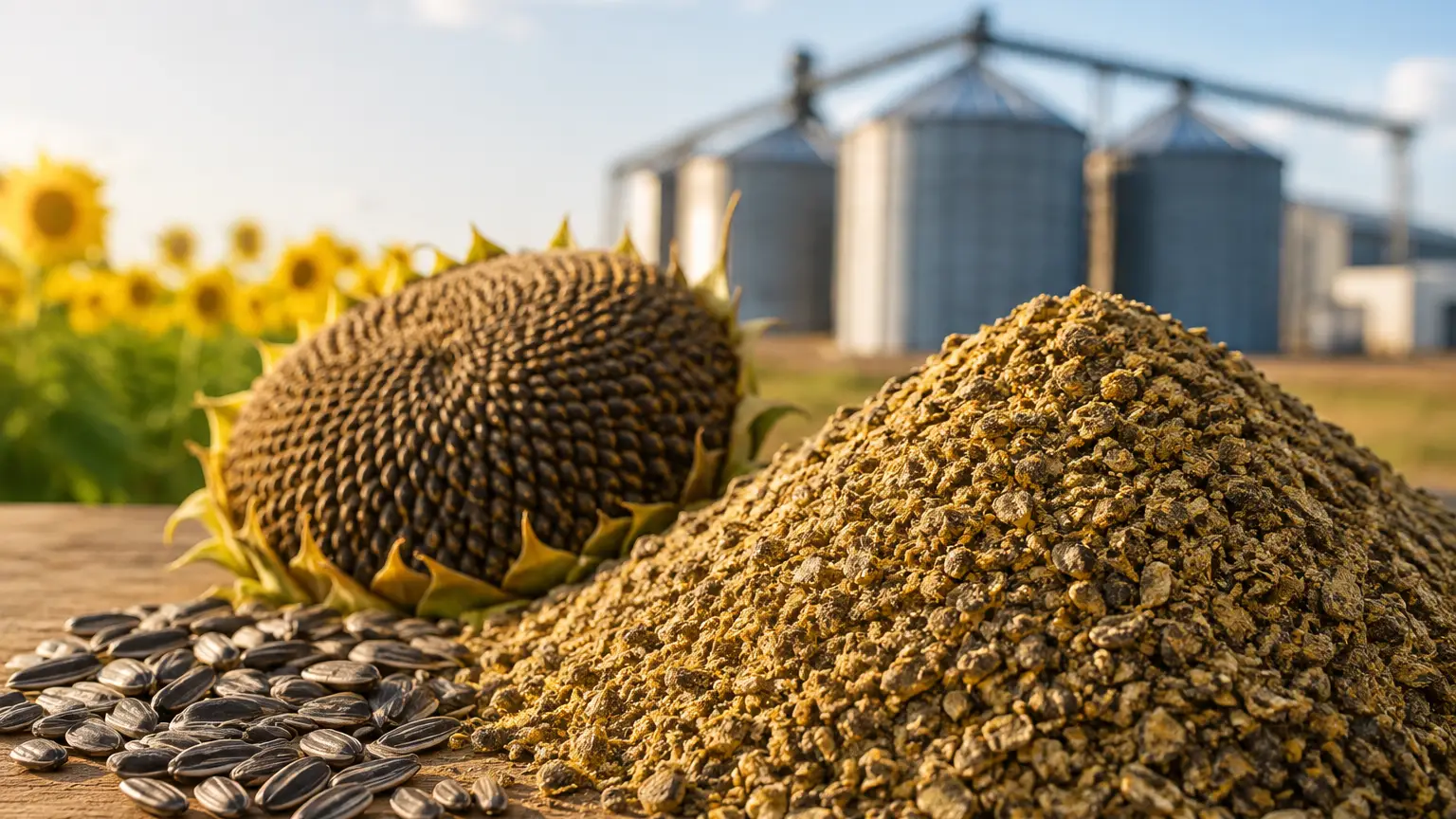
Sunflower meal is a feed-grade by-product generated after sunflower seeds are processed to recover oil. The product page identifies it as a protein source for animal feed and lists Helianthus annuus as the species of origin. Its commercial value comes from converting an oilseed-processing by-product into a functional feed ingredient, creating a direct connection between sunflower oil production and the animal nutrition supply chain.
For procurement teams, sunflower meal should not be treated as a completely standardized commodity because its nutritional profile can change according to seed characteristics, dehulling, oil-extraction technology, and processing efficiency. The product information lists crude protein at 28–36%, crude fat at 1.5–4.0%, crude fiber at a maximum of 18%, and ash at a maximum of 7%. These specifications demonstrate why buyers need to evaluate the exact grade and processing profile rather than relying solely on the generic product name.
Processing is particularly important when comparing sunflower meal suppliers. Technical information from the product page explains that solvent extraction can produce higher protein and lower oil and fiber concentrations than mechanical extraction, while dehulling can further influence the final composition. Scientific literature likewise identifies fiber concentration as a major factor affecting the nutritional value of sunflower meal, particularly in monogastric diets.
From a B2B sourcing perspective, the relevant question is therefore not simply whether a supplier offers sunflower meal, but whether the material fits the nutritional, quality, handling, and regulatory requirements of the intended feed formulation. The available product specification includes parameters such as moisture, protein, fiber, phosphorus, lysine, microbiological criteria, aflatoxin, heavy metals, dioxins and PCBs, as well as packaging and storage information, giving procurement teams a practical starting point for supplier comparison.
Industrial Applications and End-Use Opportunities
Livestock Feed Applications
The primary commercial application of sunflower meal is animal nutrition, particularly as a protein-containing ingredient in livestock feed. FAO technical information describes sunflower meal as a high-protein feed material and notes its established use in ruminant diets, while scientific research has evaluated its nutritional value in dairy cattle, sheep and goats. This makes cattle, dairy, sheep and goat feed manufacturers important buyer groups for sunflower meal suppliers.
Ruminant nutrition can be particularly relevant because sunflower meal can contribute protein to formulated diets while also supplying fiber. Its suitability depends on the specific formulation and nutritional targets of the feed manufacturer. The product page specifically describes sunflower meal as an animal-feed protein source and highlights its relevance to livestock, while published research has examined its digestibility and use in diets for lactating ewes and goats.
Poultry and Swine Feed Applications
Poultry and swine feed represent additional application areas, although formulation requirements can be more demanding because fiber concentration and amino-acid balance influence nutritional efficiency. A 2022 review in Animal Feed Science and Technology identifies sunflower seed meal as an alternative protein ingredient for pig and chicken diets and highlights its relatively high content of recalcitrant fiber compared with soybean meal.
For procurement teams supplying poultry or swine feed manufacturers, this means sunflower meal specifications need to be matched to formulation strategy rather than considered in isolation. Protein concentration, fiber, lysine availability, residual oil, processing method and consistency between shipments can influence how much sunflower meal can be incorporated. The commercial opportunity is therefore strongest where buyers have the formulation expertise to integrate the ingredient into balanced feed programs.
Sunflower Meal Market Demand and Supply Trends
Global Supply Outlook
Sunflower meal demand is closely connected to sunflower seed crushing, vegetable oil production, feed demand and international trade flows. Recent USDA Foreign Agricultural Service data show global sunflowerseed meal production of approximately 21.4 million metric tons projected for 2026/27, compared with 22.2 million metric tons in 2025/26 and 24.8 million metric tons in 2024/25. Global exports are projected at approximately 8.8 million metric tons for 2026/27.
The geographic distribution of production is also commercially significant. USDA data identify Russia, Ukraine, the European Union, Argentina and Turkey among the major sunflowerseed meal-producing regions, while Ukraine and Russia remain significant exporters. For international buyers, these supply concentrations make origin, logistics, freight conditions and geopolitical exposure important considerations when building a sunflower meal procurement strategy.
Diversification of Feed Protein Sources
One of the strongest structural trends supporting interest in sunflower meal is the search for diversified protein supplies for animal feed. The European Commission has identified competitiveness, profitability, resilient value chains and reduced import dependence as important factors in developing alternative feed-protein sources. Its 2024 assessment reported that oilseed meals represented 27% of EU feed protein use, while the EU produced only 27% of the oilseed meal required by its livestock sector.
Recent EU market analysis also points to sunflower meal's competitive position within feed formulations. A USDA European Union report projected 2025/26 sunflower meal consumption to recover by 4% from the previous marketing year and noted expected increases in use in several member states. The report also highlighted sunflower meal's potential price competitiveness against rapeseed meal and its relevance to non-GE feed demand.
Buyer Intent and Procurement Requirements
Who Buys Sunflower Meal
The main sunflower meal buyers are compound-feed manufacturers, livestock-feed producers, poultry-feed manufacturers, dairy operations, animal nutrition companies, agricultural distributors and commodity traders. These buyers typically purchase according to nutritional specifications, intended animal species, formulation requirements, delivery volume and geographic availability rather than simply purchasing on the basis of product name. The broad application base gives sunflower meal relevance across several segments of the animal-feed value chain.
Procurement teams generally evaluate protein concentration, fiber level, moisture, fat content, amino-acid profile, ash, contaminants, microbiological parameters, processing method and physical form. The available product specification provides examples of the commercial information buyers may require, including moisture below 11%, crude protein of 28–36%, crude fiber up to 18%, Salmonella negativity per 25 g, and packaging in 50 kg bags or bulk formats.
Why Buyers Compare Suppliers
Supplier comparison is important because sunflower meal can vary considerably depending on the sunflower seed, degree of dehulling and oil-extraction process. Scientific literature notes that higher fiber levels can constrain nutritional utilization, while high-protein sunflower meal is being investigated as an alternative to more expensive protein sources. Recent EU-supported work has also examined high-protein sunflower meal as a potential replacement for soybean meal in selected livestock feeding applications.
For buyers evaluating commercial offers, the product page can serve as a starting point for reviewing available specifications, technical documentation, packaging options and quality information before initiating an inquiry. Sunflower Meal product page This supports a more structured sourcing process in which buyers can compare technical fit, documentation, logistics and supplier responsiveness alongside price.
Sourcing and Supplier Evaluation
Quality and Documentation Checks
Effective sunflower meal procurement begins with specification alignment. Buyers should compare the supplier's declared protein, fiber, fat, moisture and mineral parameters against their feed formulation requirements, then review microbiological and contaminant controls. This is especially relevant for feed ingredients because nutritional consistency and safety parameters directly affect the usability of the material in commercial feed manufacturing.
Physical form is another practical sourcing consideration. Sunflower meal may be supplied as powder, meal or pellets, and the product information indicates availability in powder or pellet form as well as 50 kg and bulk packaging. Storage conditions should also be assessed because the material is recommended to be kept in a cool, dry environment protected from rain and moisture.
Logistics and Supply Reliability
International buyers should also evaluate origin, available volume, lead time, packaging, shipping options and continuity of supply. USDA's latest global data demonstrate that sunflower meal production and exports are concentrated in several major producing regions, meaning changes in harvests, crushing volumes, domestic consumption or export performance can influence sourcing options.
A B2B marketplace can reduce sourcing friction by connecting product specifications with commercial inquiry and supplier information. For procurement teams, the value is not only access to a product listing but the ability to move from technical evaluation to discussions about pricing, customization, documentation, shipping and volume requirements. This makes a structured sunflower meal sourcing page relevant to both first-time buyers and established feed-material procurement teams.
Commercial Positioning and B2B Supply Opportunities
Why Sunflower Meal Matters Commercially
Sunflower meal has commercial relevance because it links two large agricultural value chains: sunflower oil processing and animal feed production. As a protein-containing by-product, it provides an additional revenue outlet for oilseed processors while giving feed manufacturers another ingredient option alongside soybean meal, rapeseed meal and other protein sources. Scientific literature continues to examine ways of improving fiber utilization and expanding sunflower meal's role in monogastric nutrition.
Demand can therefore be influenced by several variables at once, including sunflower seed availability, crushing activity, relative protein-ingredient prices, animal-feed demand and formulation economics. The European Commission's work on feed-protein diversification emphasizes that competitiveness and supply-chain resilience are central to decisions about alternative protein sources, reinforcing the importance of commercial rather than purely nutritional evaluation.
Opportunities for Suppliers and Procurement Teams
For manufacturers, traders and distributors, opportunities are strongest when sunflower meal can be offered with clear technical specifications, dependable documentation, commercially viable packaging and consistent logistics. For procurement teams, the objective is to identify supply that meets the required nutritional and safety profile while providing predictable delivery and competitive total landed cost. Recent USDA projections indicate that sunflower meal will remain a substantial globally traded oilseed-meal commodity, supporting continued relevance for international B2B sourcing.
Tradeasia and its marketplace ecosystem can position sunflower meal as a practical sourcing opportunity by giving buyers a direct route to product information and commercial inquiry. Buyers evaluating bulk sunflower meal, livestock-feed ingredients or alternative protein materials can use the Sunflower Meal product page to review available product information before discussing specific sourcing requirements. The commercial value of this approach is strongest when technical specifications, application needs and supply requirements are considered together.
Sources
Leave a Comment