Sunflower Meal Market 2026: Expanding Applications, Buyers, Pricing Dynamics, and Global Trade Growth
Introduction: The Expanding Industrial Role of Sunflower Meal in Global Feed Markets
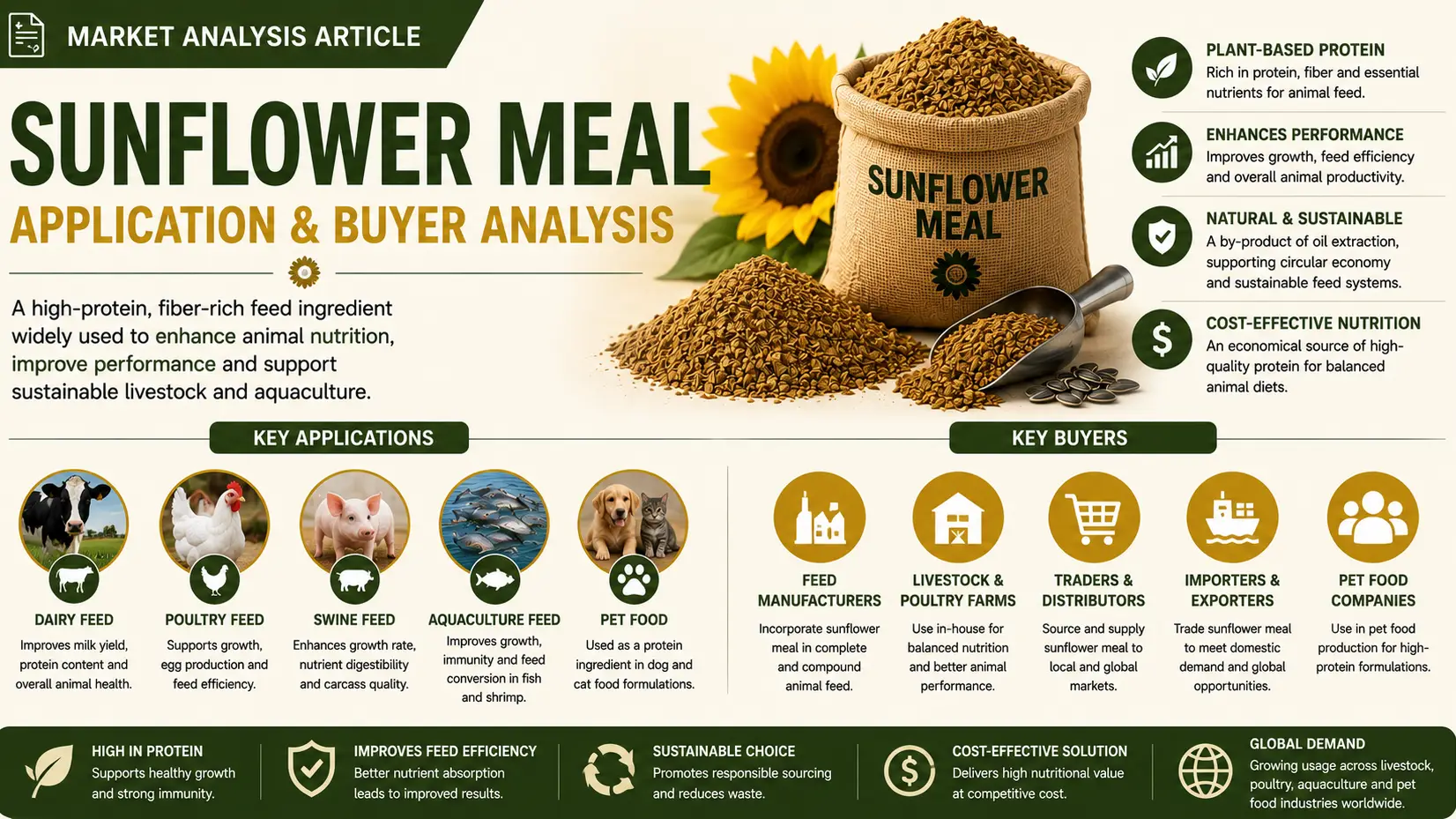
The sunflower meal market is entering 2026 with stronger commercial relevance as feed manufacturers and livestock producers seek cost-efficient protein ingredients amid volatile grain markets. Derived as a byproduct of sunflower oil extraction, sunflower meal has evolved from a secondary feed ingredient into a strategically traded agricultural commodity. Its favorable fiber profile, digestibility improvements, and increasing protein concentration have widened its acceptance across poultry, dairy, cattle, and aquaculture applications.
Global sunflower meal production is projected to surpass 27 million metric tons in 2026, supported by robust sunflower seed processing activity in Eastern Europe, Argentina, and the Black Sea region. Market analysts estimate the sunflower meal sector will expand at a CAGR of 5.4% between 2024 and 2029, driven primarily by feed industry demand and rising protein consumption in emerging economies. Average international sunflower meal prices are expected to fluctuate between USD 210–320/MT depending on protein content and regional supply conditions.
Rising Demand from Commercial Livestock Integrators
Large-scale poultry and cattle producers remain the dominant buyers of sunflower meal in 2026. Integrated livestock companies increasingly incorporate high-protein sunflower meal into feed formulations to partially substitute soybean meal amid ongoing price instability. Poultry feed manufacturers in Europe and Asia are particularly active buyers due to the ingredient’s balanced amino acid composition and improved processing technologies that reduce fiber limitations.
Commercial dairy farms are also increasing procurement volumes as nutritionists optimize ruminant feed efficiency. In several European markets, sunflower meal inclusion rates in cattle feed have climbed above 18% of total protein formulations, particularly where soybean imports remain expensive.
Aquaculture and Specialty Feed Segments Gain Momentum
Aquaculture producers are becoming an influential buyer group within the sunflower meal market. Fish feed manufacturers are blending sunflower meal with other vegetable proteins to reduce reliance on fishmeal and improve sustainability credentials. The aquaculture sector alone is expected to account for nearly 11% of global sunflower meal consumption by 2026.
Pet food manufacturers and specialty organic feed producers are also exploring non-GMO sunflower meal variants. These premium-grade products can command prices exceeding USD 340/MT in niche European and North American markets where traceability and sustainability certifications influence procurement decisions.
Price Competitiveness Reshaping Buyer Preferences
Price sensitivity remains a major factor shaping purchasing decisions across the global feed industry. Compared with soybean meal prices averaging USD 410–480/MT, sunflower meal continues to offer a more economical alternative for protein supplementation. This pricing advantage is encouraging feed compounders to diversify sourcing strategies and reduce dependence on single-origin protein meals.
Buyers in cost-sensitive markets such as Turkey, Egypt, and Southeast Asia are increasingly negotiating long-term supply contracts to secure stable sunflower meal volumes amid uncertain commodity trading conditions.
Emerging Markets Driving Import Growth
Rapid livestock industrialization across Asia, the Middle East, and Africa is accelerating import demand for sunflower meal. Countries with expanding poultry sectors are increasing purchases from exporters in Ukraine, Russia, and Argentina to support feed manufacturing growth.
Import volumes in Southeast Asia alone are forecast to rise by more than 8% year-over-year in 2026. Meanwhile, Middle Eastern feed processors are prioritizing sunflower meal due to competitive freight economics and expanding regional demand for affordable animal protein products.
Conclusion
As a platform feed ingredient, sunflower meal continues to strengthen its role within the global agricultural supply chain by offering affordability, flexibility, and nutritional value across multiple livestock applications. Expanding buyer diversification, competitive pricing, and growing aquaculture adoption are expected to sustain market momentum throughout 2026 and beyond.
Companies seeking reliable sourcing solutions, consistent quality standards, and global trade support are increasingly partnering with international suppliers capable of managing complex agricultural procurement networks. Tradeasia International continues to support global feed and commodity industries through integrated sourcing, distribution, and market intelligence services tailored to evolving industrial demand.
Sources
Leave a Comment