Sunflower Meal Supply Chain Insights for Global B2B Buyers
Understanding Sunflower Meal in the Global Supply Chain
Sunflower Meal as an Agricultural Processing Product
Sunflower meal is an important by-product generated during sunflower oil processing. As global demand for agricultural commodities continues to expand, sunflower meal has become a valuable material within international supply chains. Its availability is closely connected to sunflower cultivation, oilseed processing capacity, and regional agricultural production networks.
For procurement teams and industrial buyers, sunflower meal represents a commodity where supply reliability depends on coordination between farmers, processors, exporters, distributors, and end users. Understanding these interconnected stages helps companies develop stronger sourcing strategies and reduce supply risks.
Importance of Supply Chain Visibility
Supply chain visibility plays a critical role in sunflower meal procurement because buyers need consistent access to suitable suppliers, stable availability, and predictable delivery schedules. A transparent supply chain allows businesses to evaluate sourcing options more effectively and build long-term supplier relationships.
For global B2B buyers, supply chain management involves more than product availability. It includes supplier qualification, logistics planning, trade documentation, and coordination between different market participants to ensure efficient purchasing operations.
Sunflower Meal Production and Supply Chain Flow
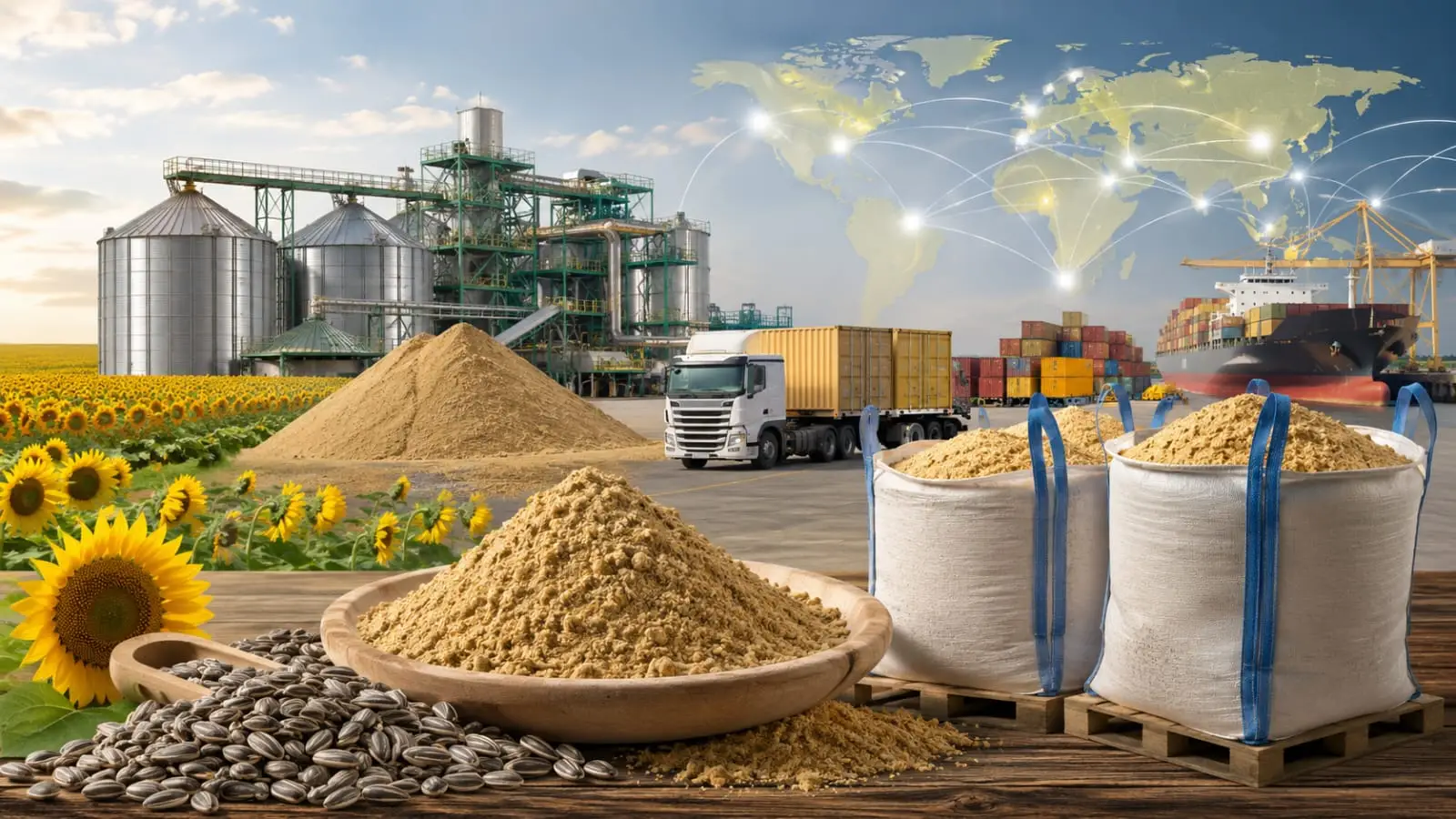
The sunflower meal supply chain begins with sunflower cultivation and continues through processing facilities where oil extraction produces sunflower meal as a secondary product. Processing capacity and agricultural output directly influence the volume available for commercial distribution.
After production, sunflower meal moves through storage, transportation, export channels, and distribution networks before reaching industrial buyers. Each stage requires careful management to maintain supply continuity and meet buyer expectations.
Logistics and International Trade Considerations
International sunflower meal trade requires coordination between suppliers, logistics providers, and buyers across different regions. Transportation planning, shipment schedules, and regional trade requirements influence procurement efficiency.
Companies sourcing sunflower meal internationally often evaluate supplier locations, transportation options, and market conditions before selecting purchasing partners. Efficient logistics management helps businesses maintain reliable supply while controlling operational costs.
Industrial Applications and Buyer Demand for Sunflower Meal
One of the primary commercial applications of sunflower meal is its use as an ingredient in animal feed formulations. Feed manufacturers and agricultural businesses evaluate sunflower meal based on availability, consistency, and suitability for their production requirements.
The demand from the animal nutrition sector makes sunflower meal an important commodity within agricultural supply chains. Buyers often seek dependable suppliers capable of providing consistent volumes to support ongoing production needs.
Growing Interest from Global Buyers
As agricultural industries continue expanding, demand for alternative feed ingredients has increased. Sunflower meal offers procurement opportunities for companies seeking plant-based materials within their supply networks.
Global buyers, distributors, and trading companies monitor sunflower meal availability to identify sourcing opportunities and strengthen their supply portfolios. Reliable supplier networks are essential for meeting changing market requirements.
Market Factors Influencing Sunflower Meal Procurement
The sunflower meal market is influenced by agricultural production levels, sunflower processing activity, and demand from industrial users. Changes in crop availability or processing output can affect supply conditions and purchasing decisions.
Procurement teams must monitor market trends and supplier capabilities to make informed sourcing decisions. Understanding supply and demand relationships helps companies manage purchasing risks and improve planning.
Regional Production and Trade Patterns
Regional differences in sunflower production influence global trade flows. Areas with strong sunflower cultivation and processing industries often become important supply sources for international buyers.
For distributors and procurement specialists, analyzing regional supply patterns can support better supplier selection and improve access to competitive sourcing opportunities.
Sourcing Strategies for Sunflower Meal Buyers
Choosing the right supplier is a key factor in successful sunflower meal procurement. Buyers typically consider supplier experience, production capacity, export capability, and ability to maintain consistent supply.
A reliable supplier relationship helps businesses reduce disruptions and create a more predictable procurement process. Supplier evaluation is therefore an essential part of international commodity purchasing.
Building Long-Term Procurement Networks
Long-term sourcing partnerships allow buyers and suppliers to improve communication, forecast demand, and coordinate future supply requirements. Stable relationships are particularly valuable in agricultural commodity markets where availability can vary.
B2B procurement teams benefit from developing networks that connect producers, traders, and distributors. These networks improve supply chain resilience and support sustainable business growth.
Role of B2B Marketplaces in Sunflower Meal Trade
Digital B2B marketplaces provide platforms where buyers and suppliers can discover new business opportunities. These platforms improve market access by connecting companies across different regions.
For sunflower meal buyers, online marketplaces can simplify supplier discovery, product comparison, and initial trade communication. This supports more efficient sourcing processes in global markets.
Improving Supply Chain Efficiency Through Digital Trade
Digital sourcing platforms contribute to supply chain efficiency by improving information exchange between suppliers and buyers. Better access to supplier information allows businesses to make faster and more informed procurement decisions.
As global trade becomes increasingly connected, B2B marketplaces continue to support transparency and accessibility within agricultural supply chains.
Future Outlook for Sunflower Meal Supply and Global Trade
The future of sunflower meal trade will depend on improvements in agricultural production, processing capabilities, logistics infrastructure, and international sourcing networks. Companies that develop flexible procurement strategies will be better positioned to respond to market changes.
Supply chain optimization will remain a key focus for businesses involved in sunflower meal distribution and industrial purchasing. Strong supplier relationships and efficient trade channels will support continued market development.
Strategic Importance for Global Buyers
For procurement teams, sunflower meal represents an opportunity to strengthen agricultural sourcing strategies while supporting demand from industrial users. Understanding market conditions and supply chain structures enables better purchasing decisions.
Companies seeking reliable sunflower meal supply can benefit from working with experienced suppliers and established B2B trade platforms. Effective sourcing strategies create stronger connections between producers, distributors, and end users across global markets.
Sources
Food and Agriculture Organization of the United Nations (FAO)
United States Department of Agriculture (USDA)
International Trade Centre (ITC)
Leave a Comment