Introduction Stearic Acid
The Asian chemical landscape is a dynamic engine of global industry, and within it, Stearic Acid stands as a critical workhorse ingredient. As a saturated fatty acid primarily derived from palm and other vegetable oils, its versatility underpins countless manufacturing processes, from rubber vulcanization to personal care formulation. The period from 2026 to 2040 is poised to be transformative, shaped by sustainability mandates, technological advancements, and shifting regional economic power. For buyers and industry stakeholders, navigating this evolving terrain requires more than just price awareness; it demands a deep understanding of application trends, supply chain resilience, and quality benchmarks.
This article provides a comprehensive analysis of the Stearic Acid market in Asia through the lens of the coming decades. We will dissect the fundamental properties and applications that make this chemical indispensable, forecast the macroeconomic and regulatory trends shaping its production and consumption, and profile the evolving needs of buyers across diverse sectors. The insights herein are designed to equip procurement specialists, product developers, and strategic planners with the knowledge to make informed decisions in a complex and competitive marketplace.
Understanding Stearic Acid: Properties and Primary Applications
Stearic Acid, or octadecanoic acid, is a long-chain saturated fatty acid characterized by its waxy, solid form at room temperature. Its chemical structure grants it unique functional properties, including excellent lubricity, surfactant capabilities, and the ability to act as a release agent or thickening agent. Industrially, it is available in various grades—such as single-pressed, double-pressed, and triple-pressed—which denote increasing levels of purity and specific melting points, typically ranging from 54°C to 69°C. This purity directly influences its performance in sensitive applications like cosmetics and pharmaceuticals.
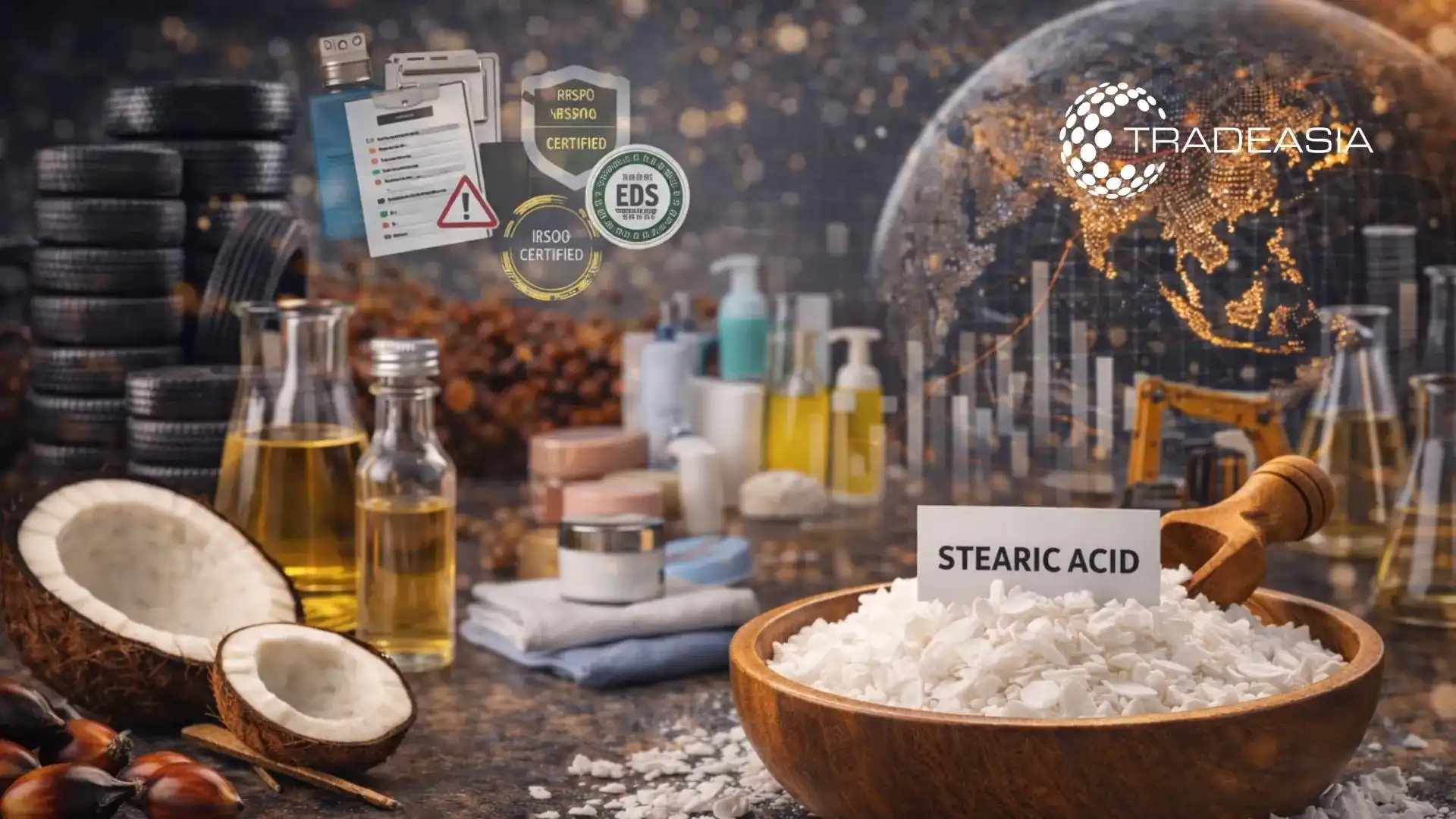
The primary applications of Stearic Acid are a testament to its utility. In the rubber and tire industry, it is a crucial activator and dispersing agent in the vulcanization process, improving processing and final product strength. In plastics and polymer production, it serves as an effective lubricant and mold release agent. Perhaps most visibly, in personal care and cosmetics, it is a foundational ingredient in creams, lotions, soaps, and deodorants, where it acts as an emulsifier and provides texture and stability. Furthermore, it finds significant use in food as a release agent and binder, and in the production of candles, lubricants, and metalworking compounds.
Asia's Stearic Acid Market: The 2026-2040 Trajectory
The Asian Stearic Acid market is projected to experience steady growth from 2026 to 2040, driven by the region's expanding manufacturing base and rising domestic consumption. Key producing nations like Indonesia, Malaysia, China, and India, which have abundant access to palm and other vegetable oil feedstocks, will continue to dominate supply. However, the market trajectory will be heavily influenced by several interconnected trends. The global push for sustainability and traceability will pressure producers to adopt certified sustainable palm oil (CSPO) practices, potentially restructuring supply chains and creating premium product segments. Additionally, advancements in bio-based and synthetic alternatives may begin to penetrate specific niche applications by the 2030s.
From a demand perspective, regional shifts are anticipated. While China will remain the largest consumer, growth rates in Southeast Asia and India are expected to outpace the regional average, fueled by infrastructure development, a growing middle class, and localizing manufacturing. Market volatility will be influenced by feedstock (palm oil) price fluctuations, environmental regulations governing oleochemical production, and trade policies. Platforms like chemtradeasia will become increasingly vital for buyers to access real-time market intelligence, verify supplier credentials, and ensure a consistent, compliant supply amidst these complexities.
Key Application Sectors Driving Demand
The demand for Stearic Acid is inextricably linked to the health of its end-use industries. The rubber and tire sector, a traditional powerhouse consumer, will see sustained demand tied to automotive production and infrastructure projects across Asia. However, innovation here will focus on high-performance grades that contribute to fuel-efficient tire manufacturing. The plastics industry's growth, particularly in packaging and consumer goods, will continue to rely on stearic acid as a processing aid, though this sector faces increasing scrutiny regarding recyclability and additive migration.
The most dynamic growth is forecast in the personal care and cosmetics sector. Asia's beauty and personal care market is exploding, driven by rising disposable incomes and digital influence. This fuels demand for high-purity, cosmetic-grade Stearic Acid for use in skincare, color cosmetics, and hair care products. The trend towards "clean beauty" and natural ingredients aligns well with its plant-derived origin, though it amplifies the need for certified sustainable sourcing. Emerging applications in pharmaceuticals (as an excipient) and in the construction industry (as a waterproofing agent and concrete admixture) represent additional, high-value growth frontiers that will gain prominence through the 2030s.
The Evolving Profile of Stearic Acid Buyers in Asia
The archetype of the Stearic Acid buyer in Asia is undergoing a significant transformation. While price sensitivity remains a key factor, it is no longer the sole determinant. Modern buyers, especially from multinational corporations and export-oriented manufacturers, prioritize a holistic value proposition. This includes stringent quality consistency, reliable supply chain logistics, comprehensive technical documentation (including SDS/MSDS), and verifiable sustainability credentials. Buyers are increasingly responsible for ensuring their raw materials do not pose regulatory or reputational risks downstream.
Furthermore, procurement strategies are becoming more sophisticated. Buyers are leveraging digital B2B platforms to conduct supplier due diligence, compare specifications, and manage orders efficiently. There is a growing preference for establishing long-term partnerships with suppliers who can offer technical support, co-develop application-specific solutions, and provide transparency into their production processes. The role of the buyer is evolving from a simple purchaser to a strategic supply chain manager who must navigate quality, compliance, sustainability, and cost in equal measure.
Strategic Sourcing and Future Outlook
For buyers looking to secure a competitive advantage in the Stearic Acid market from 2026 onward, a proactive and informed sourcing strategy is paramount. This begins with a clear understanding of the required technical specifications (grade, iodine value, acid value, melting point) for the intended application. Diversifying the supplier base geographically can mitigate risks associated with regional feedstock shortages or trade disruptions. Engaging with suppliers who invest in sustainable practices and can provide relevant certifications will future-proof procurement against tightening environmental regulations and consumer preferences.
The future outlook for Stearic Acid in Asia is one of opportunity tempered by challenge. Demand will remain robust, but the market will stratify. Conventional grades will face margin pressure, while high-purity, sustainably sourced, and application-engineered grades will command premiums. Innovation in the oleochemical value chain may yield new co-products or modified stearic acid derivatives with enhanced functionalities. Success will belong to those buyers and suppliers who can collaborate, adapt to regulatory shifts, and harness digital tools for market intelligence and efficient transaction management on platforms dedicated to chemical commerce.
Conclusion
The journey of Stearic Acid in Asia from 2026 to 2040 will mirror the region's broader industrial and economic evolution. Its fundamental role in diverse industries is secure, but the parameters of its production, trade, and consumption are set to change. By understanding the deep interplay between application trends, sustainability imperatives, and buyer evolution, stakeholders can position themselves strategically. Embracing transparency, prioritizing quality and sustainability, and leveraging digital resources will be the keystones for navigating this essential chemical's market in the decades to come. For comprehensive market insights, sustainable sourcing solutions, and reliable Stearic Acid supply across global markets, contact our team today.

Leave a Comment