Global Soybean Meal Supply Chain Trends for Feed Industry Buyers
Introduction to the Global Soybean Meal Supply Chain
Soybean Meal as a Strategic Protein Ingredient
Soybean meal has become one of the most important protein sources in the global animal nutrition industry due to its high protein content, consistent availability, and compatibility with different feed formulations. Produced mainly as a by-product of soybean oil extraction, soybean meal plays a central role in supporting commercial livestock production worldwide. According to information from the United States Department of Agriculture (USDA), soybean processing remains a major agricultural activity because soybean-derived products support both food and feed industries.
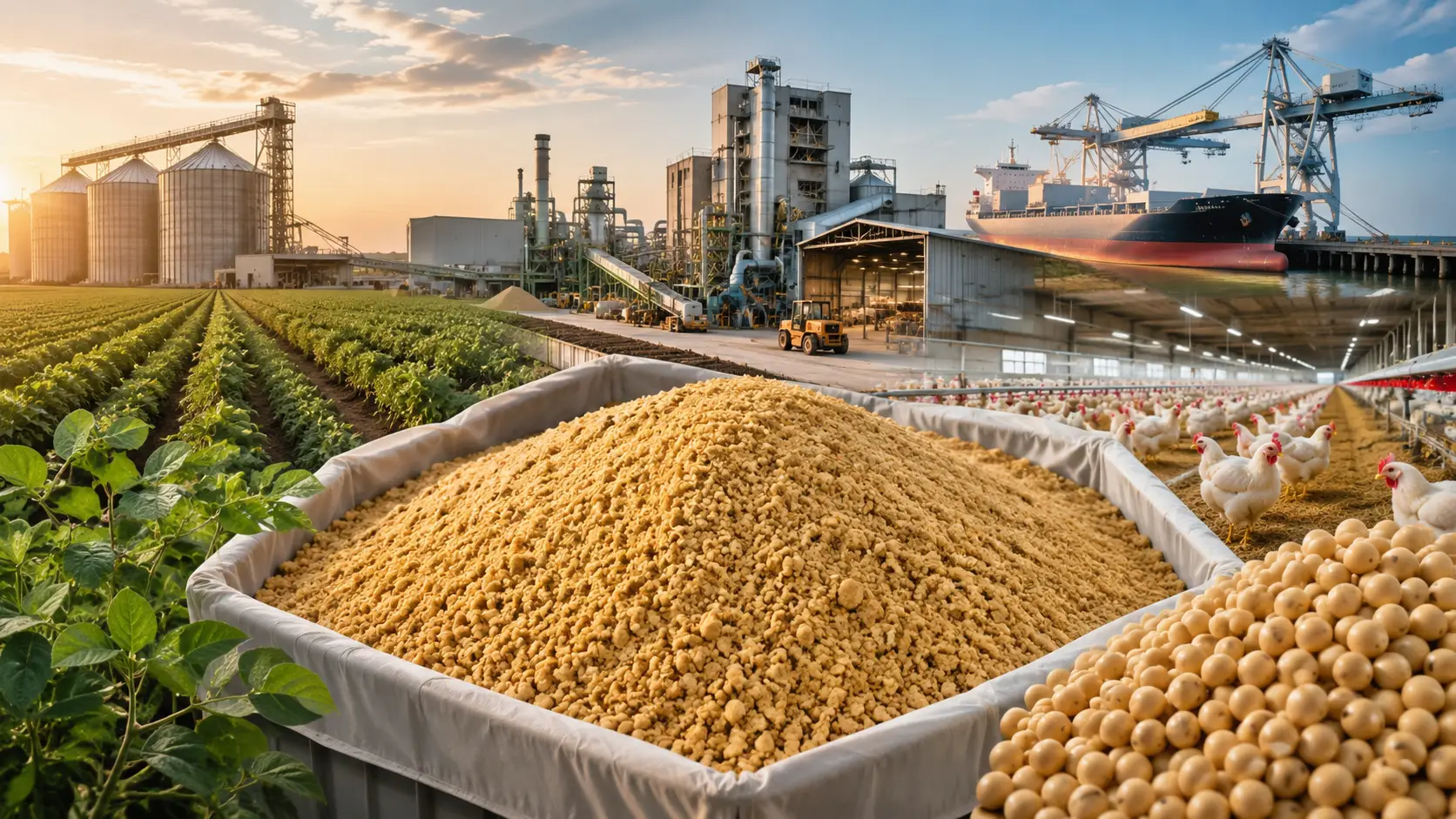
The soybean meal supply chain connects soybean cultivation regions, crushing facilities, exporters, distributors, feed manufacturers, and livestock producers. Major production and export markets include countries with established soybean agriculture and processing industries, allowing international buyers to access large-volume supplies for industrial applications.
Global Supply Chain Importance for Industrial Buyers
For procurement teams, soybean meal sourcing involves more than product availability. Buyers evaluate supplier reliability, export capability, quality consistency, logistics performance, and long-term supply stability. The increasing scale of poultry, swine, and aquaculture production has made dependable soybean meal supply networks essential for maintaining feed production efficiency.
According to market analysis from the Food and Agriculture Organization (FAO), global demand for animal protein continues to influence agricultural commodity markets, creating continued demand for protein-rich feed ingredients such as soybean meal. This demand encourages feed manufacturers to establish strategic relationships with suppliers capable of meeting volume and quality requirements.
Soybean Meal Production and International Trade Dynamics
Soybean meal production is closely connected to global soybean cultivation and crushing capacity. Countries such as Brazil, the United States, Argentina, and China represent significant players in soybean production and processing. The availability of soybean meal depends on soybean harvest volumes, crushing operations, transportation infrastructure, and international trade conditions.
According to USDA agricultural commodity reports, soybean processing activities generate substantial quantities of soybean meal annually, making it a critical commodity in global feed ingredient markets. The expansion of soybean processing industries in producing regions has strengthened international supply availability for industrial buyers.
Soybean meal exporters and traders monitor production cycles carefully because weather conditions, agricultural policies, and global soybean demand can influence supply conditions. For buyers, understanding these market factors helps improve procurement planning and reduce supply risks.
International Trade Flow Considerations
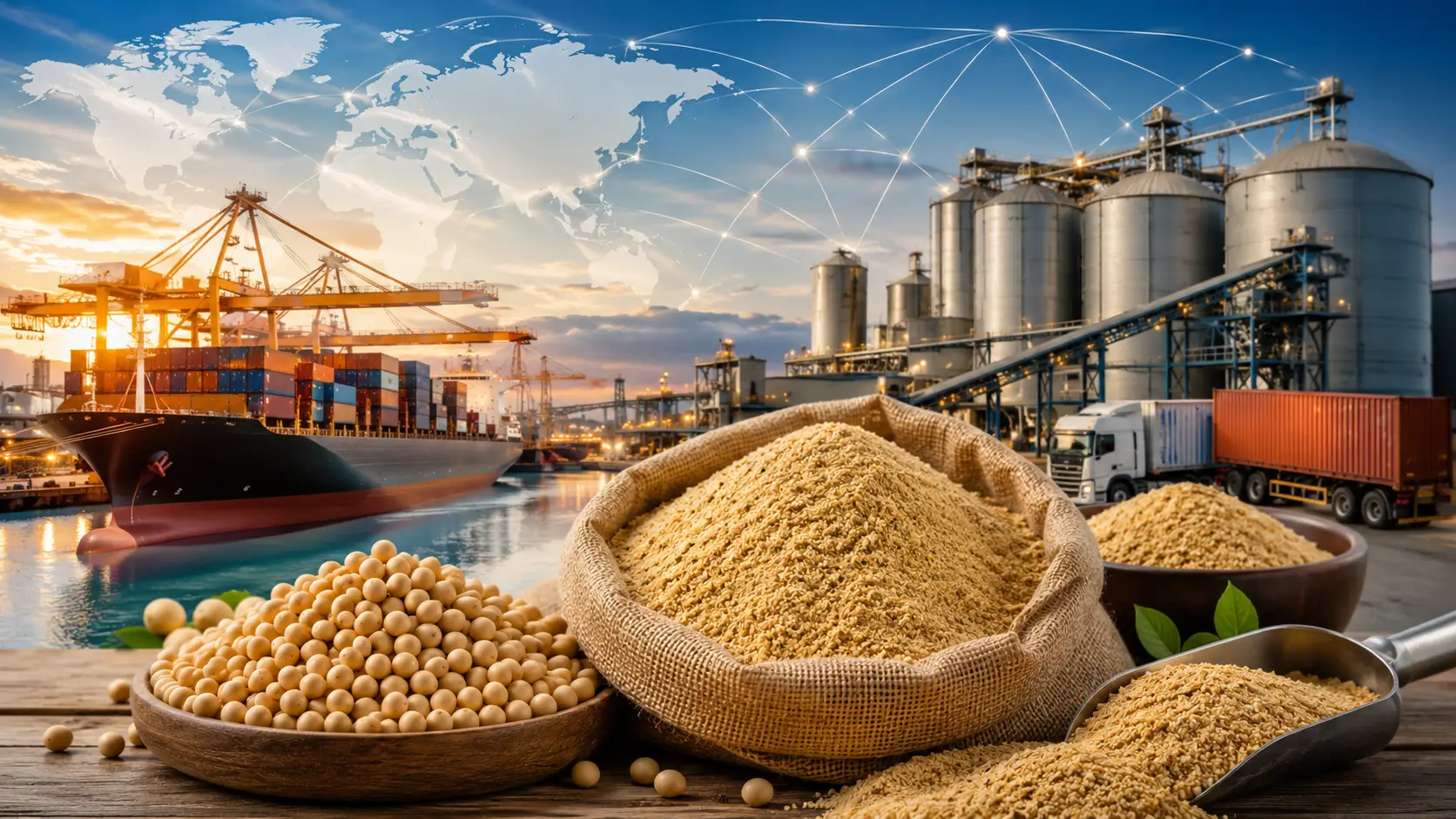
International soybean meal trade involves complex logistics networks connecting exporters, shipping companies, distributors, and end users. Bulk shipments require careful management of documentation, transportation schedules, quality specifications, and regulatory requirements.
Industry data from the International Grains Council highlights the importance of global grain and oilseed trade networks in supporting feed ingredient availability. As feed producers operate across different regions, efficient supply chains allow manufacturers to secure soybean meal supplies from competitive international markets.
Demand Growth Across Animal Feed Applications
The largest application area for soybean meal is animal feed production, particularly poultry and livestock nutrition. Its amino acid profile and protein concentration make it a preferred ingredient for poultry feed, swine feed, and cattle feed formulations. Commercial feed manufacturers rely on soybean meal to support animal growth, productivity, and nutritional balance.
According to technical information published by agricultural research institutions, soybean meal remains one of the most widely used plant-based protein ingredients because of its nutritional characteristics and global availability. Feed producers commonly combine soybean meal with grains and other additives to develop balanced animal diets.
The growth of poultry and livestock industries directly influences soybean meal demand. As meat and dairy production expands in developing markets, demand for reliable protein feed ingredients continues to increase.
Expansion into Aquaculture Feed Markets
Aquaculture growth has also created additional demand for soybean meal as feed producers search for sustainable plant-based protein sources. Fish and shrimp feed manufacturers increasingly evaluate soybean meal as part of balanced feed formulations.
Market reports from international agricultural organizations indicate that rising global seafood consumption is supporting expansion of aquaculture production. This trend creates new opportunities for soybean meal suppliers that can meet technical specifications required by aquaculture feed manufacturers.
Key Factors Influencing Soybean Meal Procurement Decisions
Soybean meal buyers evaluate multiple quality parameters before establishing purchasing agreements. Protein content, moisture level, fiber composition, amino acid profile, and contamination control are among the most important technical considerations for feed manufacturers. Consistent specifications help producers maintain stable feed formulations and optimize production performance.
According to technical guidance from the National Research Council, nutrient composition and ingredient quality are critical factors when formulating animal diets. For industrial buyers, reliable soybean meal suppliers must provide consistent product information, quality documentation, and traceability records.
Large-scale feed companies typically require suppliers that can maintain uniform quality across multiple shipments. Variations in nutritional characteristics can affect feed efficiency, production costs, and overall operational planning.
Logistics, Availability, and Supply Risk Management
Supply chain reliability is a major consideration when sourcing soybean meal internationally. Buyers assess supplier location, export infrastructure, shipping capability, storage facilities, and delivery timelines before selecting procurement partners.
Market analysis from the United States Department of Agriculture highlights how global oilseed markets are influenced by harvest conditions, transportation networks, and international trade policies. These factors directly affect soybean meal availability and pricing conditions.
For procurement teams, working with suppliers that understand international logistics helps reduce risks related to shipment delays, seasonal shortages, and market volatility. Reliable sourcing strategies often include maintaining multiple supplier options and monitoring global commodity trends.
Global Buyers and Supplier Evaluation Strategies
Soybean meal is purchased by a wide range of industrial users, including compound feed manufacturers, poultry integrators, livestock producers, aquaculture companies, agricultural distributors, and commodity trading companies. These buyers require dependable access to high-volume protein ingredients to support continuous production.
According to industry information from the Food and Agriculture Organization of the United Nations, livestock production systems depend heavily on efficient feed supply chains because feed represents one of the largest operating costs in animal production.
The purchasing requirements of these industries vary depending on application. Poultry producers may prioritize protein consistency and availability, while international distributors may focus more on export documentation, logistics flexibility, and commercial competitiveness.
How Buyers Compare Soybean Meal Suppliers
Supplier evaluation involves reviewing production capability, export experience, product documentation, pricing structure, and customer support. Buyers increasingly compare suppliers through digital B2B marketplaces because these platforms provide access to multiple sourcing options.
Industrial procurement teams often analyze supplier credibility, response time, quality assurance processes, and ability to support long-term contracts. A supplier that understands international trade requirements can provide additional value beyond product availability.
For companies searching for soybean meal suppliers, a transparent sourcing platform can simplify supplier discovery, quotation comparison, and communication between buyers and sellers.
Commercial Opportunities in Soybean Meal Trading Markets
The commercial outlook for soybean meal remains closely connected to global protein consumption, livestock production expansion, and feed industry development. Increasing demand for poultry, pork, dairy, and aquaculture products continues to support demand for high-quality feed ingredients.
According to agricultural market assessments published by the USDA, soybean complex markets remain among the most significant agricultural commodity sectors due to their role in food and animal feed supply chains. Soybean meal demand follows broader trends in global animal protein production.
For suppliers and distributors, understanding regional demand patterns creates opportunities to connect production areas with growing feed markets. Businesses that provide consistent supply, competitive pricing, and efficient logistics are better positioned to participate in international trade.
Digital Marketplaces and Supply Chain Connectivity
Digital B2B platforms are transforming how industrial buyers identify and evaluate soybean meal suppliers. Online marketplaces allow procurement teams to explore supplier profiles, request quotations, compare commercial terms, and improve sourcing efficiency.
For Tradeasia / Chemtradeasia / Tradechem Marketplace, soybean meal represents an opportunity to connect agricultural producers, exporters, distributors, and industrial buyers through a structured global trading environment.
By supporting supplier visibility and buyer access, marketplace platforms can help companies simplify sourcing processes while improving transparency throughout the supply chain.
Conclusion: Building Reliable Soybean Meal Supply Partnerships
Soybean meal remains a fundamental protein ingredient supporting the global animal feed industry. Its importance is driven by expanding livestock production, increasing aquaculture demand, and the need for efficient agricultural supply chains.
Based on market information from international agricultural organizations, future demand for feed ingredients will continue to depend on reliable production networks, responsible sourcing practices, and efficient global distribution channels.
For buyers, selecting the right soybean meal supplier requires evaluating quality consistency, logistics capability, market knowledge, and long-term reliability.
Tradeasia as a Global Sourcing Partner
Tradeasia International provides a marketplace environment designed to support industrial buyers seeking reliable connections with global suppliers. Through digital sourcing solutions, product information access, and international trade support, buyers can explore soybean meal supply opportunities for feed manufacturing and agricultural applications.
As global feed markets continue evolving, access to dependable suppliers and transparent procurement channels will remain important for companies managing international ingredient sourcing strategies.
Sources
https://www.fas.usda.gov
https://www.fao.org
https://www.igc.int
Leave a Comment