Soybean Meal Applications and Buyer Trends in Global Feed Markets
Understanding Soybean Meal as a Strategic Feed Ingredient
Role of Soybean Meal in Animal Nutrition
Soybean meal is one of the most important protein-rich feed ingredients used in modern animal nutrition. Produced after extracting oil from soybeans, soybean meal provides a concentrated source of protein and amino acids required for efficient livestock growth. According to information from the United States Department of Agriculture (USDA), soybean meal remains one of the dominant protein meals traded globally due to its extensive use in feed production.
The commercial importance of soybean meal comes from its ability to support balanced animal diets while meeting the nutritional requirements of intensive farming operations. Feed manufacturers incorporate soybean meal into formulations for poultry, swine, cattle, and aquaculture species because of its consistent protein profile and availability.
Nutritional Value Driving Industrial Demand
The demand for soybean meal continues to increase as global meat, dairy, and seafood production expands. Technical information published by the Food and Agriculture Organization (FAO) highlights that efficient feed resources are essential for improving productivity in livestock systems, making protein ingredients such as soybean meal important components of agricultural supply chains.
For procurement teams, soybean meal represents more than a commodity ingredient. Buyers evaluate protein concentration, quality consistency, origin, logistics capability, and supplier reliability before establishing long-term purchasing relationships. These factors influence sourcing decisions across international feed markets.
Growing Market Demand for Soybean Meal Applications
Soybean meal applications are closely connected with the growth of commercial animal farming and compound feed manufacturing. The International Feed Industry Federation (IFIF) reports that global compound feed production continues to support increasing demand for reliable protein ingredients, particularly in regions with expanding livestock industries.
Feed producers rely on soybean meal because it can be incorporated into different formulations while maintaining nutritional performance. Poultry and swine producers represent major consumption segments, while aquaculture continues to create additional demand as fish farming expands globally.
Market Drivers Supporting Soybean Meal Consumption
Population growth, increasing protein consumption, and industrialized farming practices continue to influence soybean meal demand. Market analysis from agricultural commodity organizations shows that protein meal consumption is strongly linked with global livestock production trends and feed efficiency improvements.
As animal nutrition companies seek stable ingredient supplies, soybean meal suppliers with international logistics capabilities become increasingly important. Buyers often compare suppliers based on availability, shipment flexibility, documentation support, and ability to meet feed industry requirements.
Key Industries and Buyers Using Soybean Meal
The poultry industry is among the largest users of soybean meal because chickens require high-quality protein sources for growth and production performance. Commercial feed mills purchase soybean meal in significant quantities to formulate broiler, layer, and breeder diets.
Swine producers also depend on soybean meal as a major protein component in feed programs. According to research published by agricultural universities and animal nutrition institutions, soybean meal contributes essential amino acids that support efficient animal development.
Aquaculture and Specialty Nutrition Markets
Aquaculture feed manufacturers increasingly evaluate soybean meal as a plant-based protein ingredient for fish and shrimp diets. As global aquaculture production grows, feed companies require dependable sources of alternative protein materials.
Buyers in aquaculture, livestock, and specialty animal nutrition sectors typically assess soybean meal suppliers based on nutritional specifications, supply consistency, traceability, and commercial reliability. These evaluation factors determine supplier selection in competitive B2B markets.
Procurement Factors Influencing Soybean Meal Purchasing Decisions
Procurement teams purchasing soybean meal focus on technical characteristics including protein content, moisture level, amino acid profile, processing quality, and compliance documentation. Feed manufacturers require consistent specifications because ingredient variation can affect final feed performance.
According to technical guidance from the National Grain and Feed Association (NGFA), quality management and proper handling practices are essential in maintaining feed ingredient safety and reliability throughout the supply chain.
Supplier Evaluation and Commercial Considerations
Soybean meal buyers compare suppliers based on more than pricing. Factors such as production capacity, export experience, shipment availability, documentation support, and communication efficiency influence purchasing decisions.
In international B2B trade, reliable sourcing partnerships help companies manage supply risks caused by market fluctuations, transportation challenges, and changing demand patterns. This makes supplier transparency and marketplace credibility important elements of procurement strategies.
Global Supply Chain and Sourcing Considerations for Soybean Meal
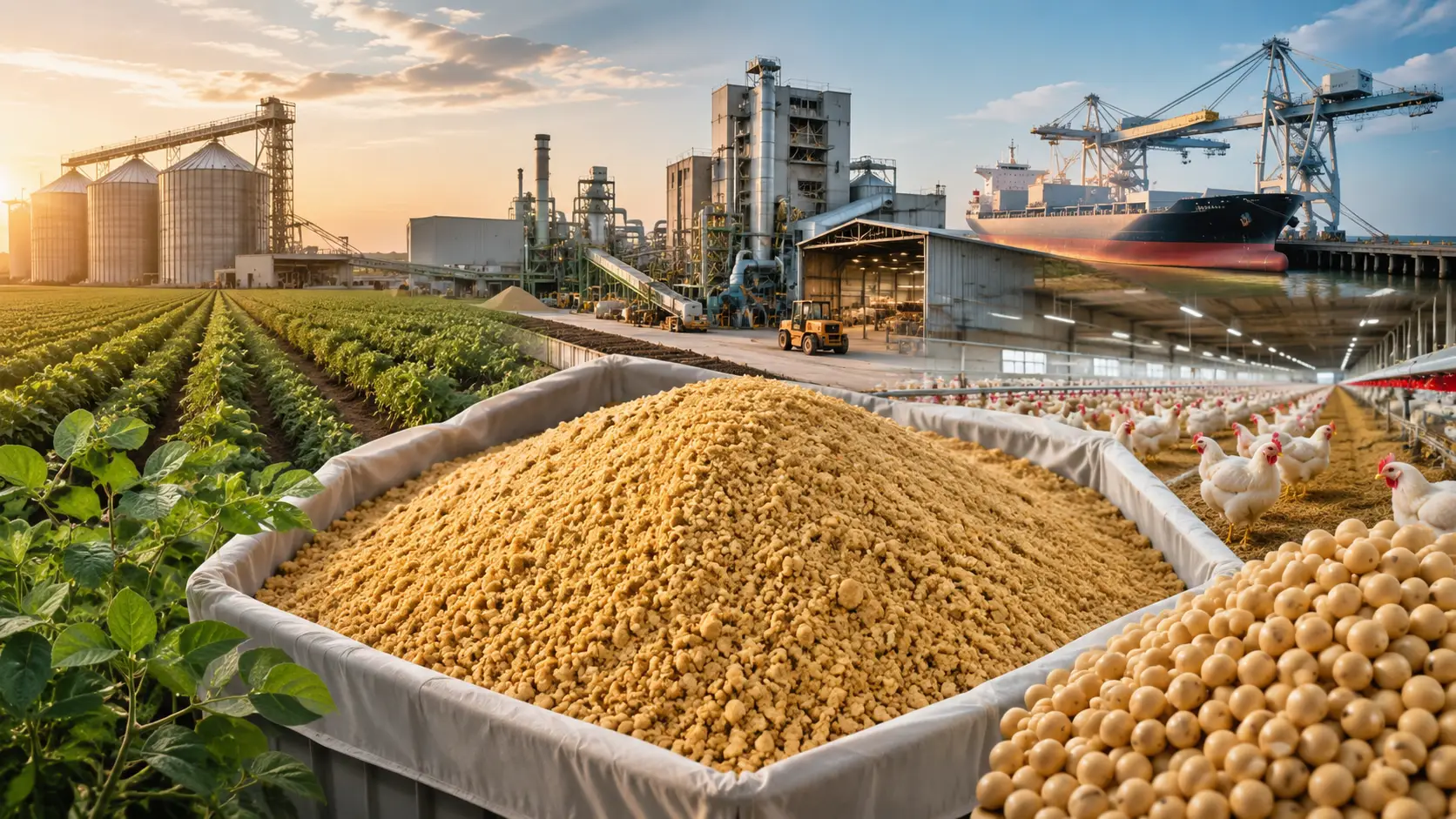
Soybean meal supply chains involve agricultural producers, processors, exporters, distributors, and industrial buyers across multiple regions. Major soybean-producing countries contribute significantly to global soybean meal availability, supporting international feed ingredient markets.
Industry reports from organizations such as the USDA Foreign Agricultural Service indicate that soybean processing and trade activities remain closely connected with global livestock production trends.
Importance of Reliable B2B Sourcing Channels
For international buyers, sourcing soybean meal through established B2B marketplaces provides access to supplier networks, product information, and commercial communication channels. Buyers benefit from improved visibility when comparing suppliers, specifications, and purchasing options.
A structured sourcing approach helps procurement teams identify partners capable of supporting recurring orders and maintaining consistent supply requirements for feed manufacturing operations.
Commercial Opportunities in Soybean Meal B2B Trading
Soybean meal continues to represent an attractive commercial opportunity because of its essential role in global animal feed production. Feed manufacturers, livestock companies, and distributors require dependable suppliers to support expanding agricultural operations.
The product’s broad applications create opportunities for exporters and marketplace platforms to connect producers with international buyers seeking efficient procurement solutions.
Supporting Buyer-Supplier Connections
Tradeasia, Chemtradeasia, and Tradechem Marketplace can support soybean meal sourcing activities by connecting industrial buyers with international supply opportunities. A professional marketplace environment helps procurement teams evaluate product information, communicate requirements, and identify suitable trading partners.
For companies purchasing soybean meal, supplier reliability, application knowledge, and supply chain capability remain important considerations when developing long-term sourcing strategies.
Conclusion: Supporting Reliable Soybean Meal Sourcing for Global Buyers
Soybean meal remains a fundamental protein ingredient supporting global livestock, poultry, and aquaculture industries. Its nutritional value, broad application range, and role in feed manufacturing continue to maintain strong commercial demand.
As agricultural markets evolve, buyers increasingly focus on dependable suppliers that can provide consistent quality, efficient logistics, and transparent trade support. Understanding buyer requirements and application trends is essential for successful soybean meal sourcing.
Building Sustainable B2B Supply Partnerships
For businesses seeking soybean meal sourcing solutions, Tradeasia / Chemtradeasia / Tradechem Marketplace provides a platform-oriented approach to connecting buyers with international suppliers. By supporting industrial procurement needs and improving supplier visibility, the marketplace helps companies explore reliable opportunities within global feed ingredient supply chains.
Sources
https://www.fas.usda.gov
https://www.fao.org
https://ifif.org

Leave a Comment