Global Soy Protein Isolate Supply Chain Trends for Industrial Procurement
Introduction to Soy Protein Isolate
What Makes Soy Protein Isolate a Strategic Food Ingredient?
Soy protein isolate (SPI) is one of the highest-purity plant proteins available for commercial food manufacturing, typically containing more than 90% protein on a dry basis. Produced by removing most fats and carbohydrates from defatted soybean meal, SPI offers excellent functionality, including emulsification, water retention, gel formation, and protein fortification. These characteristics have positioned it as a key ingredient in a wide range of processed foods and nutritional formulations.
Growing consumer demand for plant-based diets, protein-enriched products, and sustainable food ingredients has accelerated the adoption of soy protein isolate across global markets. Manufacturers increasingly rely on SPI to formulate products that meet nutritional expectations while maintaining desirable texture and processing performance. According to the Food and Agriculture Organization (FAO), plant proteins continue to play a significant role in supporting future food security through efficient protein production systems.
Expanding Commercial Importance
Beyond nutrition, soy protein isolate contributes to manufacturing efficiency because of its consistent composition and functional versatility. Food processors use it to improve product stability, increase protein content, and optimize production costs without compromising quality. These advantages have encouraged widespread adoption in both developed and emerging food markets.
Commercial demand has also been supported by expanding investments in plant-based food innovation. Industry analysis published by organizations such as the Good Food Institute (GFI) indicates that alternative protein development continues to attract substantial investment, strengthening demand for reliable protein ingredient suppliers throughout the global supply chain.
Understanding the Global Supply Chain
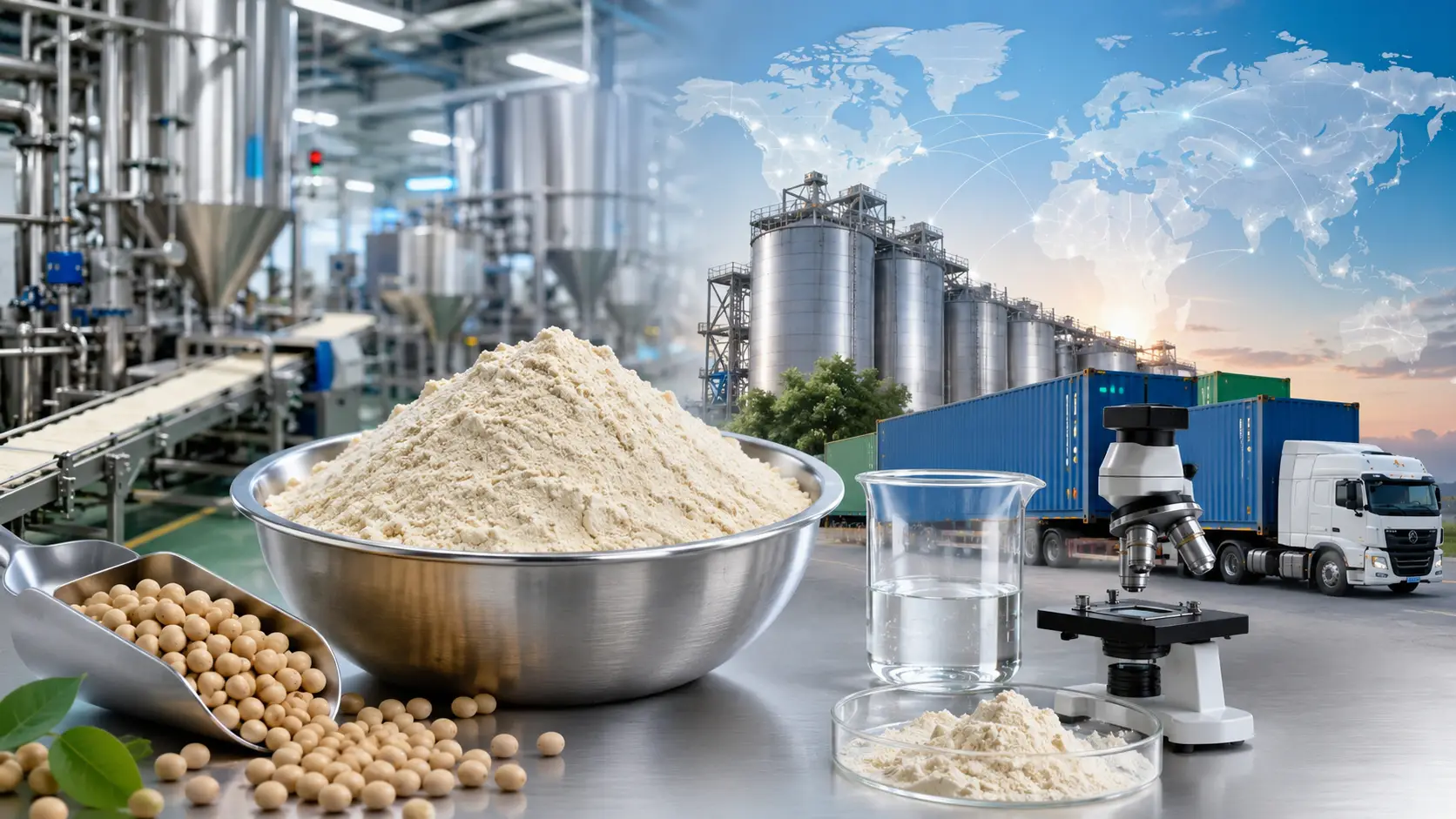
The soy protein isolate supply chain begins with soybean cultivation in major producing countries including Brazil, the United States, and Argentina. After harvesting, soybeans undergo oil extraction to produce defatted soybean meal, which serves as the primary raw material for protein isolation. Specialized processing facilities then apply extraction, purification, neutralization, drying, and quality control procedures to manufacture high-purity soy protein isolate suitable for industrial use.
International trade flows are influenced by agricultural production volumes, weather conditions, logistics infrastructure, trade policies, and processing capacity. According to the United States Department of Agriculture (USDA), global soybean production remains concentrated among a limited number of exporting countries, making regional harvest performance an important factor affecting downstream protein ingredient availability.
Factors Affecting Supply Reliability
Procurement teams closely monitor supply chain resilience because fluctuations in soybean harvests, freight costs, and energy prices can influence ingredient pricing and lead times. Food manufacturers therefore increasingly diversify sourcing strategies to reduce operational risk and maintain production continuity.
Quality assurance also represents a critical component of supply chain management. Buyers frequently require documentation covering product specifications, microbiological testing, allergen management, traceability, and regulatory compliance before approving suppliers for long-term purchasing agreements. These requirements reinforce the importance of experienced international distributors capable of maintaining consistent supply standards.
Market Demand and Industry Growth
Global demand for soy protein isolate continues to expand as food manufacturers respond to consumer preferences for high-protein, vegetarian, vegan, and flexitarian products. The ingredient supports product innovation across meat alternatives, dairy alternatives, nutritional beverages, bakery products, and functional foods, creating sustained purchasing activity among industrial buyers.
According to the Organisation for Economic Co-operation and Development (OECD) and the FAO Agricultural Outlook, long-term protein consumption patterns continue to evolve toward diversified protein sources. This trend has encouraged ingredient manufacturers to expand processing capacity while distributors strengthen international supply networks to meet increasing commercial demand.
Market Trends Supporting Procurement
Recent product development emphasizes clean-label formulations, protein fortification, and sustainable sourcing practices. Food manufacturers increasingly seek suppliers capable of providing consistent technical performance alongside comprehensive regulatory documentation and dependable logistics support.
As competition intensifies across food manufacturing markets, procurement teams evaluate suppliers not only on price but also on production capability, certification standards, inventory reliability, and international distribution experience. These commercial considerations continue to shape sourcing strategies for soy protein isolate within the global food ingredient market.
Industrial Applications Across Food Manufacturing
Soy protein isolate has become a cornerstone ingredient for modern food manufacturers because it provides high protein content alongside excellent functional properties. Its ability to emulsify, bind water, improve texture, and stabilize formulations makes it suitable for a broad range of processed foods. These characteristics allow manufacturers to develop products that meet nutritional targets while maintaining production efficiency and product consistency.
According to technical information published by the U.S. Soybean Export Council (USSEC), soy protein ingredients are widely recognized for their versatility in improving texture, moisture retention, and protein enrichment across commercial food applications.
Supporting Innovation in Plant-Based Foods
The rapid growth of plant-based eating has significantly expanded the use of soy protein isolate in meat alternatives, dairy-free beverages, protein powders, nutrition bars, bakery products, confectionery, and ready-to-eat meals. Manufacturers value its balanced amino acid profile and neutral flavor, allowing it to blend effectively with other plant proteins and functional ingredients.
Food innovation is also being driven by consumer demand for healthier and more sustainable products. Market insights published by the Good Food Institute (GFI) indicate that continued investment in alternative protein technologies is accelerating the commercialization of new plant-based food products worldwide.
Procurement Considerations for B2B Buyers
Industrial procurement teams assess multiple factors before selecting a soy protein isolate supplier. Product specifications, protein content, particle size, microbiological standards, allergen management, packaging options, documentation, and production capacity all contribute to supplier qualification. Consistent quality is particularly important for manufacturers operating under strict food safety and regulatory requirements.
According to guidance from the Global Food Safety Initiative (GFSI), supplier verification and traceability remain essential components of responsible food ingredient procurement and supply chain management.
Building a Reliable Supply Chain
Reliable sourcing extends beyond product quality. Buyers also evaluate inventory availability, lead times, export experience, logistics capabilities, and responsiveness during periods of market volatility. Long-term partnerships with experienced suppliers help reduce procurement risks associated with seasonal soybean production, freight disruptions, and fluctuating raw material costs.
Global distributors that maintain diversified sourcing networks and established logistics partnerships are often better positioned to provide stable supply continuity. This reliability supports uninterrupted manufacturing operations while enabling procurement teams to manage inventory more efficiently.
Buyer Intent and Supplier Evaluation
Typical buyers of soy protein isolate include food manufacturers, beverage producers, nutritional supplement companies, plant-based meat producers, bakery manufacturers, dairy alternative processors, contract manufacturers, and ingredient distributors. Procurement professionals seek suppliers capable of delivering consistent quality, competitive pricing, regulatory compliance, and dependable international logistics.
Industry purchasing decisions increasingly consider sustainability initiatives, documentation transparency, and long-term supplier reliability. According to the Food and Agriculture Organization (FAO), resilient agricultural supply chains are becoming increasingly important as food systems adapt to evolving consumer demand and environmental considerations.
How Tradeasia Supports Sourcing Decisions
For B2B buyers, sourcing platforms play an important role in streamlining supplier discovery and procurement evaluation. A comprehensive product page should provide technical specifications, available packaging, regulatory information, application guidance, and an efficient request-for-quotation process to facilitate purchasing decisions.
Tradeasia, Chemtradeasia, and Tradechem Marketplace support industrial buyers by connecting them with reliable chemical and food ingredient supply networks. Through a structured marketplace approach, buyers can efficiently evaluate product availability, documentation, and sourcing options while reducing procurement complexity for international transactions.
Future Outlook and Conclusion
The outlook for soy protein isolate remains positive as demand for plant-based nutrition continues to expand across global food industries. Population growth, rising health awareness, and increasing investment in sustainable protein production are expected to support continued market development over the coming years. At the same time, supply chain resilience, regional processing capacity, and agricultural productivity will remain key determinants of market stability.
According to the OECD-FAO Agricultural Outlook, global protein consumption patterns are expected to continue evolving, creating new opportunities for ingredient manufacturers, processors, distributors, and international procurement teams.
Conclusion
Soy protein isolate has evolved into a strategically important ingredient for modern food manufacturing due to its nutritional value, functional versatility, and broad application across multiple product categories. As demand for high-protein and plant-based foods increases, reliable sourcing and supply chain management become increasingly important for maintaining manufacturing efficiency and product quality.
For industrial buyers, selecting experienced suppliers with consistent product quality, comprehensive technical documentation, and dependable logistics capabilities can significantly reduce procurement risks. Through Tradeasia, Chemtradeasia, and Tradechem Marketplace, businesses gain access to global sourcing solutions that support efficient procurement, international trade, and long-term supply partnerships while addressing the evolving needs of the global food ingredient market.
Sources
https://www.fao.org/faostat/en/#data
https://ussec.org/
https://gfi.org/resource/plant-based-state-of-the-industry-report/

Leave a Comment