Understanding Soy Protein Isolate
Soy protein isolate is one of the most refined forms of soy-derived protein, typically containing more than 90% protein on a dry-weight basis. It is produced through processing methods that remove most fats and carbohydrates while preserving valuable protein components.
The ingredient has gained importance as manufacturers seek functional and cost-effective protein solutions for a growing range of food and nutrition products. According to technical information published by the United States Department of Agriculture, soy remains one of the world's most significant plant protein sources used across food systems.
Functional Characteristics in Food Manufacturing
Soy protein isolate offers desirable functional properties including emulsification, water retention, gel formation, and texture enhancement. These characteristics allow formulators to improve product consistency and nutritional value simultaneously.
Technical research published by the Food and Agriculture Organization highlights the importance of plant proteins in supporting food innovation and nutritional development. As a result, soy protein isolate continues to play a central role in modern ingredient formulation strategies.
Key Industrial Applications of Soy Protein Isolate
The versatility of soy protein isolate allows it to serve multiple food manufacturing segments. Its ability to enhance protein content while supporting texture and stability makes it valuable across diverse product categories.
Manufacturers increasingly use soy protein isolate to meet consumer demand for high-protein and plant-based products. According to research published by the Institute of Food Technologists, protein enrichment remains a major innovation driver in food development.
Applications Across Food Categories
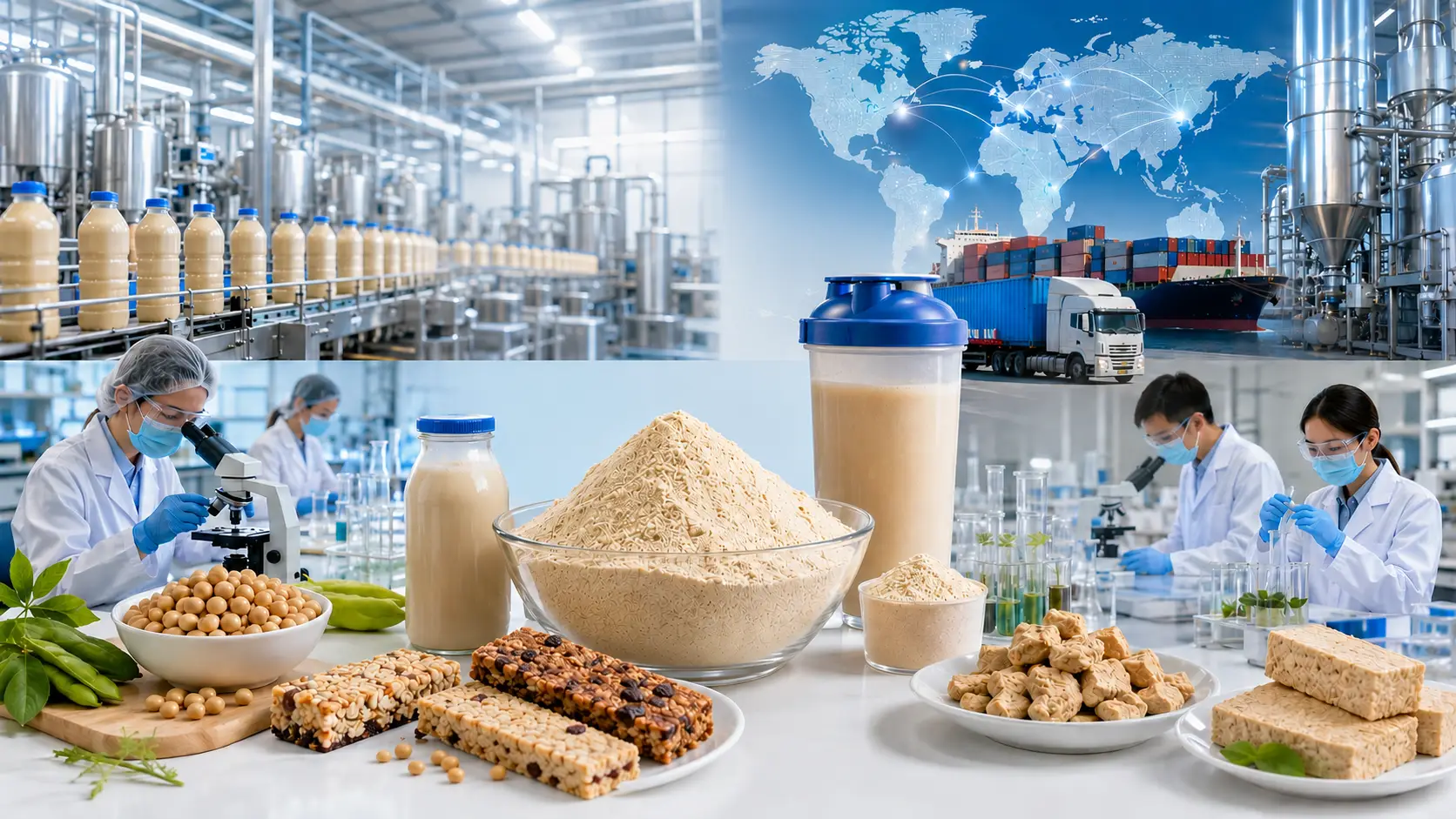
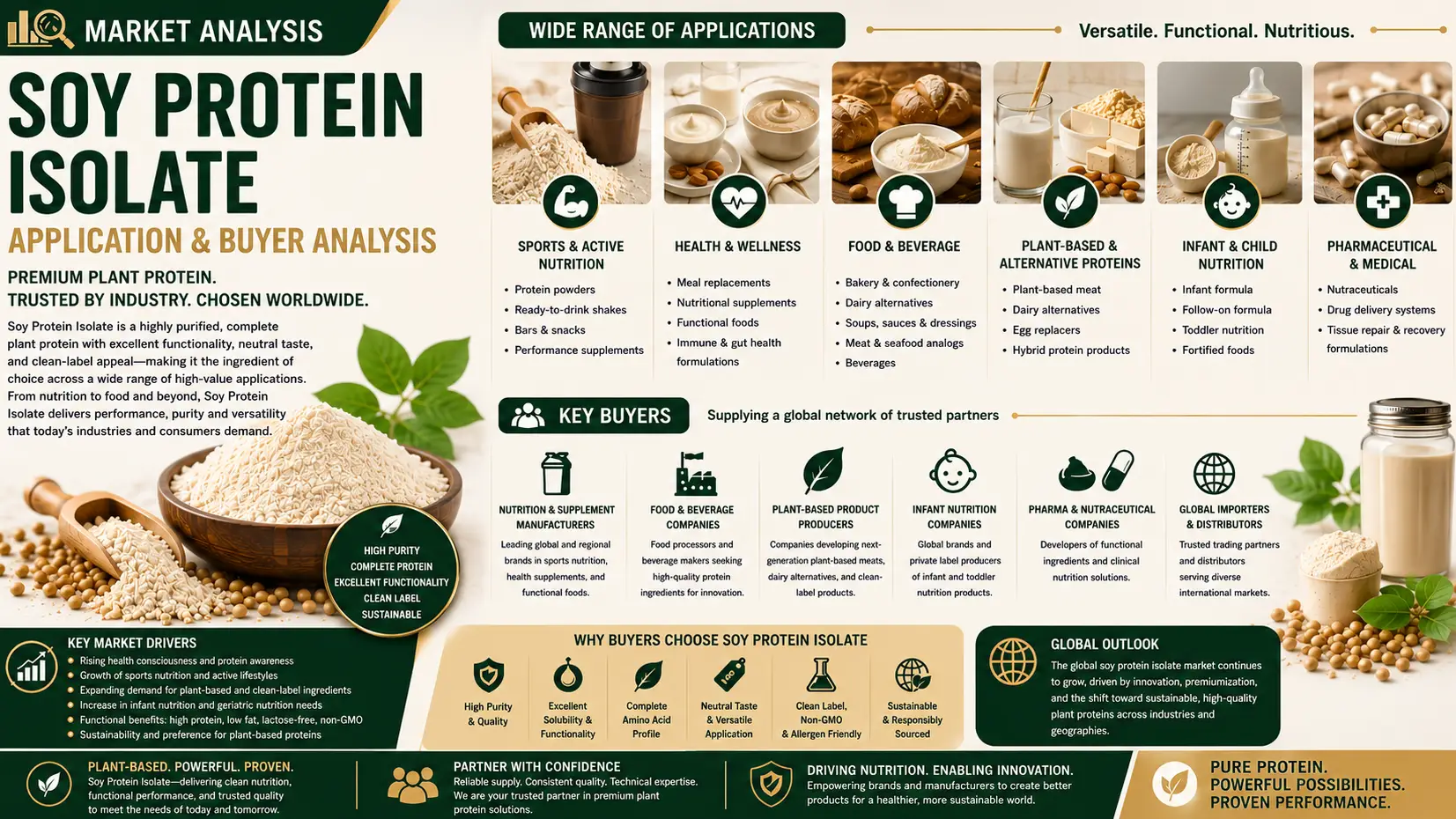
Soy protein isolate is widely used in meat alternatives, dairy alternatives, nutritional beverages, protein bars, bakery products, processed meats, and ready-to-eat foods. In these applications, it contributes both nutritional and functional benefits.
The ingredient also supports product reformulation initiatives focused on protein fortification and alternative protein development. Industry analysis from the Good Food Institute indicates continued growth in plant-based food categories worldwide, supporting demand for ingredients such as soy protein isolate.
Market Trends Driving Soy Protein Isolate Demand
Global demand for plant-based protein ingredients has expanded significantly over the past decade. Consumer interest in nutrition, sustainability, and alternative protein sources continues to influence purchasing decisions across food markets.
Market assessments published by Organisation for Economic Co-operation and Development and the Food and Agriculture Organization indicate ongoing growth in protein consumption and diversification of food protein sources worldwide.
Growth of Plant-Based and Functional Foods
Food manufacturers are responding to demand for products that offer both nutritional value and convenience. This trend has increased investment in ingredients capable of delivering protein enrichment without compromising functionality.
Soy protein isolate benefits from this shift because it combines established supply chains with proven performance characteristics. Industry reports from the Good Food Institute continue to identify plant-based foods as a strategic growth area for ingredient suppliers and manufacturers.
Industries and Buyer Groups Using Soy Protein Isolate
Soy protein isolate serves a broad range of industrial users beyond traditional food manufacturers. Its functionality and nutritional profile make it suitable for numerous commercial applications requiring reliable protein ingredients.
According to food industry research from the Institute of Food Technologists, demand for protein ingredients increasingly spans multiple product categories and manufacturing sectors.
Key Buyer Segments
Primary buyers include food manufacturers, beverage producers, plant-based product companies, sports nutrition brands, ingredient blenders, contract manufacturers, distributors, and private-label producers. These organizations often purchase soy protein isolate in bulk volumes to support large-scale production.
Animal nutrition companies may also utilize soy-derived protein ingredients in specialized formulations. Procurement teams within these sectors prioritize consistent quality, protein concentration, regulatory compliance, and long-term supply reliability when selecting suppliers.
Buyer Intent and Procurement Considerations
Commercial buyers approach soy protein isolate procurement with a focus on product performance, supply continuity, and overall value. Purchasing decisions typically involve collaboration between sourcing managers, quality teams, formulation specialists, and production departments.
According to guidance from the Food and Agriculture Organization, ingredient quality and supply consistency remain critical considerations throughout global food supply chains.
Factors Buyers Evaluate Before Purchasing
Procurement teams commonly assess protein content, microbiological specifications, certification requirements, country of origin, production capacity, and logistics capabilities before selecting a supplier. Documentation and traceability also influence supplier approval processes.
Buyers compare suppliers to reduce operational risk and ensure dependable access to raw materials. Product pages within B2B marketplaces support sourcing decisions by providing technical information, supply availability, and direct connections between buyers and qualified suppliers.
Global Sourcing Opportunities and Supplier Evaluation
As international trade networks continue to expand, soy protein isolate sourcing has become increasingly globalized. Buyers often evaluate multiple sourcing regions to balance cost efficiency, quality expectations, and supply security.
Trade and agricultural market information from the United States Department of Agriculture indicates that global soybean production and processing infrastructure remain important factors influencing protein ingredient availability.
Selecting the Right Supplier
Successful supplier evaluation extends beyond pricing considerations. Buyers increasingly assess manufacturing standards, quality management systems, export experience, and responsiveness to procurement requirements.
Reliable suppliers can help manufacturers maintain production continuity while adapting to evolving market conditions. Strategic sourcing partnerships therefore play an important role in supporting long-term growth across food manufacturing and nutrition sectors.
Conclusion
Soy protein isolate continues to strengthen its position as a critical ingredient within modern food manufacturing. Its high protein content, functional versatility, and compatibility with plant-based product development make it attractive across numerous industrial applications.
Growing consumer demand for protein-rich and plant-based products is expected to support ongoing market expansion. Industry organizations including the Food and Agriculture Organization and the Institute of Food Technologists continue to highlight the importance of alternative protein ingredients in future food systems.
Strategic Importance for B2B Buyers
For manufacturers, distributors, and procurement professionals, soy protein isolate represents both a functional ingredient and a strategic sourcing category. Careful supplier evaluation helps organizations secure quality, consistency, and long-term supply reliability.
As food innovation accelerates globally, businesses that establish dependable sourcing strategies for soy protein isolate will be better positioned to respond to changing consumer preferences and evolving market opportunities.
Sources
https://www.fao.org
https://gfi.org
https://www.adm.com/en-us/products-services/human-nutrition/products/plant-proteins/soy-protein/soy-protein-isolates/ (adm.com)
Leave a Comment