Soy Protein Concentrate Supply Chain Trends Driving Global Industrial Procurement
Introduction to Soy Protein Concentrate Supply Chain
Soy protein concentrate has become an essential plant-based ingredient for food processors, feed manufacturers, and industrial ingredient suppliers seeking consistent protein quality and dependable sourcing. Produced by removing soluble carbohydrates from defatted soybean meal, the ingredient offers an attractive balance between nutritional performance and cost efficiency, making it valuable across multiple industrial sectors.
Understanding the Growing Importance of Supply Chains
According to the Food and Agriculture Organization (FAO), global soybean production continues to expand as demand for protein ingredients increases across both food and feed industries. This growth has elevated the importance of efficient international supply chains capable of supporting large-scale manufacturing while maintaining quality and traceability.
Industrial buyers increasingly evaluate suppliers not only by production capacity but also by logistics capabilities, documentation standards, and inventory stability. Reliable transportation networks and diversified sourcing reduce procurement risks while supporting uninterrupted manufacturing operations across regional markets.
As sustainability becomes a strategic purchasing factor, companies are also emphasizing responsible soybean sourcing, certified production practices, and transparent supply chain management. These trends continue to reshape procurement strategies for global buyers seeking long-term supplier partnerships.
Global Production and Supply Network
Global production of soy protein concentrate is concentrated in regions with strong soybean cultivation and advanced processing infrastructure. Major manufacturing countries include the United States, Brazil, Argentina, China, and India, each contributing to international supply through integrated agricultural and processing industries.
Manufacturing Capacity Across Major Regions
According to the United States Department of Agriculture (USDA), Brazil and the United States remain among the world's largest soybean producers, providing abundant raw materials for protein concentrate manufacturing. Large crushing facilities and modern extraction technologies help maintain competitive production costs and consistent export availability.
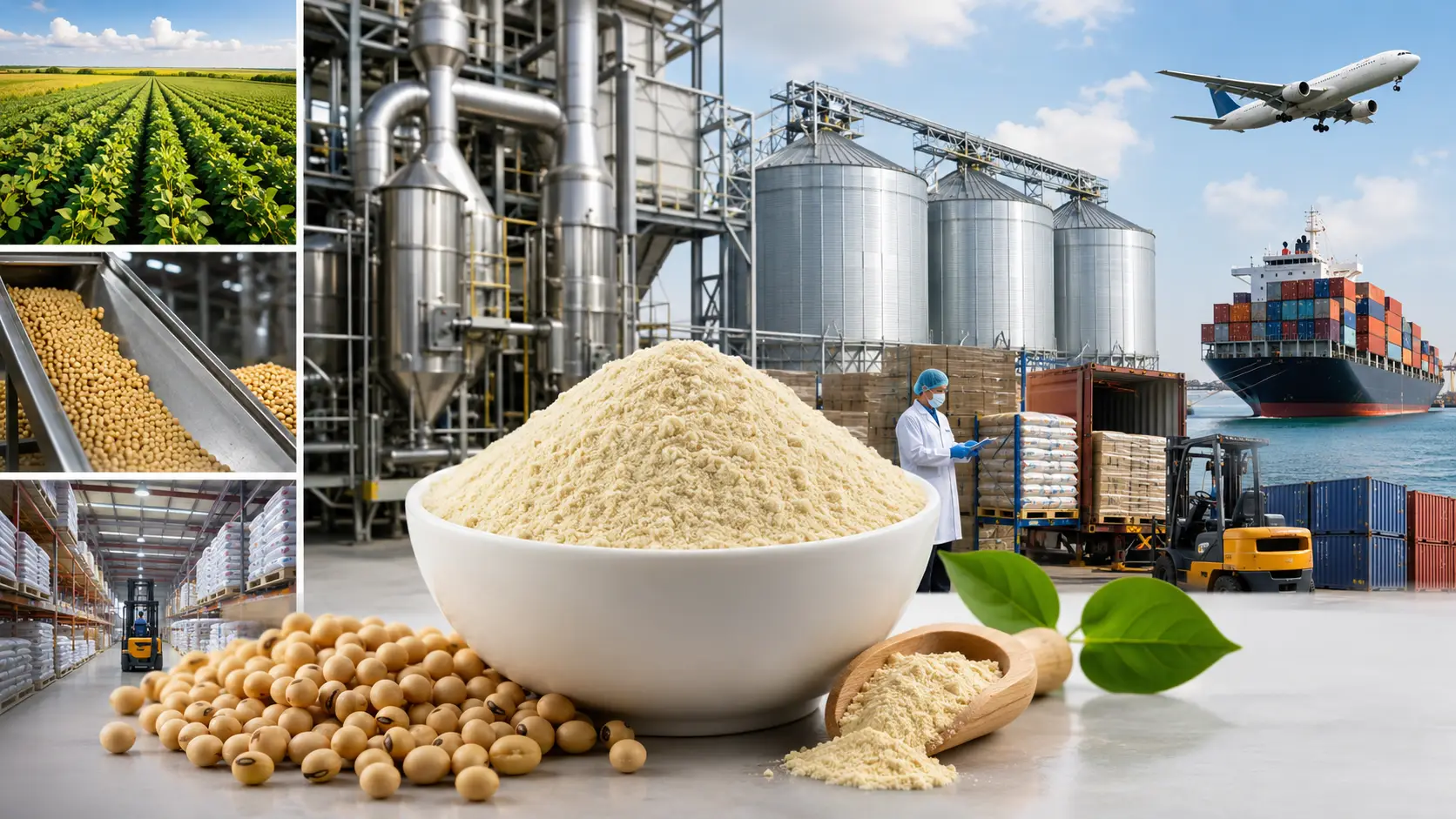
International trade depends heavily on coordinated logistics involving soybean cultivation, crushing facilities, protein processing plants, storage terminals, ports, and distribution networks. Supply chain efficiency directly affects delivery schedules and pricing stability for industrial buyers.
Manufacturers continue investing in automation, quality assurance systems, and traceability technologies to improve production efficiency while meeting increasingly stringent food safety and customer compliance requirements across international markets.
Market Drivers Influencing Supply
Demand for soy protein concentrate continues to increase as manufacturers expand production of high-protein foods, functional ingredients, meat alternatives, aquaculture feed, livestock nutrition products, and pet food formulations. These expanding application sectors support long-term investment throughout the supply chain.
Demand Trends Supporting Market Growth
Market analysis published by Grand View Research indicates that plant-based protein ingredients continue to experience strong growth driven by consumer preferences for sustainable nutrition and functional food innovation. These trends encourage manufacturers to secure reliable long-term sources of soy-derived proteins.
Industrial procurement teams also monitor fluctuations in soybean harvests, transportation costs, processing capacity, currency exchange rates, and international trade policies because these variables directly influence product pricing and supplier availability.
Growing investment in value-added soybean processing facilities further strengthens supply resilience by increasing regional manufacturing capacity while reducing dependence on imported intermediate ingredients for downstream food and feed production.
Supply Chain Risks and Procurement Challenges
Although the market outlook remains positive, soy protein concentrate supply chains face several operational challenges that require proactive procurement planning. Weather variability, geopolitical developments, logistics disruptions, and fluctuating agricultural commodity prices can all influence supply continuity.
Managing Procurement Risks
According to the Organisation for Economic Co-operation and Development (OECD), agricultural commodity markets remain sensitive to climate conditions, transportation bottlenecks, and international trade regulations. Procurement professionals therefore increasingly diversify supplier portfolios to reduce operational exposure.
Supplier qualification has become equally important as pricing. Buyers commonly assess manufacturing certifications, quality management systems, production consistency, export experience, packaging options, and technical support before establishing long-term purchasing agreements.
Companies that maintain strategic supplier relationships, transparent documentation, and flexible inventory planning are generally better positioned to manage unexpected market disruptions while maintaining continuous production schedules for industrial customers.
Global Trade and Export Landscape
International trade plays a central role in the availability of soy protein concentrate. Export-oriented producers supply food manufacturers, feed mills, and ingredient distributors through well-established shipping routes connecting soybean-producing regions with major consumption markets in Asia, Europe, the Middle East, and Africa.
Regional Export Competitiveness
According to the International Trade Centre (ITC), countries with strong soybean production and efficient processing industries maintain a competitive advantage in supplying global markets. Export performance depends on harvest quality, processing capacity, logistics infrastructure, and compliance with importing countries' regulatory requirements.
Regional diversification has become increasingly important as buyers seek to reduce sourcing risks. Procurement teams often qualify multiple suppliers from different countries to improve resilience against shipping delays, weather-related crop disruptions, or changing trade policies.
As sustainability and traceability gain importance, exporters investing in certified sourcing, quality assurance, and transparent documentation are better positioned to meet the evolving expectations of multinational food and feed manufacturers.
Buyer Intent and Commercial Positioning
Soy protein concentrate is commonly purchased by food ingredient manufacturers, meat alternative producers, dairy alternative companies, animal feed manufacturers, aquaculture nutrition formulators, pet food producers, and industrial ingredient distributors. These organizations require consistent product quality, dependable logistics, and long-term supply reliability.
What Procurement Teams Evaluate
According to technical guidance from the U.S. Food and Drug Administration (FDA), ingredient consistency, food safety compliance, labeling requirements, and manufacturing standards are critical considerations for commercial food ingredients. Buyers therefore assess product specifications, protein content, microbiological quality, moisture levels, packaging, shelf life, and available certifications before approving suppliers.
Procurement professionals also compare suppliers based on manufacturing capacity, export experience, documentation support, pricing stability, lead times, and responsiveness. These factors influence both operational efficiency and long-term procurement costs.
A comprehensive product page supports sourcing decisions by providing detailed technical specifications, application guidance, regulatory information, packaging options, and convenient RFQ channels, enabling buyers to evaluate suppliers more efficiently before initiating procurement.
Future Supply Chain Outlook and Conclusion
The outlook for soy protein concentrate remains positive as global demand for plant-based ingredients continues to expand across food processing, functional nutrition, livestock feed, and aquaculture industries. Investments in processing technology, sustainable agriculture, and supply chain digitalization are expected to improve production efficiency and strengthen international trade.
Building Resilient Supply Partnerships
Market research from Mordor Intelligence projects continued growth in plant protein markets, supported by rising consumer demand for sustainable nutrition and expanding industrial applications. These long-term trends reinforce the importance of resilient supplier networks capable of maintaining quality and reliable delivery.
For procurement teams, strategic sourcing extends beyond competitive pricing. Long-term value depends on selecting suppliers with proven manufacturing capabilities, consistent quality control, regulatory compliance, diversified logistics, and transparent communication throughout the procurement process.
As a global B2B chemical and ingredient marketplace, Tradeasia, Chemtradeasia, and Tradechem Marketplace support industrial buyers by connecting them with reliable soy protein concentrate suppliers, comprehensive product information, and efficient sourcing solutions that facilitate international trade while helping organizations build dependable long-term supply partnerships.
Sources
https://www.fao.org/faostat/
https://www.trademap.org/
Leave a Comment