Introduction
Soy protein concentrate (SPC) continues to evolve as a critical platform ingredient in global protein processing ecosystems rather than a niche feed additive. In 2026, the market is valued within a steady expansion phase driven by protein diversification strategies across industries. Global production is estimated at 3.6 million MT, supported by processing hubs in North America, Brazil, and China. The market is growing at a projected 7.8% CAGR, reflecting structural demand shifts toward sustainable protein inputs. With average pricing ranging between USD 1,250–1,850/MT, SPC is increasingly positioned between commodity soybean meal and high-purity isolates.
Expanding Demand from Animal Nutrition Sector
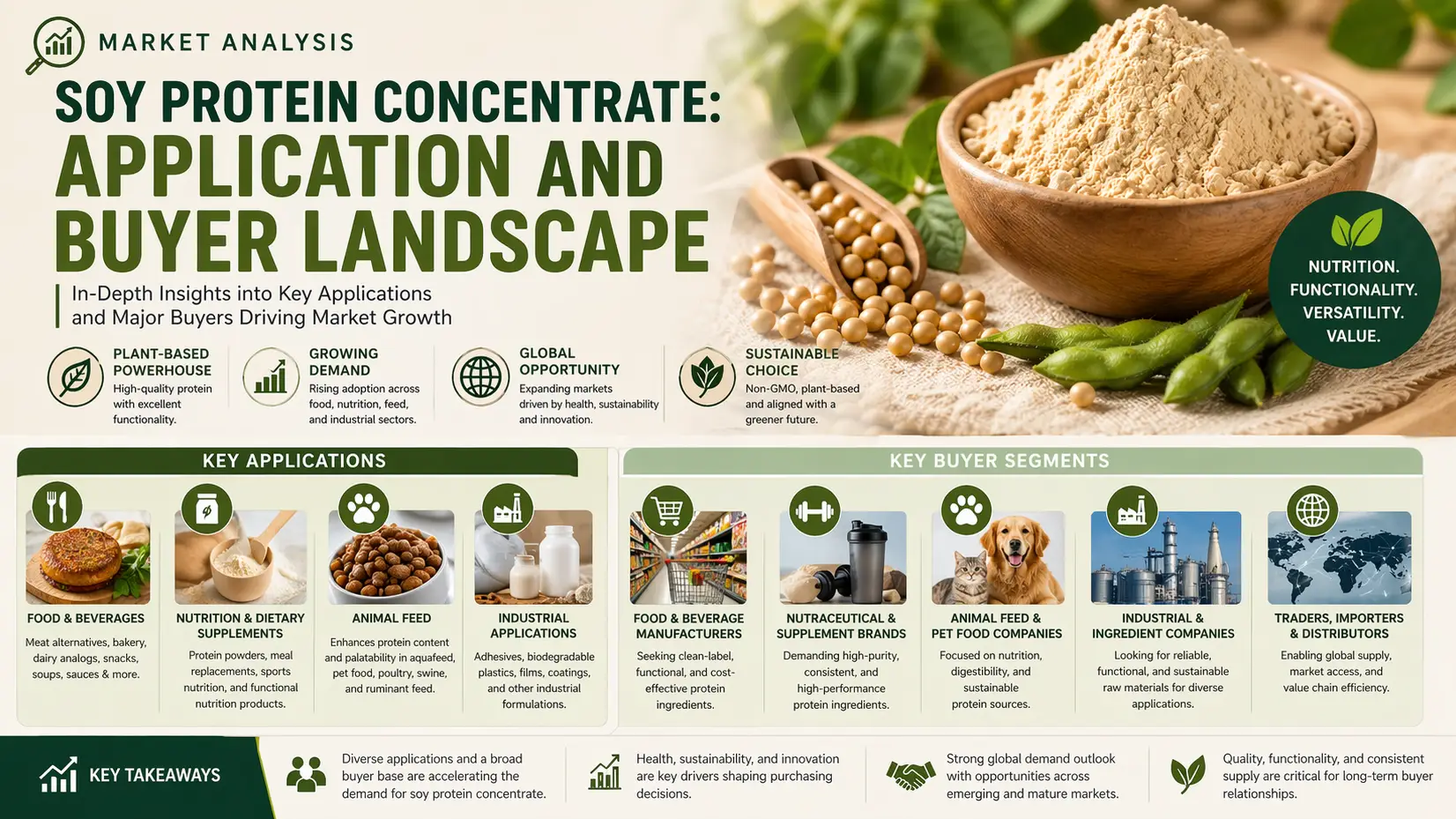
The largest buyer segment remains animal nutrition, where SPC is valued for its digestibility and low anti-nutritional factors. Poultry and swine feed formulations dominate consumption, accounting for over 55% of global demand. Aquaculture is a rapidly expanding segment, especially in Asia-Pacific, where feed formulators are integrating SPC to improve feed conversion ratios. Demand growth in Vietnam, India, and Indonesia continues to accelerate as feed manufacturers seek cost-efficient protein alternatives to fishmeal.
Food Industry and Plant-Based Applications
Beyond feed, SPC is gaining traction in food manufacturing, particularly in meat analogues, protein-enriched snacks, and dairy alternatives. Food processors prefer SPC due to its balanced amino acid profile and functional properties such as emulsification and water retention. The shift toward plant-based diets in Europe and North America is reinforcing long-term procurement contracts. Buyers in this segment prioritize consistency and traceability, pushing suppliers to invest in non-GMO and identity-preserved soybean sourcing systems.
Trade Flow, Pricing Dynamics, and Buyer Landscape
Global trade flows remain tightly linked to soybean-producing nations, with Brazil and the United States controlling over 70% of export volumes. Price volatility is influenced by soybean crush margins and freight costs, but SPC maintains relative stability compared to protein isolates. Buyers are increasingly diversified, including feed integrators, food manufacturers, and specialty nutrition companies. Long-term contracts dominate procurement strategies, particularly in regions facing supply chain uncertainty and currency fluctuations.
Conclusion
As soy protein concentrate strengthens its role as a multifunctional platform ingredient, its relevance spans both traditional feed systems and next-generation food innovation. Market participants are increasingly focused on securing resilient supply chains and strategic sourcing partnerships to manage volatility and ensure quality consistency. In this evolving landscape, global distributors and solution providers such as Tradeasia International play a pivotal role in connecting producers with industrial buyers, enabling efficient cross-border trade flows and reliable supply continuity in a competitive protein economy.
Sources
-
https://www.fao.org
-
-
https://www.oilworld.de
Leave a Comment