Global Soy Lecithin Supply Chain Guide for Buyers and Procurement Teams
Understanding Soy Lecithin and Its Commercial Importance
Soy lecithin is a naturally occurring mixture of phospholipids extracted during soybean oil processing. It functions primarily as an emulsifier, stabilizer, dispersing agent, and release agent across multiple industrial applications. Commercial demand for soy lecithin continues to expand because manufacturers increasingly require multifunctional ingredients that improve process efficiency and product consistency.
The global market has also benefited from wider interest in plant-derived ingredients and sustainable sourcing practices. Large-scale soybean processing infrastructure in key producing regions has created strong availability and commercial trade opportunities for soy lecithin manufacturers and distributors.
Soy Lecithin as a Functional Industrial Ingredient
According to technical information published by the United States Department of Agriculture (USDA), soy processing generates multiple value-added derivatives used throughout food and industrial manufacturing systems. Soy lecithin represents one of the most commercially important co-products because it delivers emulsification and surface-active properties while supporting formulation stability.
Its functionality allows manufacturers to reduce ingredient complexity while improving texture, dispersion characteristics, and manufacturing consistency. This creates value not only for end-product performance but also for production efficiency and cost management.
Commercial Importance Across Global Trade
Market analysis from industry researchers and edible oil organizations indicates that lecithin demand continues to increase alongside growth in processed foods, feed additives, and health-related applications. Increasing production capacities in Asia-Pacific and expanding export activity have strengthened international trading activity.
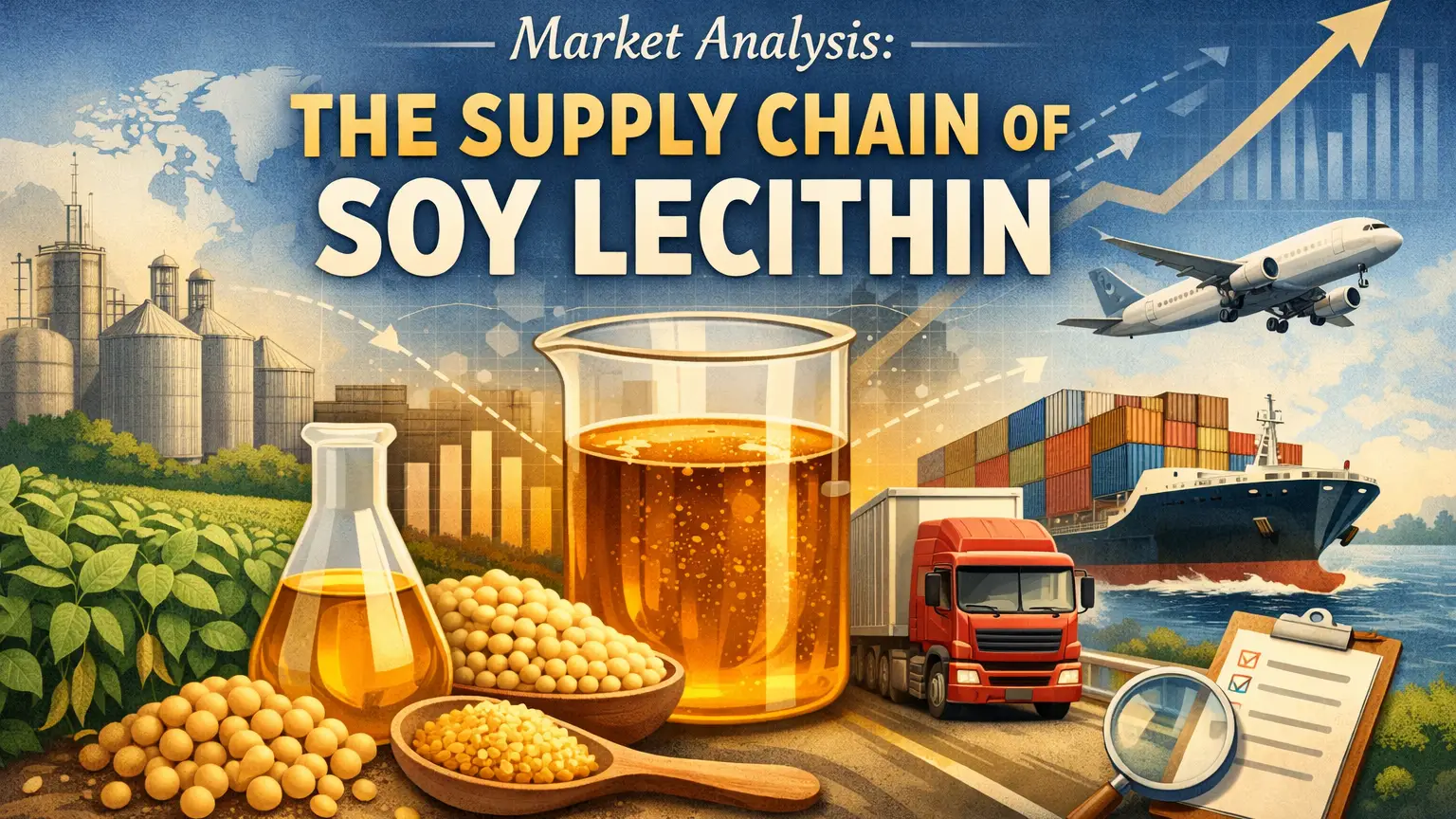
The supply chain has become increasingly integrated, linking soybean processors, ingredient manufacturers, distributors, and procurement teams within a broader global sourcing network. This integration supports long-term purchasing relationships and strategic inventory planning.
Industrial Applications Driving Soy Lecithin Demand
Industrial demand for soy lecithin is driven by its broad compatibility across manufacturing sectors. Unlike highly specialized ingredients that serve a narrow market, soy lecithin supports diverse applications and therefore creates demand across multiple end-user industries.
Its versatility allows procurement teams to evaluate soy lecithin as both a functional additive and a process optimization ingredient. This dual commercial role contributes to continued demand expansion among manufacturers seeking production efficiency and performance consistency.
Food Manufacturing and Nutritional Applications
According to technical publications from food science organizations and ingredient industry research, soy lecithin is commonly used in chocolate, bakery products, dairy alternatives, instant beverages, confectionery, and processed foods because of its emulsifying properties.
Food manufacturers frequently incorporate soy lecithin to improve texture, enhance ingredient blending, reduce viscosity, and support shelf stability. Demand has increased as producers continue introducing functional foods and convenience products requiring consistent manufacturing performance.
Feed, Pharmaceutical, and Personal Care Applications
Industry information from feed associations and pharmaceutical ingredient reports shows growing utilization of soy lecithin in animal nutrition formulations, pharmaceutical systems, and cosmetic manufacturing processes. Feed producers use lecithin to improve energy delivery and formulation characteristics in animal diets.
Pharmaceutical and cosmetic manufacturers often value soy lecithin because phospholipid content can contribute to formulation stability and ingredient delivery systems. Growth in nutraceutical and wellness products also supports wider application development.
Global Market Trends and Supply Chain Development
The soy lecithin market has experienced transformation because of changing consumer behavior, regional manufacturing growth, and evolving sourcing strategies. Procurement teams increasingly evaluate supply continuity alongside traditional considerations such as pricing and specifications.
Recent supply chain disruptions across various industries also highlighted the importance of diversified sourcing strategies and regional manufacturing resilience. As a result, many organizations now prioritize supply visibility and strategic procurement partnerships.
Regional Production and Trade Patterns
According to data published by the Food and Agriculture Organization and agricultural trade organizations, major soybean-producing regions including North America, South America, and parts of Asia continue to influence global lecithin supply availability.
Countries with large soybean crushing industries often establish strong export positions because soy lecithin production is integrated directly into edible oil processing infrastructure. Production scale and logistics capabilities therefore play important roles in global trade competitiveness.
Emerging Trends Influencing Future Demand
Market research published by food ingredient analysts indicates increasing interest in clean-label products, plant-based formulations, and sustainable ingredient sourcing. These developments influence purchasing behavior among manufacturers and procurement teams.
The demand for traceability and supply transparency is also becoming more important within international sourcing decisions. Companies increasingly seek suppliers capable of supporting documentation, quality standards, and regulatory requirements within global procurement frameworks.
Key Buyer Groups and Procurement Requirements
Soy lecithin purchasing activity extends across a wide range of manufacturing sectors because the material performs multiple functional roles within formulations and industrial processes. Procurement decisions are typically driven by performance requirements, regulatory considerations, and long-term supply objectives.
As markets become increasingly globalized, procurement teams also examine operational risks associated with raw material sourcing. Stable supply networks and documented quality systems have become increasingly important in purchasing strategies.
Major Commercial Buyer Segments
According to ingredient market assessments published by food and agricultural industry organizations, food processors remain among the largest commercial buyers because soy lecithin is widely incorporated into processed foods, confectionery products, bakery systems, and beverage formulations.
Additional demand comes from animal feed manufacturers, nutraceutical producers, pharmaceutical companies, and cosmetic manufacturers. Industrial buyers often require different grades, specifications, and functionality profiles depending on intended application requirements.
Procurement Evaluation Criteria
Technical sourcing information from manufacturing organizations indicates that buyers typically assess product consistency, phospholipid composition, allergen declarations, certification availability, and regulatory compliance before supplier selection.
Purchasing teams also evaluate packaging formats, logistics capabilities, production capacity, documentation support, and supply reliability because these variables directly affect operational efficiency and inventory management performance.
Sourcing Considerations for B2B Procurement Teams
Strategic sourcing decisions involve more than comparing prices between suppliers. Companies increasingly evaluate supply networks based on quality assurance systems, operational continuity, and the ability to maintain consistent long-term availability.
Global market volatility and transportation challenges have encouraged procurement teams to strengthen supplier diversification strategies. Companies increasingly seek sourcing partners that support risk reduction objectives.
Supply Chain Stability and Supplier Capabilities
According to manufacturing supply-chain studies and agricultural trade reports, sourcing resilience has become an increasingly important procurement priority across ingredient markets. Buyers seek suppliers capable of maintaining production continuity despite market fluctuations.
Manufacturers and distributors with established global sourcing networks may provide stronger flexibility through diversified supply channels and broader logistics capabilities. This approach helps reduce operational exposure associated with regional disruptions.
Quality and Regulatory Considerations
Industry guidance from food safety organizations highlights the growing importance of product traceability, specification control, and regulatory documentation within ingredient procurement systems.
Procurement teams often require supporting technical documents, certificates, and quality assurance information to ensure compliance with internal standards and regional regulatory frameworks. Strong supplier documentation can significantly improve purchasing confidence.
Buyer Intent and Strategic Supplier Evaluation
Commercial buyers approach soy lecithin purchasing with objectives that extend beyond immediate product availability. Procurement strategies increasingly focus on long-term value creation and supply security rather than solely on transaction cost.
Digital B2B marketplaces have also changed purchasing behavior by enabling buyers to compare suppliers, specifications, and sourcing options more efficiently. This creates more informed procurement decisions and shorter sourcing cycles.
Understanding Buyer Intent in Soy Lecithin Procurement
Typical buyers include food ingredient manufacturers, feed producers, nutraceutical companies, pharmaceutical formulators, and personal care manufacturers. Each buyer group evaluates sourcing priorities according to production requirements and business objectives.
Buyers frequently compare suppliers because product consistency, pricing stability, regulatory support, and supply continuity can significantly influence operational performance. Procurement teams may also evaluate sustainability initiatives and regional sourcing capabilities.
Supporting Procurement Decisions Through Product Information
According to digital procurement research and B2B sourcing studies, purchasing teams increasingly depend on product information quality during supplier evaluation. Transparent specifications and supporting technical data can reduce purchasing uncertainty.
A detailed product page within a chemical marketplace environment supports decision-making by providing sourcing visibility, application information, and commercial guidance that helps buyers accelerate procurement workflows.
Conclusion: Future Opportunities in Soy Lecithin Trade
Soy lecithin continues to strengthen its commercial position because of broad industrial applicability and expanding demand across global manufacturing sectors. Its functional value and compatibility with diverse applications support long-term growth opportunities throughout multiple industries.
The increasing emphasis on plant-derived ingredients and process optimization may continue supporting market expansion across food, feed, pharmaceutical, and personal care sectors. Supply chain development and regional production capacity will remain important market drivers.
Organizations involved in manufacturing and distribution can benefit from stronger sourcing strategies that prioritize quality, consistency, and supply resilience. Procurement teams increasingly seek partners capable of supporting long-term operational objectives.
As global B2B trade evolves, marketplace platforms that improve sourcing transparency and supplier accessibility may become increasingly valuable within procurement ecosystems.
Sources
United States Department of Agriculture (USDA)
Food and Agriculture Organization (FAO)
Institute of Food Technologists (IFT)

Leave a Comment