Introduction
In the bustling industrial and commercial landscape of Singapore, maintaining high standards of cleanliness and efficiency is paramount. At the heart of many cleaning formulations, from household detergents to industrial cleaners, lies a critical yet often unsung ingredient: Sodium Tripolyphosphate (STPP). This versatile inorganic chemical serves as a foundational builder in detergent chemistry, enabling products to perform effectively in Singapore's diverse water conditions and stringent hygiene requirements. Its role extends far beyond mere cleaning, impacting manufacturing processes, food safety, and water treatment.
For businesses in Singapore's chemical, manufacturing, and F&B sectors, understanding the properties, applications, and sourcing of high-quality STPP is a strategic necessity. This article delves into the science behind this essential compound, explores its dominant use in detergents and other industries, analyzes the local market dynamics, and highlights the importance of partnering with established suppliers like Chemtradeasia to ensure a consistent supply of premium-grade materials that meet both performance and regulatory standards.
What is Sodium Tripolyphosphate (STPP)?
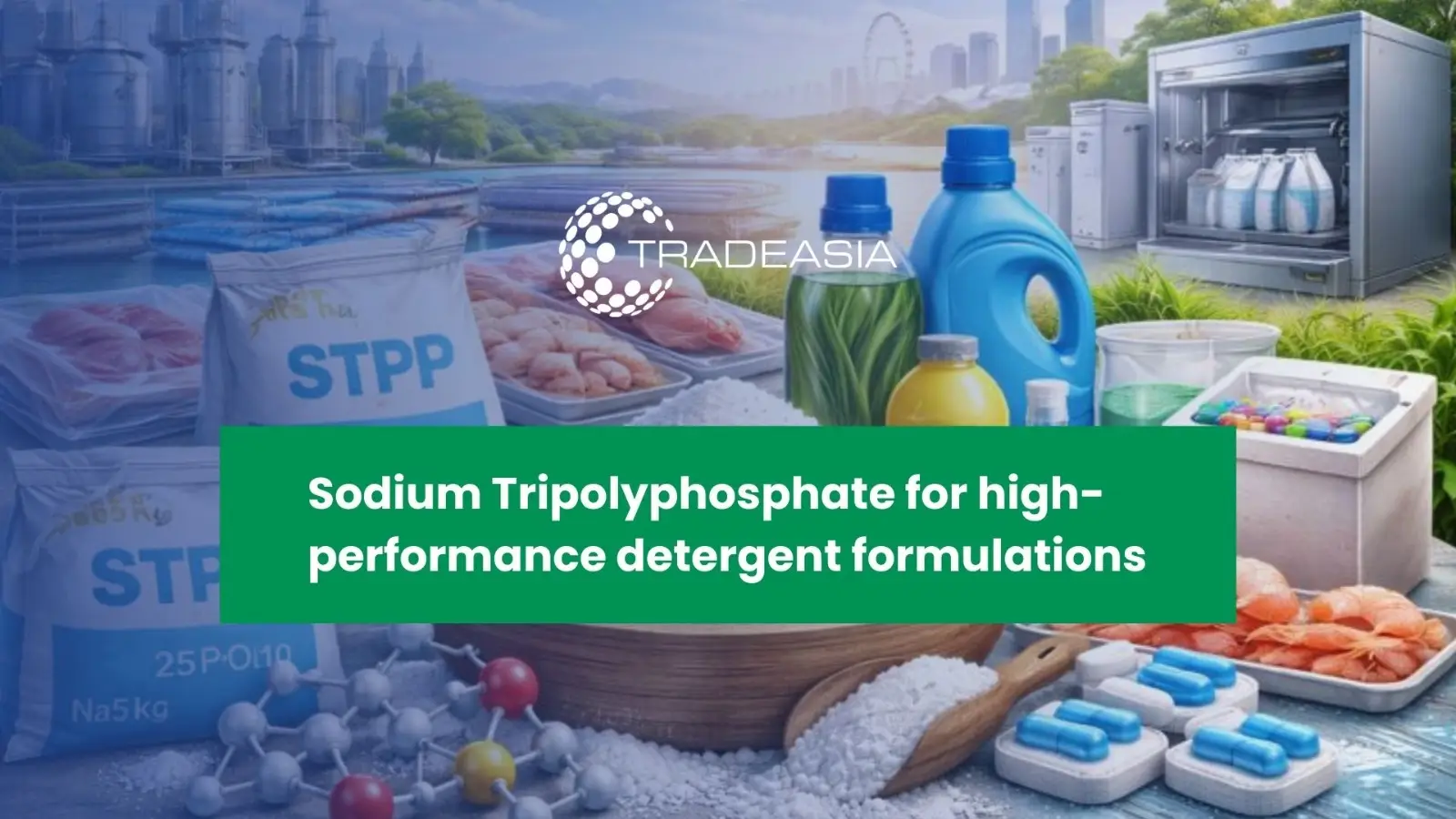
Sodium Tripolyphosphate, commonly abbreviated as STPP, is a white, crystalline, water-soluble powder with the chemical formula Na5P3O10. It is a sodium salt of polyphosphate penta-anion and is synthesized through the thermal dehydration and condensation of monosodium phosphate (NaH2PO4) and disodium phosphate (Na2HPO4). The resulting compound is classified as a polyphosphate, known for its unique ability to sequester (bind) metal ions, emulsify fats and oils, and maintain alkalinity in solution.
The efficacy of STPP stems from its molecular structure. In aqueous solutions, it hydrolyzes to form phosphate anions that actively chelate di- and trivalent metal ions, such as calcium (Ca2+) and magnesium (Mg2+). This property is crucial in regions with hard water, a common challenge even in treated water supplies. By binding these hardness ions, STPP prevents them from interfering with the cleaning action of surfactants, thereby dramatically improving detergent performance. It is commercially available in two primary forms: STPP Phase I (anhydrous, fast-dissolving) and STPP Phase II (hexahydrate, slower-dissolving), allowing formulators to choose based on their specific process and product requirements.
Key Applications and Benefits in the Detergent Industry
The detergent industry remains the largest consumer of sodium tripolyphosphate globally, and Singapore's advanced manufacturing sector for industrial and institutional cleaning products is no exception. Here, STPP functions as a multifunctional "builder." Its primary role is to soften water by sequestering hardness ions, which would otherwise react with surfactants to form insoluble scum, reducing cleaning power and leaving deposits on fabrics and surfaces. This is particularly valuable in Singapore, where water, though treated, can still carry varying mineral content.
Beyond water softening, STPP delivers several other critical benefits in detergent formulations. It acts as a peptizing agent, helping to break down and suspend dirt particles, preventing them from re-depositing onto cleaned surfaces. It also emulsifies grease and oils, breaking them down into tiny droplets that can be easily rinsed away. Furthermore, STPP provides alkalinity, which enhances the cleaning efficacy of surfactants, especially on protein-based stains. In powdered detergents, it serves as a processing aid, ensuring the final product remains free-flowing and non-caking in Singapore's humid climate by absorbing moisture and maintaining crisp granule structure.
The specific use cases in Singapore are diverse. From high-efficiency laundry powders used in hotels and hospitals to heavy-duty dishwashing compounds in commercial kitchens and food processing plants, STPP is a workhorse ingredient. It is also found in industrial cleaners for manufacturing facilities and in car wash formulations. While environmental regulations have led to the development of phosphate-free alternatives in some consumer markets, the controlled use of STPP in industrial and commercial settings, where performance and hygiene are non-negotiable, remains widespread and essential.
Beyond Detergents: Other Industrial Uses of STPP
While renowned for its role in cleaning, the utility of sodium tripolyphosphate spans several other key industries in Singapore's economy. In the food processing sector, STPP is approved as a food additive (E451). It is used as a preservative and quality enhancer in seafood processing, particularly for shrimp and scallops, where it helps retain moisture, improve texture, and reduce drip loss during thawing—a critical factor for Singapore's major seafood import and re-export market. It also serves as a stabilizer in certain dairy and meat products.
Another significant application is in water treatment. Municipal and industrial water treatment plants utilize STPP as a corrosion inhibitor and sequestrant in potable water systems. By binding calcium and magnesium, it prevents scale formation in pipes and boilers, improving energy efficiency and extending infrastructure lifespan. This is highly relevant for Singapore's integrated water management system, which includes desalination and NEWater plants. Additionally, STPP finds use in ceramics as a deflocculant to control slurry viscosity, in textile processing as a scouring agent, and in leather tanning as a dispersing agent.
The Singapore Market for STPP: Trends and Insights
Singapore's market for sodium tripolyphosphate is shaped by its position as a global logistics hub, a center for advanced manufacturing, and a nation with strict environmental and quality standards. Demand is driven by the robust chemicals industry, a thriving F&B sector, and the constant need for high-performance cleaning solutions across its commercial, hospitality, and healthcare institutions. The trend towards specialized, high-efficiency industrial cleaners and the growth of the food processing industry continue to support steady demand for high-quality STPP.
However, the market is also influenced by global environmental discourse regarding phosphates in waterways, which can lead to eutrophication. Singapore's regulatory framework is sophisticated, balancing industrial needs with environmental stewardship. This has led to a market preference for responsible usage, efficient formulations, and suppliers who can provide not only the product but also expertise in optimal application to minimize environmental impact. Furthermore, supply chain resilience has become a critical factor. Companies are increasingly seeking reliable partners with strong regional logistics networks, like Chemtradeasia, to mitigate risks associated with global supply disruptions and ensure just-in-time delivery crucial for manufacturing operations.
Sourcing Quality STPP: The Role of Reliable Suppliers
Procuring sodium tripolyphosphate in Singapore is not merely a transactional purchase; it is a strategic partnership that affects product quality, regulatory compliance, and operational continuity. A reputable supplier provides more than just the chemical compound. They offer consistency in product grade, whether technical grade for detergents or food grade for F&B applications, ensuring every batch meets stringent specifications for purity, particle size, and solubility. This consistency is vital for manufacturers to maintain the efficacy and quality of their end products.
Established suppliers such as Chemtradeasia add significant value through comprehensive service. This includes providing detailed technical data sheets (TDS) and material safety data sheets (MSDS), offering formulation support, and ensuring proper packaging (from 25kg bags to bulk containers) suited for Singapore's storage and handling conditions. Their deep understanding of local regulations and customs procedures streamlines importation. Moreover, a supplier with a robust regional network can offer flexible logistics solutions, reliable inventory management, and responsive customer service, turning the procurement of a basic chemical into a dependable supply chain pillar for businesses across Singapore's industrial landscape.
Conclusion
Sodium Tripolyphosphate (STPP) remains an indispensable chemical in Singapore's industrial ecosystem. Its unparalleled ability to enhance cleaning performance, coupled with its versatility in food processing, water treatment, and other sectors, secures its ongoing relevance. While market dynamics evolve with environmental considerations, the demand for high-performance, reliably sourced STPP persists, especially in commercial and industrial applications where compromise on quality is not an option.
Navigating this market successfully requires an informed approach. Understanding the chemical's properties, applications, and the local regulatory context is the first step. The second, and equally critical, step is establishing a partnership with a trusted and professional supplier. By sourcing from established providers like Chemtradeasia, businesses in Singapore gain access to consistent product quality, expert support, and a resilient supply chain, ensuring that this powerful chemical builder continues to contribute effectively to the nation's cleanliness, industrial output, and economic vitality. To ensure a consistent supply of high-quality Sodium Tripolyphosphate tailored to your detergent, food processing, or industrial applications, businesses in Singapore can connect with Chemtradeasia’s expert team through the Contact Us page.

Leave a Comment